If you want to understand the Antipodes Festival, you need to accept one thing: you will miss something. That’s the paradox, and fittingly, that’s a Greek word.
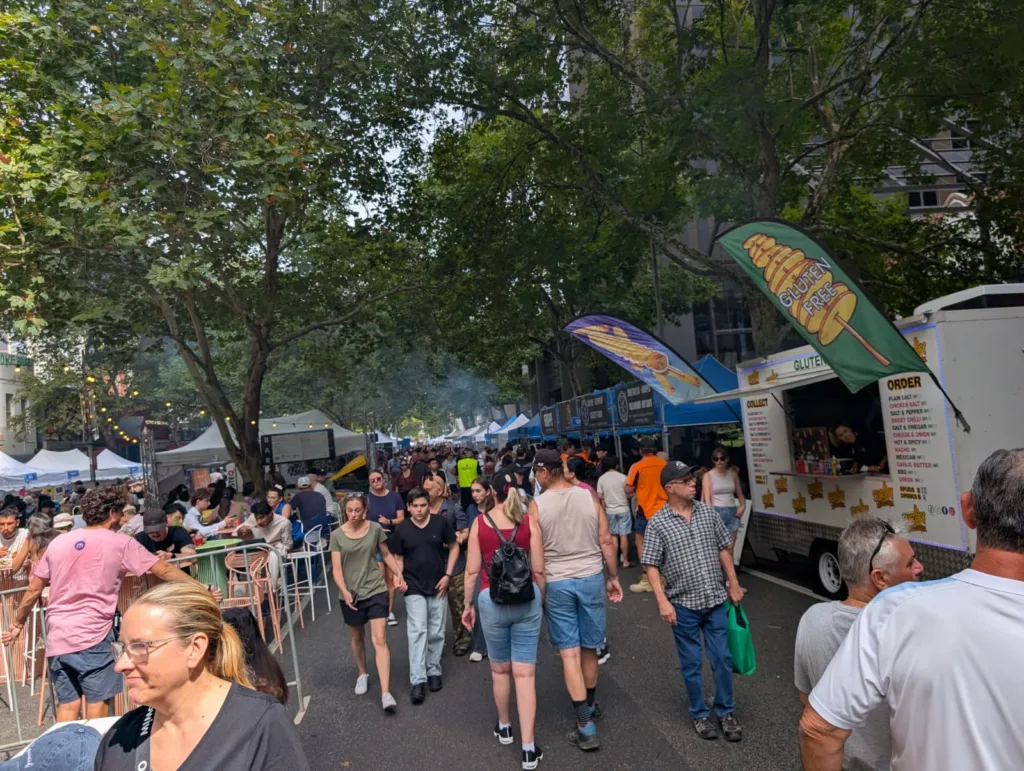
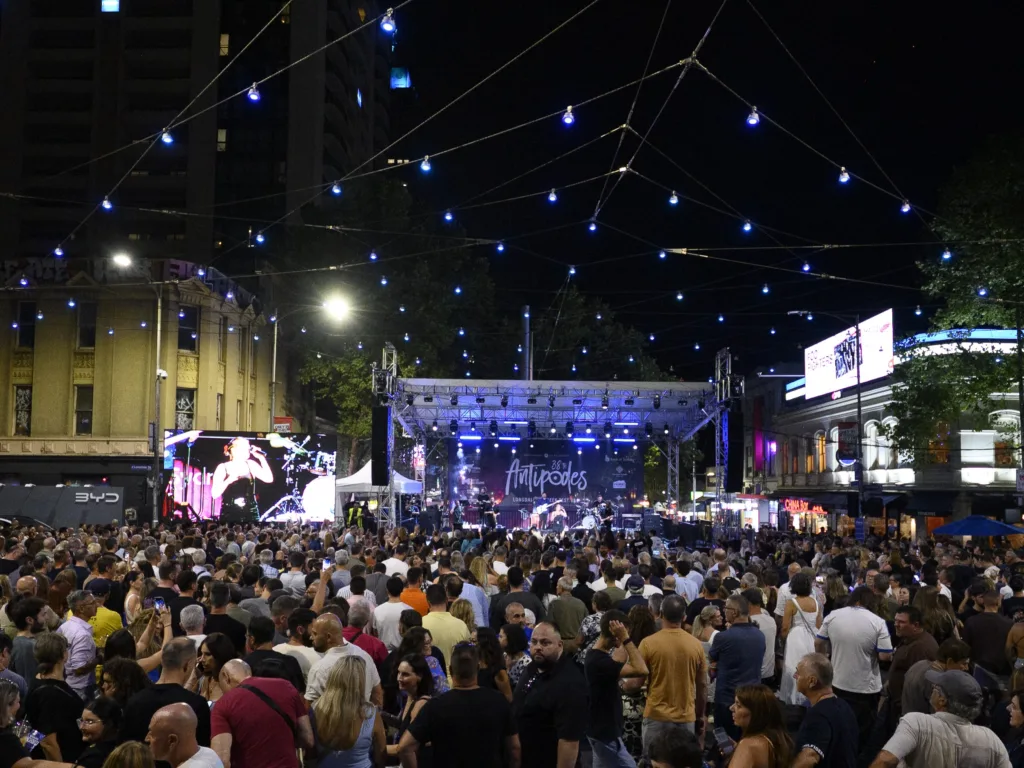
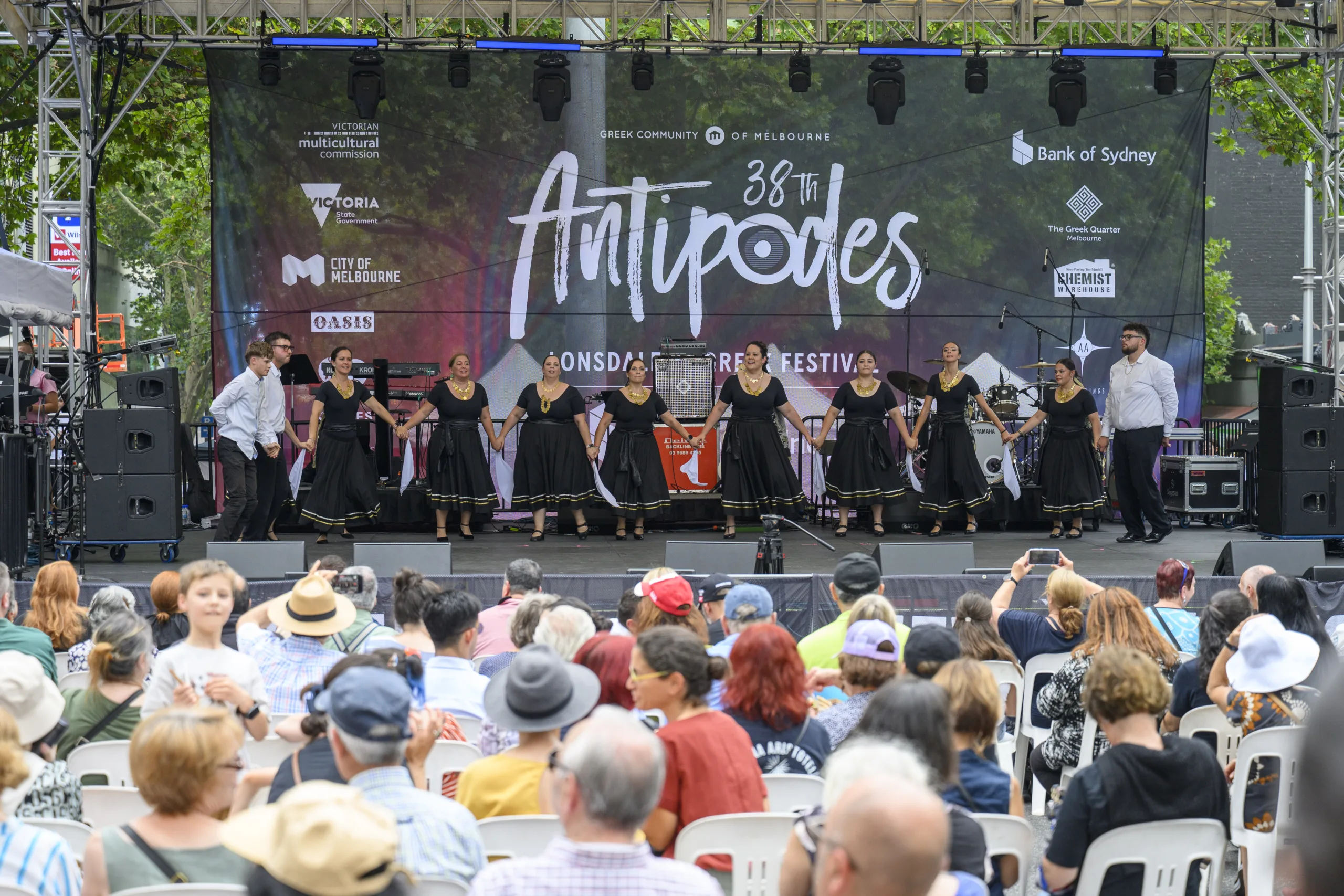
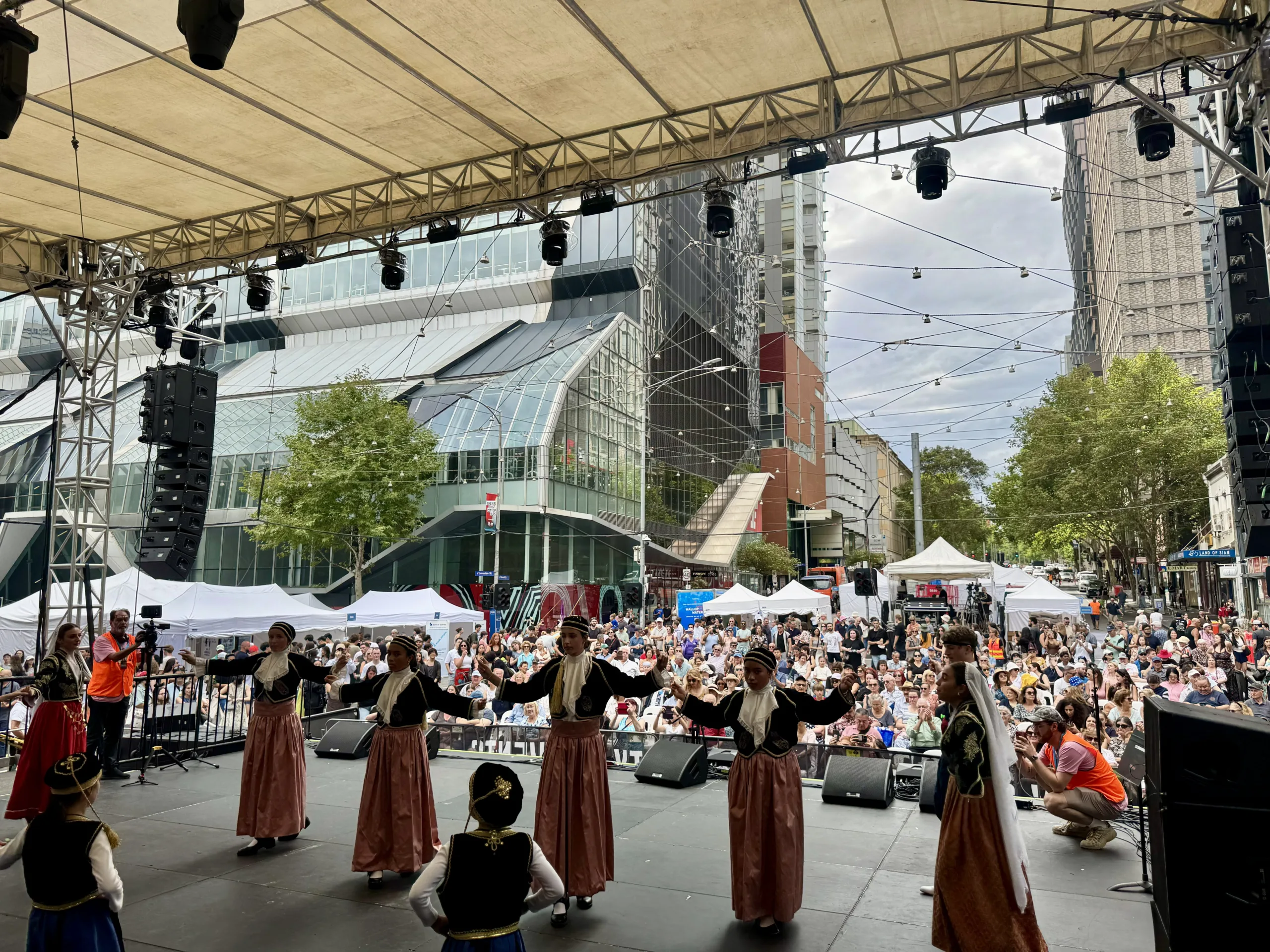
Some might call the sheer volume of it a hyperbole, another Greek word. But with more than 500 performers, over 100 stalls, upwards of 90 hours of live entertainment and three jam-packed stages stretching along Lonsdale Street between Swanston and Exhibition, the 38th Antipodes Festival didn’t just transform Melbourne’s CBD into the beating heart of Hellenism; it spilled into surrounding streets, where Greek could be heard in every direction, all the way to Flinders Street Station.
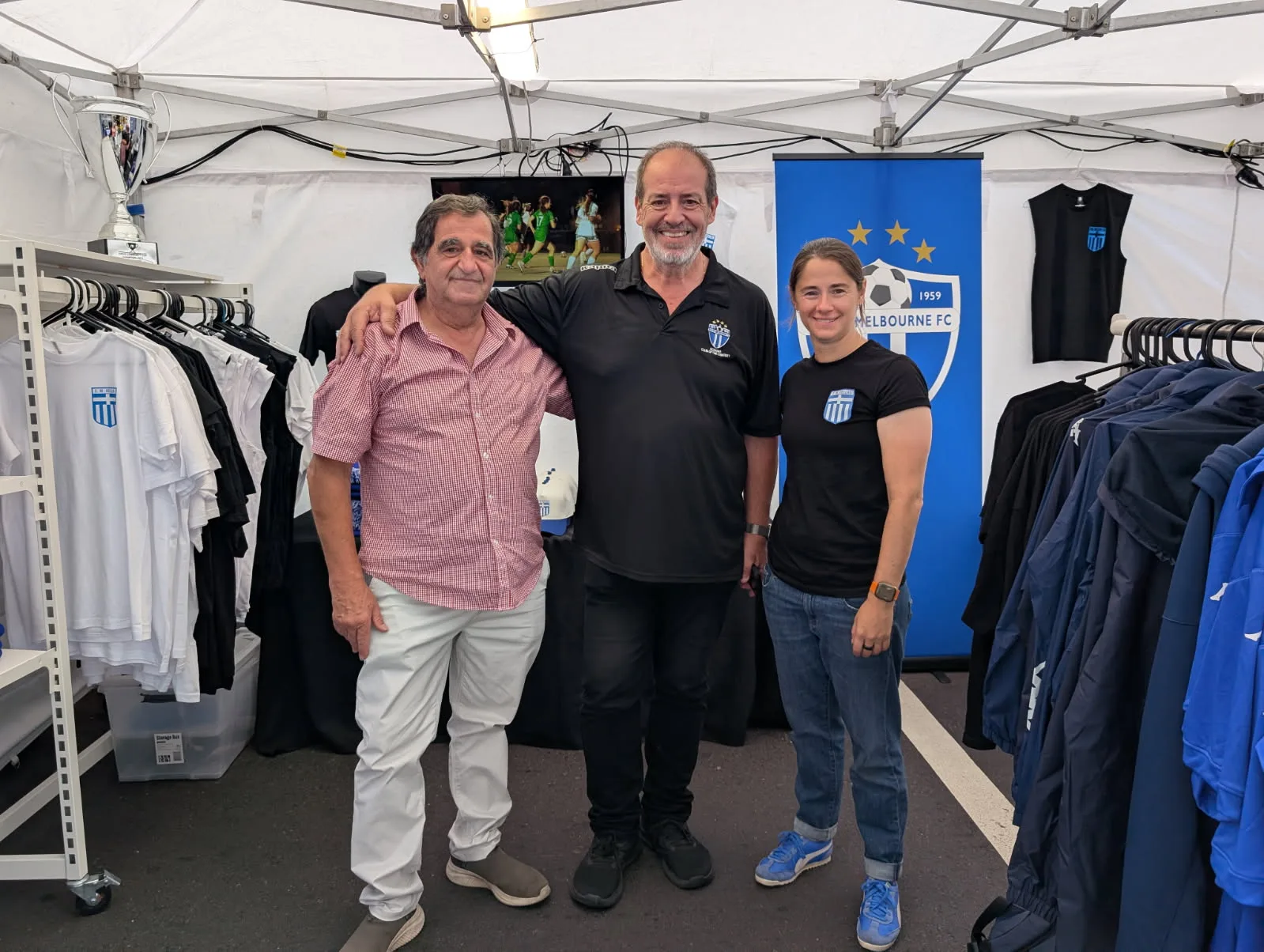
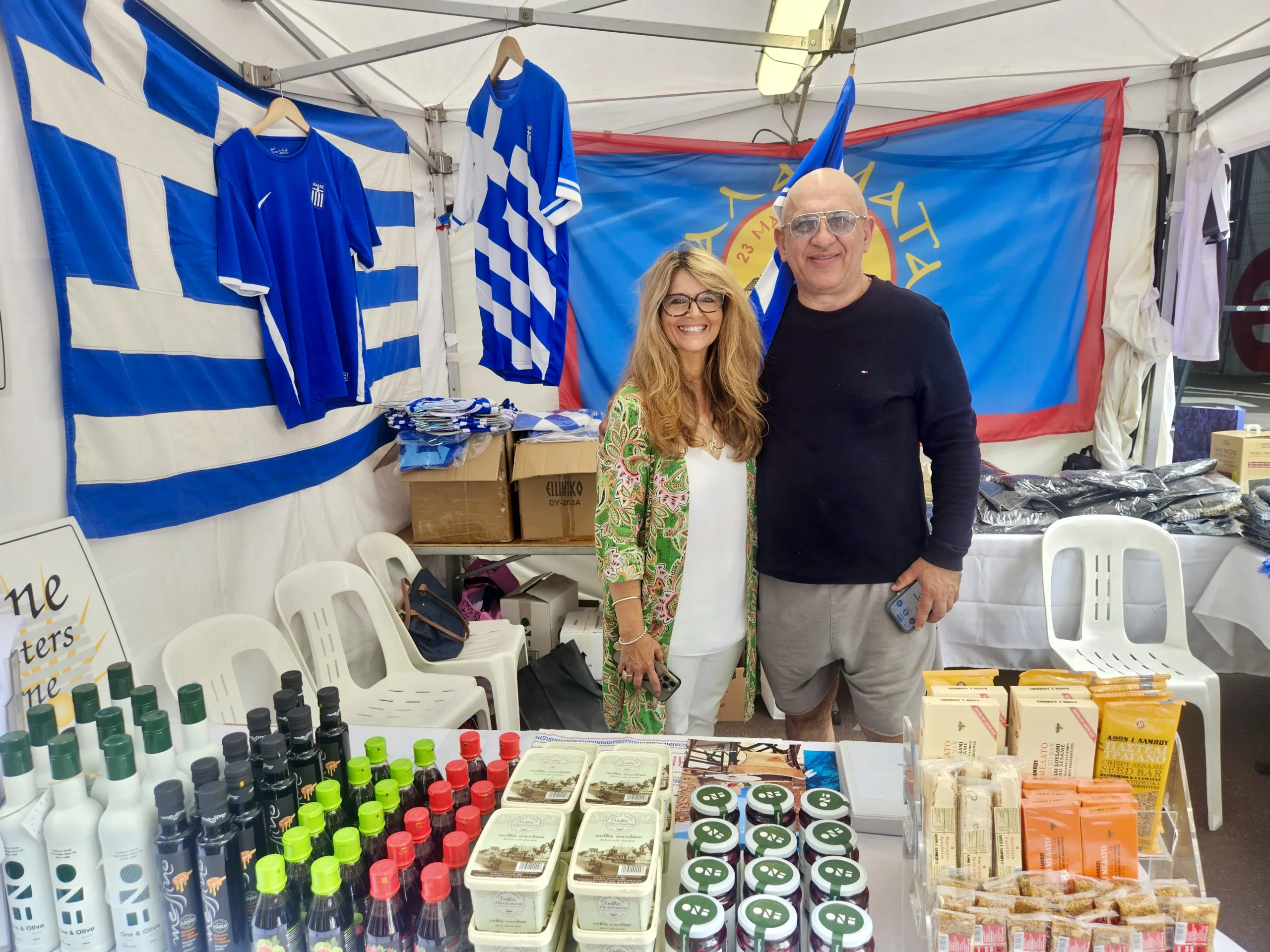
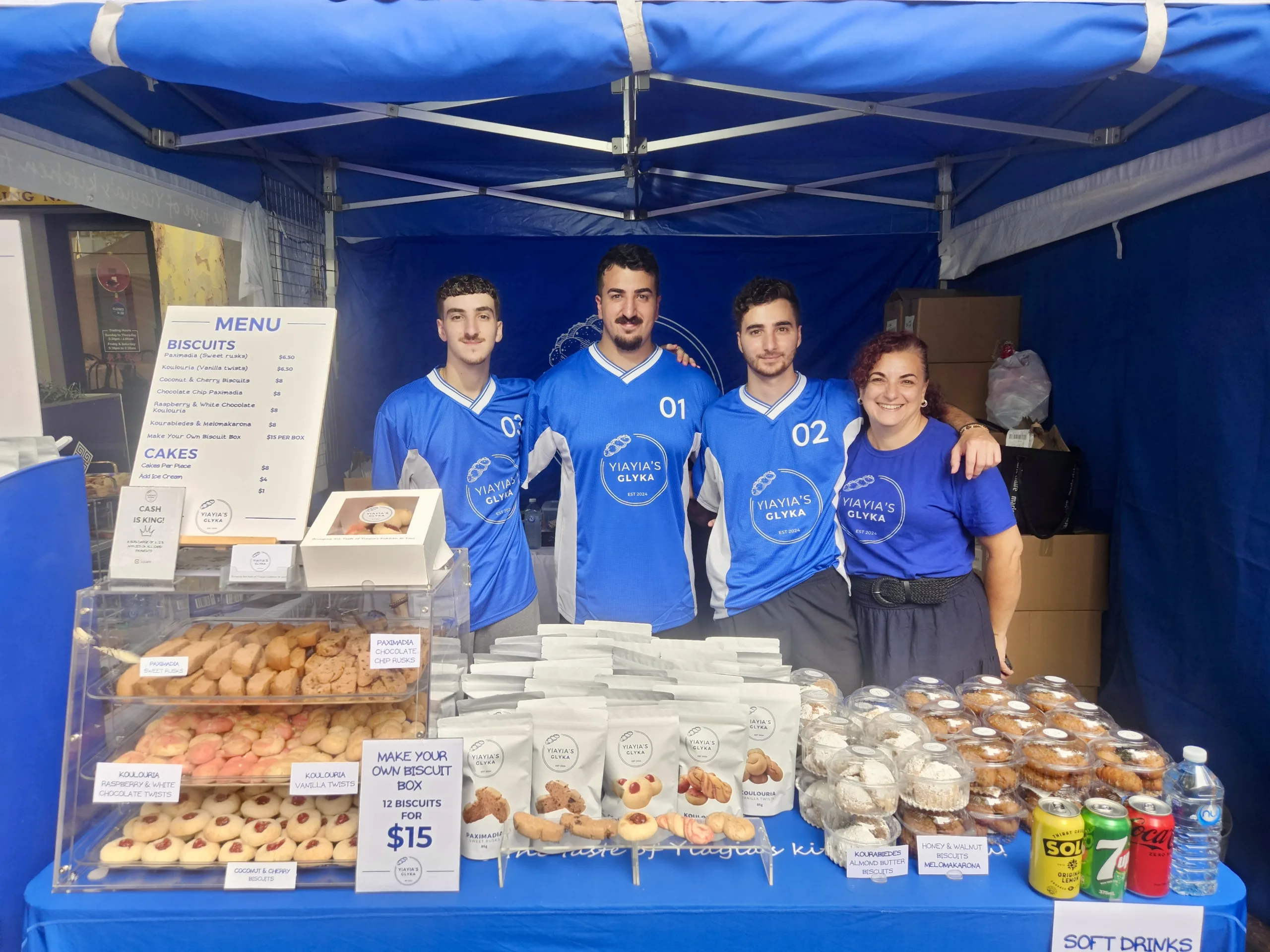
The street breathes Greek
Victoria Police estimates put attendance across the weekend at about 145,000 people.
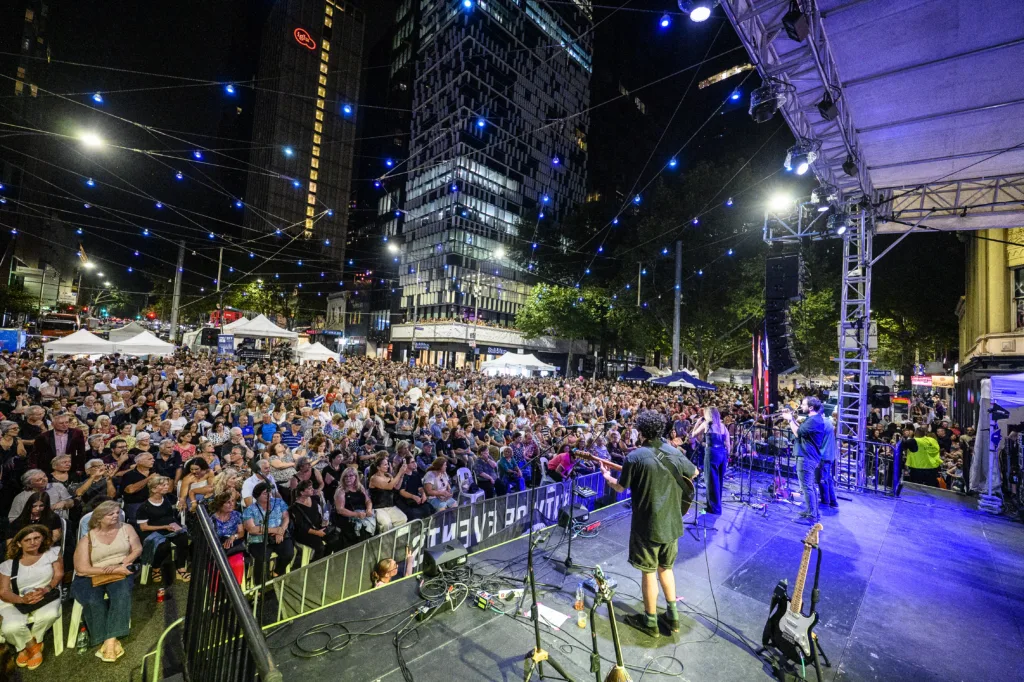
Wide crowd shots captured Lonsdale Street heaving: families, teenagers wrapped in blue-and-white flags, yiayiades staking out chairs near the Bank of Sydney Main Stage, toddlers perched on shoulders. The energy was generational. The pride unmistakable.
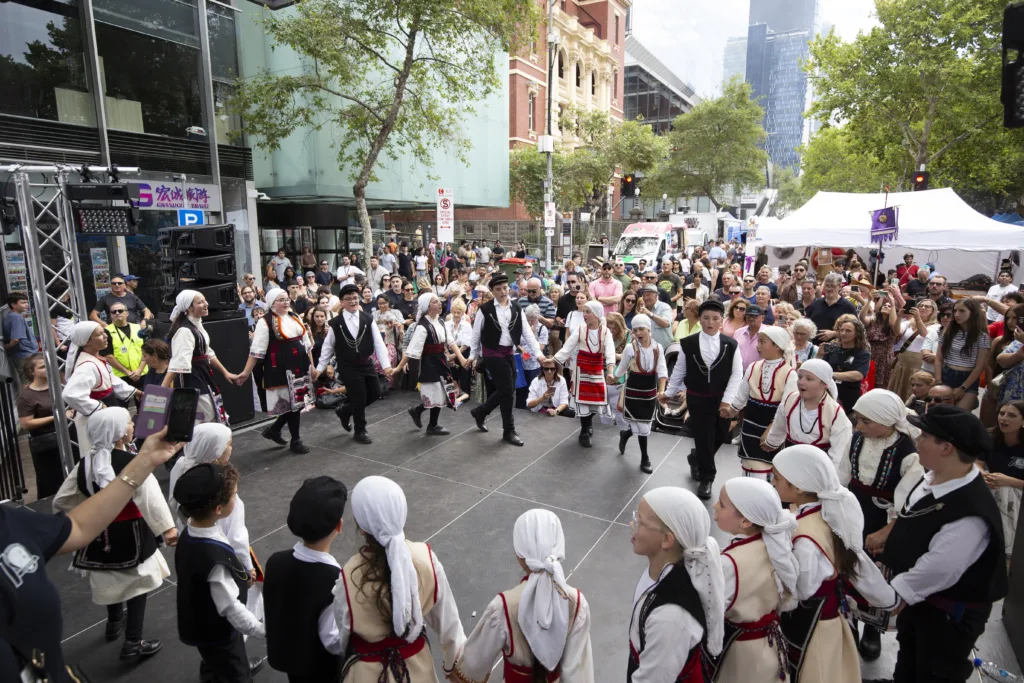
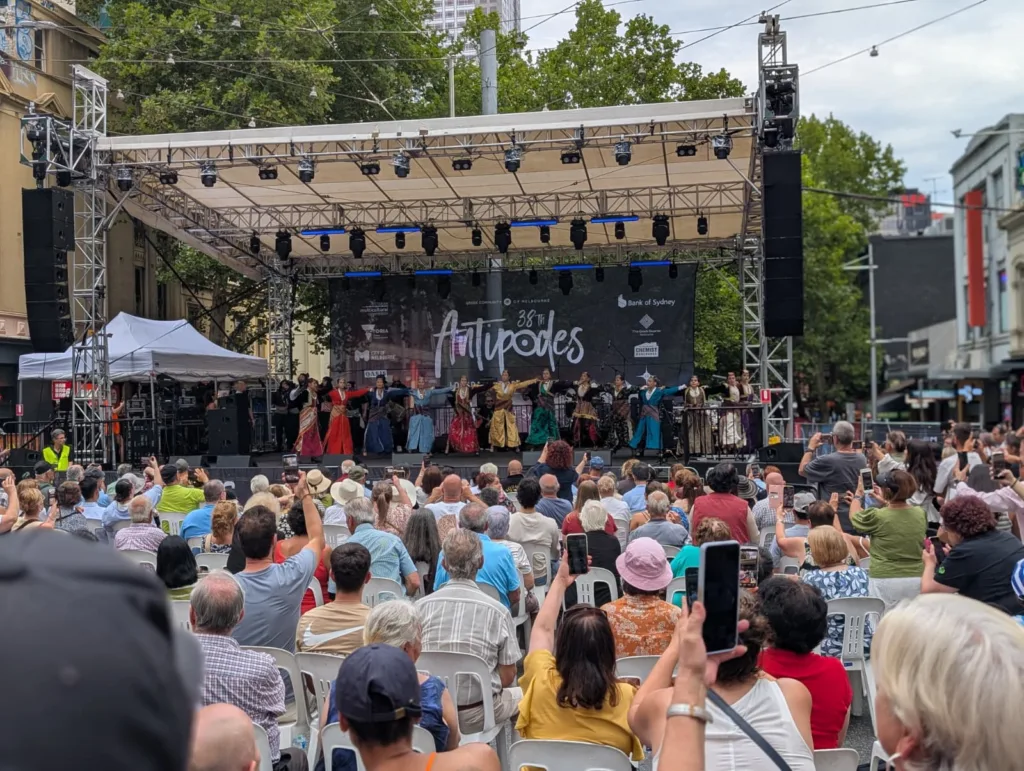
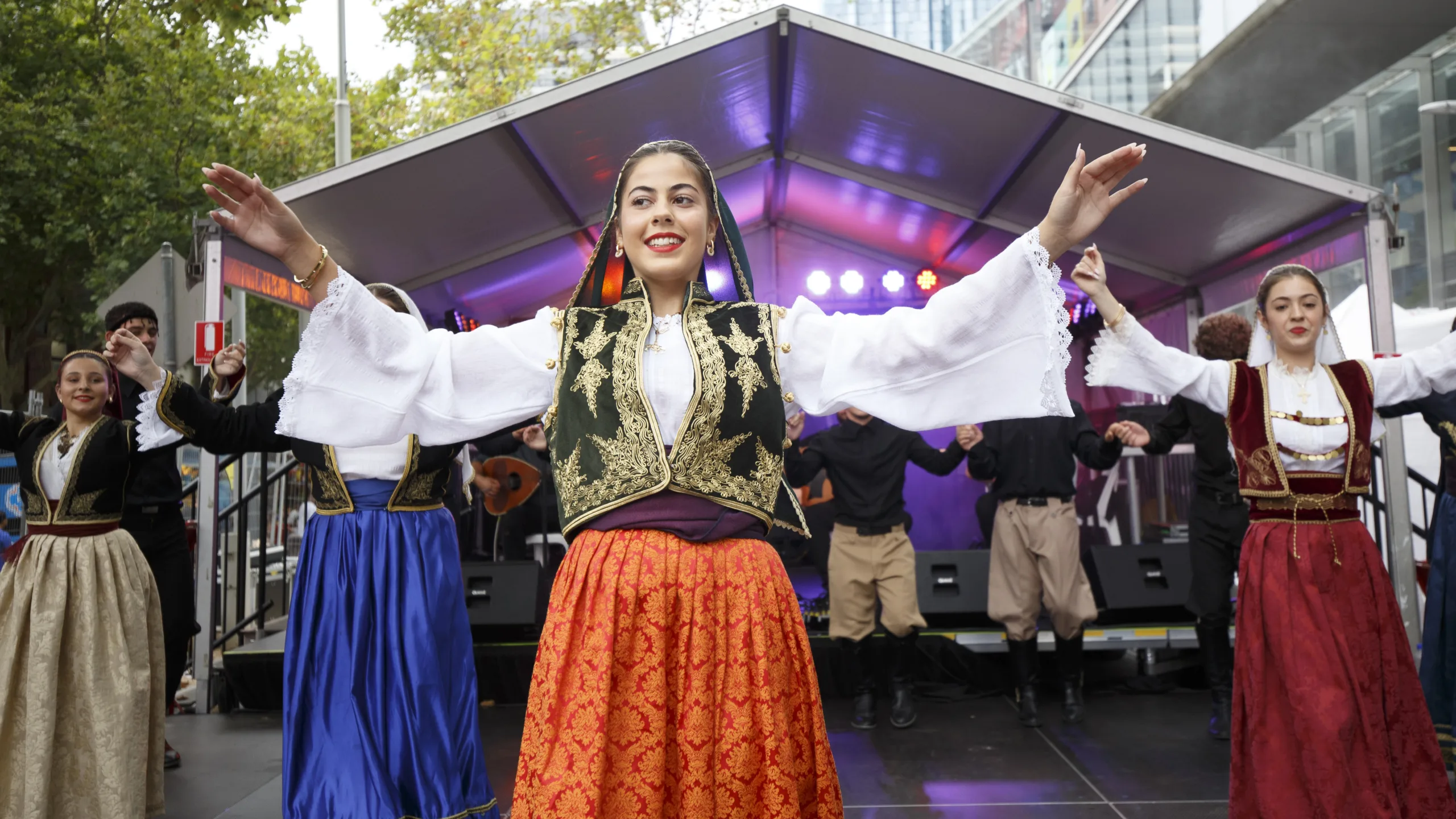
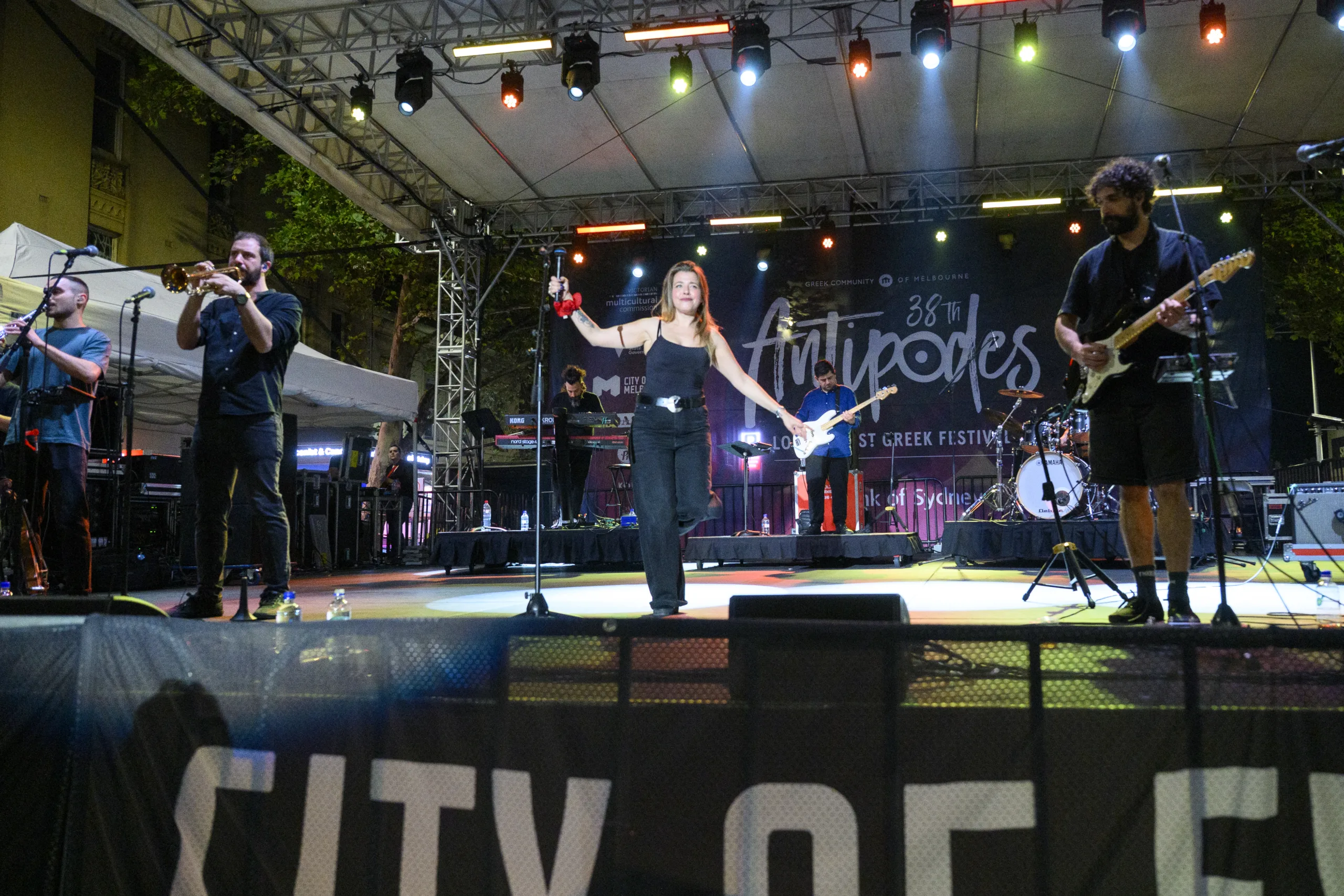
As they do every year, the Greek language teachers from the Greek Community of Melbourne Schools (GCM) moved straight from their stall to the front of the stage, principal Maria Bakalidou leading the dancing, word-perfect to every lyric sung by Ioulia Karapataki.
“This is the best one yet,” said teacher Mary Lefteriotis.
I felt a flicker of déjà vu. Hadn’t we heard the same words during singer Rena Morfi’s performance last year? But this time it genuinely felt tighter, more electric.
Claiming the night
“Are you coming to Konstantina Touni tomorrow?” author Despina Merambeliotis asked at the cocktail party, which I eventually reached after navigating near standstill crowds around the main stage, half an hour just to cross the road.
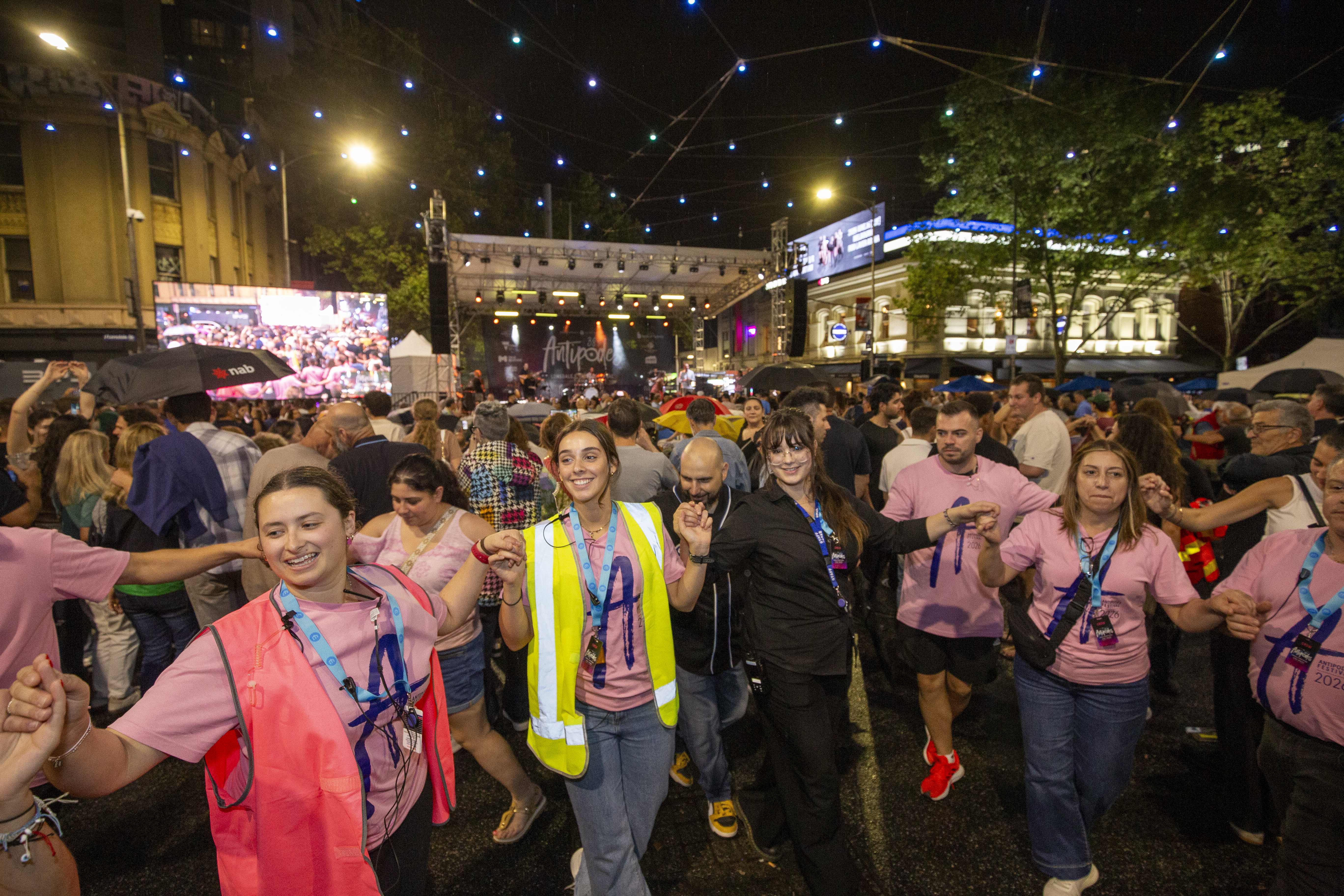
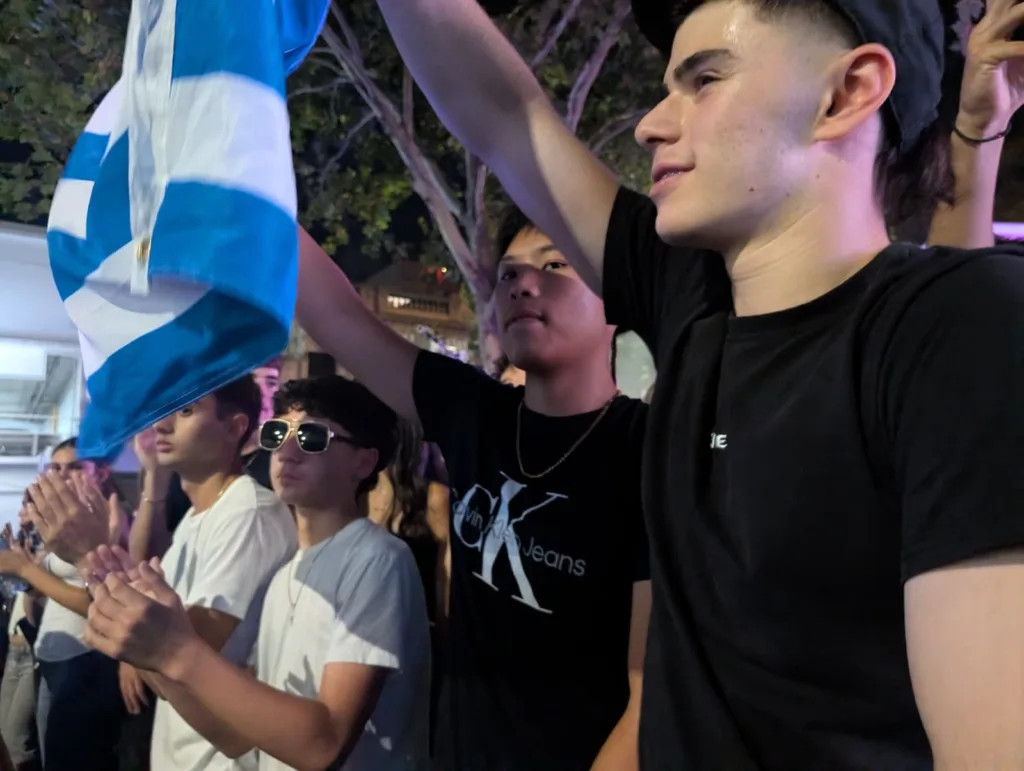
As we spoke, the AA Holdings stage morphed into something closer to a nightclub, the younger generation claiming its version of Hellenism under city lights. Flags waved. Phones glowed. Lyrics were shouted back at the stage, pulsating with strobe lights and music by Nico Entertainment.
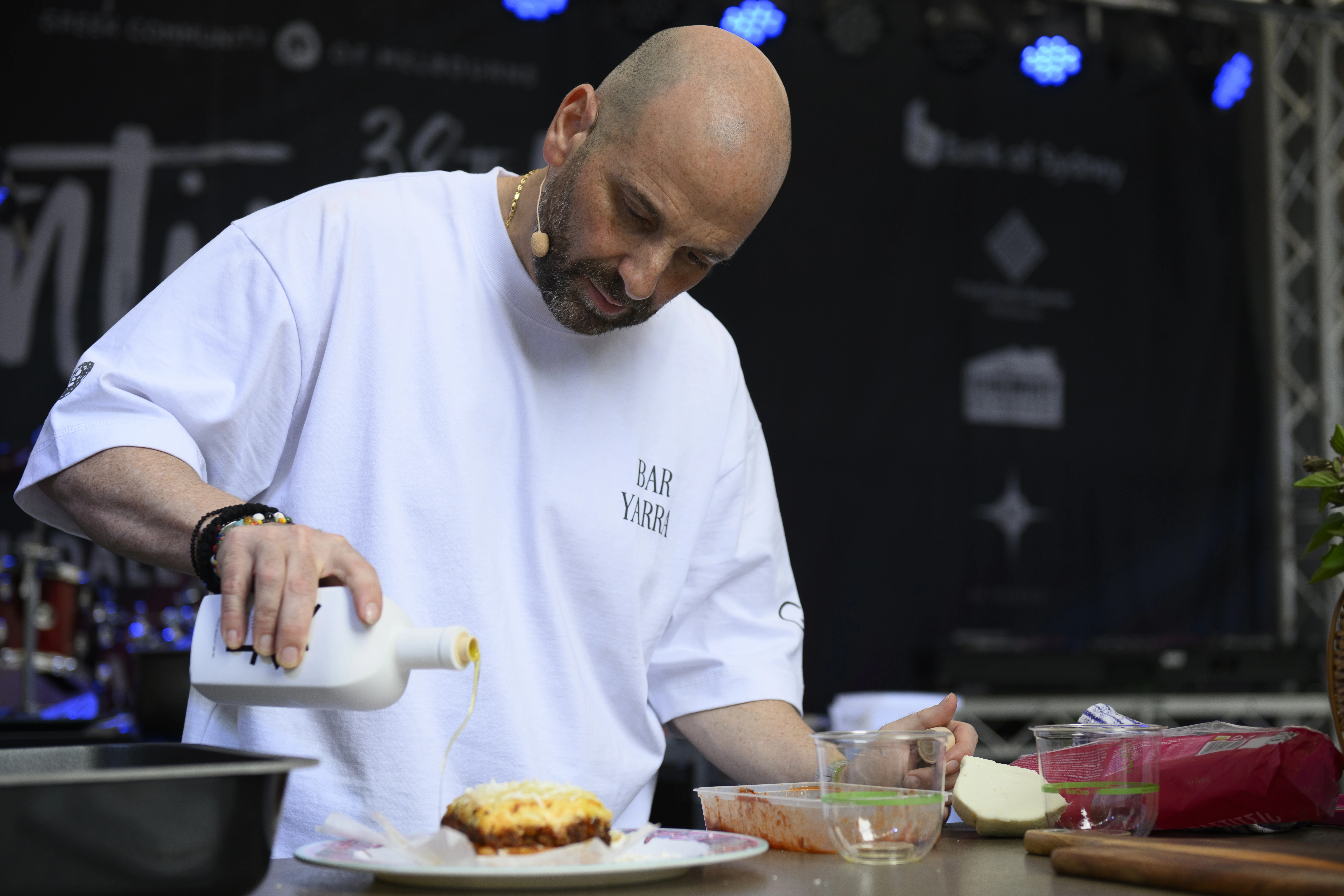
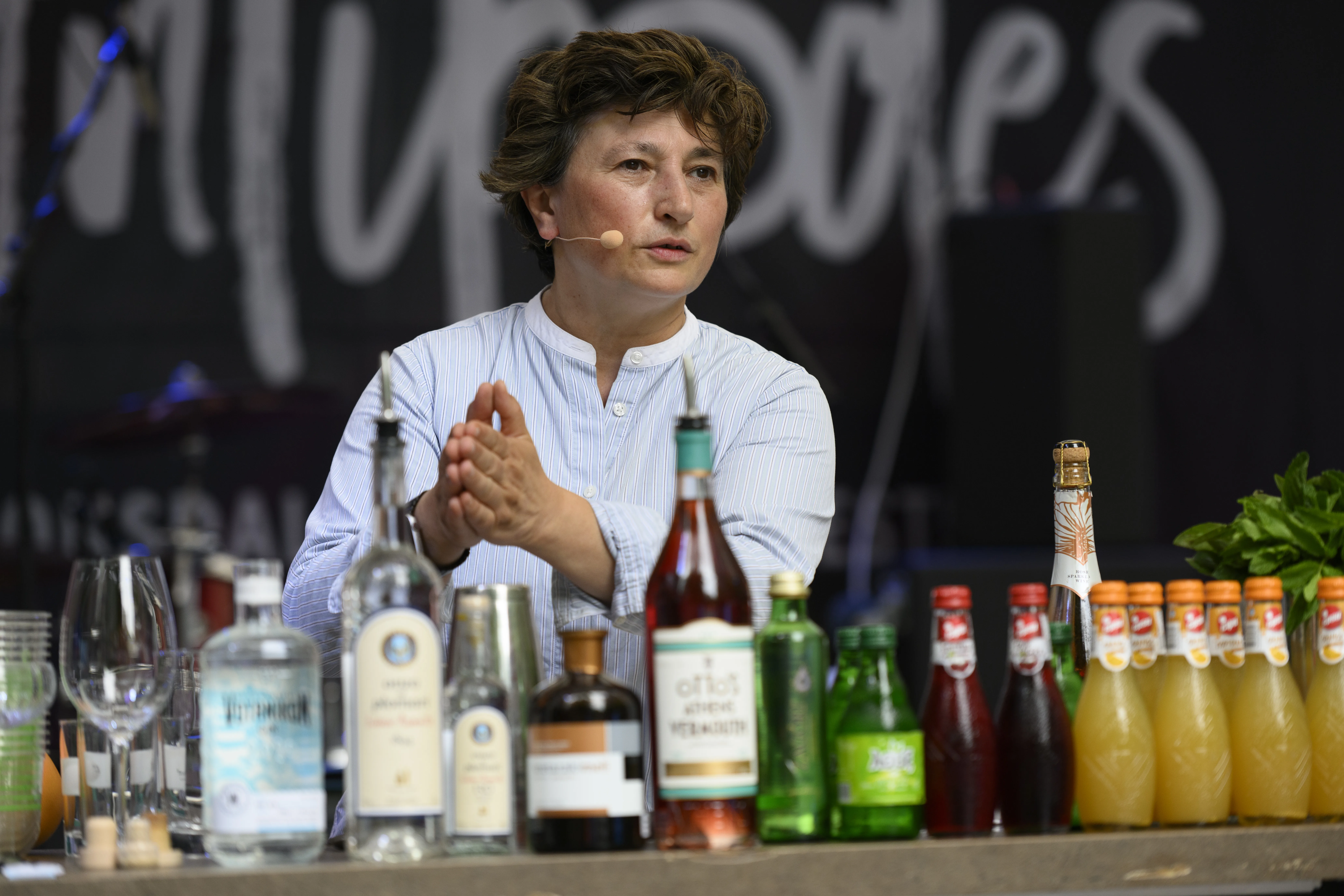
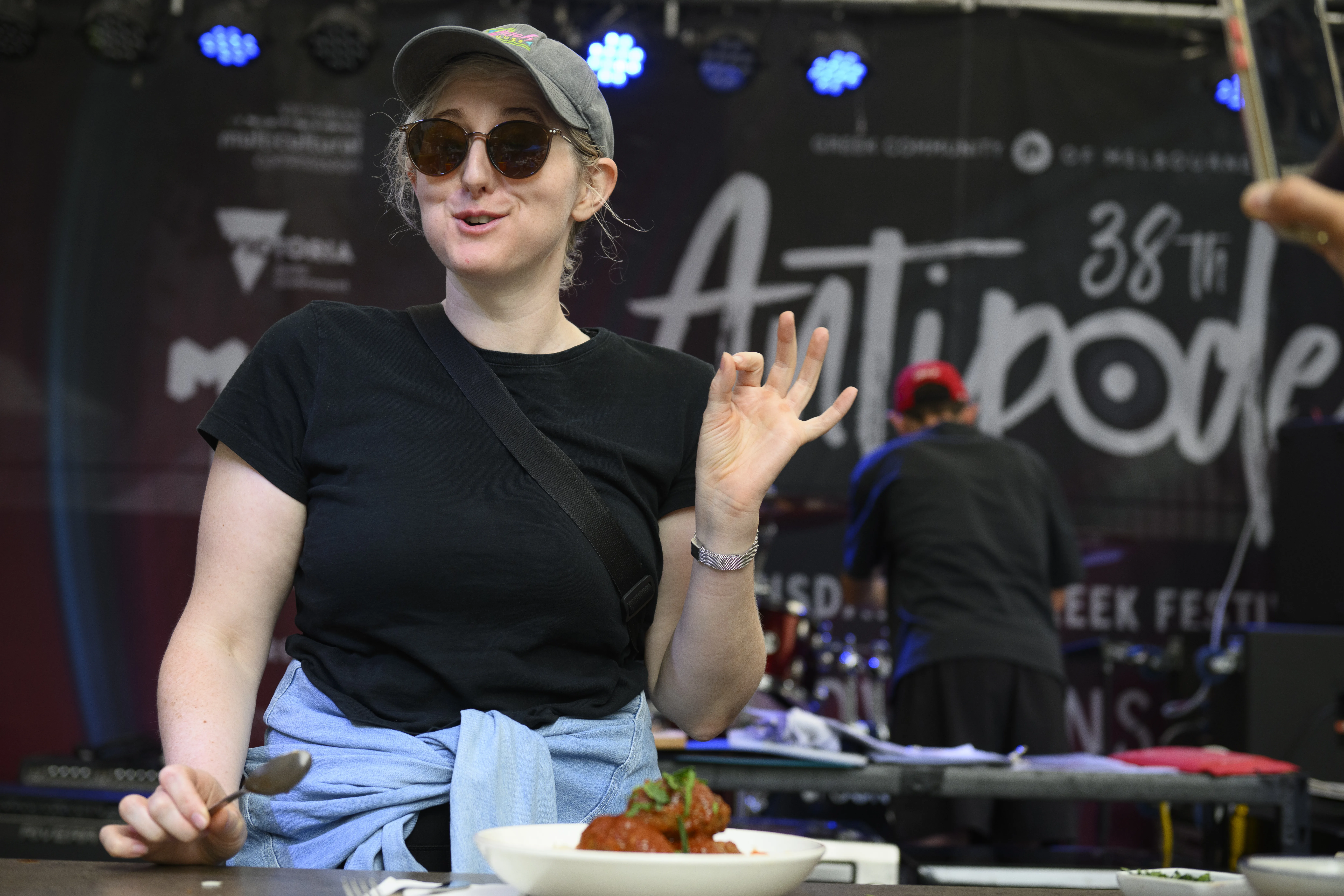
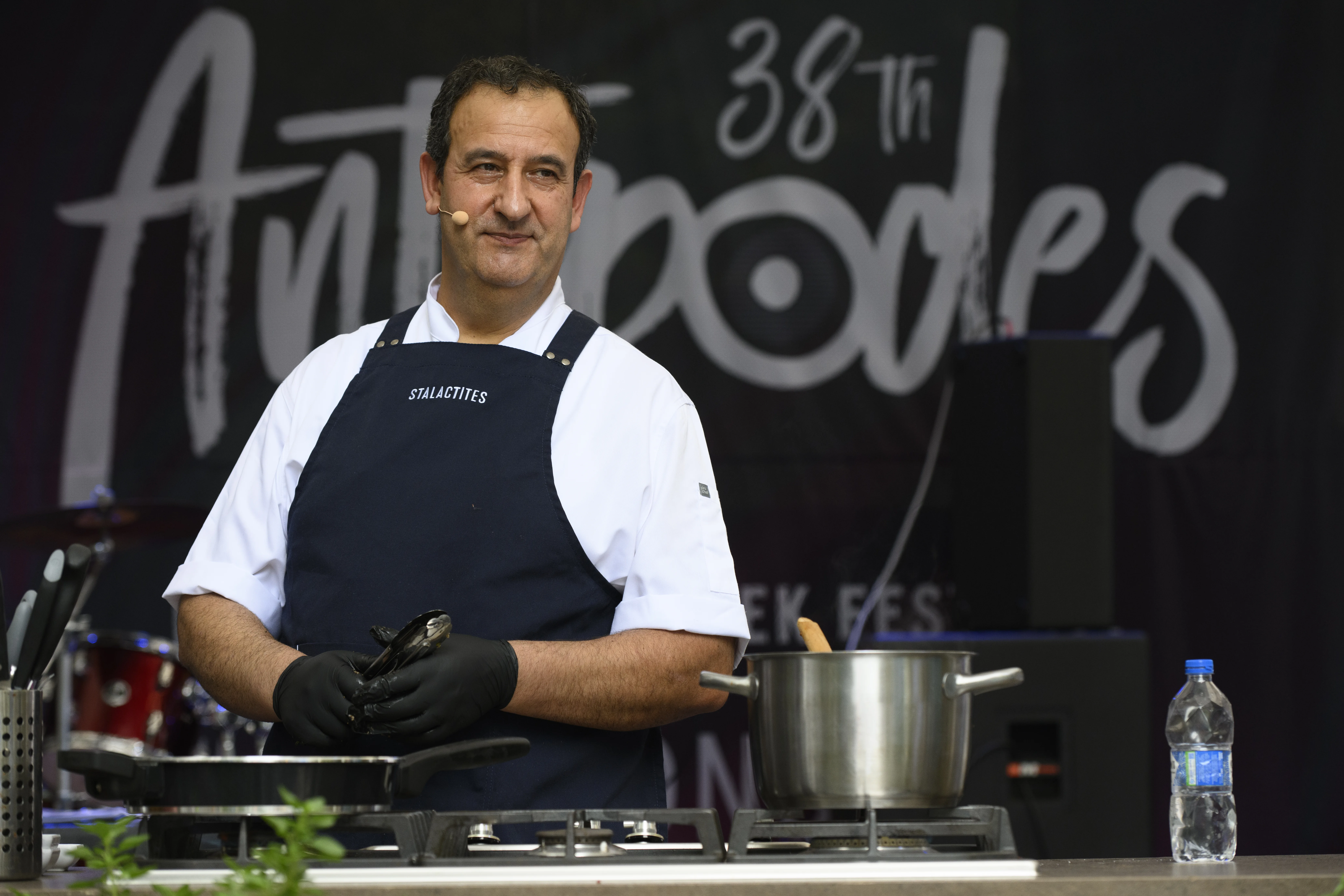
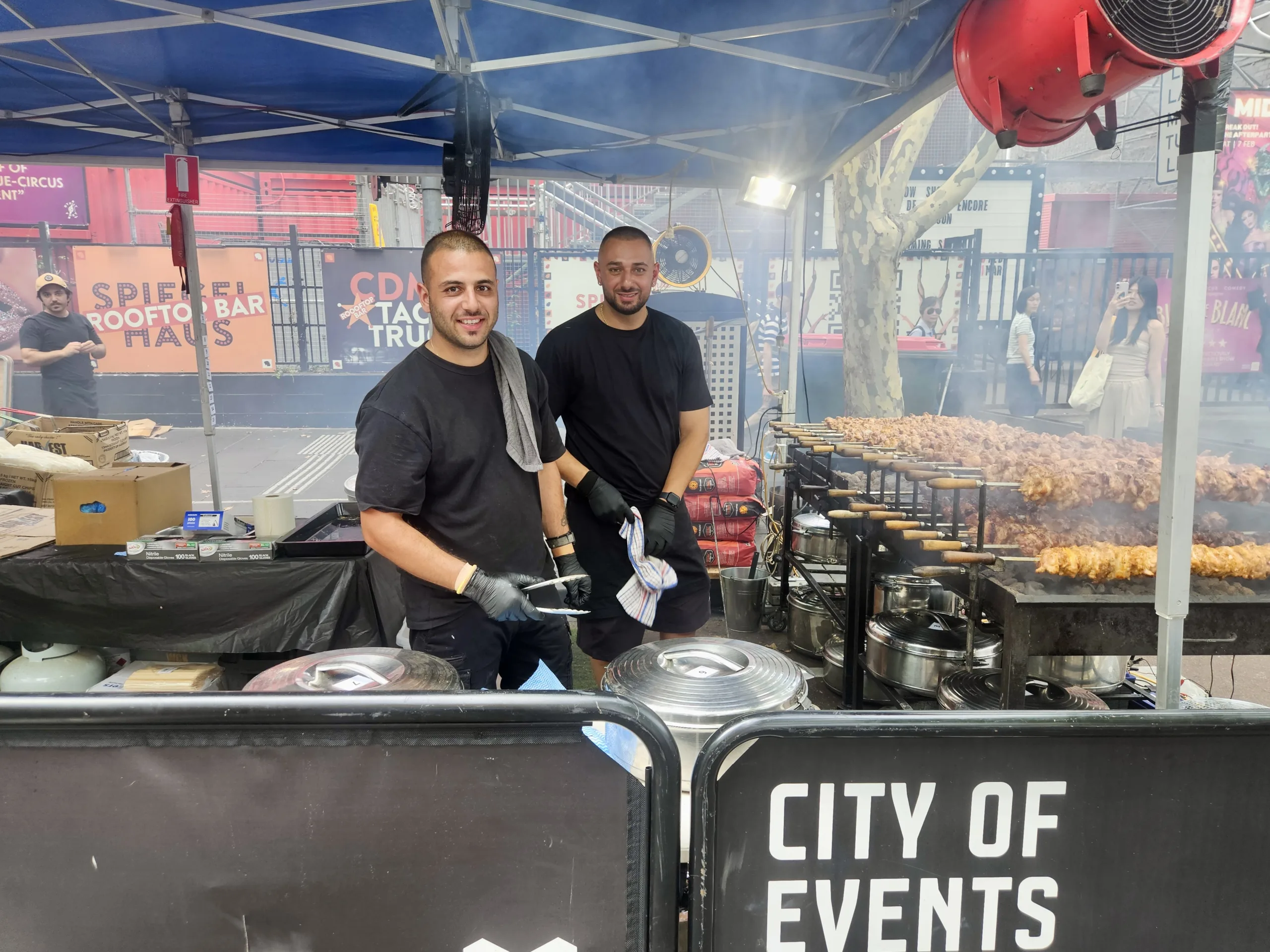
Ancient Spartans roamed the street. Carnival rides spun overhead. A Greek Silent Disco Tour wove through the crowd. ‘Flavours of Greece’ cooking demonstrations, supported by The Greek Herald, unfolded at the #LoveLoveLonsdale stage. Nearby, Phlavour drew food lovers. And somewhere, always, someone was dancing.
Zorba, DNA and endurance
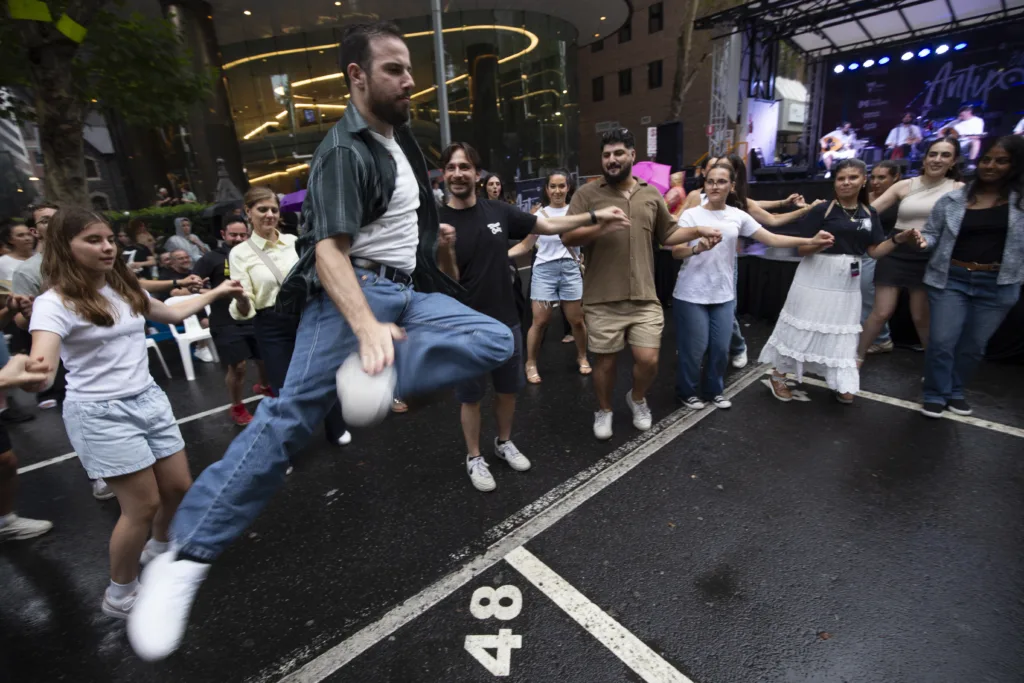
At the AA Holdings stage, presenter Roula Krikellis hyped the crowd for “Zorba ‘Til You Drop,” where the last dancer standing wins flights to Greece.
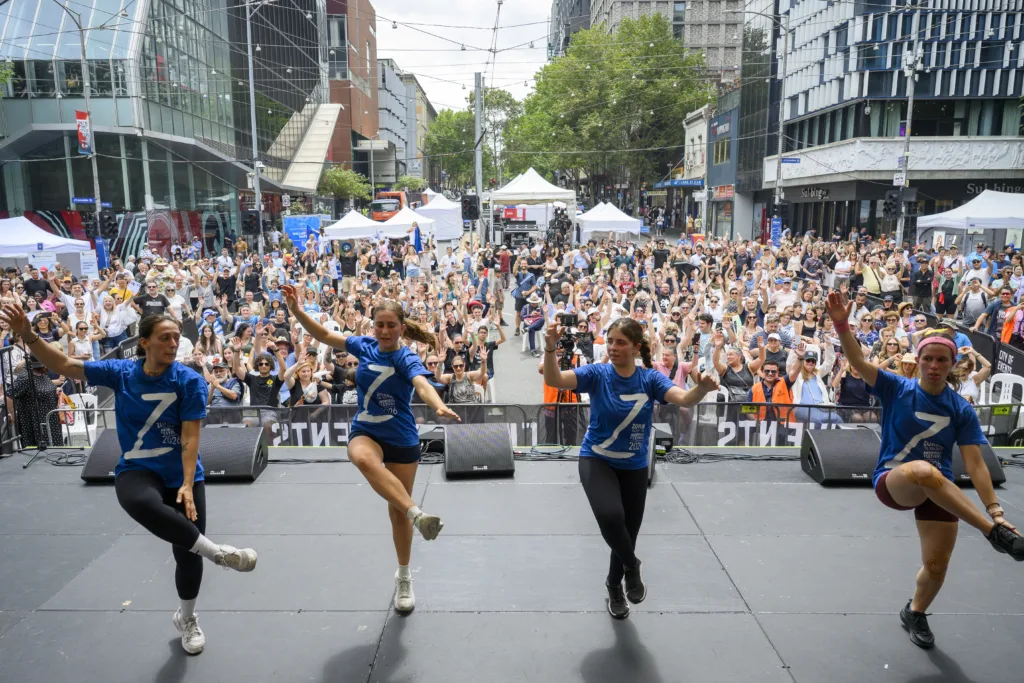
“I didn’t train. It’s in my blood. Strength,” said fifteen-year-old Dimitris.
“DNA,” Roula shot back. “It’s in the blood.”
He then danced his way across the festival to the main stage, for hours on end.
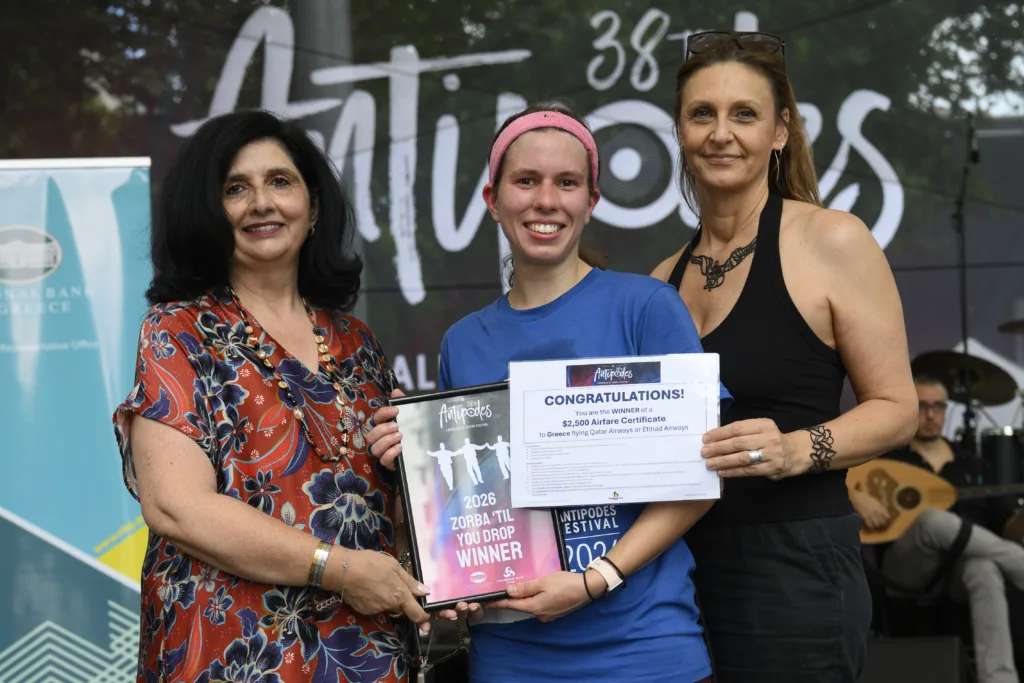
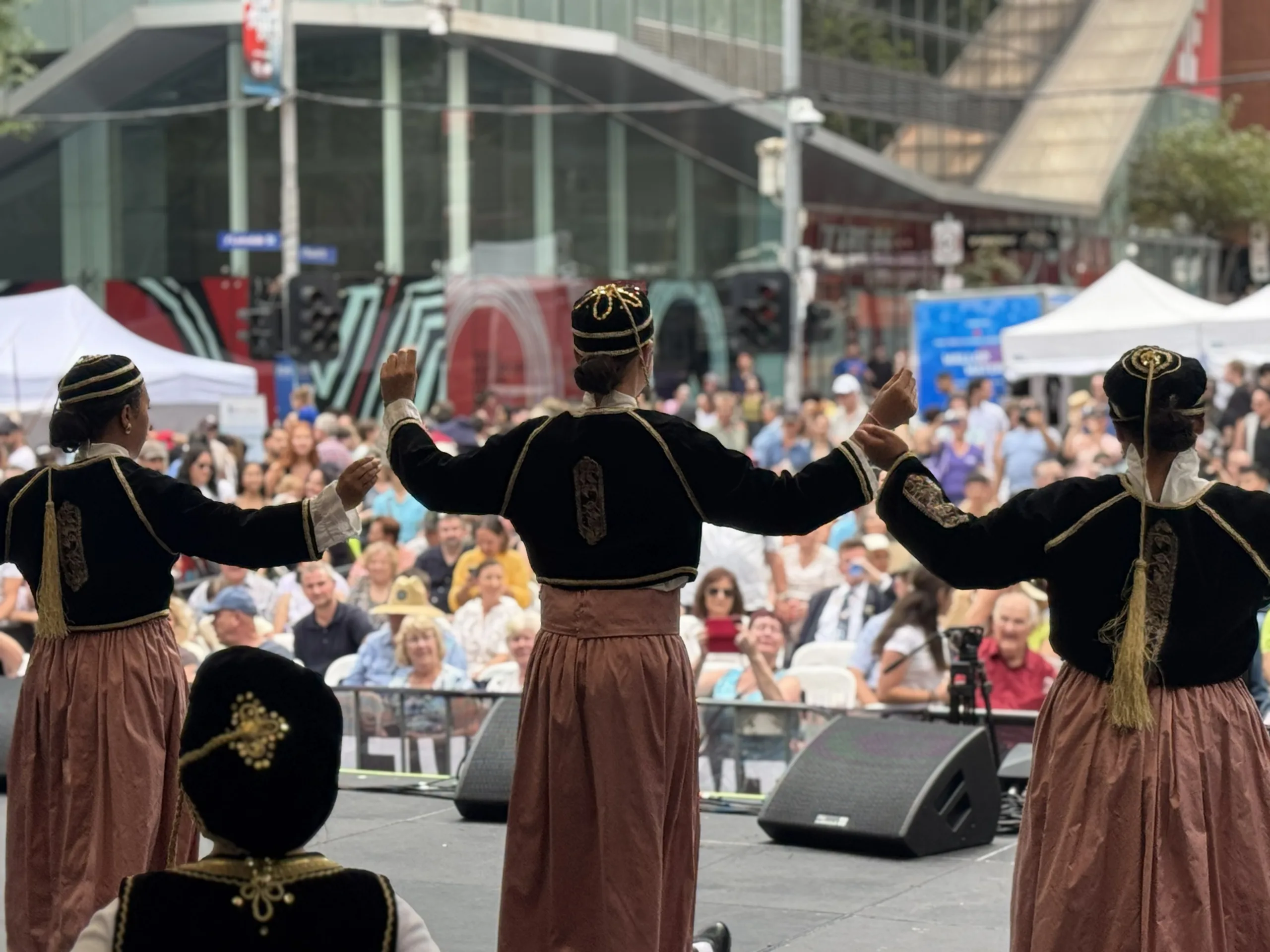
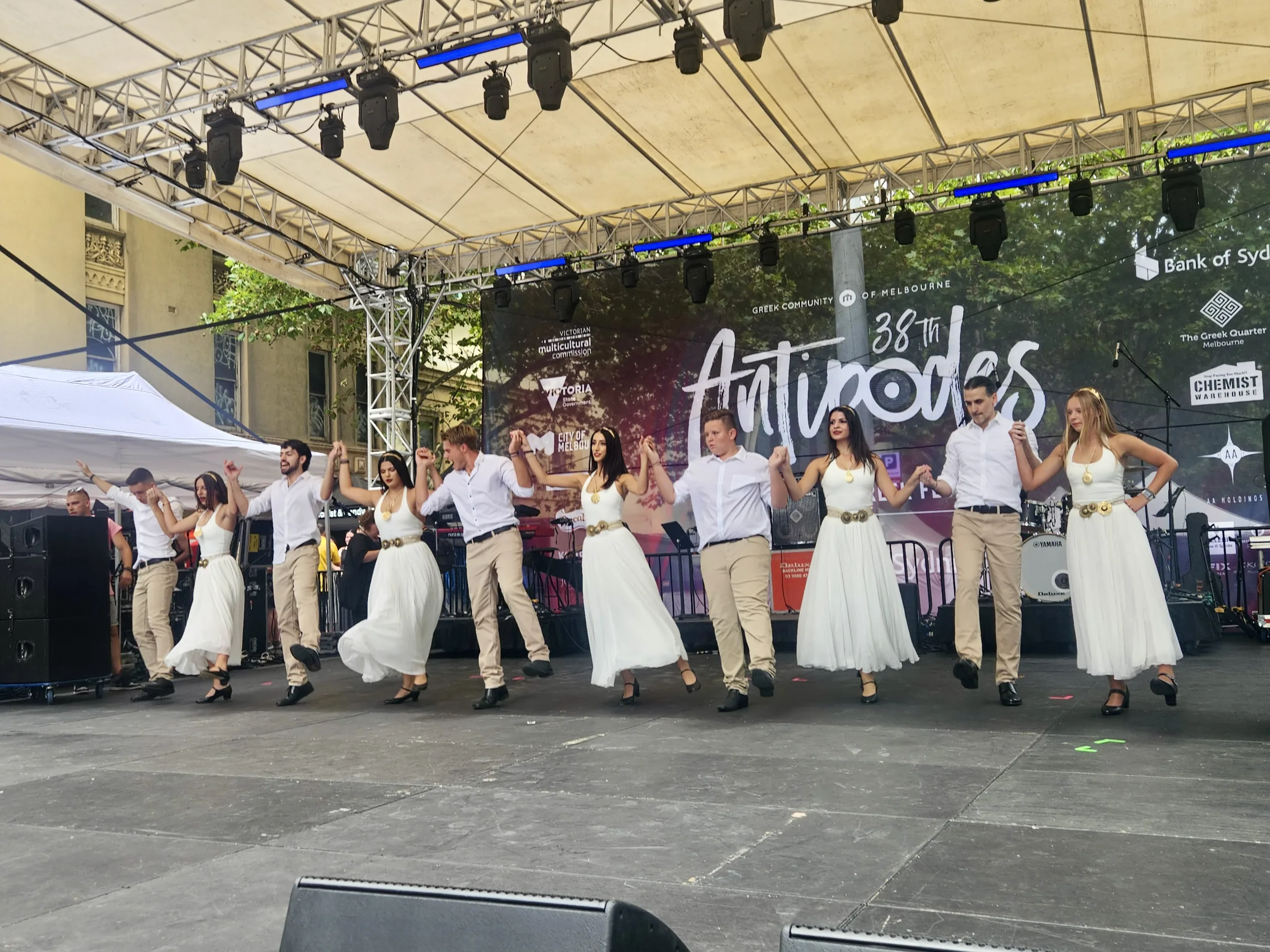

That spirit of endless movement echoed across the 48 traditional dance troupes who travelled from around Australia — in youth performances, in families cheering from the sidelines.
Love stories between the stalls
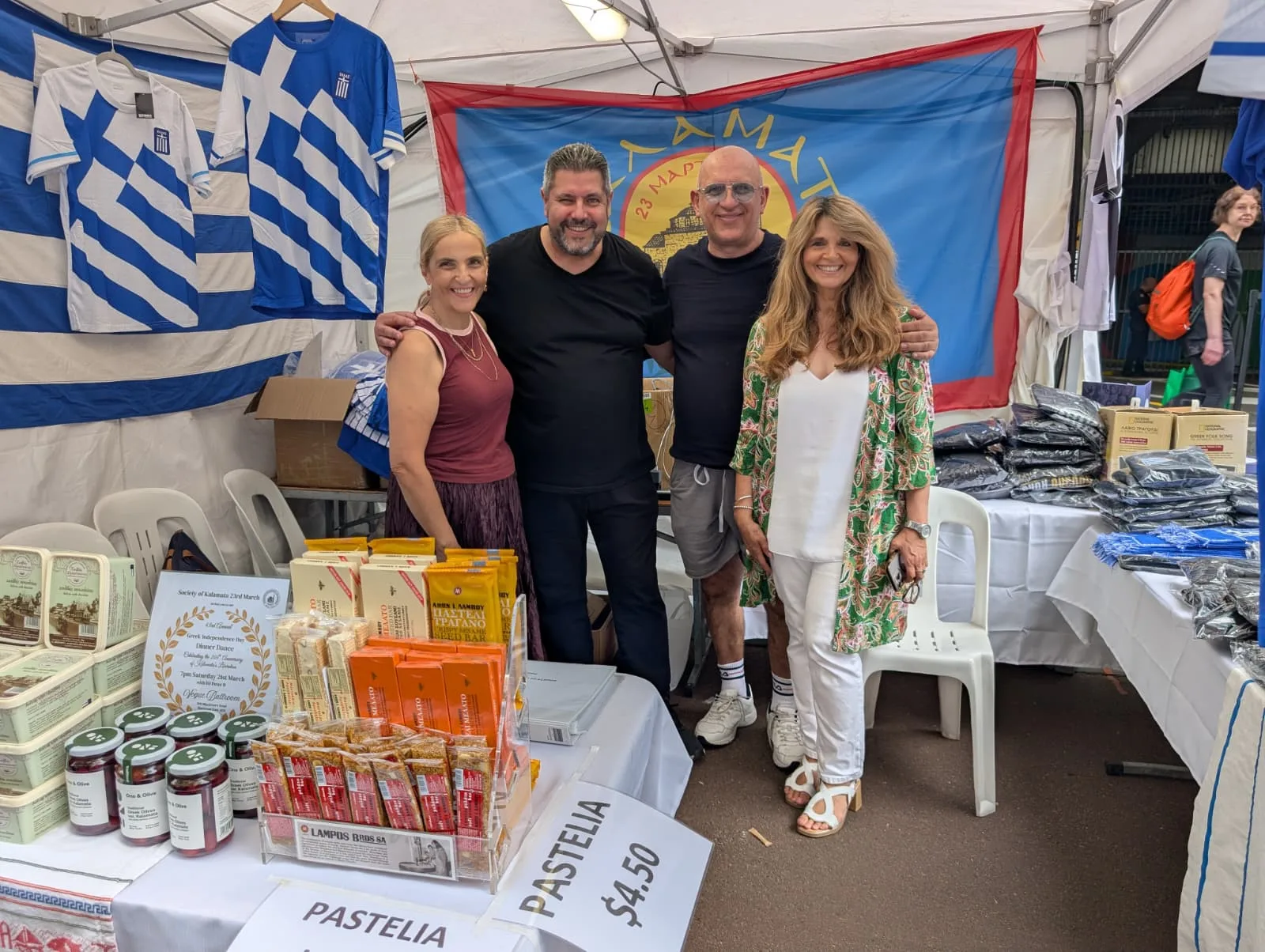
At the Society of Kalamata 23rd March stall, Zoe Kyriakopoulou laughed about her Irish husband’s transformation from Christopher to Christos.
“If you can’t marry Greek, bring them to the festival and see how they go,” Sophia Mandouka added.
Tony Mandoukos nodded. “Messinia Receptions. That’s how we met. The rest is history.”
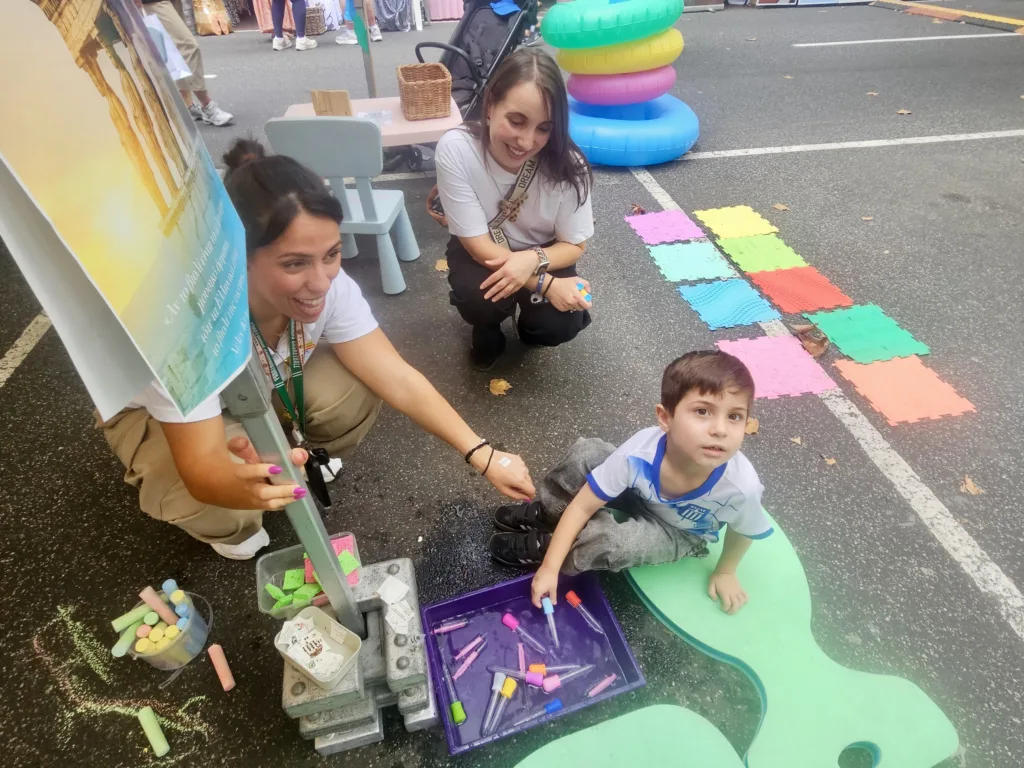
Love was evident too at Agapi Care, where each child spun for a prize and left clutching an oversized toy, all free.
“For us, the festival is more than exposure,” said CEO Mary Gakopoulos. “It’s a chance for our clients to volunteer, participate, really belong.”
Visibility builds trust
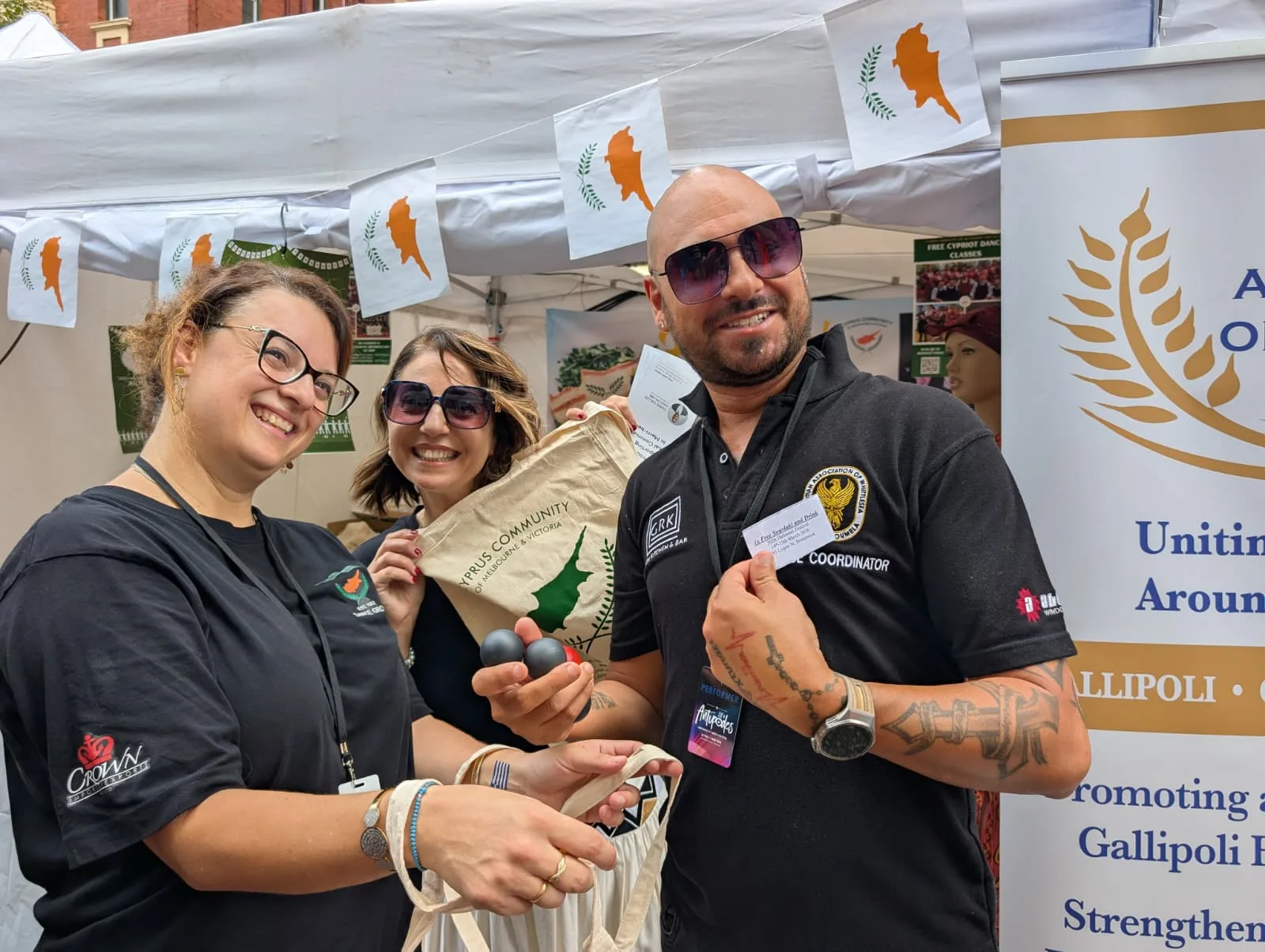
Next door, the Hellenic Victorian Police Association reinforced its focus on community connection.
“We’re doing all we can to remove barriers,” said Senior Sergeant Steve Spyrou.
“Everyone is welcome,” added recruitment HR representative Anastasia Kourvelos.
“Visibility builds trust,” they said.
Planting the seeds for language
But beyond exposure and economics lies a deeper question: can a festival strengthen the Greek language itself?
Dr Stavroula Nikoloudi, head of La Trobe University’s Greek Language Program, believes it can.
“What they do is create visibility. They celebrate the language publicly. They make people proud,” she said. “It’s about planting seeds.”
What stands out most to her is continuity. Students grow up. They return as teachers, colleagues, mentors.
“It reflects commitment not just to the language, but to community,” she said.
Continuity in motion
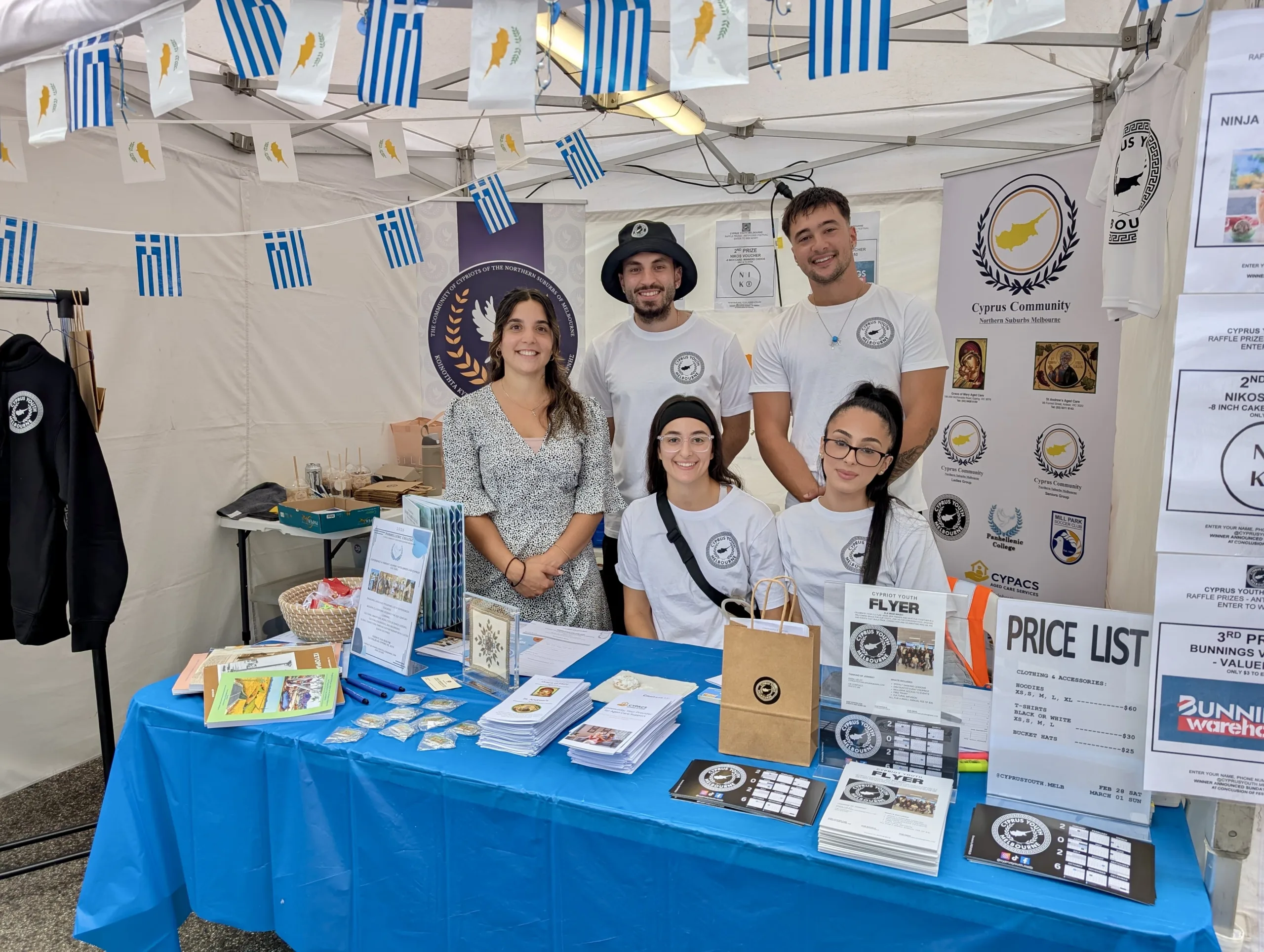
At the Cypriot Youth Group of the Northern Suburbs stall, members aged 13 to 28 promoted their growing presence.
“We started with a trip to the snow,” said President Harris Peyiotios. “Then tavern nights. A food and wine festival.”
Younger generations made it clear: Greek in Australia is not static. It evolves. And here, it is vibrantly alive.
You cannot see everything at Antipodes. You cannot attend every performance, visit every stall, taste every dish, hear every speech. You will miss something.
And yet, collectively, nothing is lost.
That is the paradox of Antipodes.
