Members and supporters of Sydney Olympic Football Club have formally moved to convene an Extraordinary General Meeting (EGM), citing concerns about governance, transparency and the club’s future direction at what they described as a critical juncture in the club’s history.
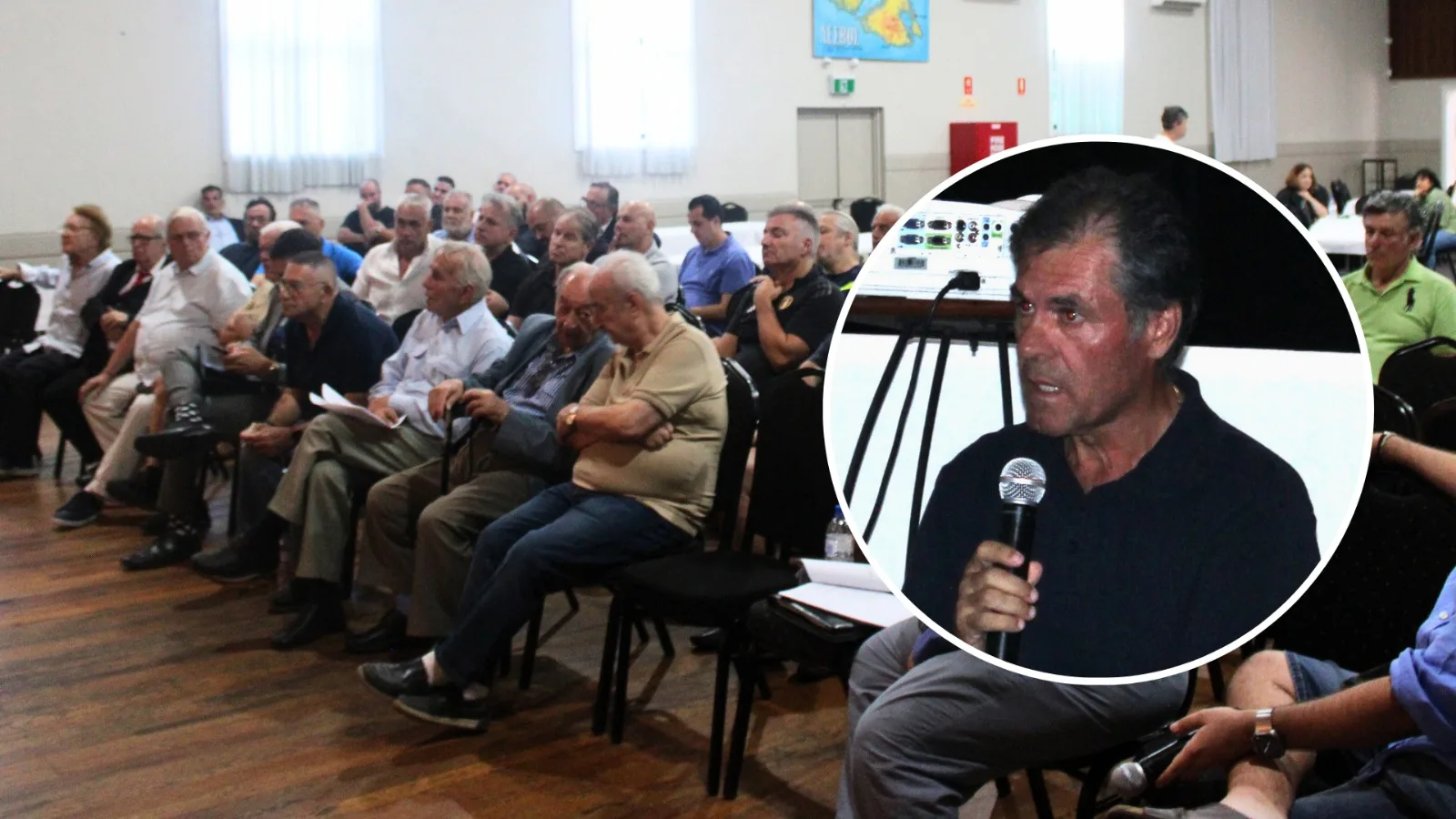
The initiative, organised by former international footballer Peter Katholos, culminated in a well-attended meeting held at the hall of the Mytilenian Brotherhood of Sydney and New South Wales on Wednesday, December 17.
The gathering brought together past players, former board members, long-standing supporters and ordinary members, many of whom spoke of their deep personal and cultural ties to the club.
Those in attendance agreed that Sydney Olympic is undergoing a period of transition and that clearer, more inclusive governance processes are required to ensure the club’s long-term sustainability. Participants described the discussion as open and constructive, with a shared emphasis on accountability, member participation and respect for the club’s historical and community foundations.
The meeting took place in the context of recent leadership changes, including the resignation of long-time director and benefactor Damon Hanlin. While no allegations were made, several members said the development had heightened uncertainty around the club’s governance structures, decision-making processes and medium-term direction, reinforcing calls for greater clarity and formal engagement with the membership.

During the meeting, members outlined a range of issues and questions they believe warrant consideration at a general meeting. These included concerns about transparency and accountability, the size and composition of the Board, and the degree to which members are informed and consulted on key decisions affecting the club.
Several attendees said they had sought access to financial information and the club’s updated constitution, which they claimed had not been made available to them. Members stressed they were seeking information rather than making allegations, and argued that access to such documents was fundamental to informed participation in a member-based organisation.
Members say they are seeking clarity about a deed approved in or around 2022, including what obligations it created, how it affected governance and financial arrangements, and whether its implications were fully explained to members at the time. Attendees emphasised they were not alleging wrongdoing, but said clearer communication and disclosure would help rebuild confidence and ensure decisions are properly understood and supported.
In relation to the club’s finances, they said they were seeking clarity around the club’s overall financial position and governance arrangements, including the existence and nature of any loans, securities, guarantees or debts, how bank accounts are structured, and who holds responsibility for financial control and oversight within the organisation. Several speakers noted that understanding these matters was essential before members could meaningfully consider governance reform or board participation.
Some attendees also highlighted the legal responsibilities associated with directorships, noting that clarity around financial and governance structures was important for anyone considering standing for the Board, given directors’ fiduciary duties and potential personal liability under Australian law.
A recurring theme throughout the discussion was concern about the club’s identity and connection to the Greek Australian community that founded and sustained Sydney Olympic for decades. Members spoke of declining match-day attendance, limited community engagement and a perceived disconnect between youth programs and the senior team, arguing that revitalising these links was central to the club’s future.
Concerns were also expressed about the absence of a clearly articulated long-term strategy, alignment between football development pathways and senior performance, and on-field results in recent seasons. Participants said these issues underscored the importance of broader member involvement in shaping the club’s vision and direction.
An official members’ request to convene an Extraordinary General Meeting was presented and read aloud during the gathering. The document was unanimously supported by those present and subsequently signed by registered members in attendance.
The request, addressed to the Board of Directors of Sydney Olympic Football Club Ltd, cites Section 249D of the Corporations Act 2001, which allows members holding at least five per cent of voting rights to require directors to call a general meeting.
According to the document, the proposed EGM would consider the election of additional board members, provide a forum to discuss the club’s vision, strategy and future direction, and address other matters arising within the scheduled two-hour meeting.
Members have requested that the Board announce the EGM within 21 days of receiving the request, with the meeting to be held within two months, in accordance with legislative requirements. The document also seeks formal confirmation of receipt and notification of the proposed date, time and venue.
Several attendees emphasised that the initiative was not intended to be adversarial, but rather a mechanism to restore confidence, improve transparency and ensure Sydney Olympic’s governance reflects the collective interests of its members and broader community.
Looking ahead, members expressed hope that the process would help lay the foundations for a stronger and more unified club, with some pointing to models such as South Melbourne FC as examples of how clear governance, community engagement and football ambition can work together to deliver sustained success.
The signed request is expected to be formally submitted to the Board in the coming days.
The Greek Herald has contacted Sydney Olympic FC President Chris Haralambous for comment.
