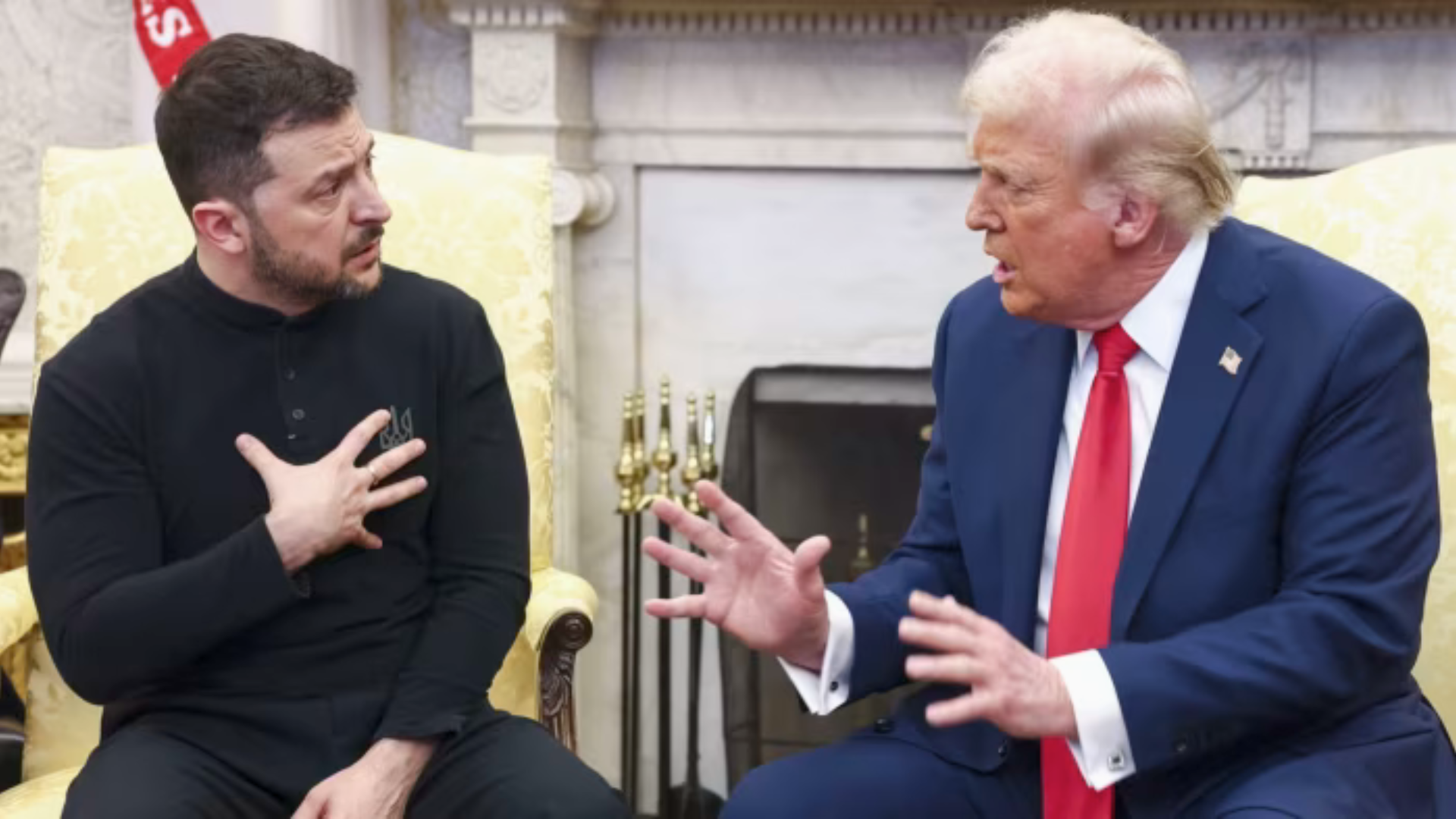
Ukrainian President Volodymyr Zelenskyy extended an olive branch to US President Donald Trump following a tense exchange during their meeting last week in the White House.
Describing the meeting as “regrettable,” Zelenskyy addressed the strained talks and called for cooperation under Trump’s leadership.
The exchange, which included heated criticism from both sides, centered around discussions about a potential peace deal with Russia.
The incident occurred in front of reporters and senior government officials, and led to Trump announcing on Tuesday, March 4, that he would pause all aid to Ukraine, which has been engaged in a conflict with Russia for over three years.
In a post on social media, Zelenskyy stated, “Our meeting in Washington, at the White House on Friday, did not go the way it was supposed to be,” and emphasised his desire to “make things right” and work with Trump.
He also expressed Ukraine’s readiness to sign a minerals deal proposed by the Trump administration and affirmed the country’s appreciation for US assistance in maintaining Ukraine’s sovereignty.
Zelenskyy continued, “Ukraine is ready to come to the negotiating table as soon as possible to bring lasting peace closer.”
He reiterated that “nobody wants peace more than Ukrainians,” and expressed his team’s readiness to work under Trump’s leadership to achieve peace.
I would like to reiterate Ukraine’s commitment to peace.
— Volodymyr Zelenskyy / Володимир Зеленський (@ZelenskyyUa) March 4, 2025
None of us wants an endless war. Ukraine is ready to come to the negotiating table as soon as possible to bring lasting peace closer. Nobody wants peace more than Ukrainians. My team and I stand ready to work under…
The US has been a significant military and aid donor to Ukraine since Russia’s full-scale invasion in February 2022.
However, relations between Zelenskyy and Trump have soured recently, especially after Trump returned to the White House.
The US president has been outspoken in his criticism of Zelenskyy, even calling him a “dictator” and repeating Kremlin-backed claims about Ukraine’s role in the war.
Trump’s approach to foreign policy has also shifted, with warmer relations developing between him and Russian President Vladimir Putin.
European leaders have voiced concern about this change, especially as Russia continues its aggression against Ukraine.
In response, European Commission President Ursula von der Leyen announced plans to significantly increase Europe’s military spending, proposing a €150 billion ($254 billion) borrowing plan to enhance defence capabilities.
The plan is part of a broader effort to boost Europe’s rearmament in the face of growing concerns over US disengagement.
Source: ABC News.
