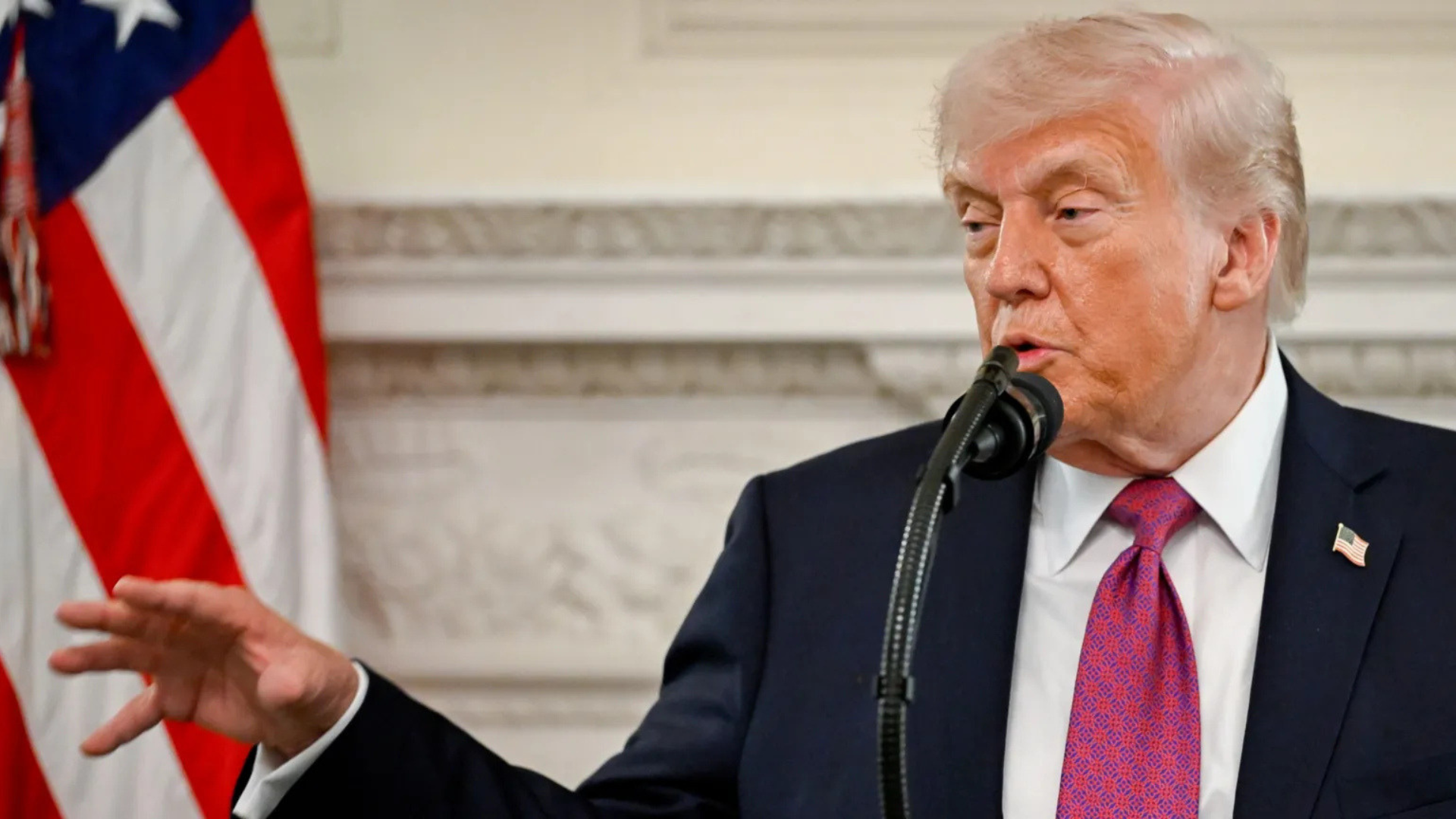
President Donald Trump has held talks with US oil executives on the potential continuation of a months-long blockade of Iran, while urging Tehran to strike a deal as negotiations remain deadlocked.
The White House said Trump met industry leaders to discuss “the steps President Trump has taken to alleviate global oil markets and steps we could take to continue the current blockade for months if needed and minimise impact on American consumers.”
The discussions come as Washington seeks to restrict Iran’s oil exports through a naval blockade aimed at forcing it to reopen the Strait of Hormuz.
Trump also renewed pressure on Tehran, warning it should “get smart soon” and agree to a deal, adding in a social media post: “They don’t know how to sign a non-nuclear deal. They’d better get smart soon!”
Efforts to resolve the conflict have stalled, with mediator Pakistan attempting to prevent escalation while both sides exchange messages. A Pakistani source said Iran had requested time until the end of the week to respond to US “observations” on its latest proposal.
Oil markets reacted sharply, with prices rising more than 6% amid fears of prolonged disruption. A senior Pentagon official said the conflict has already cost the US military $25 billion.
Tehran has warned of “unprecedented military action” if the blockade continues and has pledged to disrupt shipping through the strait while under threat. Iranian officials maintain their nuclear ambitions are peaceful, while the US insists Iran must not obtain nuclear weapons.
Iran’s parliament speaker Mohammad Baqer Qalibaf accused Trump of trying to divide the country, saying: “The solution for confronting the enemy’s new conspiracy is only one thing: maintaining unity, which has been the bane of all the enemy’s conspiracies.”
The conflict has taken a heavy toll inside Iran, with the currency falling to a record low and inflation reaching 65.8% for the month to April 20. The United Nations also reported at least 21 executions and more than 4,000 arrests on national security-related charges since the war began.
Iran has proposed delaying nuclear negotiations until the conflict formally ends and shipping routes are restored, a position that does not meet US demands to address the nuclear issue upfront.
