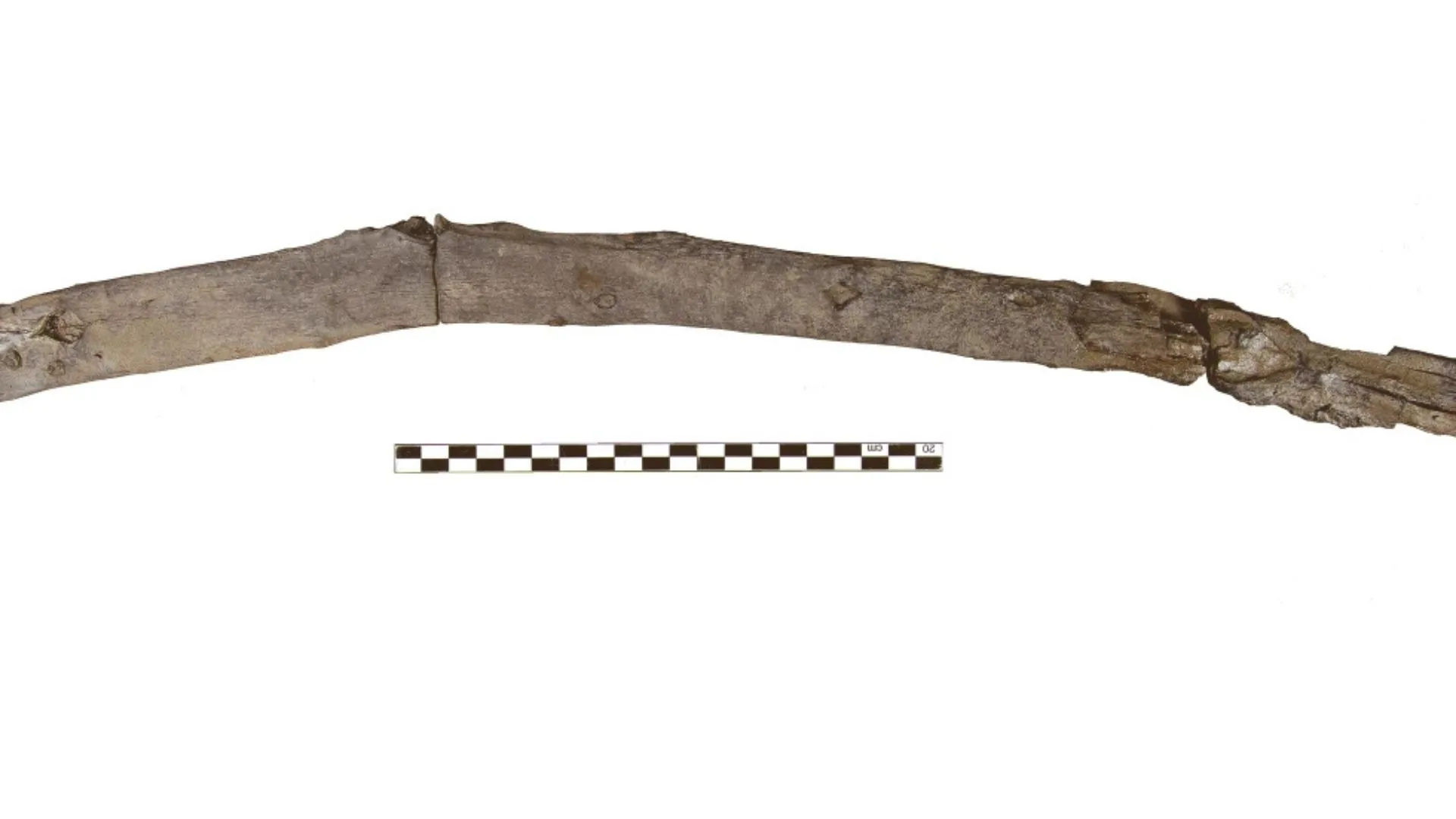
Scientists have recovered what are believed to be the oldest wooden tools ever found, dating back about 430,000 years, from a lakeshore site in the Megalopolis basin of southern Greece. The discovery offers rare insight into early human technology, where wooden implements are seldom preserved, according to apnews.com.
The two artifacts include a slender wooden stick roughly 80 centimetres long, thought to have been used for digging in soft, muddy ground, and a smaller handheld piece made of willow or poplar wood. Researchers suggest the latter may have been used in the shaping of stone tools. The findings were published in the Proceedings of the National Academy of Sciences.
While ancient humans are known to have relied on tools made of stone, bone and wood, wooden objects rarely survive because they decay quickly. Preservation is usually possible only in exceptional conditions such as waterlogged sites, caves or ice. In this case, scientists believe the tools were rapidly buried by sediment and preserved in a wet environment.
Although the wooden tools were not directly dated, other material from the site – including stone tools and cut-marked elephant bones – indicates an age of approximately 430,000 years.
No human remains have yet been found, leaving uncertainty over who made or used the tools. Possible users include Neanderthals or other early human ancestors.
Researchers say the discovery highlights a lesser-known aspect of early human technology and suggests more important finds may still lie hidden at the site, waiting to be uncovered.
Source: apnews.com
