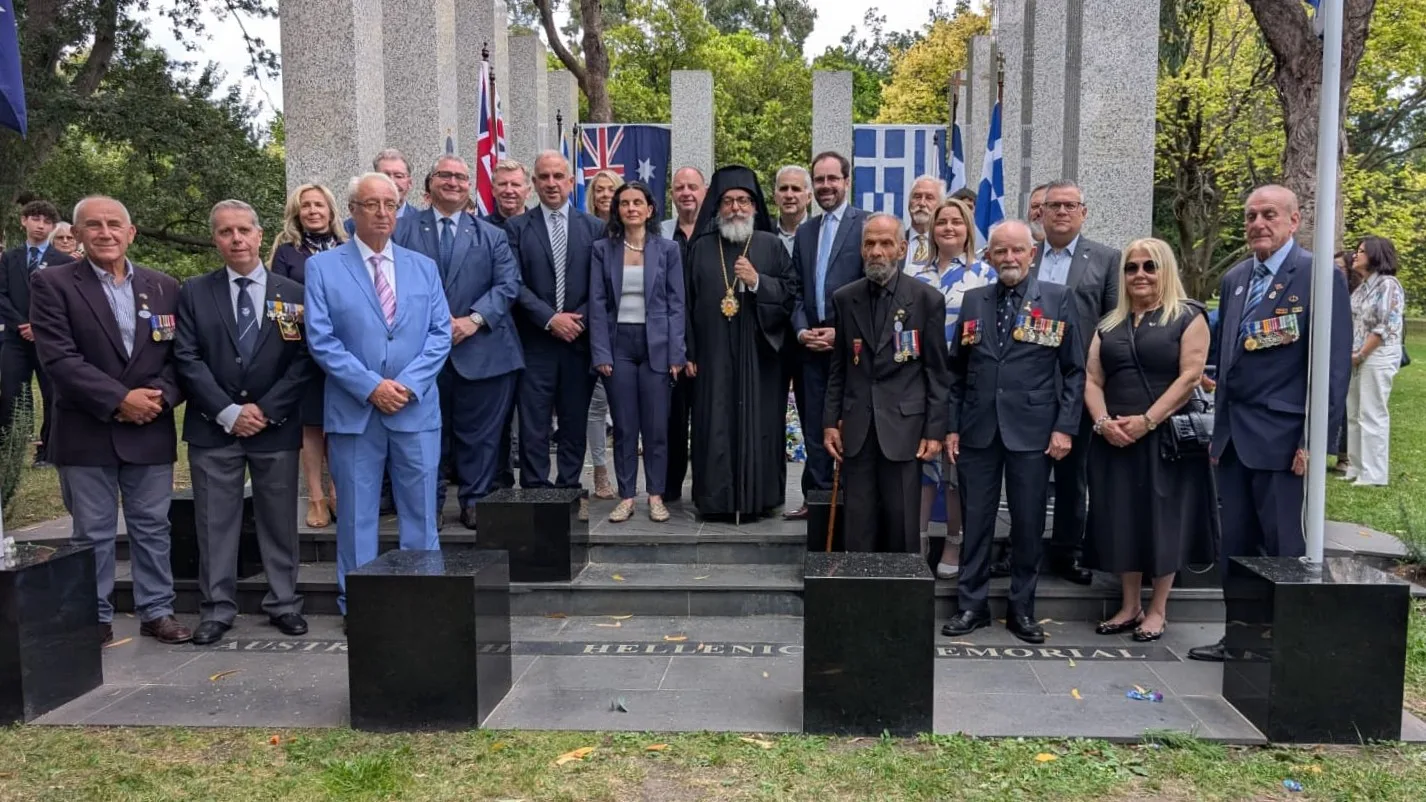
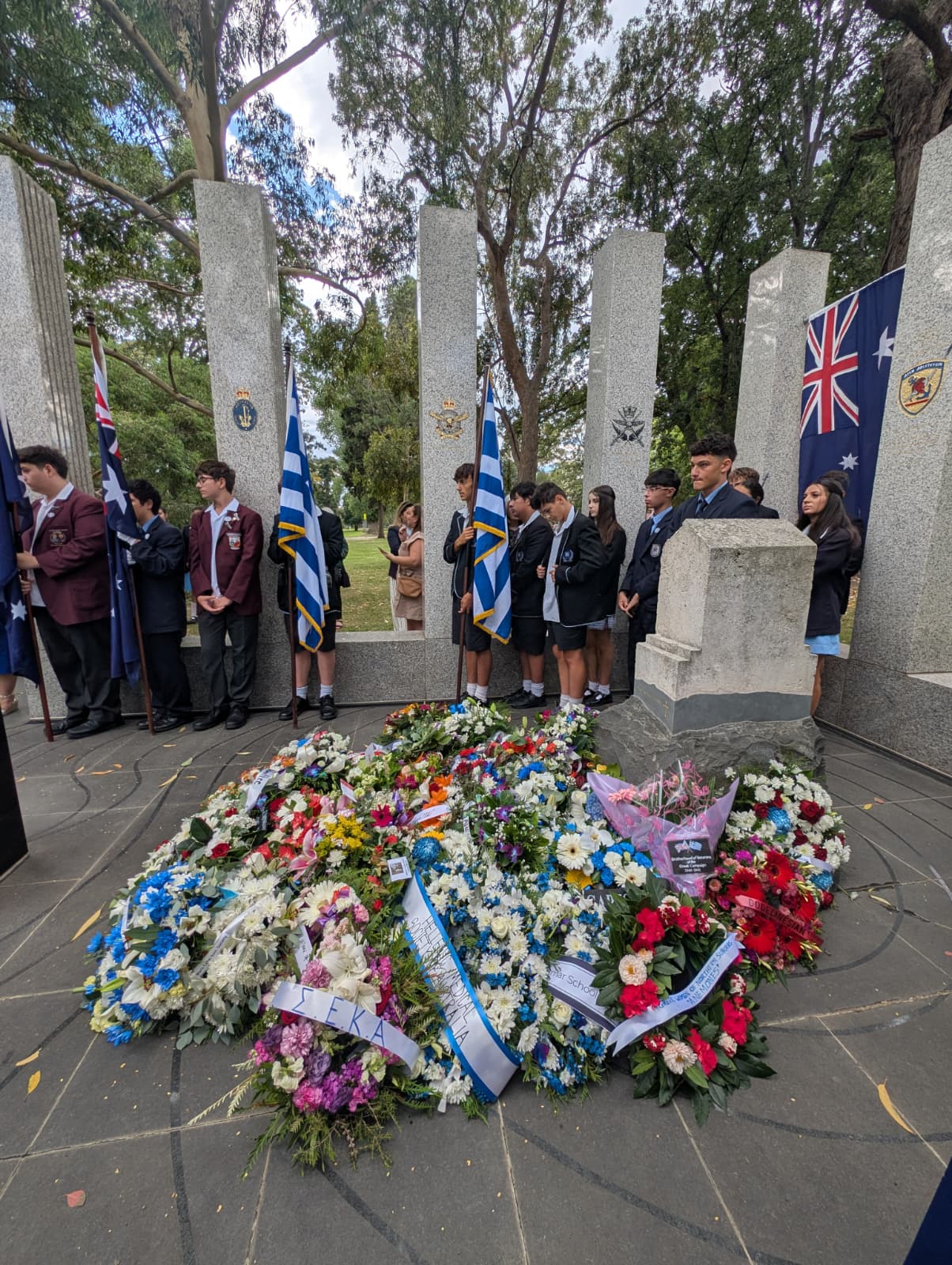
The world feels increasingly volatile: pandemic echoes, conflict in Ukraine, and a Middle East on edge. Yet, on March 25th in Melbourne, one thing remains immovable. Each year, the Australian Hellenic Memorial is draped in blue and white, wreaths laid with quiet, unwavering precision.
The program moves with military rhythm. Starting with a 9:30 am service at Saint Efstathios, the day progresses to the memorial before a strict 1:00 pm arrival at the Shrine of Remembrance.
“No delays. No ‘Greek time.’ It has to work like clockwork,” says Hellenic RSL President Manny Karvelas. “At the Shrine, when they say they are shutting the door at 1pm, they shut the door.”
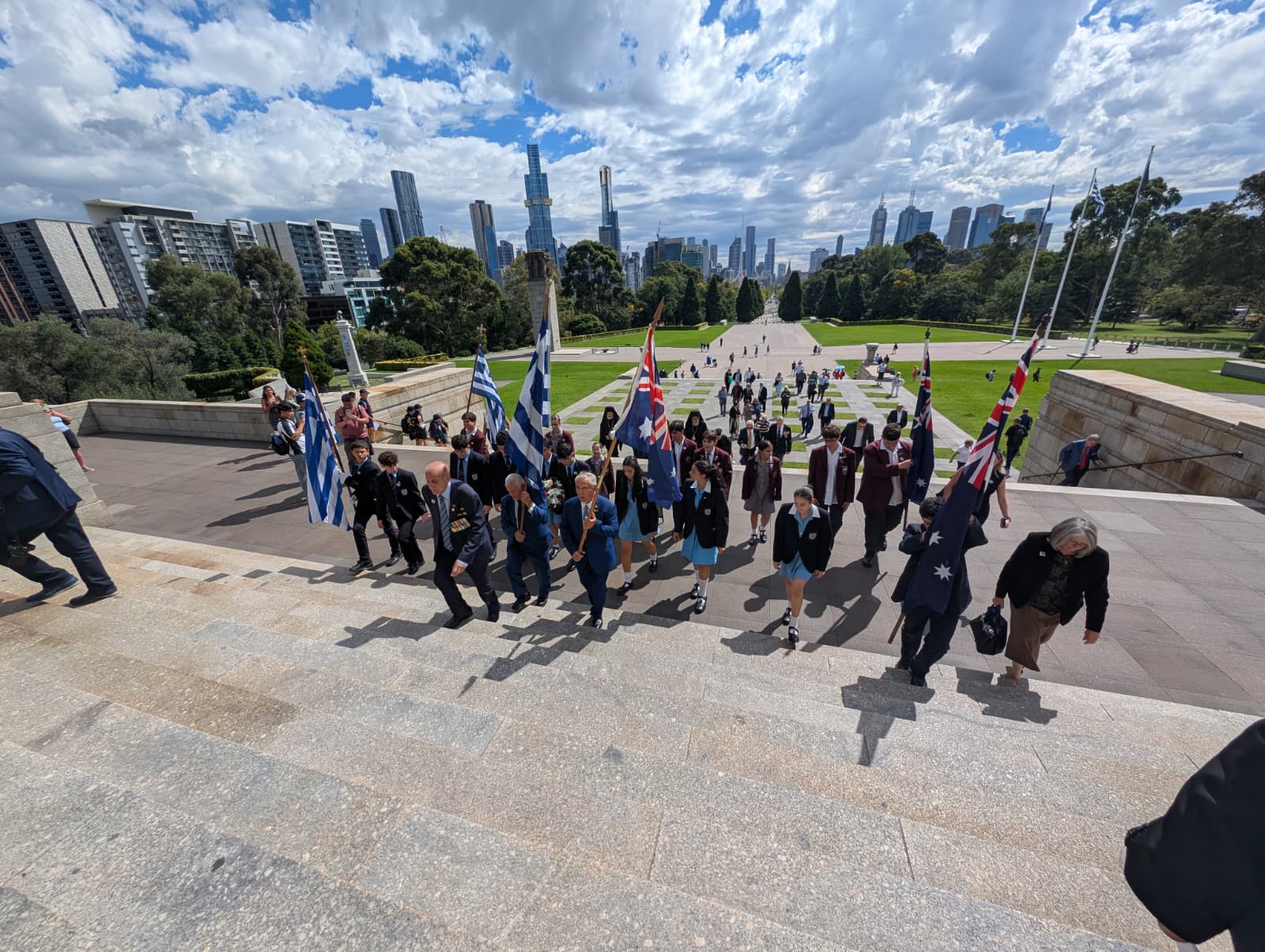
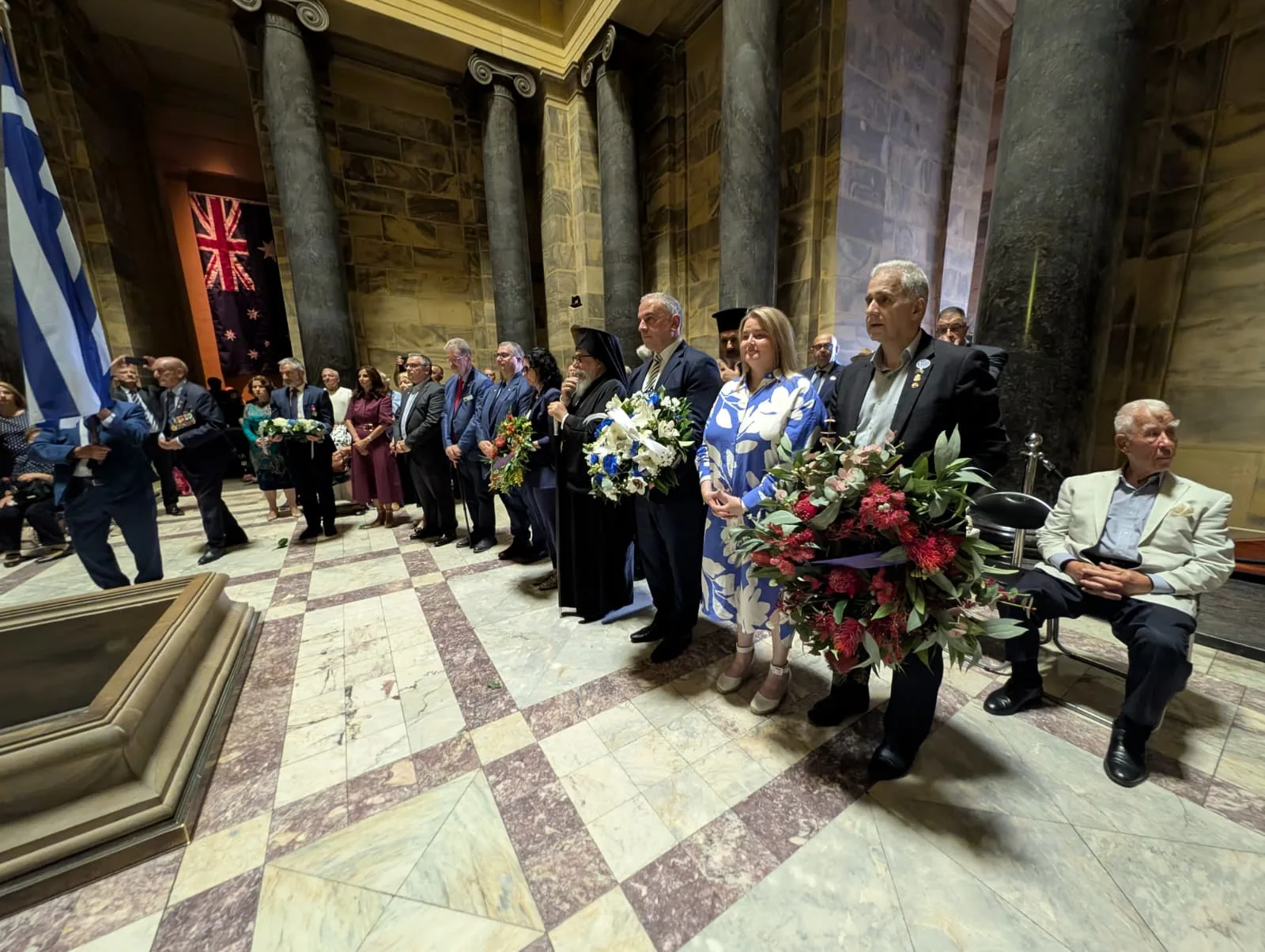
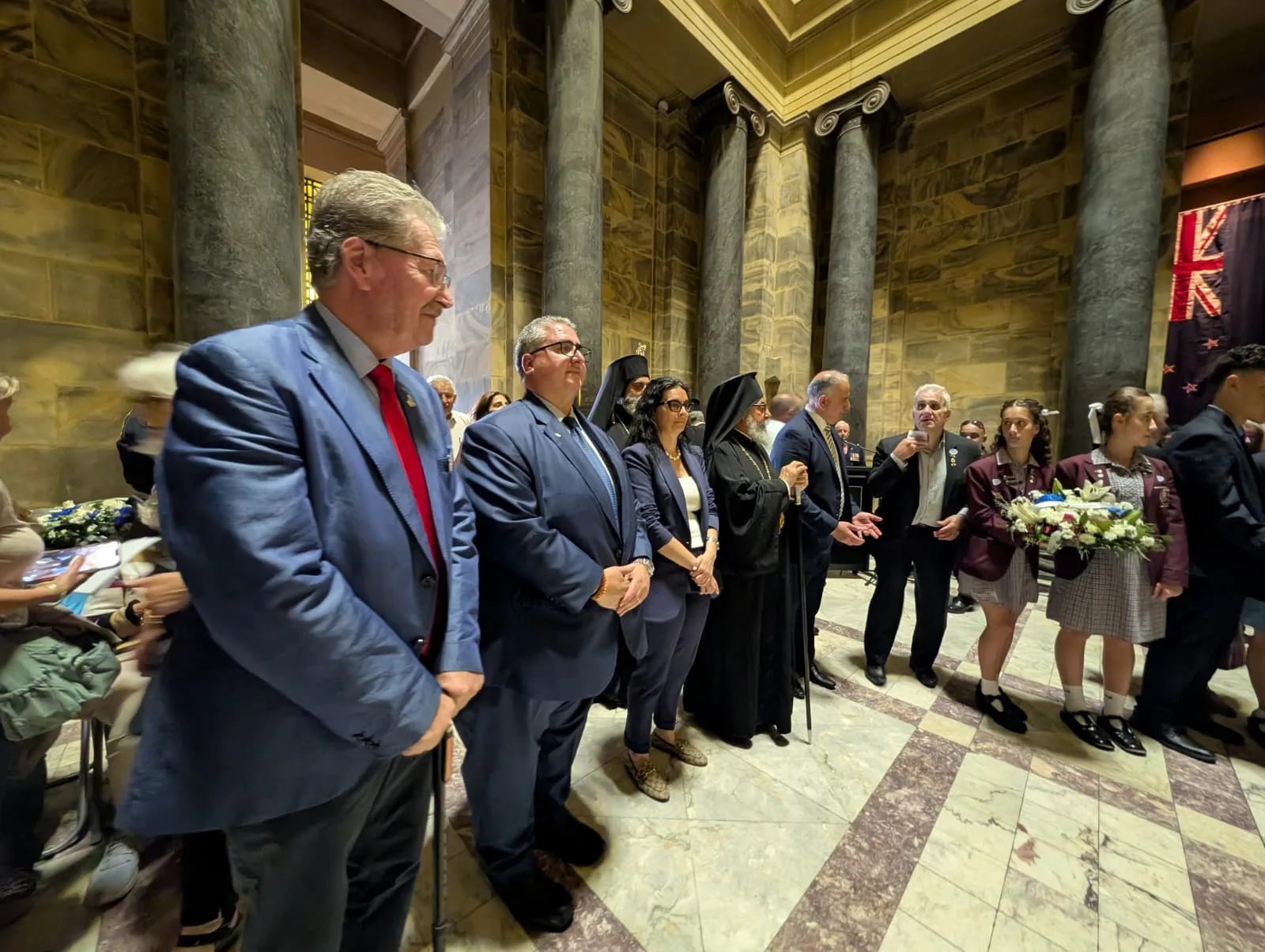
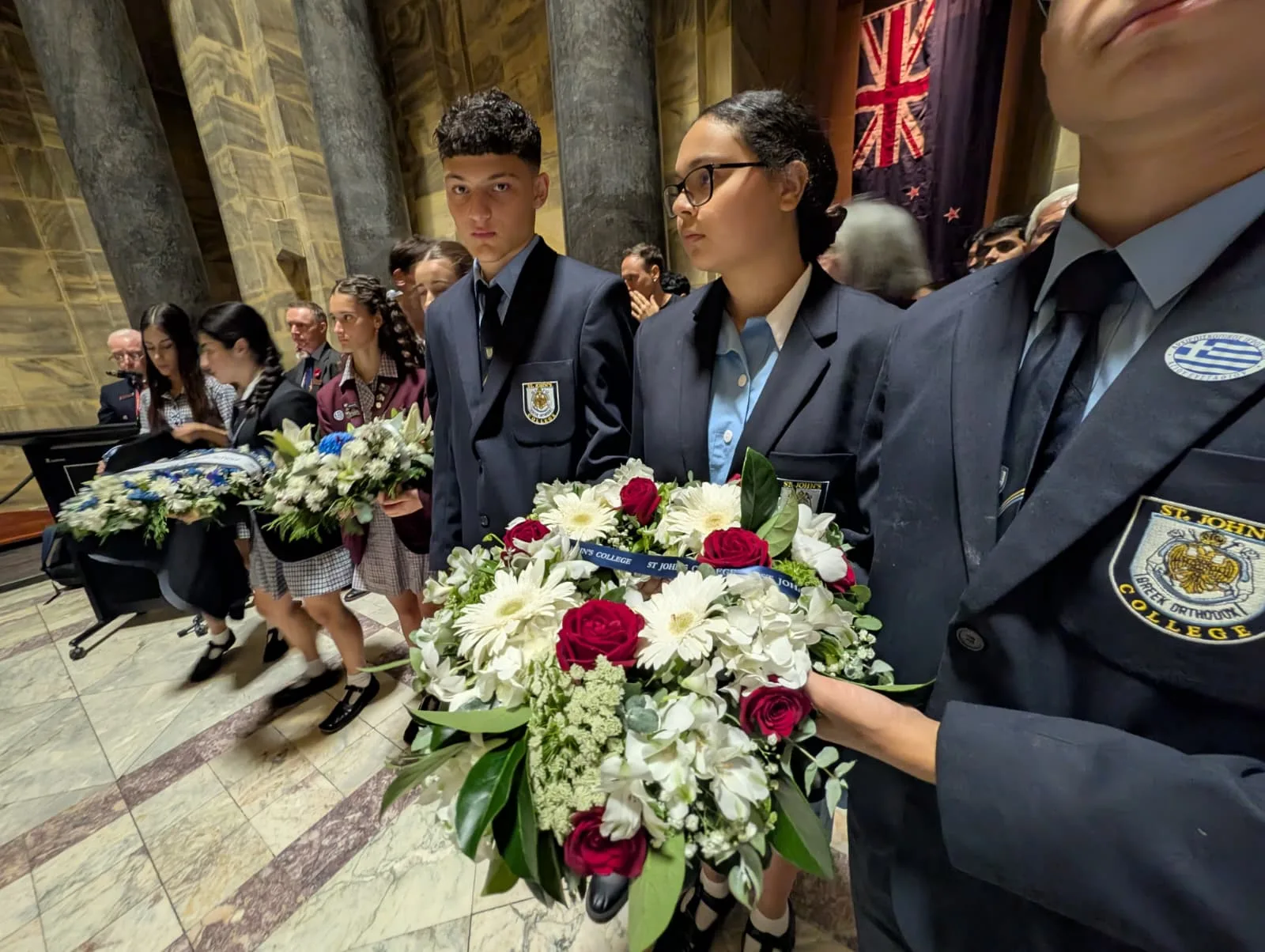
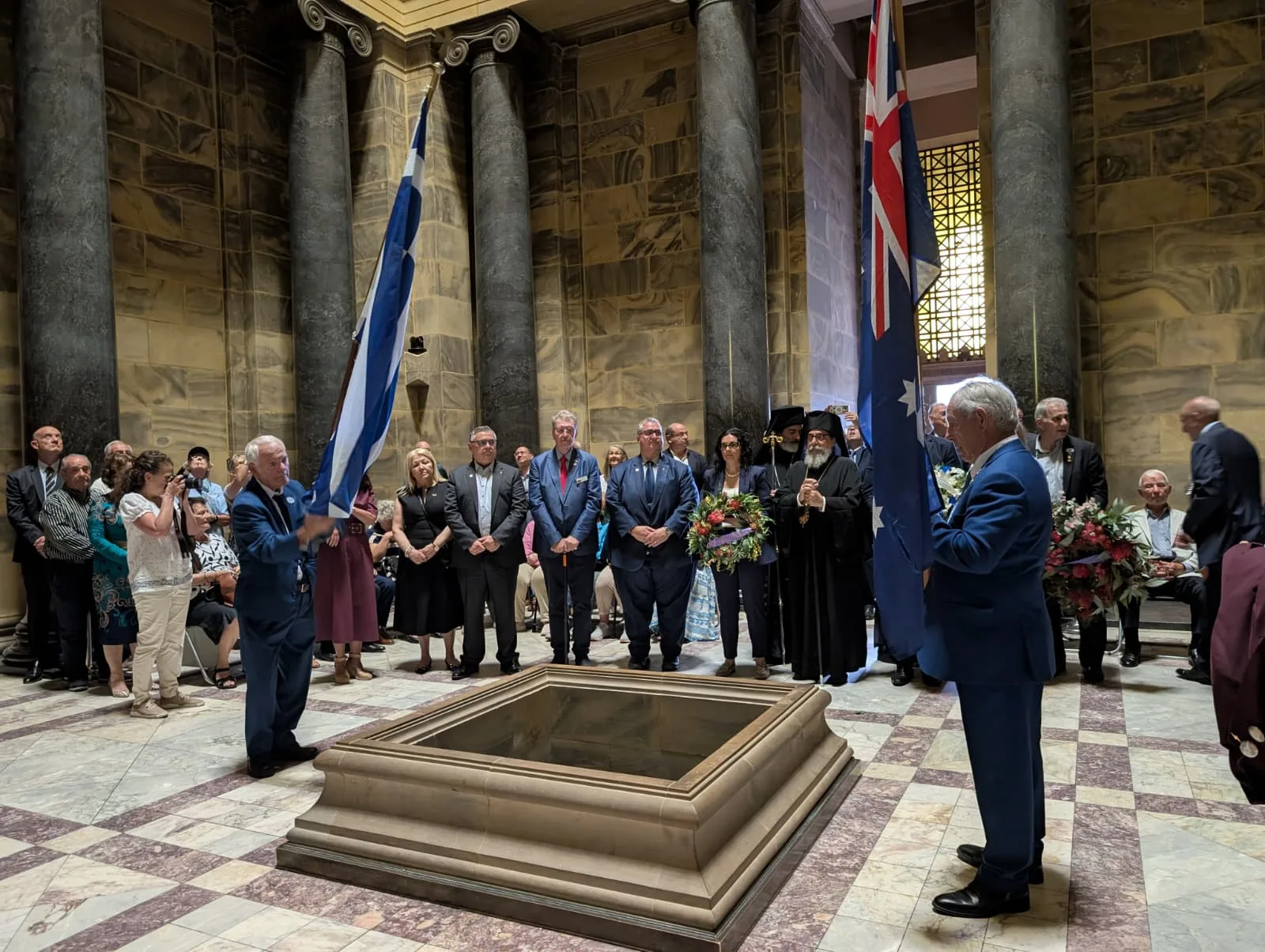
Behind that precision is the Hellenic RSL, the steady engine of this commemoration for decades. This year, 43 wreaths were laid by a cross-section of society: parliamentarians like Consumer Affairs Minister Nick Staikos and Lee Tarlamis MP, Mayor Jim Grivas, veterans like Aron Segal and Michael Fallon of the 2/2 Field Regiment Association. Students from St John’s College, Alphington Grammar, and Oakleigh Grammar, at the other end of the age spectrum, bridged generations in a single act of remembrance.
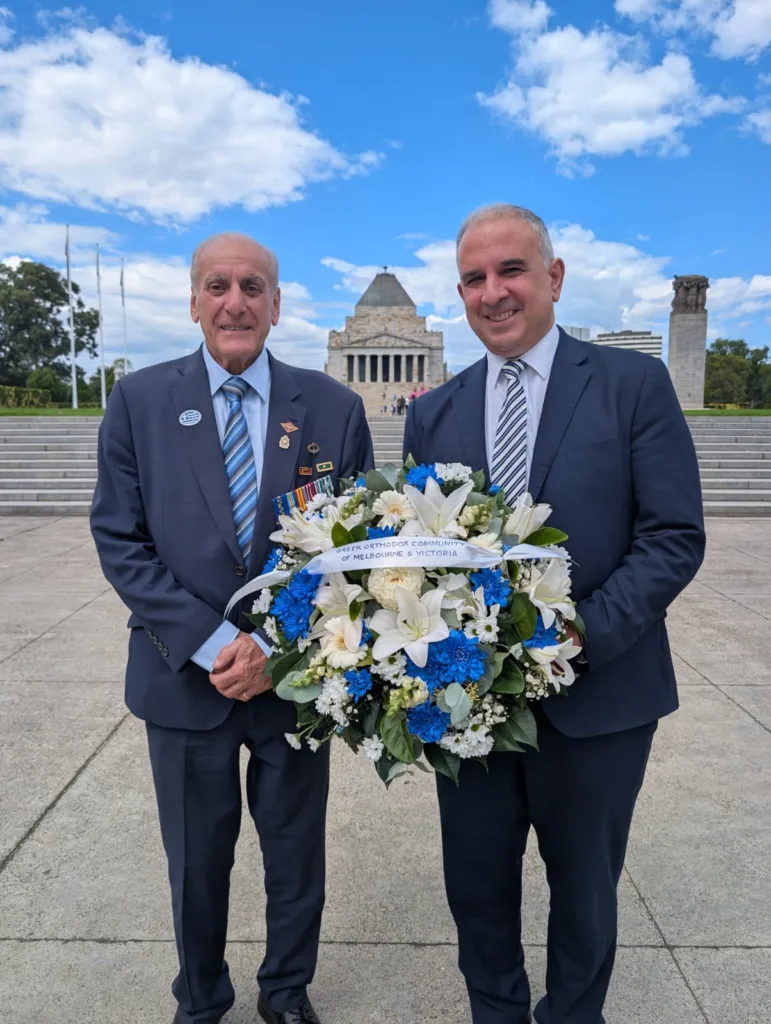
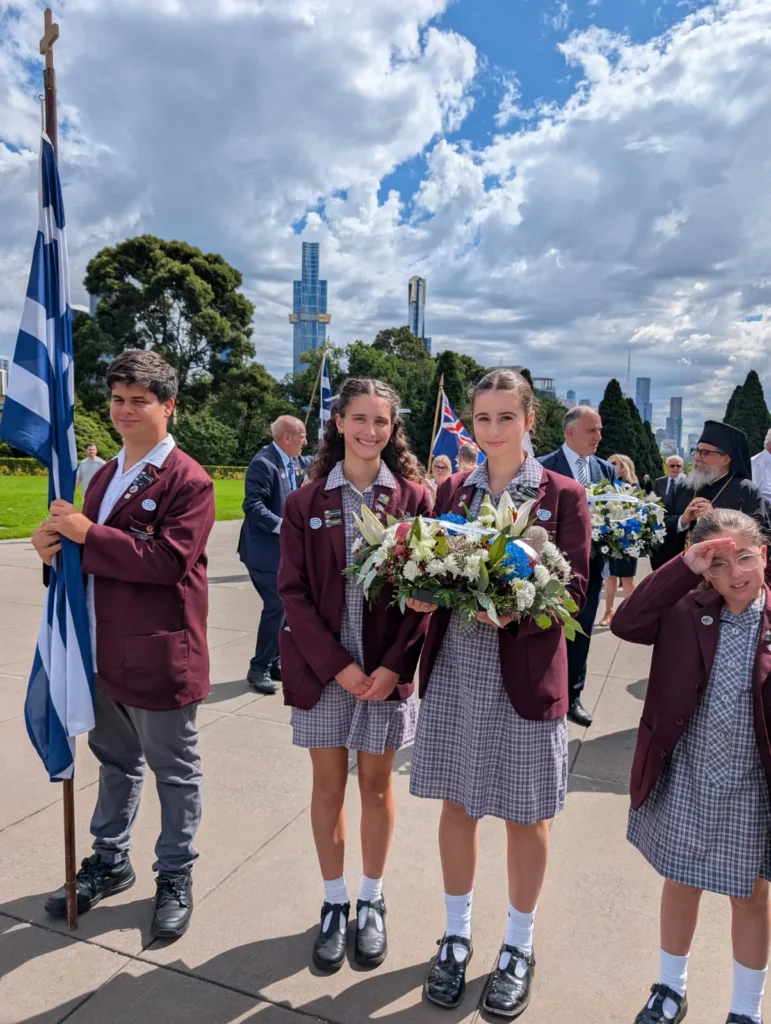
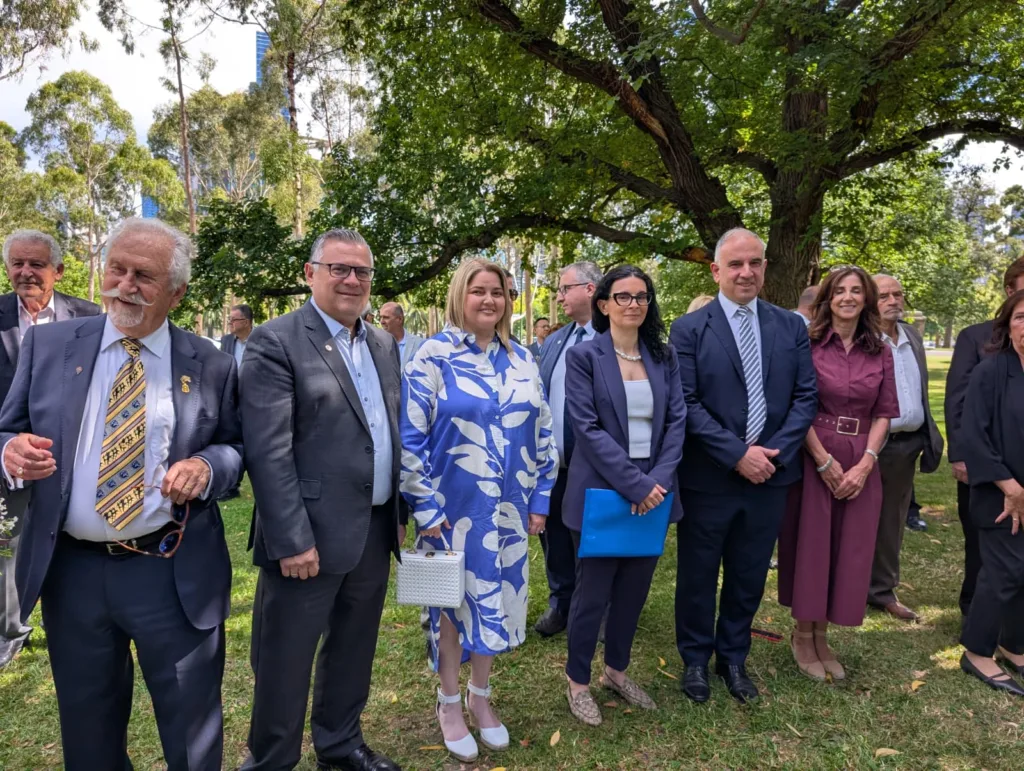
At the Shrine, passersby paused to ask what was being commemorated. The answer is Greek Independence, but in the diaspora, the meaning is deeper. It is about the responsibility to sustain language and culture while respectfully belonging to a country built on the world’s oldest living cultures.
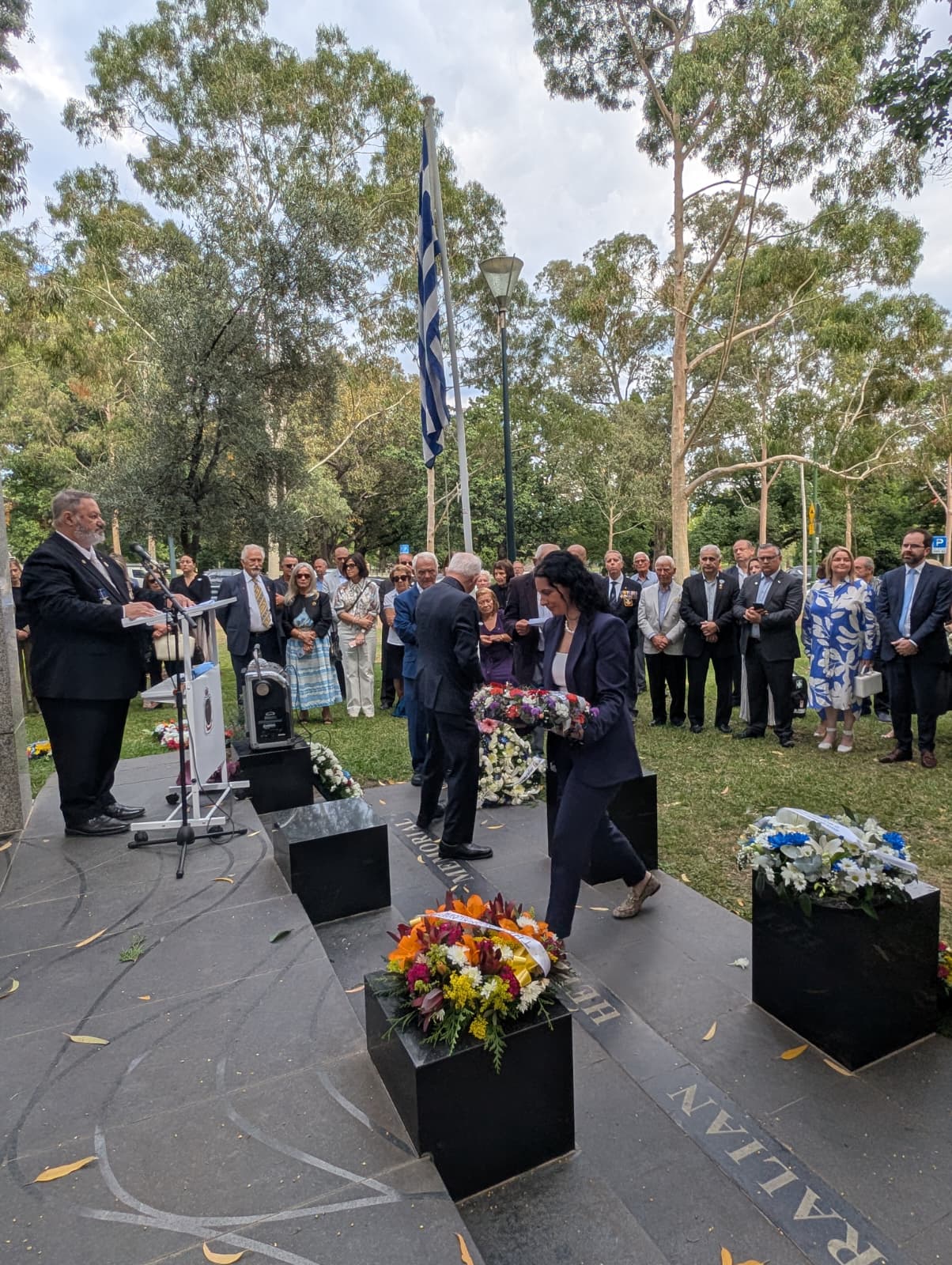
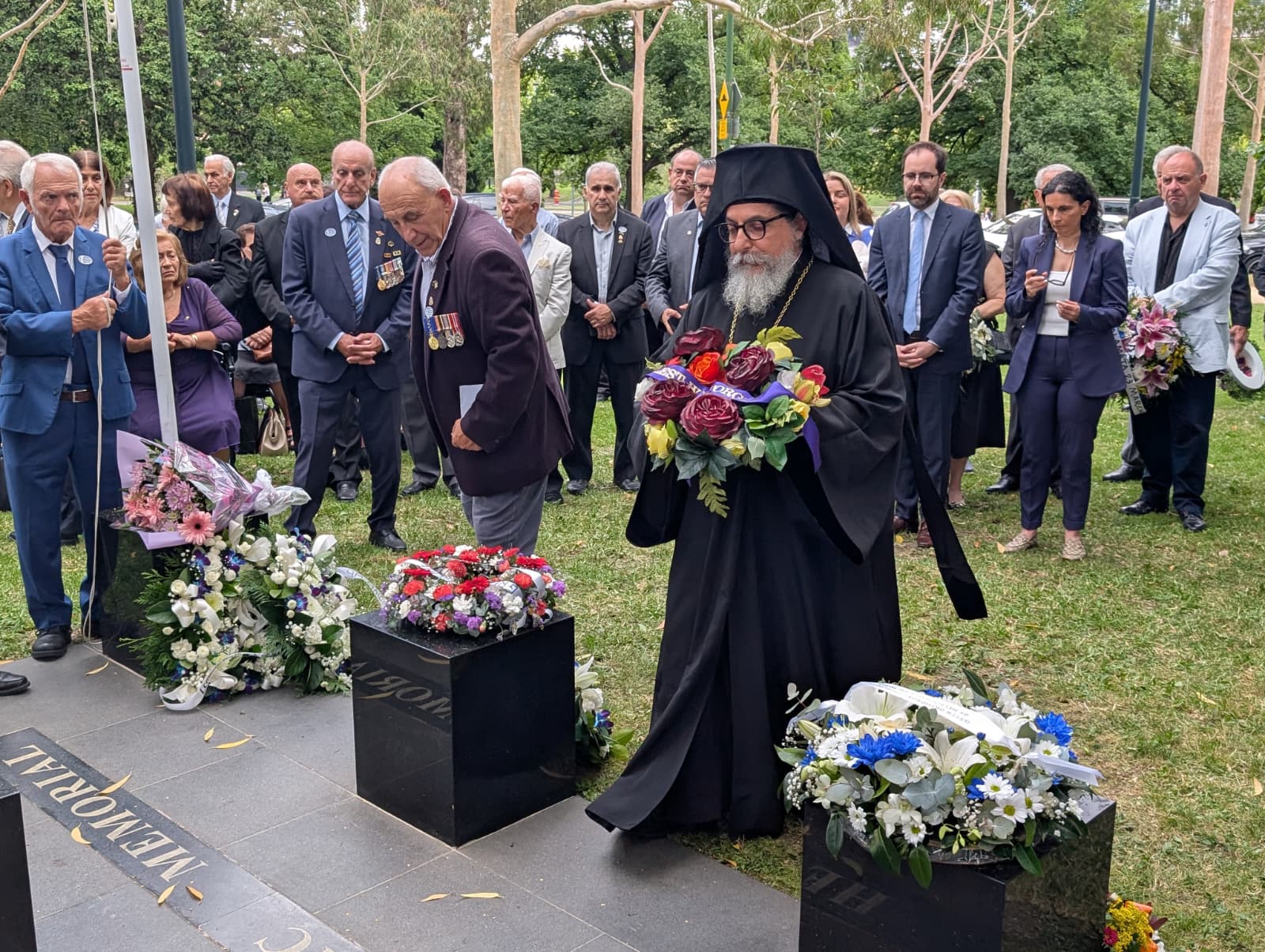
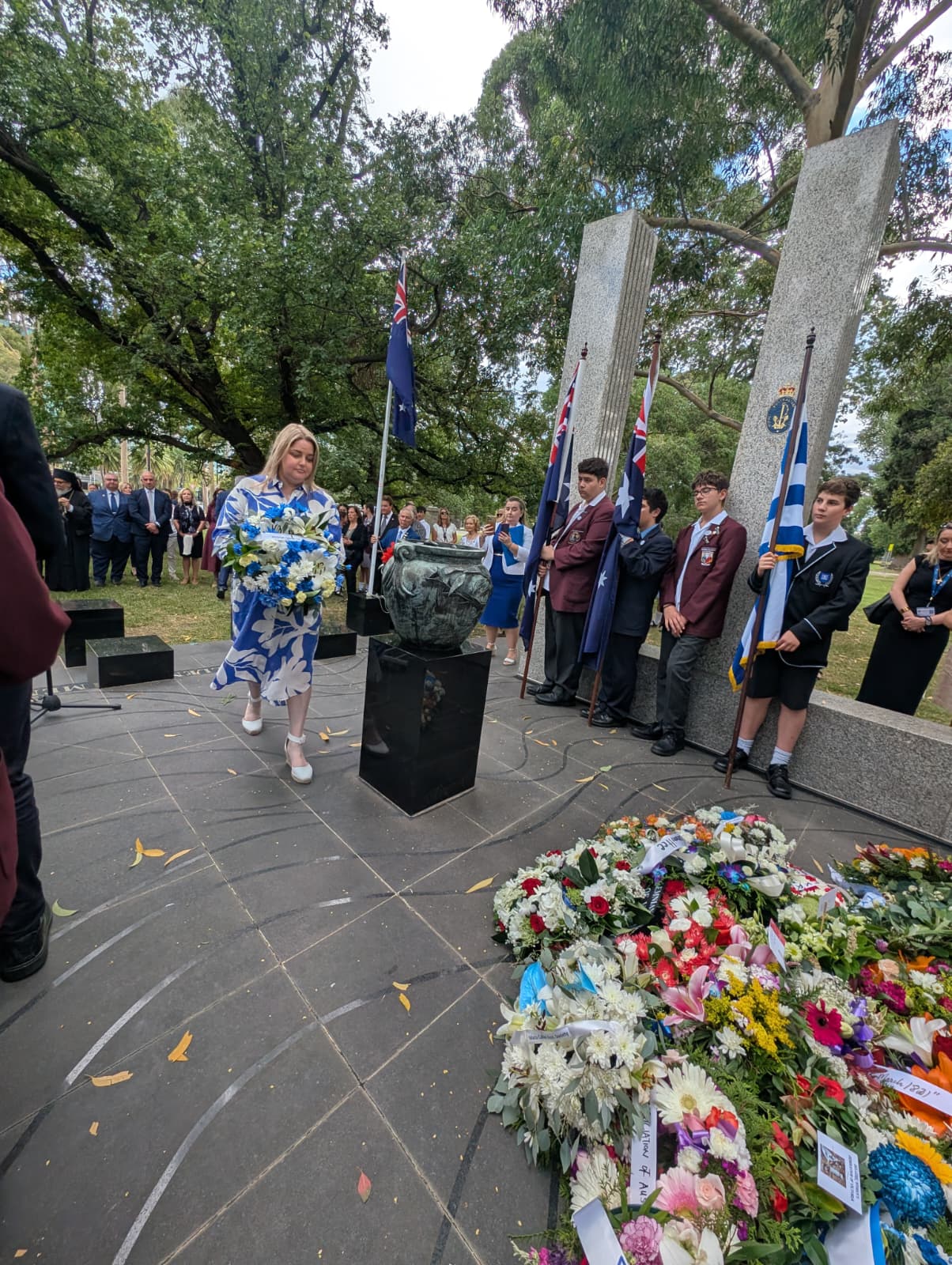
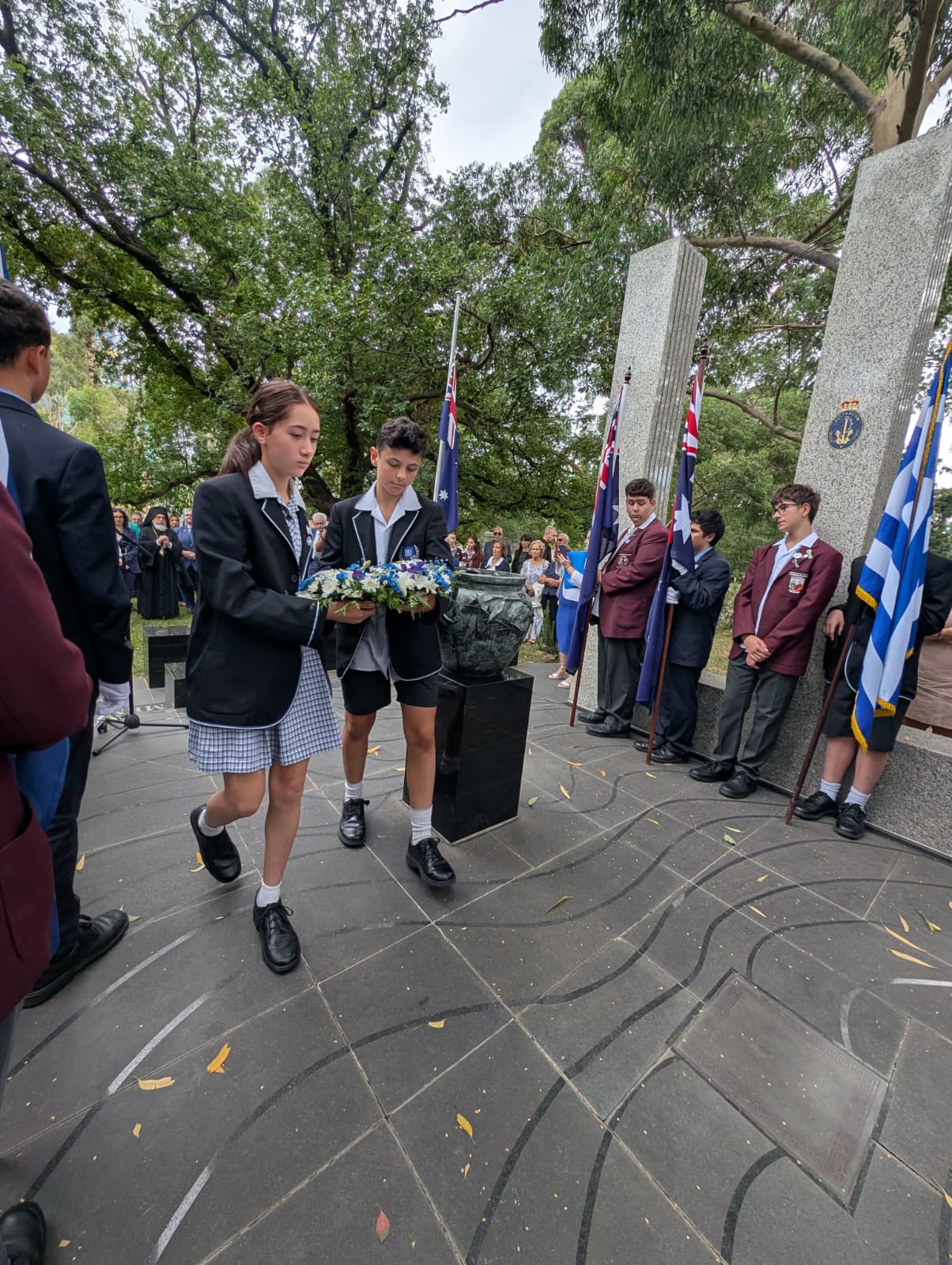
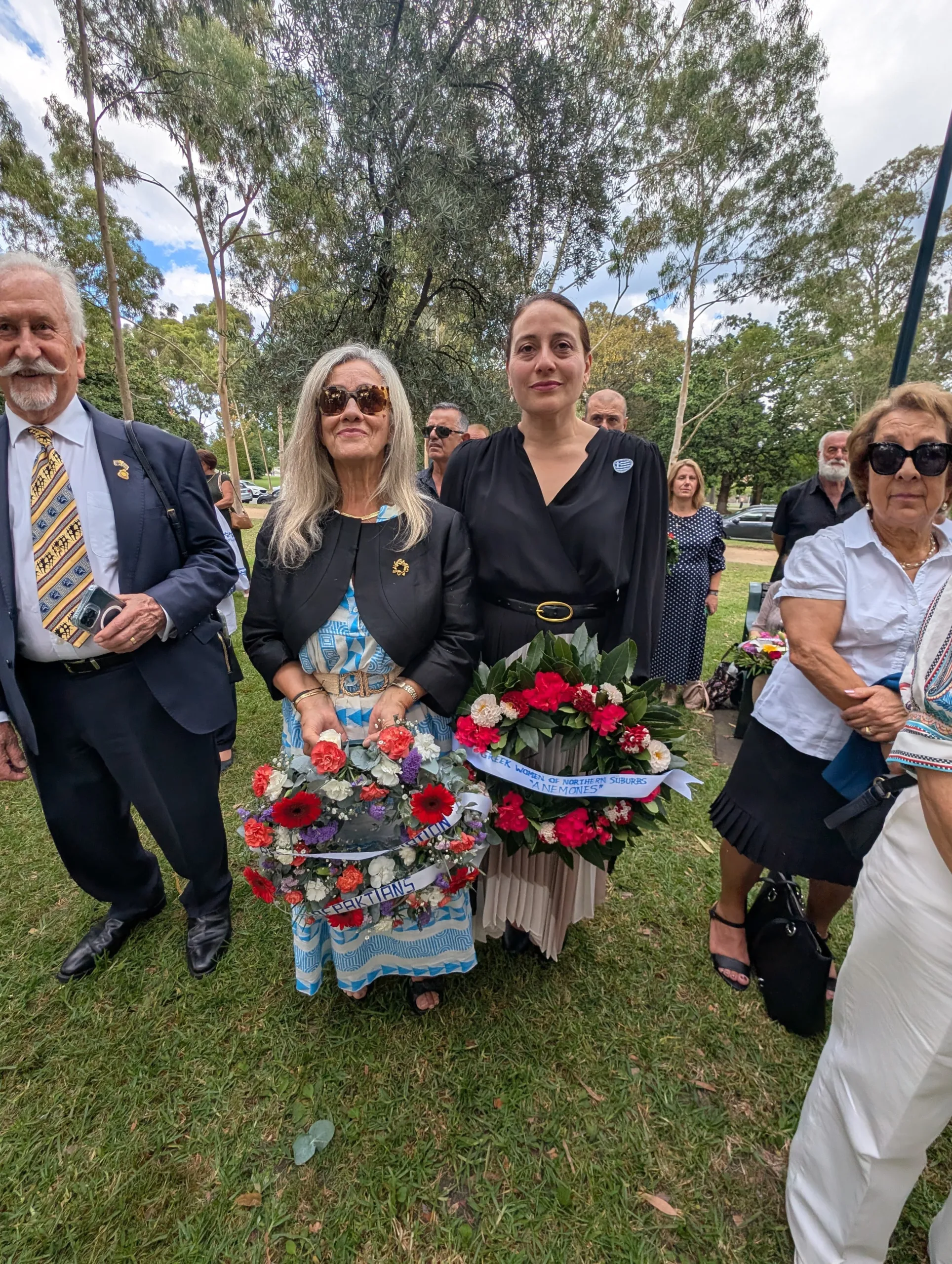
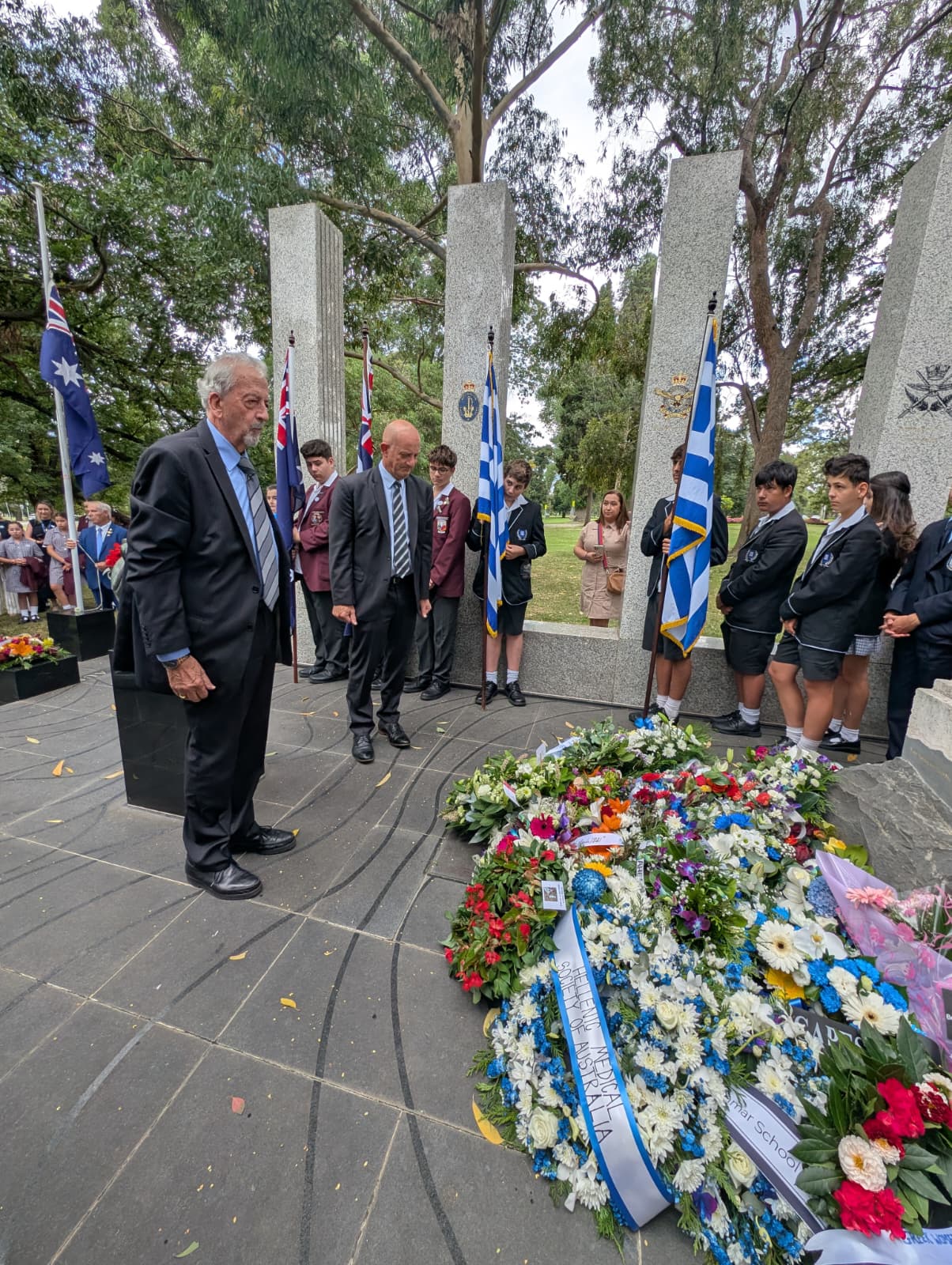
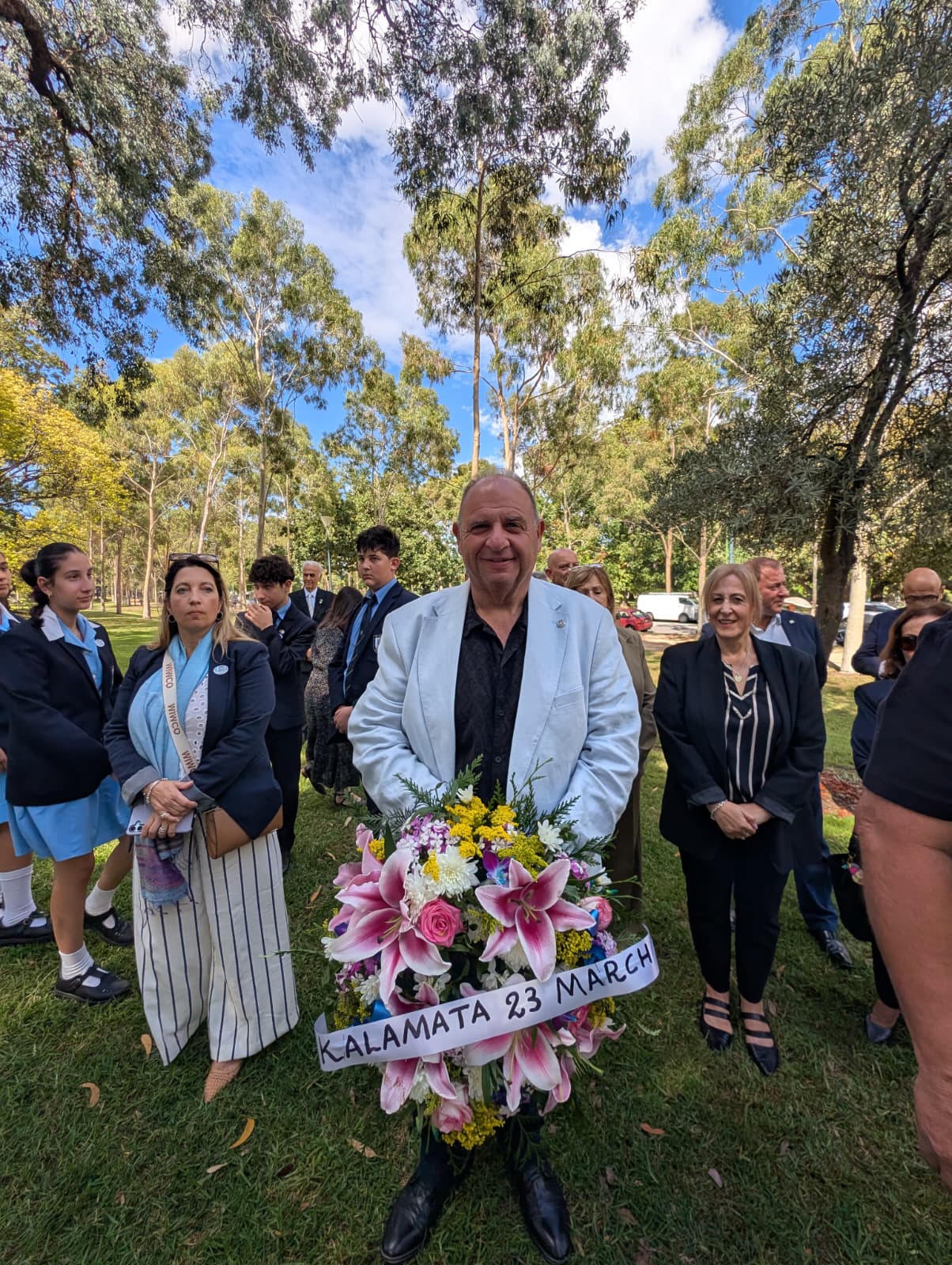
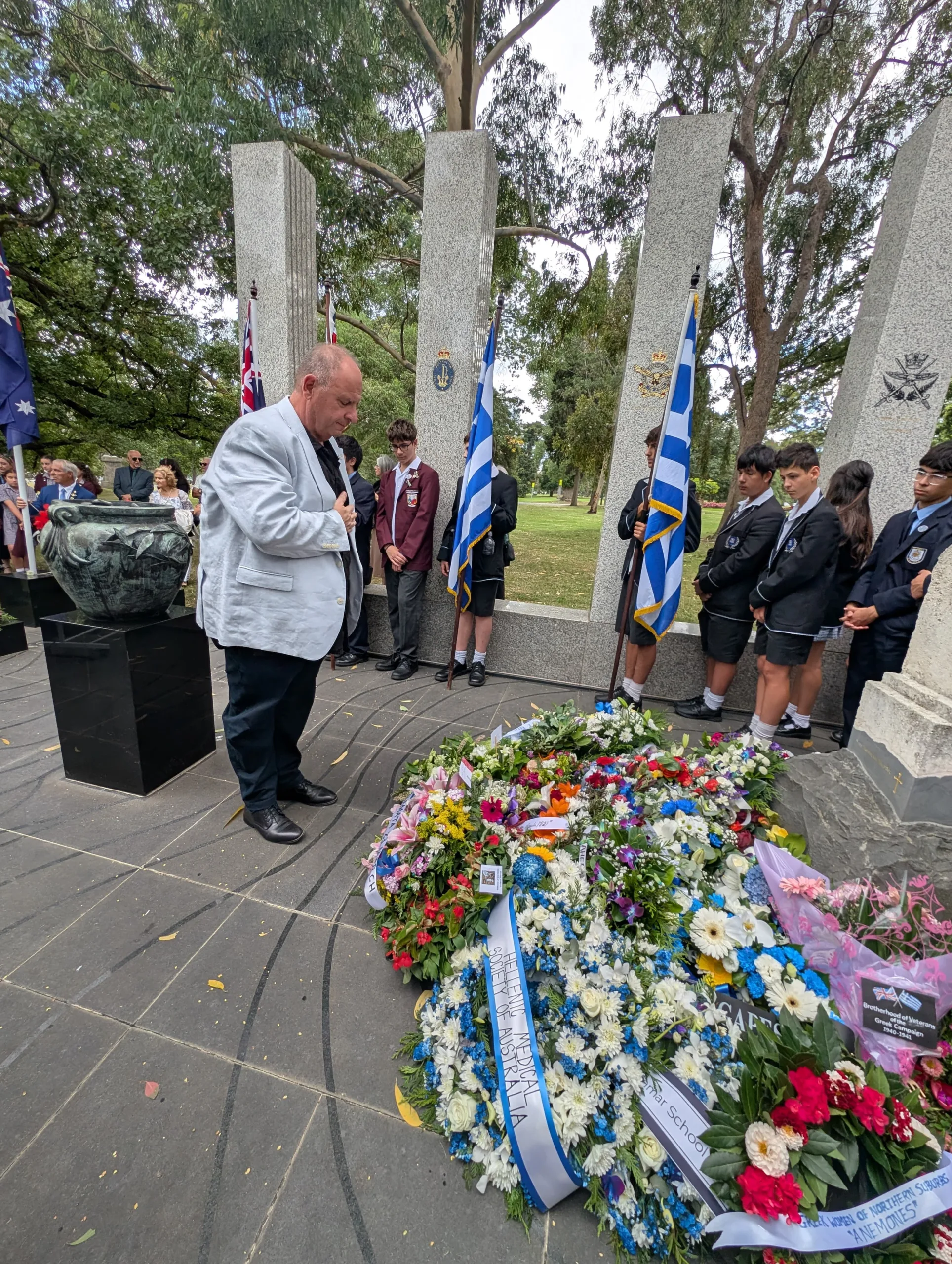
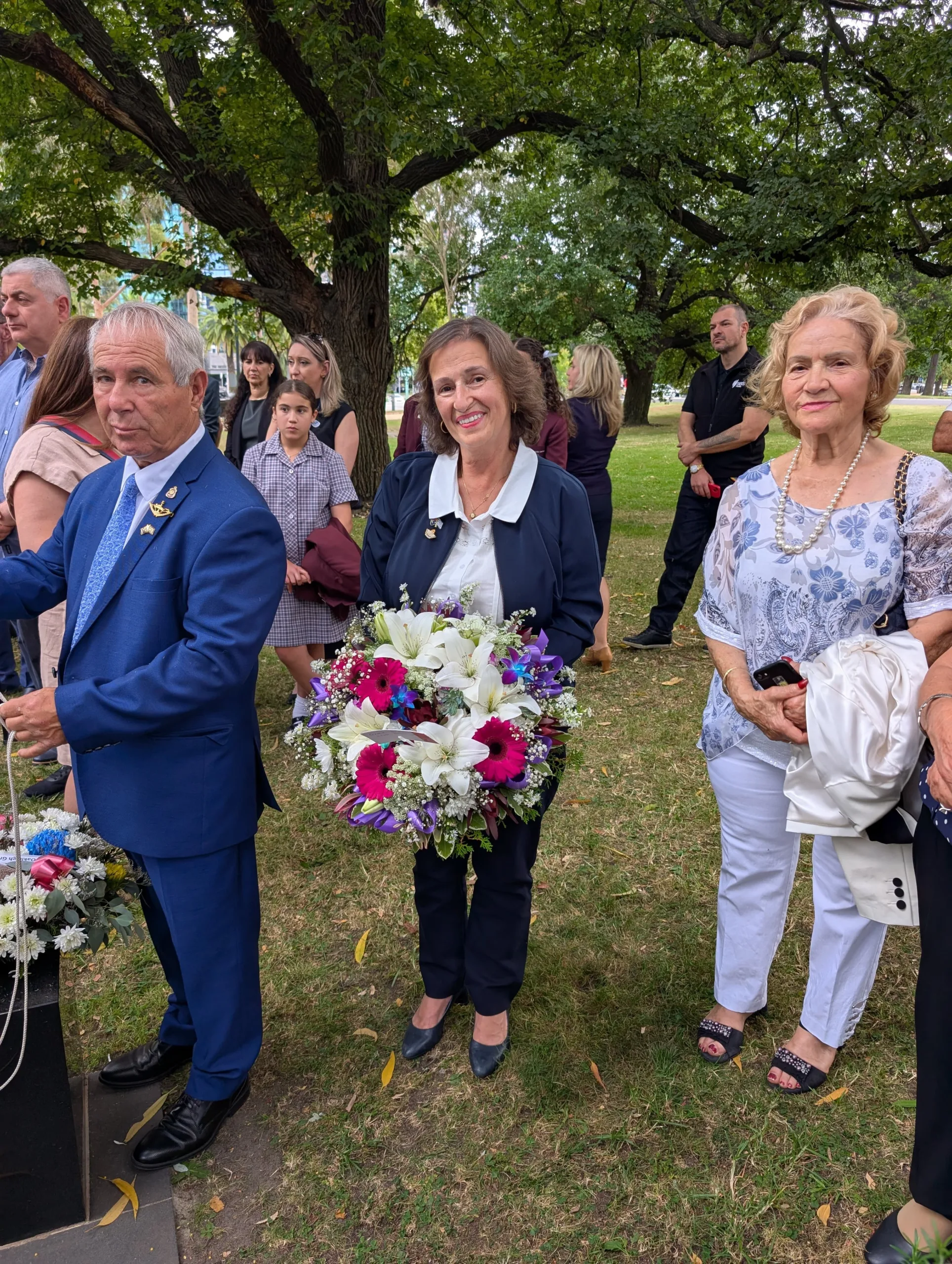
Greece’s Consul General in Melbourne, Dimitra Georgantzoglou, sharpened this message by delivering a statement from the President of the Hellenic Republic, Konstantinos Tasoulas. He noted that the Revolution of 1821 wasn’t just fought on Greek soil; it was sustained by the diaspora, a legacy that continues today through memory and mutual respect.
This year, the narrative widened. Master of Ceremonies Terry Kanellos turned the spotlight toward the women of 1821, often left at the margins of history.
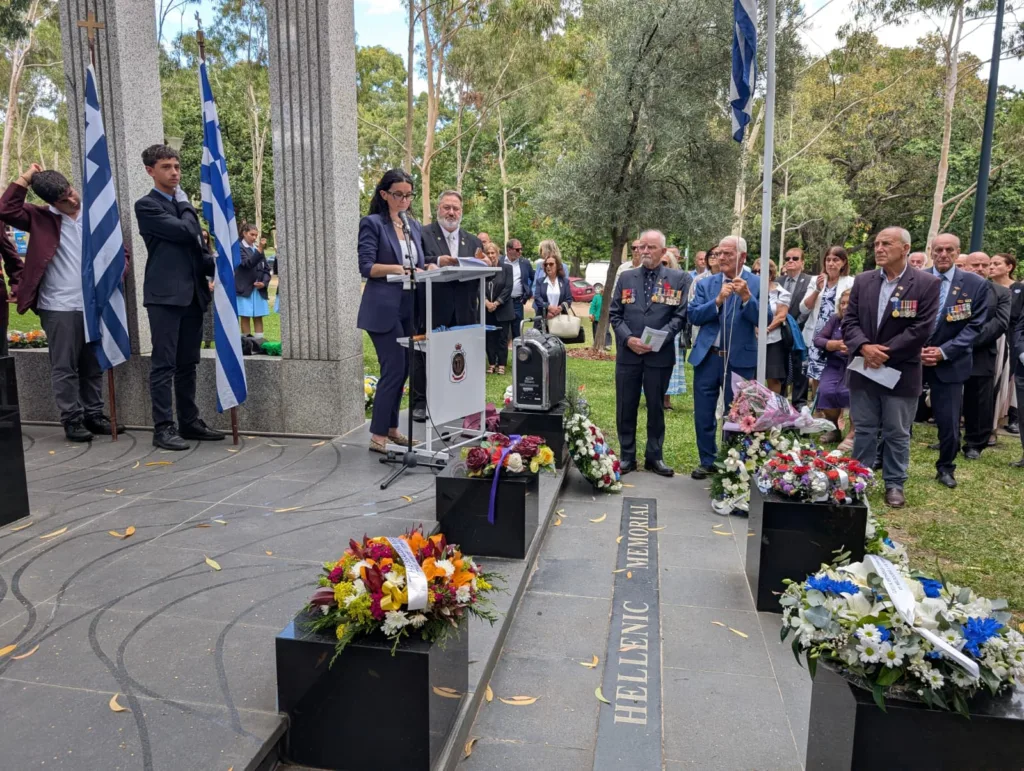
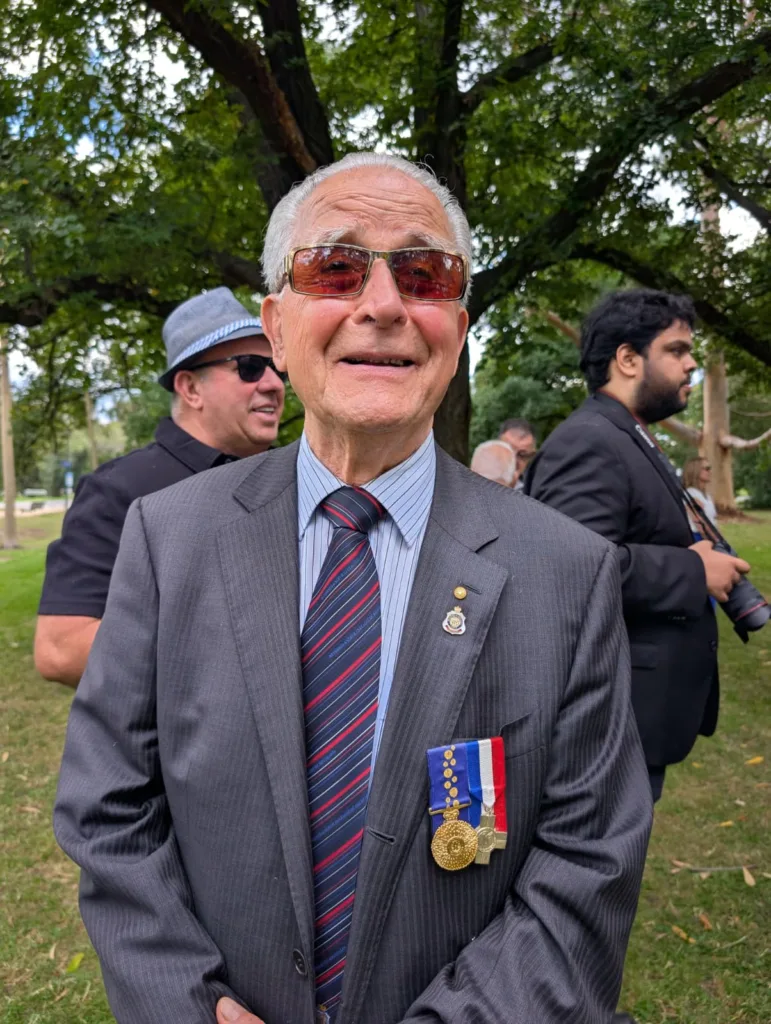
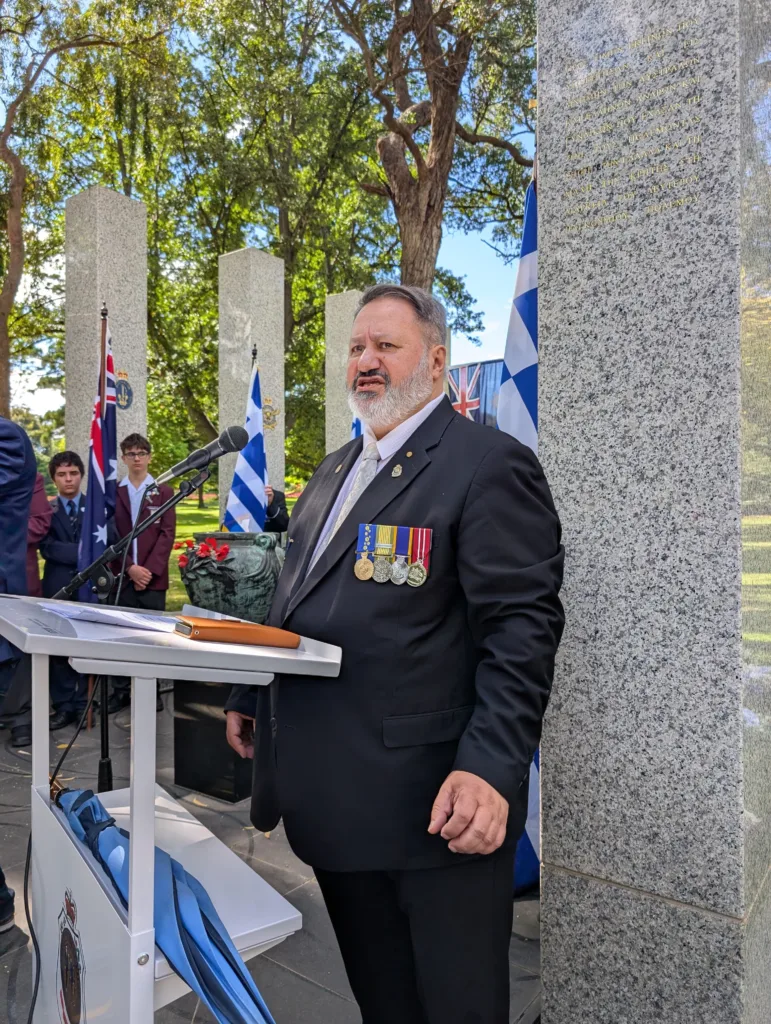
“The revolution was not an all-male affair,” Kanellos noted, highlighting figures like Stavriana Savvaina. After her husband’s execution, Savvaina formed a women’s fighting unit, eventually earning the rank of Major. It was a meaningful reframing, particularly for a modern community where women now lead across all sectors of public life.
Despite the layered history, the day’s structure remains intentionally simple. “My job isn’t to make speeches,” Karvelas told The Greek Herald. “Too many speeches bore people.”
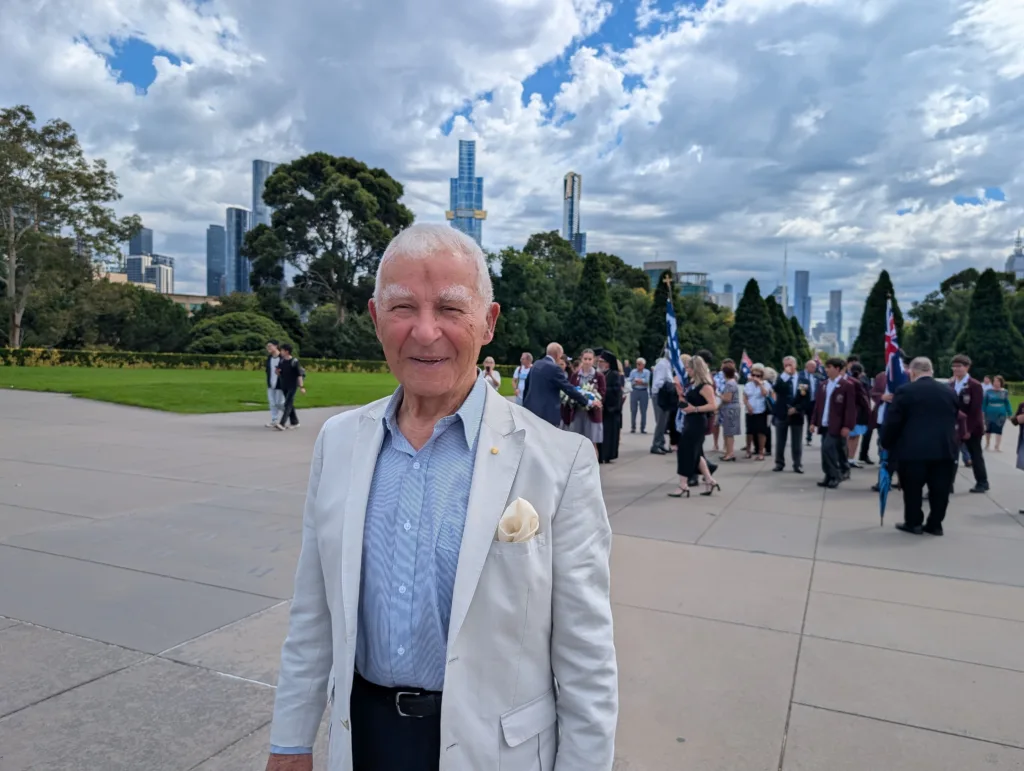
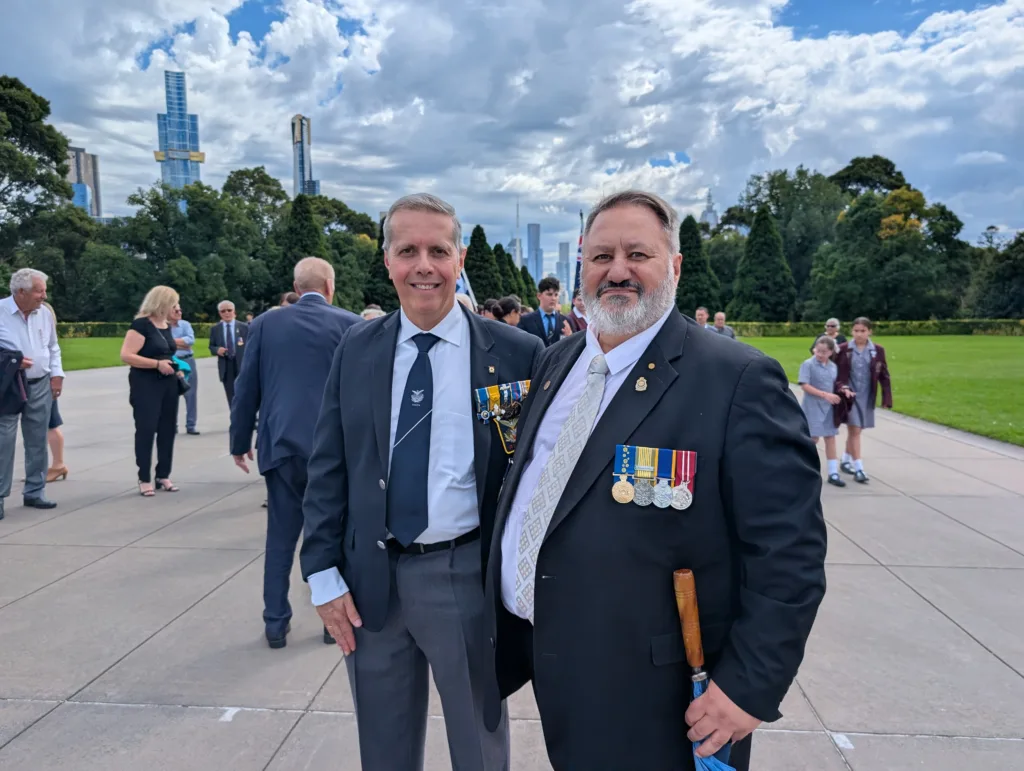
Once the formalities conclude, the mood softens at the Hellenic RSL clubhouse. The menu has evolved, the days of pungent skordalia (garlic dip) that Karvelas jokes “could kill flies with your breath” have faded, but the ritual has not.
The story of March 25th hasn’t changed; it has simply grown more inclusive. And, true to form, it remains perfectly on time.
To become a member of the Hellenic RSL, contact manny351@bigpond.com
*All photos copyright The Greek Herald / Mary Sinanidis.
