By Ilias Karagiannis.
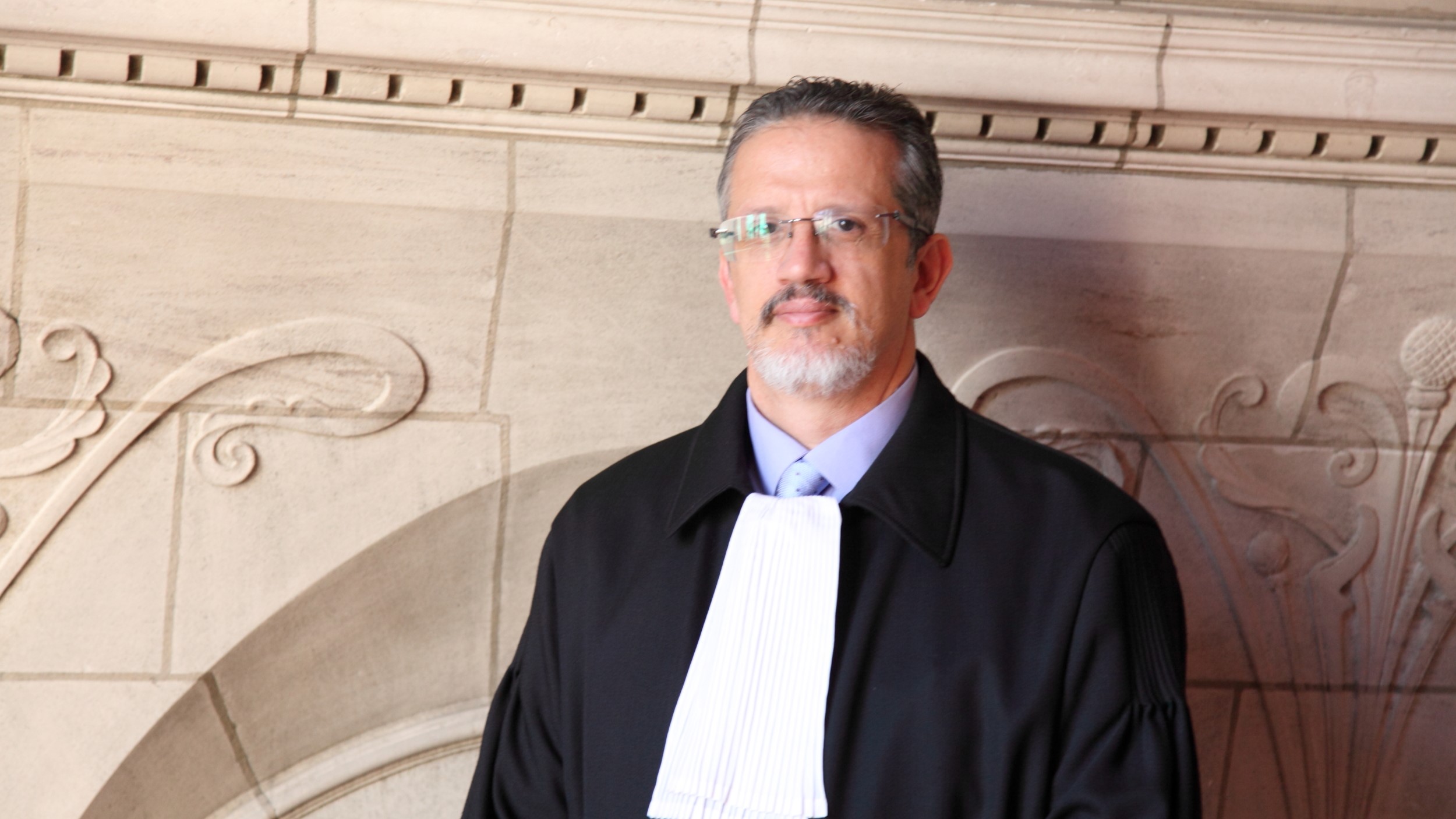
Prominent Brussels lawyer and New Democracy candidate for the upcoming national elections in Greece, Nikos Korogiannakis has been actively involved for more than 30 years with Greek community organisations in Brussels and has occasionally been elected to the presidencies of the Federation of Greek Communities of Belgium, the Belgian-Hellenic Chamber, and the AHEPANS of Brussels.
He is a personal choice of Greece’s current Prime Minister, Kyriakos Mitsotakis, who placed him on the ballot of New Democracy as one of the three Diaspora candidates.
In an interview with The Greek Herald, Mr Korogiannakis speaks about the problems of the Diaspora and says the Party has the necessary knowledge to contribute solutions.
First, we asked Mr Korogiannakis about the low rate of expatriate Greeks who registered to vote in these elections and whether he would propose improvements to the diaspora vote law if New Democracy is re-elected in the upcoming elections.
“According to the Constitution, the diaspora vote law in the countries where they reside requires a majority of 2/3 – 200 votes,” Mr Korogiannakis said.
“Unfortunately, the main opposition, SYRIZA, refused to vote for the bill, requiring the participation of 4 parties to “pass” legislation in Parliament. One of these parties, the Communist Party of Greece, imposed on the three others (ND, PASOK and Greek Solution) incomprehensible restrictions, which prevented a large number of expatriates from registering: stay in Greece for 2 years in the last 35 years with submission of supporting documents and receipts for this, and submission of a tax return by the elector in the last year before registration.
“But many of the certificates are not available online and even those who met the criteria have difficulty submitting them. In the face of registration difficulties, New Democracy submitted to Parliament an amendment removing the restrictions. Again SYRIZA refused to vote for it (as did the Communist Party of Greece).
“Alexis Tsipras in Berlin said he was against the restrictions. New Democracy will also bring in the next Parliament an amendment to remove the restrictions and if SYRIZA does not change its position again, we hope that the restrictions will be removed.”
One of the big problems of the diaspora is, of course, bureaucracy. What could New Democracy do in order to mitigate the effects of bureaucracy on the everyday life of citizens abroad?
“The digitisation of the state by the Kyriakos Mitsotakis government and the operation of MyConsul and the gov.gr have greatly improved the situation for expatriates and freed up valuable time from consulates by reducing service delays,” Mr Korogiannakis said.
“The number and type of services provided is constantly expanding with very good results. Recently, all services have started to be provided in English. This is a great convenience for second-third and fourth-generation Greeks who do not speak Greek well enough or at all. However, there remain some services that are done exclusively through the consulates, such as passports, child identification, the acquisition of a VAT number, etc. that require a face-to-face presence and appointments that are delayed for weeks or even months.
“It is a programmatic commitment of New Democracy to expand the gov.gr in more services and the digitisation of all state archives so that it is possible to search for certificates online. This is therefore an issue whose solution is progressing with impressive speed and efficiency. There is no doubt, however, that an increase in the staff of embassies and consulates is required in some cases.”
The stakes of the upcoming elections:
Greeks abroad often say that they are twice as Greek as Greece’s citizens.
“The phrase referred to is indeed one of the clichés, which personally cause me irritation,” Mr Korogiannakis said.
“The Greek state has a constitutional obligation to take care of its citizens wherever they reside and to solve their problems, at least those connected with it, such as the preservation of language, culture and ties with the homeland and the provision of high-level services linked to their Greek origin and citizenship.
“The reform of “mother tongue” schools so that Greek children everywhere can learn the history of their country and maintain their language, customs and customs will be the core of the New Democracy government’s policy in the next Parliament.”
In Greece, everyone is talking about the stakes of simple proportional representation elections. The non-halting of Greece’s upward course is, according to Mr Korogiannakis, the issue of the elections.
“The course of the country during the period of rule by Kyriakos Mitsotakis is, without a doubt, better than before. Economic growth is stronger than other European countries, unemployment has fallen significantly, the country’s external borders are better guarded, the country’s defence is shielded while its international image is improving,” the lawyer said.
“Against this path there is no credible alternative. SYRIZA’s economic program is a stitch-up of promises that the budget fails to meet. In fact, SYRIZA simply states that its program is costed without analysing the cost of the individual measures itself.
“Moreover, in the absence of a governing majority, SYRIZA will be forced to co-govern with parties that agree on almost nothing, except, perhaps, their desire to govern at all costs- for the country. Not preventing the rise of Greece is the real issue of this election!”
Message to Australia:
Finally, Mr Korogiannakis send a message to the Greeks of Australia.
“The vote of the expatriates… is a great opportunity for expatriate Hellenism, including Australia, to promote through them its fixed and local demands and needs,” Mr Korogiannakis said.
“In the state ballot of N.D. there are genuine representatives of expatriates who are aware of the problems and, together with the candidates and elected representatives of the other parties, will contribute to their resolution.”

