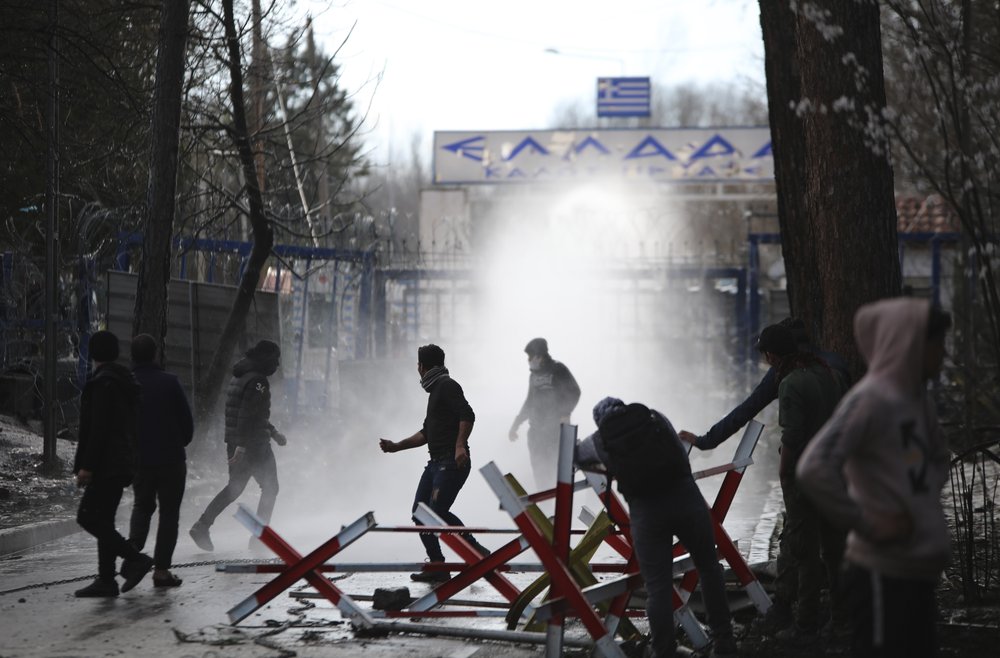
Greek border units trying to stop crowds of migrants from pushing their way in from Turkey have hit on a new defence against tear gas unleashed on them from the Turkish side of the frontier — enormous fans.
The jeep-mounted turbines were deployed Thursday near the Kastanies crossing in the northeastern Evros border region that’s seen daily clashes between migrants and Greek border forces since late last month.
The violence followed the Turkish government’s announcement that it would no longer stop its vast migrant and refugee population from illegally entering Greece, arguing that it faces a potential new wave of refugees from Syria. That has spurred thousands to try their luck getting into the European Union.
Read More: Greek Community of Melbourne supports Greece’s strict stance on border control
Greece accuses Turkish authorities of helping the attempted violent crossings by firing the volleys of tear gas that are regularly used against Greek border units.
Greece has also repeatedly used tear gas to prevent migrants from destroying sections of the border fence and pushing through.
Greek military officials said the turbines used to disperse the gas are normally employed in parachute training.
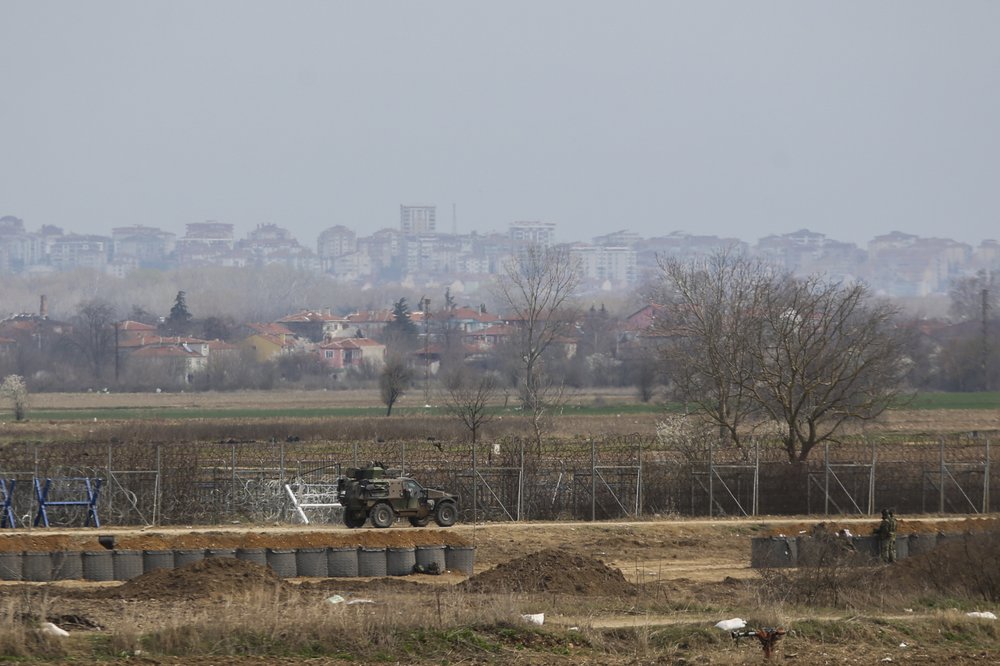
Athens says more than 45,000 attempted entries have been thwarted since the crisis erupted on Feb. 29, including more than 500 on Thursday — when for a second day migrants threw petrol bombs at Greek border troops and police. Greek units were also attacked with tear gas and responded in kind.
Also Thursday, the European Union offered to pay up to 5,000 migrants in squalid, overcrowded camps on the Greek islands to voluntarily return home. Nearly 42,000 people live in the camps, and the Greek government says it plans to move 10,000 to the mainland to ease overcrowding.
Read More: Five EU countries to take in child migrants stuck in Greece
During a visit to Athens, EU Home Affairs Commissioner Ylva Johansson said migrants who sign up would each receive 2,000 euros ($2,240) “of financial and technical support for their departure and towards reintegration in their home countries.”
Johansson also said that seven EU countries so far have pledged to take in more than 1,600 unaccompanied minors trapped in Greece.
“I am confident more pledges could come,” she said.
Sourced by: Associated Press
