UK rejects UNESCO plea to repatriate Parthenon Marbles

·

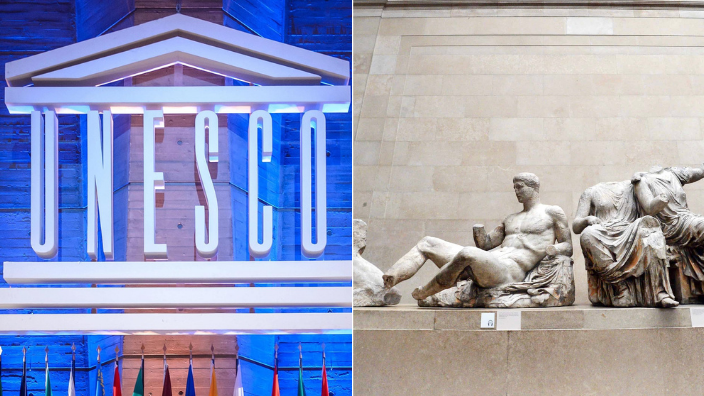
The UK government has rejected UNESCO’s calls that it reconsider repatriating the Parthenon Marbles. 

UNESCO’s Intergovernmental Commission for the Return of Cultural Property to Countries of Origin (ICPRCP) called for the repatriation and an investigation into the acquisition of the marbles during a meeting in Paris last week.

“We disagree with UNESCO’s decision,” a UK government spokesperson tells Ta Nea. 

“Our position is clear – the Parthenon Sculptures were acquired legally in accordance with the law at the time.”

The spokesperson shifted the responsibility to the trustees of the British Museum where the marbles currently reside. 

“The British Museum operates independently of the government and free from political interference. All decisions relating to collections are taken by the Museum’s trustees,” the spokesperson added.

A British Museum spokesperson told Ta Nea that “the Parthenon Sculptures are an integral part of (the Museum’s collection) story and a vital element in this interconnected world collection”.

The ICPRCP says Greece has made “legitimate and rightful” requests for their repatriation.

They say “the case has an intergovernmental character and, therefore, the obligation to return the Parthenon Sculptures lies squarely on the UK Government “.

The UK has consistently rejected Greece’s calls for talks over repatriation, with Prime Minister Boris Johnson defending the legality of the museum’s ownership of the marbles in March.

The marbles date back to the fifth century BC and are regarded as culturally significant. 

Lord Elgin removed the marbles in 1801 while as British ambassador to the Ottoman Empire. 

Greece has long argued the reunification of the marbles is integral to understanding the artworks in the context of the temple they once embellished. 

Source: Art Forum

Share:

KEEP UP TO DATE WITH TGH

By subscribing you accept our Terms of Service and Privacy Policy.

Latest News

Dr Yianni Cartledge traces the stories of Ikarians in Australia through archival research

Inspired by his own family history and the broader migrant experience, Dr Yianni Cartledge has published a book exploring Ikarian migration.

Elfa Moraitakis included among the most powerful people in Western Sydney

Elfa Moraitakis has been named among the most powerful people in Western Sydney in The Daily Telegraph’s list.

Chicago family returns ancient Greek artefacts to Greece

Five ancient Greek artefacts spanning from the 6th century BC to the Roman period have been returned to Greece by a family from Chicago.

Kefalonia beach voted as the second best beach in the world

Fteri Beach has been ranked the second most spectacular beach in the world for 2026 in the annual World’s 50 Beaches list.

Frank Alexopoulos says leaving construction job transformed his approach to fatherhood

Frank Alexopoulos says a call to Lifeline during a difficult period in his life transformed the way he approached fatherhood.

You May Also Like

PRONIA responds to allegations by President of Victoria’s Greek Elderly Federation

PRONIA has responded to serious allegations made by John Kostoulias, President of the Federation of Greek Elderly Citizen Clubs in Victoria

Structural concerns force temporary closure of Louvre’s Greek ceramics wing

The Louvre has closed its Campana Gallery after an audit uncovered structural concerns in beams supporting the floor above the space.

Filos Taverna and Bar owner Tim Moustakas shares the influence of his father and Greek upbringing

Tim Moustakas is the Greek Australian owner of Fillos Taverna and Bar at the Hellenic Club of Canberra in Woden.