
The number of new recorded COVID-19 infections reported by the Greek health authorities continued to rise exponentially on Wednesday, reaching a new record for 2021 of 2,702.
The National Organisation for Public Health (EODY) also reported 40 new deaths over the last 24 hours with the total now reaching 6,597.
The numbers of intubated patients in ICUs increased slightly to 431. The average age of intubated patients is 68 years old, and 84,9% have an underlying condition and/or are aged over 70. From the beginning of the pandemic, over 1,376 patients have been successfully discharged from Greece’s ICUs.
There were 394 new Covid admissions in Greece’s hospital over the last 24 hours, a daily increase of 36,33%. The daily average of daily admissions over the last week has been 304 patients. ICU capacity for Covid cases is at 63,62%.
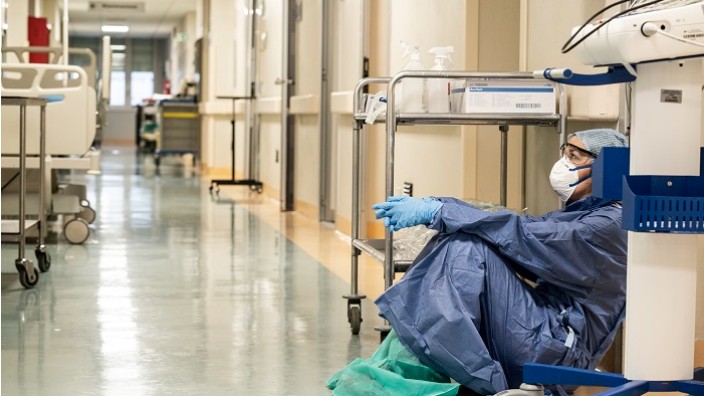
Attica, Greece’s most populous region, remains at the epicenter of the pandemic with 1,269 new cases. The healthcare system in the region is also under the most strain. The northern port city of Thessaloniki follows Attica in new cases with 314, and Achaia in the northwestern Peloponnese is third with 178.
Health authorities carried out 54,553 tests over the last 24 hours (24,435 PCR tests and 30,118 rapid antigen tests) with positive results on 4.95% of these tests.
Health Minister, Vassilis Kikilias, attributed the spike in infections to the spread of the coronavirus variant that first appeared in Britain.
New anti-virus measures announced:
In an address to the public on Wednesday, Deputy Minister for Civil Protection, Nikos Chardalias, announced a series of new coronavirus measures.
These new restrictions further limit the movement of Greeks as the country tries to suppress a rapidly increasing transmission rate amongst its citizens.

Since the beginning of the lockdown in November, Greeks have had to send an SMS to a toll-free number declaring their purpose for leaving the home.
The reasons for movement include exercise, shopping for essential items, going to the bank, helping someone in need, and going to the doctor or pharmacy.
From now on, in every region of the country, regardless of transmission risk, citizens leaving the home for essential purchases and bank transactions will be limited to establishments in their neighborhood within a 2-kilometer radius.
Additionally, those who go out for exercise must only do so on foot or on a bicycle. Therefore, those who drive to a certain area for exercise will be in violation of the new restrictions.
Source: Ekathimerini.
