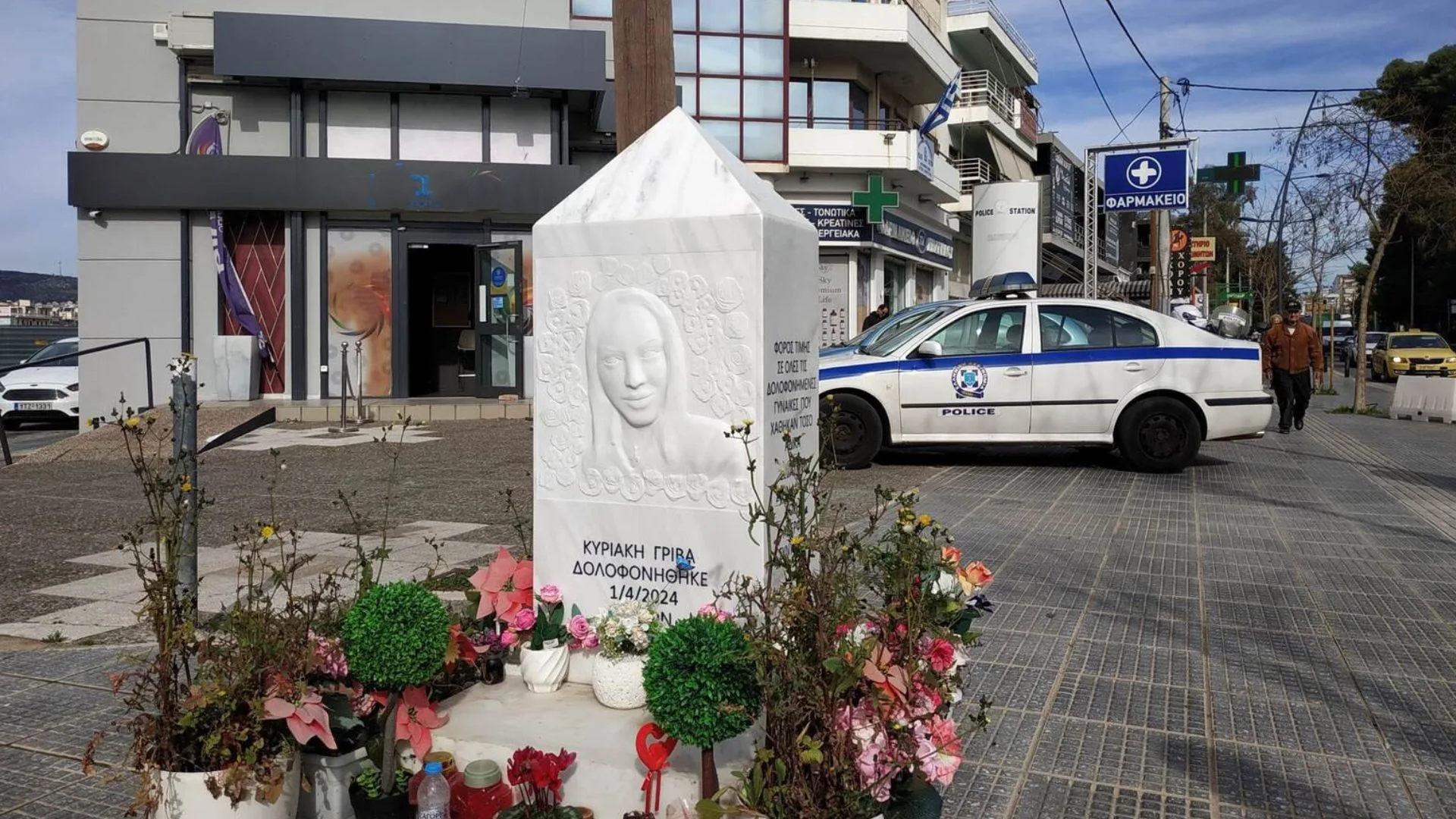
Femicide is referred to as the intentional killing of a female because she is female, with Wikipedia specifying “… murder that disproportionately targets women or girls.” This crime, enacted more often by a partner, ex-partner, or family member, is usually preceded by domestic violence. It is an ongoing problem in Greece and around the world.

Many cases of femicide go unreported. The European Observatory of Femicide records the following figures for Greece:
- 2020: 19 deaths
- 2021: 31 deaths
- 2022: 26 deaths
- 2023: 15 deaths
- 2024: 15 deaths
- 2025/26: not yet recorded.
There were 105 femicides in Australia in 2024. Italy’s statistics are similar – 106 in 2024. As of last year though, Italy joined thirty countries worldwide who have accorded femicide as a separate crime within their national legal systems. Greece and Australia have not.

In Greece (and not just), the already existing “homicide” or “manslaughter” laws, regardless of victim gender, are considered sufficient by many who claim femicide is hard to categorise. In 2012, for example, the Vienna Declaration on Femicide recognised 11 different forms of femicide:
- intimate partner killings
- killings within the family (so-called honour killings, sex selection before or after birth, dowry-related killings, widow burning)
- killings in connection with the commission of gender-based crimes such as sex offences, assault and battery, and stalking
- killings in connection with organised crimes such as sex trafficking; and
- killings as an expression of hate and other gender-related killings such as those committed by so-called incels and those committed in the context of intersectional discrimination.
Others – individuals and organisations in Greece, such as the Diotima Centre, the Bodossaki Foundation, Action for Women, etc – state that the motives of femicide are uniquely gender-based. They consequently advocate for femicide to be treated as a separate crime to murder or manslaughter.

Perhaps the reason that femicide has not yet been acknowledged as a separate issue/term in law (apart from in the aforementioned “thirty countries”) goes deeper. A writer for an Australian memorial organisation that pays homage to women and children killed violently says: “… those in power would have to recognise the full extent of our femicide epidemic – and that would mean having very uncomfortable conversations with the men who keep them in power.” (S. Moodey, 27/11/2025, The Red Heart Movement)
These “uncomfortable conversations” would involve opening a can of worms by acknowledging the vested interests inherent in maintaining current power structures and, in turn, unjust social hierarchies. This may include a fear of women’s true potential (for more nurturing and peaceful forms of societal administration perhaps) being kept oppressed.
The above quote and interpretation is not about ‘radicalism’, ‘Marxism’ or even feminism. It is about humanitarianism. Christianity, embodied in the Greek Orthodox tradition of my culture, specifically states that men should respect women (and vice versa). A Greek Orthodox local priest here in Athens, where I live, stressed murder as an abomination, and specifically that of women: “We do not see the husband as authoritarian, but as sacrificial. He has a Christ-like responsibility as the first servant of Christ to treat his wife and all females with equality, honour and dignity.”
Unfortunately, there are aspects of common culture that oppose this priest’s civilising views. They encourage males to view violence towards women as natural or even honourable. Some popular Greek songs are among the culprits. “Crimes of passion” and “honour killings” are often themes in many of these older Greek “murder ballads”. For example, a song by Tsitsanis, Ximeroni kai vradiazi, includes lyrics like: “… You under the ground and me in prison”.
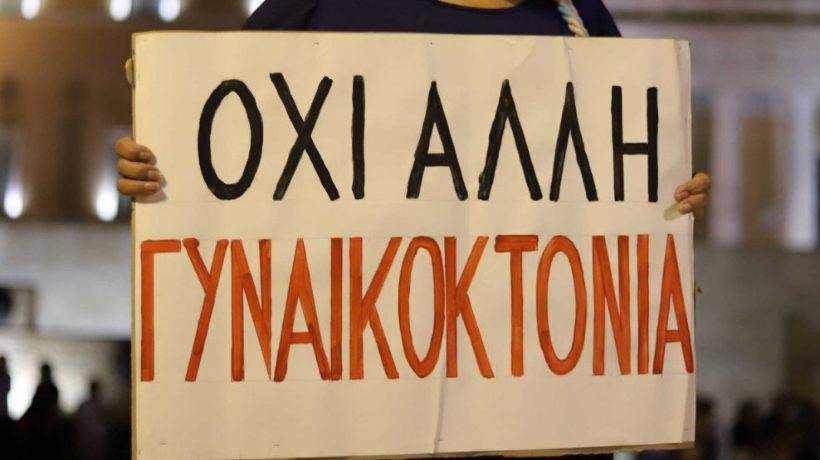
In Ta Nea Tis Alexandras, told by Alexandra’s uncle – her murderer and sexual abuser – and then written by Kostas Yiannidis, lyrics included are: “I will take revenge on her, I will burn her / kill her”. It’s a true story.
There’s also the song, with its joyous, playful music, called Thelo Ta Opa Mou (I Want My Fun), sung by various big-name female singers throughout the years, written by Aleko Sakellariou, with lyrics: “I want/need my slap from the man I love.” And there are some pretty bad lyrics in more ‘modern’ Greek songs.
Culture shapes behaviours, and unfortunately there also seems to be a backlash to the #MeToo movement with false and/or exaggerated stereotypes of macho identity, encouraged by online forum indoctrination:
“… the feminist paradox means that the more equal women become, the more hatred and violence they face. Today we can see misogyny… everywhere, including new forms of violence such as cyberbullying. It is a proven fact that misogynist violence is constantly on the rise – that is, violence specifically directed at women, such as domestic violence, femicide, sexual assault, stalking, hate speech, and pathological attempts to control their lives.” (Dr R. Sancho, On the Necessary Transgressions of #MeToo, 2026, Max Planck Institute)
The Greek government is taking many proactive measures to reinforce that domestic violence and femicide will not be tolerated. The European Institute for Gender Equality 2025 shows, in terms of commitment to the promotion of gender equality, that “Greece scored 10.2 out of 15 points, which is above the EU average of 9.4 and shows progress compared with its 2021 score of 9.5”.
Last year, the Greek government wisely banned the use of “crime of passion” as a mitigating factor in courts of law. Furthermore, it has also developed a specialised preliminary investigations police structure of 73 Domestic Violence Services working in conjunction with 63 specifically established Domestic Violence Offices comprised of trained personnel.
There’s also a phone “Panic Button” application for immediate, discreet intervention by the police for victims in danger. Other support structures include 40 Counselling Centres, administered by the General Secretariat for Family Policy and Gender Equality or local councils; and an SOS 15900 Helpline available 24/7, as well as over 20 shelters for women and children.
Sentencing for perpetrators of domestic violence and, of course, femicide is now much more severe, codified by a 2025 law for stricter enforcement and faster judicial procedures. In terms of education, the Greek government specifies that schools must focus on gender equity. Unfortunately, underfunding for such relevant programmes is an issue, as is serious implementation and teacher training.
As for the Greek public’s views of femicide, a focus group study (FocusBari, Femicides in Greece, 2024) of 1,000 males/females aged 18+ equated domestic violence as the number one cause leading to femicide. Mental illness was classed as second. Next mentioned were stereotypes against women, lack of education, substance abuse/addiction, and poverty.
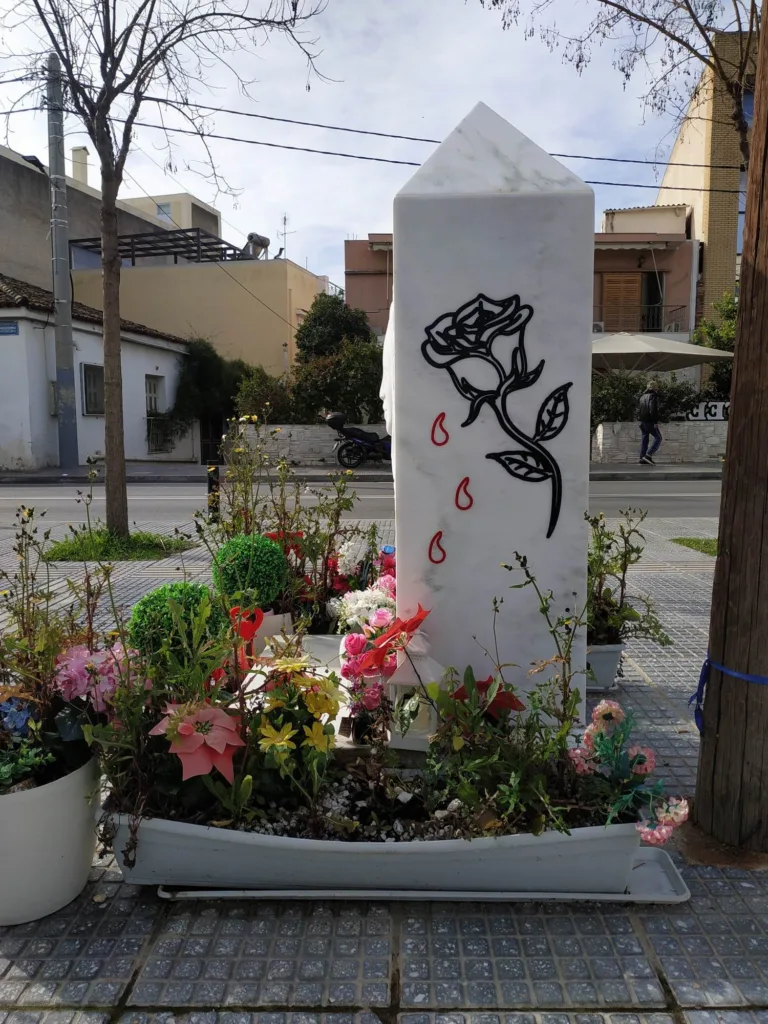
With over 90% of perpetrators being intimate partners and/or spouses, the study group rated jealousy as their main motive, then “the need for control”, followed by mental illness, revenge, misogyny and financial disputes.
Greece saw a horrific increase in femicide during the COVID pandemic: “The consequences of lockdown – financial insecurity, restriction, fear of disease and death, increased alcohol consumption and drug use – created the conditions in which abuse of women was enhanced. Many houses were turned into places of torture.” (N. Vrantsis, 2021, Missing Perspectives)
Though cases of femicide in Greece have dropped since 2021, there was an upward spiral again from 2024. This includes recent acknowledgment of more ‘silent’ cases of women over 60 killed by family members such as spouses and sons.
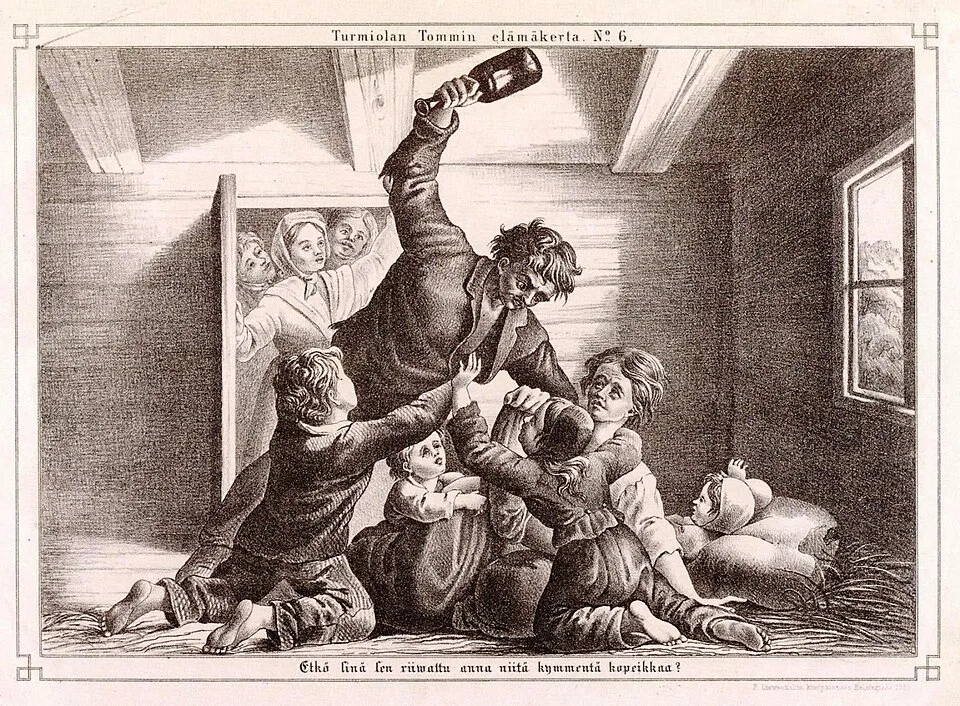
Testimonies of domestic violence I have come across in Greece include mothers being verbally and even physically abused by frustrated, often unemployed sons; also, women being bashed by their male partners for decades, threatened with murder if they told anyone; and young women sexually assaulted by a relative over years, being hit and threatened that their other immediate family members would be killed if they confessed.
I have also accompanied a son and wife caught up in repeated domestic violence to a local police station at their request. Here, their verbally threatening and emotionally abusive alcoholic husband/father was reported. The police in this case were very helpful and attentive, driving us to one of their domestic violence specialist centres where an official report was lodged. The abusive man was held overnight and appeared in court the next day, sentenced to nine months’ jail, with three years’ probation or in-house attendance of a rehab programme for alcoholics for at least a year.
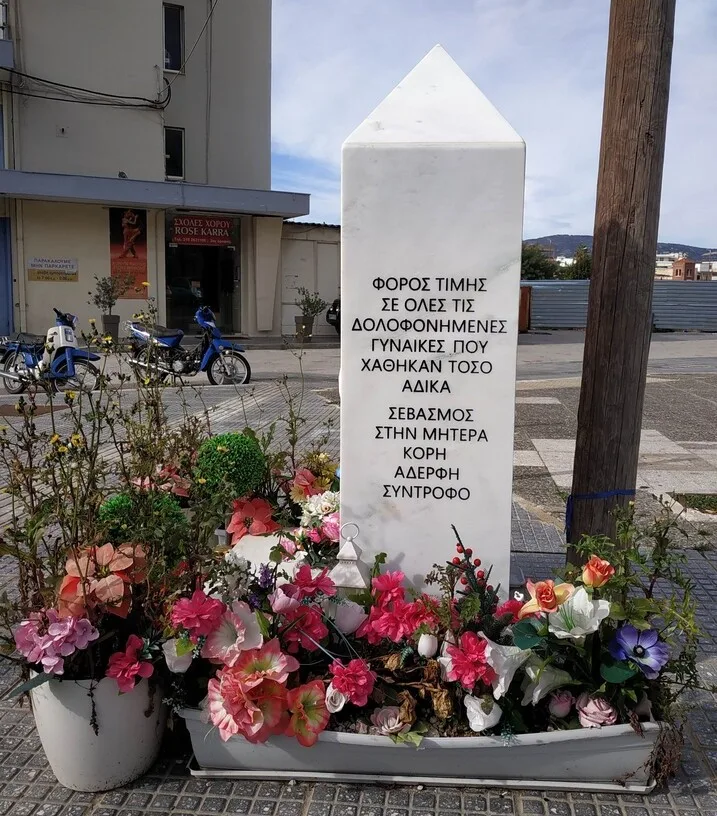
This was in 2022, and ironically and unfortunately, this initial police station in Athens was the same one where a police officer failed to assist a young woman – 28-year-old Kyriaki Grivas – in 2024. She was subsequently murdered by her ex-boyfriend in front of this very police station; stabbed to death while seeking help there.
Femicide stems from deeply rooted social perceptions and gender stereotypes, devaluing and marginalising females; a punishment used by men for centuries to intimidate, oppress and control women. Most people are decent and wish to live in peace, and so we must fight against domestic violence and femicide. We need to utilise our humanity, our spiritual faith and the ever-improving resources available in this war against femicide.
