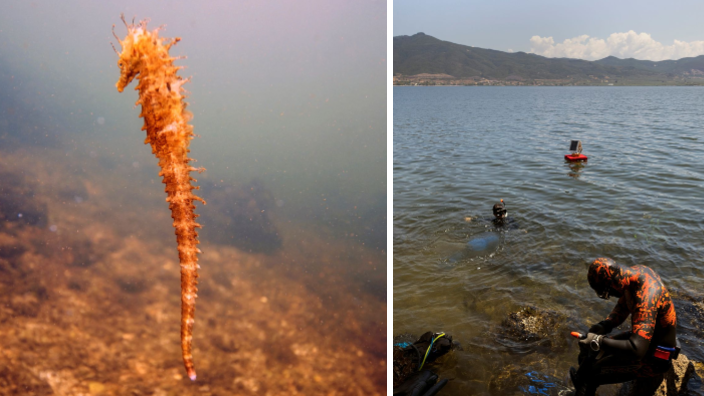
Divers spot endangered seahorses in polluted Greek lagoon

·

Divers have reported a rare sighting of hundreds of endangered seahorses in a polluted lagoon in western Greece and warn they could be lost if the area is not cleaned up.

“We see hundreds here and if they remain we have hope,” said diver, Vasilis Mentogiannis, an expert in underwater surveys who has led efforts to protect the seahorses. “I don’t think there is a similar situation to this anywhere else in Greece.”

A protected species threatened by overfishing and pollution, seahorses need an environment full of organisms to feed on and plant life to hide.
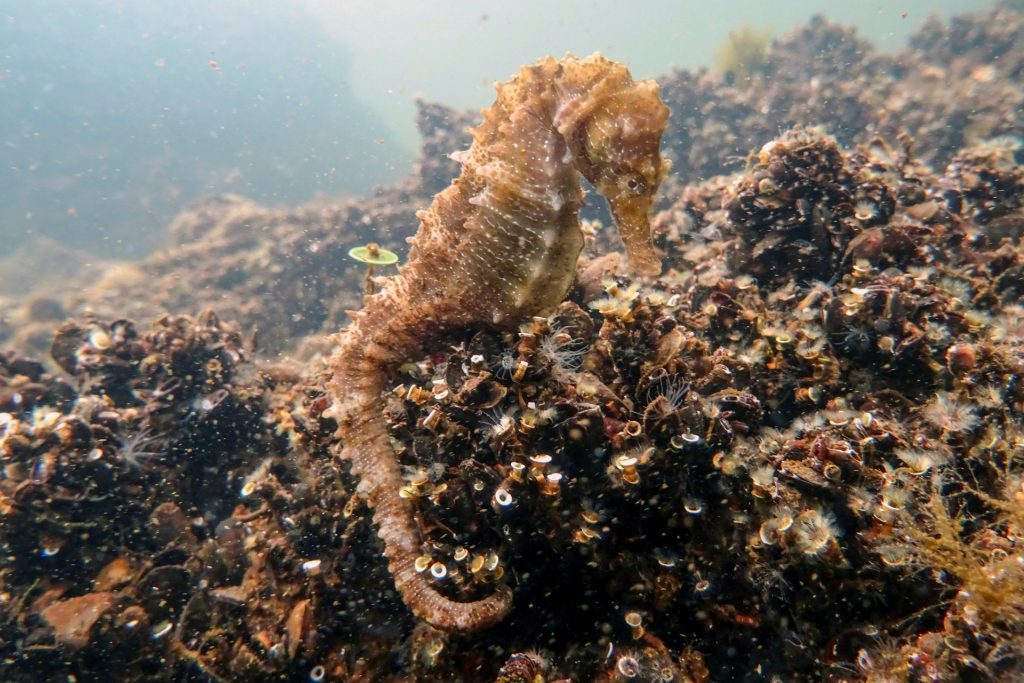
A seahorse rests on the seabed of the Aitoliko lagoon, Greece, May 31, 2020. Photo: Vassilis Mentogiannis/Handout via REUTERS.

Older fishermen say Aitoliko lagoon in the northern Patras Gulf used to contain thousands of seahorses but their numbers have plummeted in recent years and local divers were amazed when they found a group of the creatures.

“It was the first time I had spotted seahorses and they were in a place I least expected,” said local diver Labros Charelos.

Aitoliko, which reaches depths of up to 30 meters, is linked by narrow channels to a shallow lagoon open to the sea. Over recent years, leaks from damaged irrigation canals as well as factory waste and fertilizers have cut off oxygen and polluted the lagoon, which on windy days gives off a “rotten egg” smell from hydrogen sulfide produced by its oxygen-depleted waters.
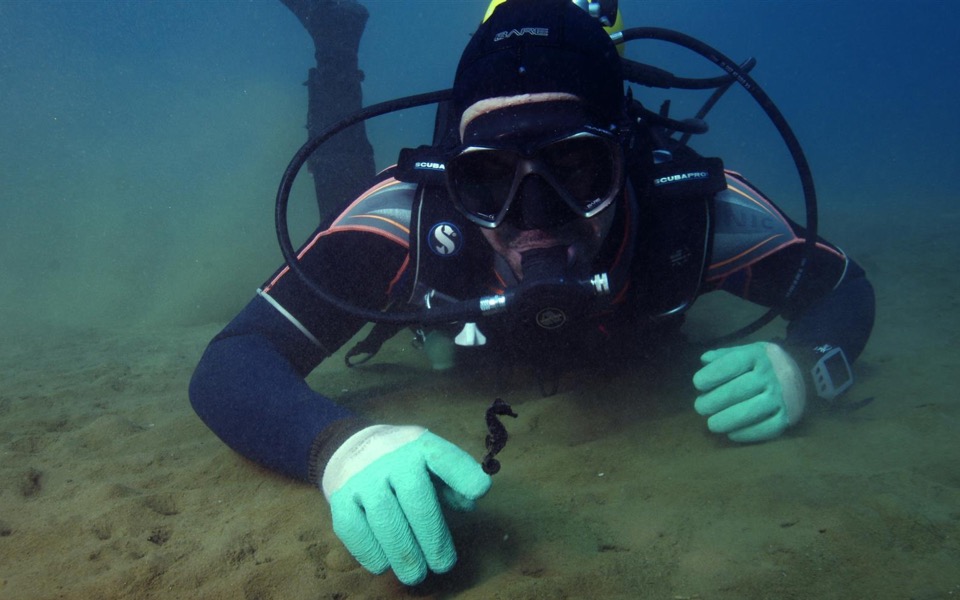
Divers have spotted endangered seahorses in a polluted Greek lagoon.

“Near the surface it is viable, it’s the deeper depths that are a problem,” said University of Patras Professor, George Katselis.

Spyros Kariofyllis has been fishing in Aitoliko for decades and says he has reached a point where he doesn’t catch anything.

“When I throw my live bait in … when it reaches five and half meters it dies, and not only does it die but there is no living organism to eat it down there,” he said.
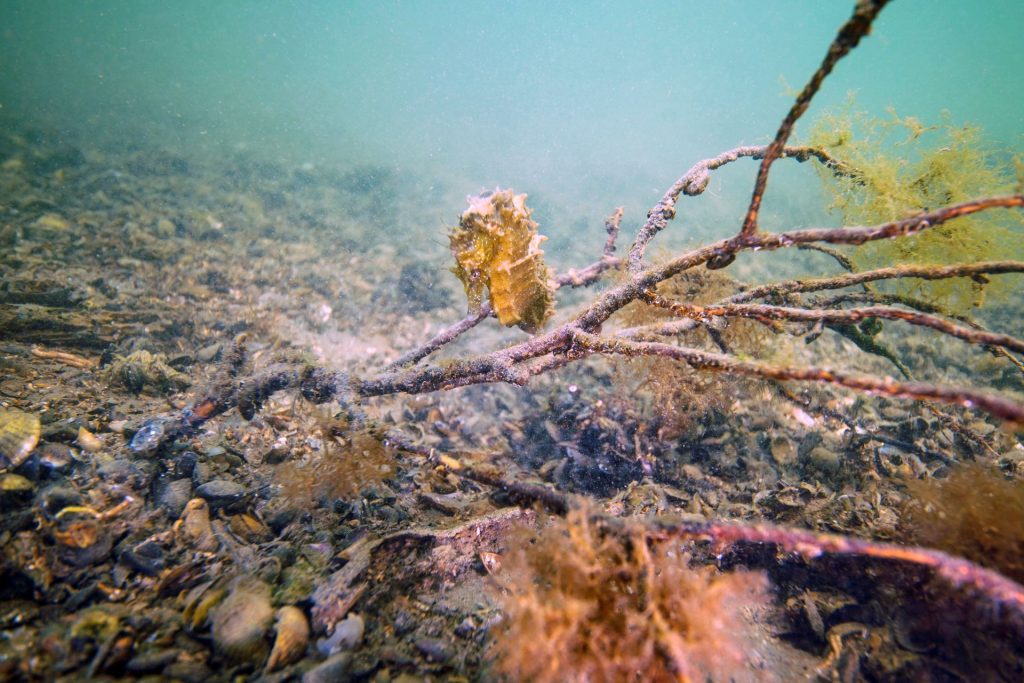
A seahorse swims in the Aitoliko lagoon, Greece, June 13, 2021. Photo: Vassilis Mentogiannis/Handout via REUTERS.

Helped by 21 million euros of EU funds, the government is going ahead with a long-delayed study on repairing the damage but Mentogiannis said time was short for the seahorses.

For the moment, they have found a spot with oxygen and food, far from fishing areas but if hydrogen sulfide levels increase, it may be too late.

“We could lose them,” he said.

Source: Reuters.

Share:

KEEP UP TO DATE WITH TGH

By subscribing you accept our Terms of Service and Privacy Policy.

Advertisement

Latest News

Witness gives harrowing account of fatal Hornsby crash involving teen driver Aaron Papazoglu

Aaron Papazoglu remains at the centre of a fatal crash investigation after a pregnant mother, Samanvitha Dhareshwar, died.

Over a dozen bodies found in submerged boat off Crete

Seventeen deceased foreign men were discovered on Saturday in a partially submerged boat located southwest of Ierapetra, Crete.

South Melbourne FC make history as first Australian Championship winners

South Melbourne FC defeat Marconi 2–0 to claim the inaugural Australian Championship title, making history in the national competition.

SoulChef Sundays: The true taste of Christmas

Chef Georgia Koutsoukou — the Kalamata-born chef known as “SoulChef” — begins her new series SoulChef Sundays with The Greek Herald.

Cretan extra virgin olive oil gets new PGI quality status

By Lisa Radinovsky from Greek Liquid Gold. Cretan extra virgin olive oil (EVOO) is now listed in the European Union’s official Geographical Indications Register of high-quality agricultural products and...

You May Also Like

Oakleigh’s ambitious new art trail with everything from first Greek migrants to the Temple of Boom

Planning has commenced for the ambitions new 'Oakleigh Art Trail' project in Melbourne seeking to celebrate multiculturalism.

Greek Australian Billy Tsikrikas signs loan deal with English rugby league club

Greek Australian NRL player, Billy Tsikrikas, has signed a loan deal with English rugby league club Castleford Tigers.

Wolves return to the Peloponnese after almost a century

Wolves have been confirmed in Greece's Peloponnese for the first time in nearly 100 years, according to environmental group Callisto.