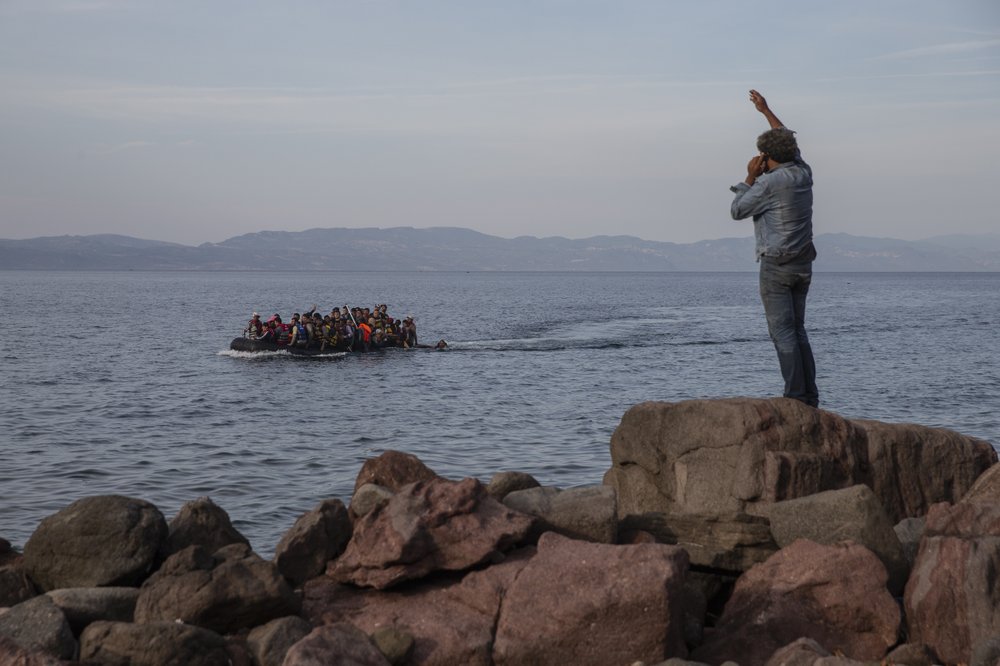
The Greek government wants to use a floating barrier to help stop migrants from reaching the Greek islands from the nearby coast of Turkey.
The Defence Ministry has invited private contractors to bid on supplying a 2.7-kilometer-long (1.7 miles) floating fence within three months, according to information available on a government procurement website Wednesday. No details were given on when the barrier might be installed.
A resurgence in the number of migrants and refugees arriving by sea to Lesvos and other eastern Greek islands has caused severe overcrowding at refugee camps.
The netted barrier would rise 50 centimetres (20 inches) above water and be designed to hold flashing lights, the submission said. The Defence Ministry estimates the project will cost 500,000 euros ($550,000), which includes four years of maintenance.
The government’s description says the “floating barrier system” needs to be built “with non-military specifications” and “specific features for carrying out the mission of (maritime agencies) in managing the refugee crisis.”
“This contract process will be executed by the Defence Ministry but is for civilian use — a process similar to that used for the supply of other equipment for (camps) housing refugees and migrants,” a government official told The Associated Press.
The official asked not to be identified pending official announcements by the government.
Greece’s six-month old centre-right government has promised to take a tougher line on the migration crisis and plans to set up detention facilities for migrants denied asylum and to speed up deportations back to Turkey.
Under a 2016 migration agreement between the European Union and Turkey, the Turkish government was promised up to 6 billion euros to help stop the mass movement of migrants to Europe.
Nearly 60,000 migrants and refugees made the crossing to the islands last year, nearly double the number recorded in 2018, according to data from the United Nations’ refugee agency.
Sourced by: AP News
