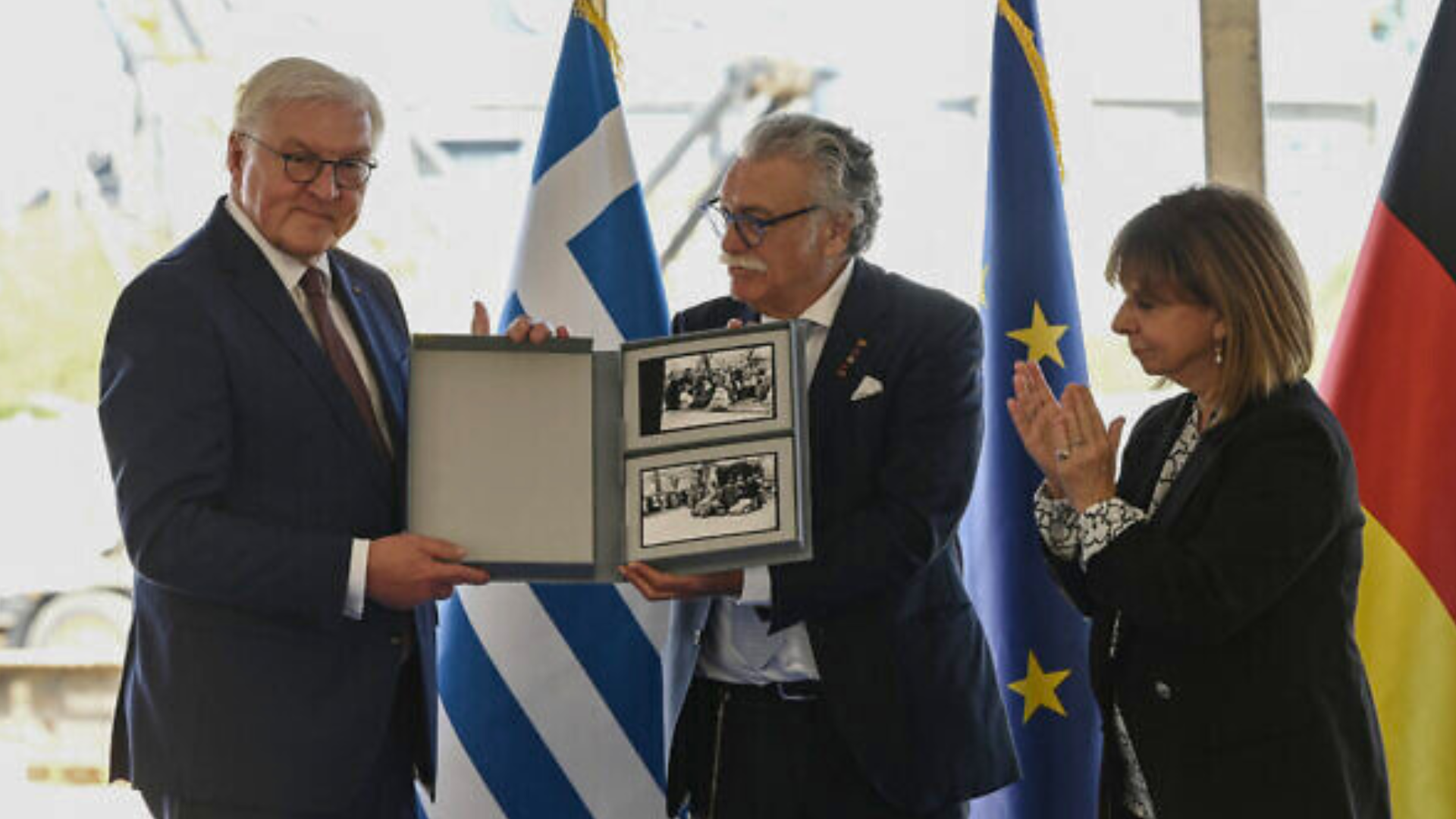
German President Frank-Walter Steinmeier began a three-day state visit to Greece on Tuesday, October 29, during which he visited the site of a Holocaust museum under construction in Thessaloniki.
Located near an old railway station, the site holds deep historical significance, as it was from here that tens of thousands of Jews were transported to Nazi concentration camps during Germany’s occupation of Greece in World War II. Tragically, over 90% of the vibrant Jewish community that once thrived in the region perished in these camps.
“What was done to the Jewish people here remains an enduring memory – a mark that cannot be erased. And today, we stand at the very place where this horror unfolded, here at the old railway station,” Steinmeier stated after a ceremony where he met with leaders of the Jewish community and relatives of Holocaust survivors.
Accompanying him was Greek President Katerina Sakellaropoulou, who recently visited the Auschwitz-Birkenau German Nazi Concentration and Extermination Camp, which was located in occupied Poland during WWII.
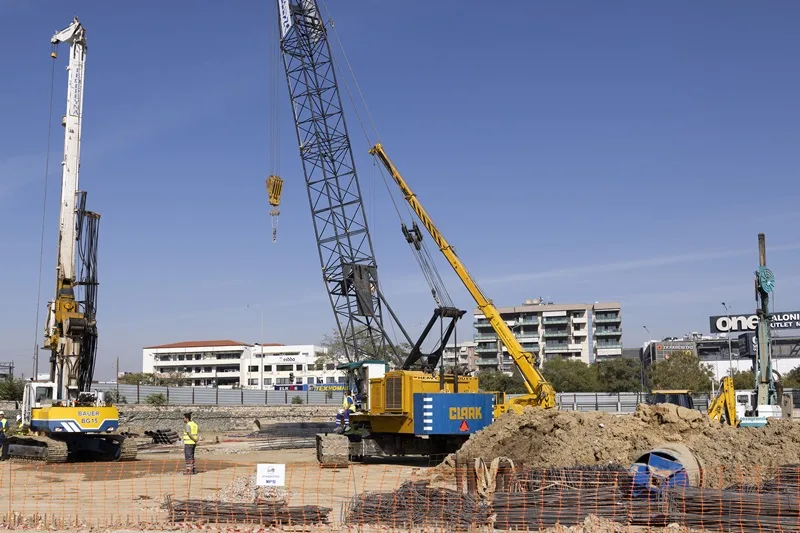
The museum’s construction, funded by the German government, Greek municipal authorities, and private donors, commenced earlier this year and is anticipated to take approximately two years to complete.
“It will not only be a place of remembrance for the millions of victims, but a tribute – a bright symbol against racism and anti-Semitism – serving as a constant reminder of the importance of humanity, tolerance, and peaceful coexistence,” David Saltiel, head of Greece’s Central Jewish Council, remarked.
Designed by architects Efrat-Kowalsky from Israel, Heide & von Beckerath from Germany, and Makridis Associates from Greece, the octagon-shaped museum aims to provide a poignant space for reflection and education.
Following his visit to Thessaloniki, Steinmeier will continue to Athens and then travel to the island of Crete, where he plans to visit a village that was destroyed by German forces during World War II.
Source: ABC News.
