Four young Afghans face trial over catastrophic migrant camp fire in Lesbos

·

UPDATE: The four Afghan asylum-seekers were sentenced to 10 years in prison in Greece.

Four young Afghan asylum seekers were tried in Greece on Friday on charges of starting the devastating fires that burned down Europe’s largest migrant camp last year.

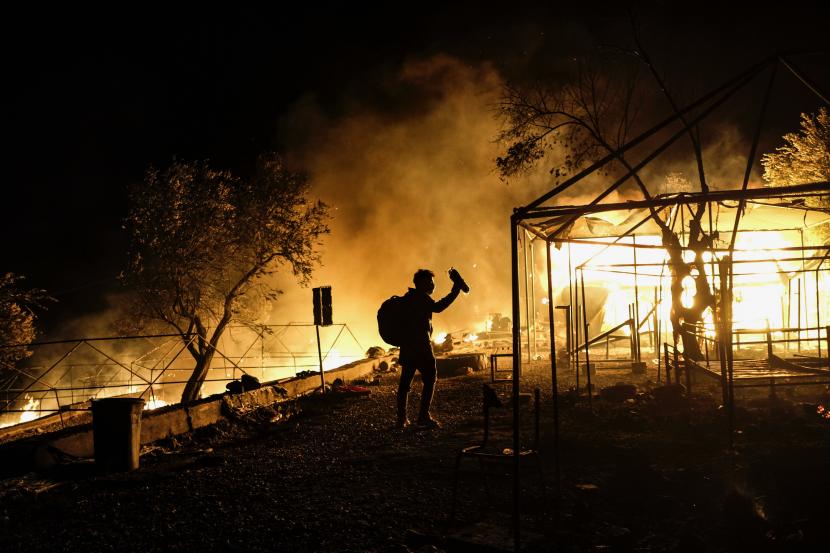
Moria camp on the Aegean island of Lesbos housed more than 10,000 people before being destroyed by two fires in September 2020.

The four Afghans, who are on trial on the neighbouring island of Chios, are charged with arson causing risk to human life and belonging to a criminal group.
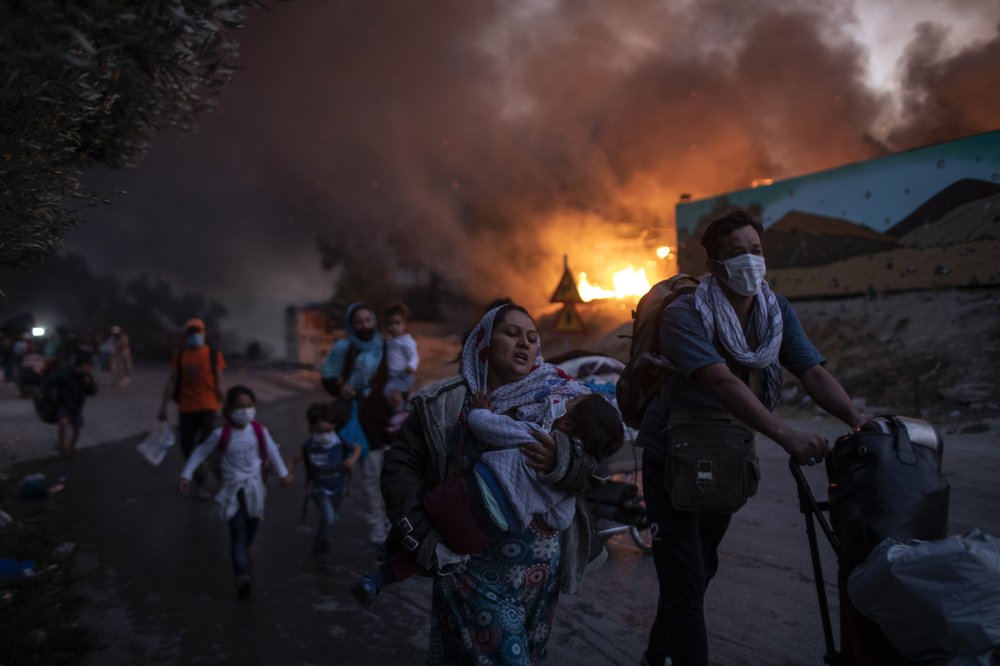
Migrants flee from the Moria refugee camp during a second fire, on the northeastern Aegean island of Lesbos, Greece, on Wednesday, Sept. 9, 2020. Photo: AP Photo/Petros Giannakouris.

A legal source told AFP the four could face up to 15 years in prison if found guilty on both counts. No media were allowed to enter the courtroom due to coronavirus precautions.

Two other young Afghans were jailed in a prison near Athens for five years for the same case in March.

Defense lawyers for Afghans appearing on Friday argued that their clients had not received a fair trial.

READ MORE: Two Afghan youths sentenced to five years jail for causing catastrophic Moria fire

They say three of them had documents showing they were under 18 at the time of their arrest, but were not recognized as minors by the Greek state.

The trial is based largely on the testimony of another Afghan asylum seeker who identified the six as the perpetrators.

Defense lawyers said the witness was not in court on Friday and did not appear at trial last March because he could not be located.
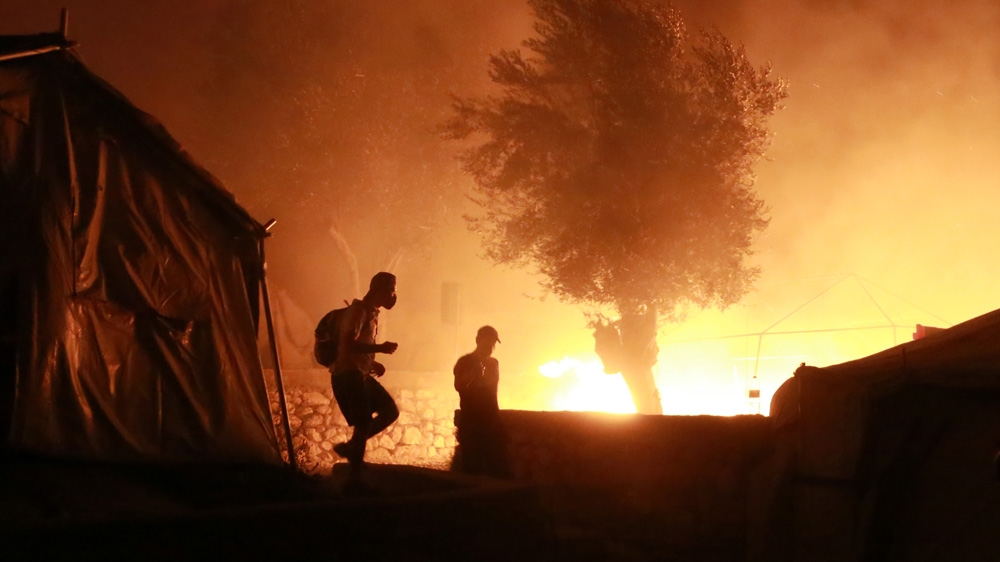
Stand by Me Lesvos, a refugee advocacy group, said the whole camp was on fire [Manolis Lagoutaris/AFP]

The defendants say they were targeted by the witness, a Pashtun ethnic group, as all six are Hazaras, a minority long persecuted in Afghanistan.

The other prosecution witnesses are police officers, firefighters called to the scene in September 2020 and staff from the European Asylum Service and non-governmental groups working in the camp.

The EU has allocated 276 million euros ($ 336 million) to build a new permanent camp on Lesvos and for similar facilities on the islands of Chios, Samos, Kos and Leros.

Source: AFP

Share:

KEEP UP TO DATE WITH TGH

By subscribing you accept our Terms of Service and Privacy Policy.

Latest News

Michael Christofas shortlisted for national portrait prize with tribute to Kastellorizian women

Melbourne photographer Michael Christofas has been named a finalist in the 2026 Percival Photographic Portrait Prize in Townsville.

Memory gathers at double book launch: Rain-soaked readings of migration and storytelling

As rain lashed the windows of St Catherine’s Greek Orthodox Church Hall, warmth gathered around a long table laid with yiayia’s tablecloth.

The last thing born in Ephesus wasn’t marble, and Melbourne has the answer

When you hear the title The Library of Ephesus, you expect marble ruins and dusty scrolls. You do not expect soccer teams, Aristotle Onassis.

Filotimo on a plate: Neoléa and the Cretan Association bring Crete to Adelaide

Neoléa, in collaboration with the Cretan Association of South Australia, hosted an intimate and engaging culinary workshop on Sunday, May 17.

Pallaconians’ OPA Y2K Youth Night brings the 2000s back to Brunswick

More than 100 young people gathered at the Pallaconian Brotherhood’s Laconian House in Brunswick on Saturday, May 9.

You May Also Like

Federal Budget 2020 reveals Australia headed to record debt of almost $1 trillion

Federal Treasurer, Josh Frydenberg, has delivered the budget speech on the floor of the House of Representatives tonight.

Greece prepares military deal with Ukraine, intensifying Russian frustration

Greece and Ukraine are currently negotiating a 10-year assistance agreement similar to those signed by accompanying NATO members.

From tech to health: Greek Australians driving innovation in 2025

Australia’s Top 100 Innovators celebrate those who turn setbacks into breakthroughs. This year, three Greek Australians are among them.