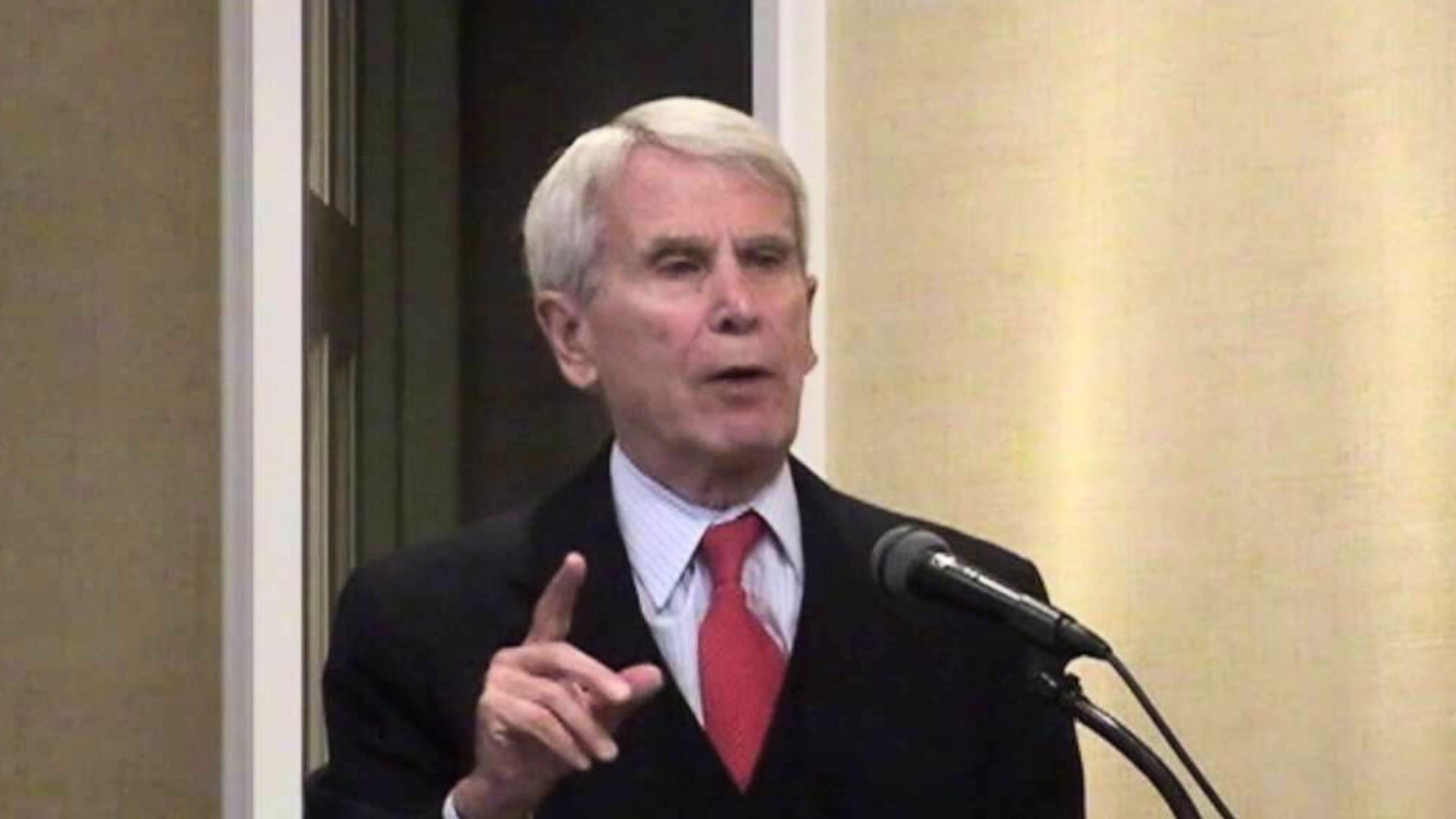
Thomas Niles, a career diplomat and US Ambassador to Greece from 1993 to 1997, has died at the age of 85.
His death from cancer was announced Wednesday, April 30, by his brother, John Edward Niles, in a social media post.
Niles served in Athens during a particularly volatile period in the Balkans following the breakup of Yugoslavia and amid escalating tensions between Greece and Turkey.
His tenure included the 1996 Imia crisis, in which both nations deployed special forces to disputed islets in the Aegean Sea.
A Greek Navy helicopter crash during the standoff killed three officers, and a military escalation was narrowly avoided through high-level US diplomatic intervention, including direct talks by President Bill Clinton with Greek Prime Minister Costas Simitis and Turkish President Suleyman Demirel.
Reflecting on the crisis a year after leaving Athens, Niles criticised the US decision to remain neutral on the sovereignty dispute.
“We knew by the time we took this position that the Greeks were right on the sovereignty argument,” he said.
“When we refused to take a position it sent a signal back to the Turks that we were prepared to countenance or not do anything about aggressive Turkish behaviour toward the Greeks.”
He also defended then-Assistant Secretary of State Richard Holbrooke’s sharp criticism of the European Union’s inaction during the crisis, calling it “unkind, perhaps unnecessary, but true nonetheless.”
The crisis occurred just days after Simitis replaced ailing PASOK founder Andreas Papandreou as prime minister. In a parliamentary debate, Simitis acknowledged US help by stating, “I thank the Americans,” a remark that drew widespread backlash from Greek politicians across the spectrum.
Before his posting in Greece, Niles served as US Ambassador to Canada (1985–89), Ambassador to the European Union (1989–91), and Assistant Secretary of State for European and Canadian Affairs (1991–93). He was succeeded in Athens by R. Nicholas Burns.
Born in Lexington, Kentucky, on September 22, 1939, Niles studied at Harvard and earned a master’s degree from the University of Kentucky.
He served 36 years in the US Foreign Service, with earlier assignments in Belgrade, Moscow, and the US Mission to NATO in Brussels.
Source: Ekathimerini.
