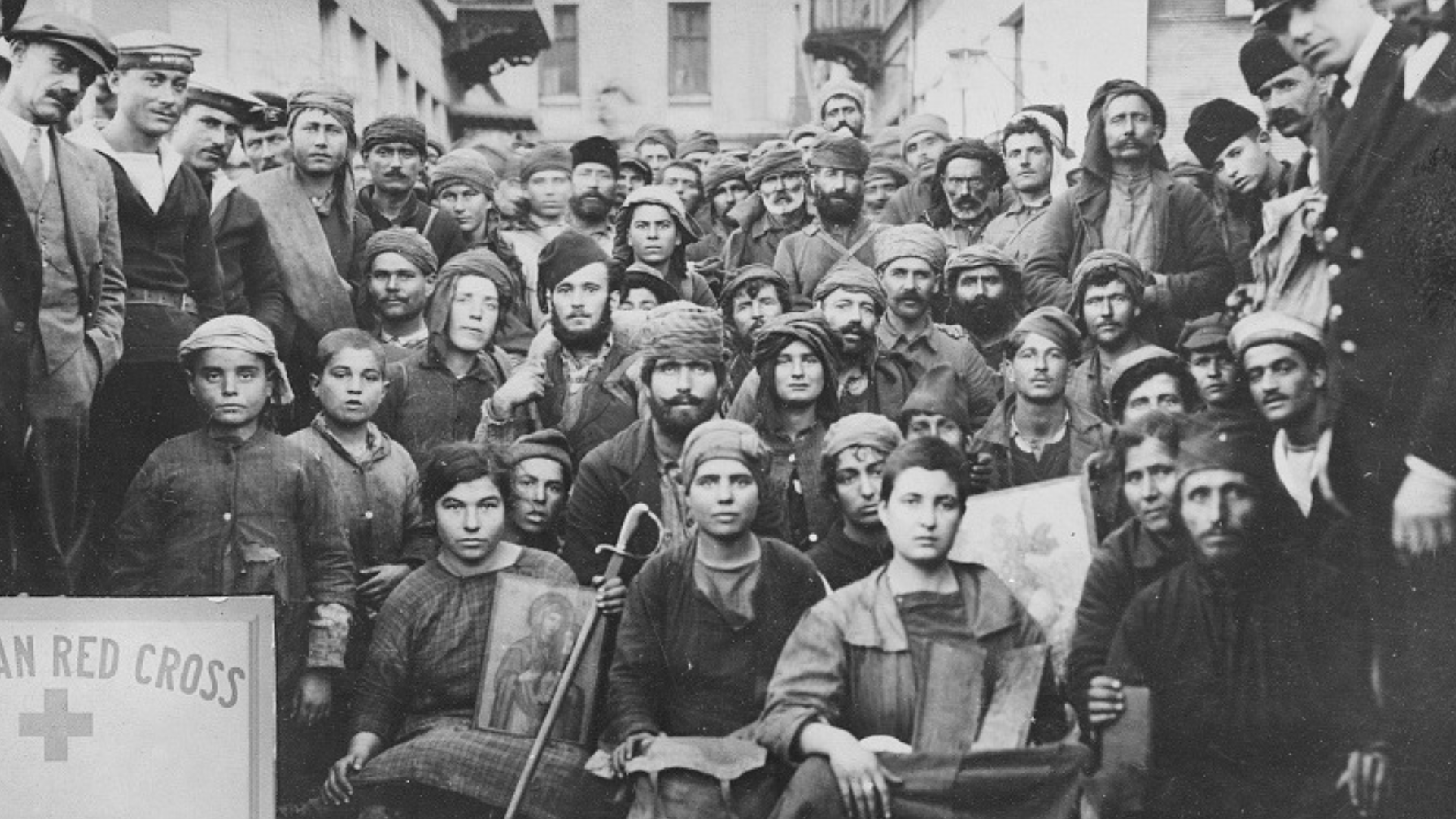
A distinguished collective of history teachers and scholars have called on the NSW Education Department, formally referred to as the NSW Education Standards Authority (NESA), to include the Armenian, Assyrian, and Greek Genocides as a dedicated Depth Study in the New South Wales History Curriculum, reported the Armenian National Committee of Australia (ANC-AU).
This cohort of academics joins every member of the New South Wales Legislative Council, who unanimously supported a motion calling on the government of Australia’s largest state to expand Holocaust education to include the Armenian, Assyrian, and Greek Genocides.
The letter, signed by 27 academics from various institutions across NSW, including the University of Sydney, University of Macquarie, University of Newcastle and UNSW, amongst others, was addressed to Paul Cahill – Executive Director of Curriculum Reform at NESA, and the Hon. Prue Car – Deputy Premier of NSW and Education Minister.
The letter read: “Firstly, we believe that failing to include such a topic in the curriculum does not provide an accurate analysis of World War I, with the 1915-1923 Genocides often being characterised as one of the first of the 20th century.”
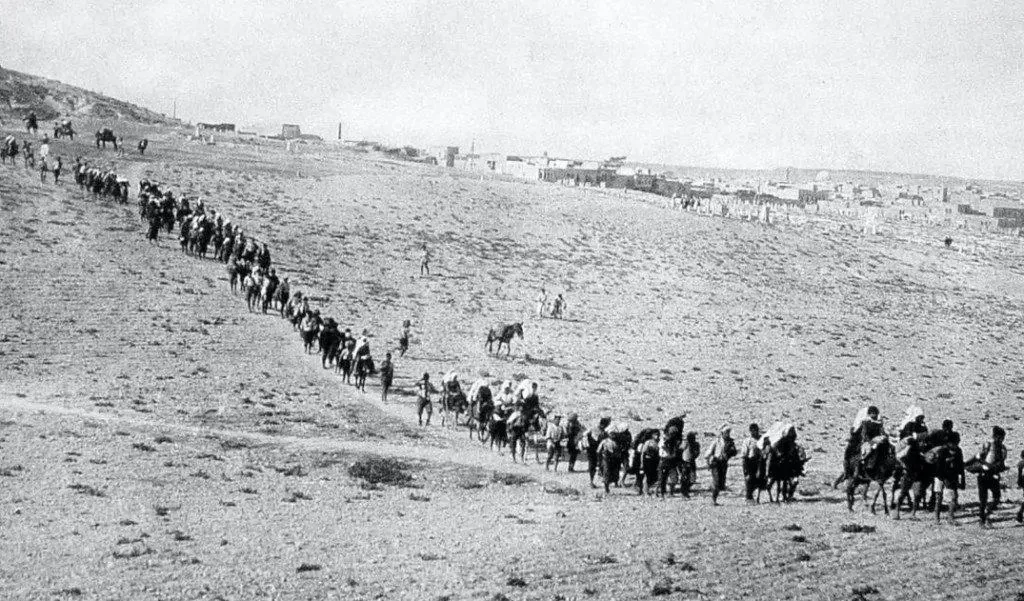
The signatories go on to urge Mr Cahill to include the 1915 Armenian, Assyrian, and Greek Genocides in the curriculum as an in-depth study to shed light on Australia’s first major humanitarian relief effort to aid victims of the 1915 Genocide and to reinforce the importance of tolerance for divergent cultures and beliefs; a core value of a multicultural, democratic society.
ANC-AU Executive Director Michael Kolokossian said, “Genocide education is crucial for fostering a well-informed and empathetic society. By understanding past atrocities, we equip our students with the knowledge to prevent such tragedies in the future and promote a culture of tolerance and human rights.”
The Armenian National Committee of Australia (ANC-AU) has written to each of the signatories, expressing the community’s gratitude for their principled stance and their ongoing efforts to educate young people about the Armenian Genocide.
The full list of signatories can be found below.
Signatories include:
- Professor Peter Stanley, Research Professor, UNSW Canberra
- Dr. Melanie O’Brien, Associate Professor of International Law, University of Western Australia; President, International Association of Genocide Scholars
- Dr. Darren O’Brien, Chair, Australian Institute for Holocaust and Genocide Studies
- Vicken Babkenian, Independent Researcher, Australian Institute for Holocaust and Genocide Studies
- Dr. Panayotis Diamadis, Vice President, Australian Institute for Holocaust and Genocide Studies
- Professor Philip Dwyer, Centre for the Study of Violence, University of Newcastle
- Professor Paul Richard McKechnie, Associate Professor in Ancient Cultures, Macquarie University
- Professor Hans Lukas Kieser, Associate Professor of History, University of Newcastle; Titularprofessor, University of Zurich
- Dr. Eureka Henrich, Lecturer in History, UNSW Sydney
- Dr. Umit Kurt, School of Humanities, University of Newcastle
- Dr. Sacha Davis, Lecturer in History, University of Newcastle
- Ms. Michelle Shamoell, Social Work Lecturer, Excelsia College
- Dr. Yona Gilead, Malka Einhorn Modern Hebrew Senior Lecturer & Program Director
- Mr. Edward Demirdjian, Principal, Hamazkaine Arshak & Sophie Galstaun College
- Ms. Leyana Alkhas, Secondary School Teacher
- Dr. Deborah Mayersen, Senior Lecturer in International and Political Studies, UNSW Canberra
- Dr. Eyal Mayroz, Senior Lecturer, Peace and Conflict Studies, University of Sydney
- Professor Iain Gardner FAHA, Professor of the History of Religions, University of Sydney
- Dr. Yona Gilead, Malka Einhorn Modern Hebrew Senior Lecturer & Program Director
- Professor Luke McNamara, Centre for Criminology, Law and Justice, UNSW
- Suzanne D. Rutland OAM, Professor Emerita, Hebrew, Biblical & Jewish Studies, University of Sydney
- Associate Professor Matthew Bailey, Director of Education, Department of History and Archaeology, Macquarie University
- James Der Derian, Director, Centre for International Security Studies, University of Sydney
- Dr. Marco Duranti, Senior Lecturer in Modern European and International History, University of Sydney
- Dr. Jan Láníek, Associate Professor in Jewish and Modern European History, UNSW Sydney
- Ann Curthoys AM, Professor Emerita at the Australian National University
- Dr. Michael Abrahams-Sprod, Roth Senior Lecturer in Jewish Civilisation, Education and Israel Studies, University of Sydney
Source: ANC.
