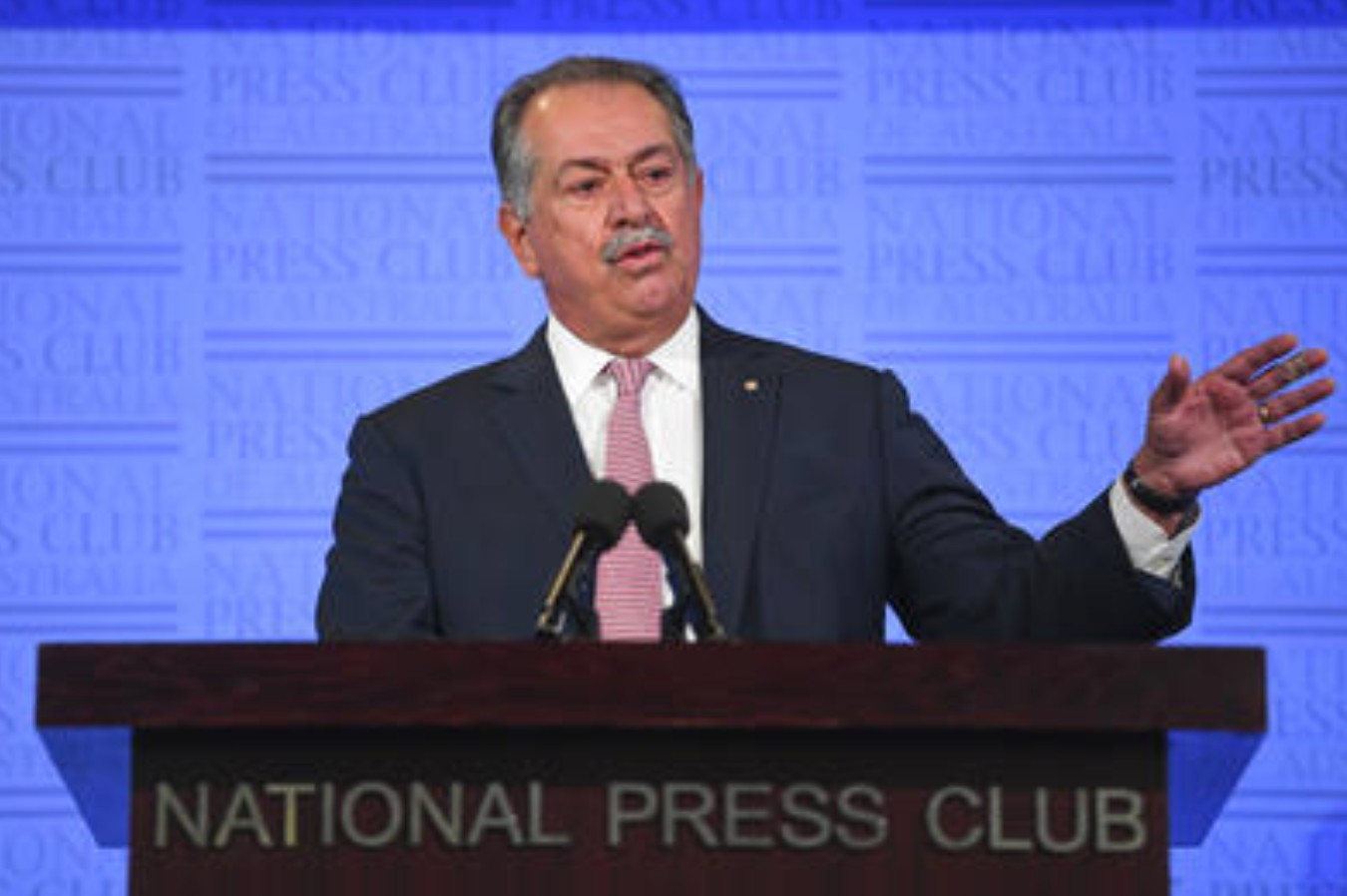
Former Chairman of The Dow Chemical Company, Andrew Liveris AO spoke about Australia’s opportunity for manufacture expansion during a National Press Club address Wednesday afternoon.
Known globally for advocating the criticality of manufacturing worldwide, Liveris spoke about Australia’s need to diversify their manufacturing strategy, urging that the country has to be a “leader” in the global market.
The Greek Australian businessman argued that the first step in this plan is the transition from coal to gas as part of its energy transition.
“I know that’s not a popular thing to say in some parts of the political establishment,” he says. “But unless you do carbon sequestration, you need to find way to get gas into the mix.”
“I warned that we were going to kill our manufacturing sector if we exported all of our gas as LNG,” he says. “Well, we almost got there. We almost killed it all. We have rendered our natural gas supply as unreliable, inaccessible.”
“We can’t get massive amounts of gas in the basins around the country to market because we have limited infrastructure. It’s like buying airplanes and having no airports. Where do you land?”
Liveris recommended four objectives for Australia in pursuit of a sustainable economy.
1. Build a manufacturing centre with technological capabilities worthy for the 21st century.
2. Diversify economic interests.
3. Invest in sustainable technologies and investment centre.
4. Restructure and reset skill base of Australian citizens.
Financial Review‘s political editor Phil Coorey asked Mr Liveris about Australia’s relationship with China, and whether the government may need to temper its public comments towards Beijing in the interests of the economic relationship.
“I never put myself in the position of a leader of a country because that’s a hard job. I’ve been around a lot of leaders. It is a difficult balancing act, in terms of what your population needs to hear, versus the competing positions of a different country,” Mr Liveris says.

“If you look at environmental standards, labour standards, all the thing we care about, we should set the highest bar. Code of conduct should be the highest bar.
“Whether other countries respond to that, it’s their choice but I don’t believe we should necessarily call them out on that. I think we should actually spend our time trying to help them if they want to be helped.”
