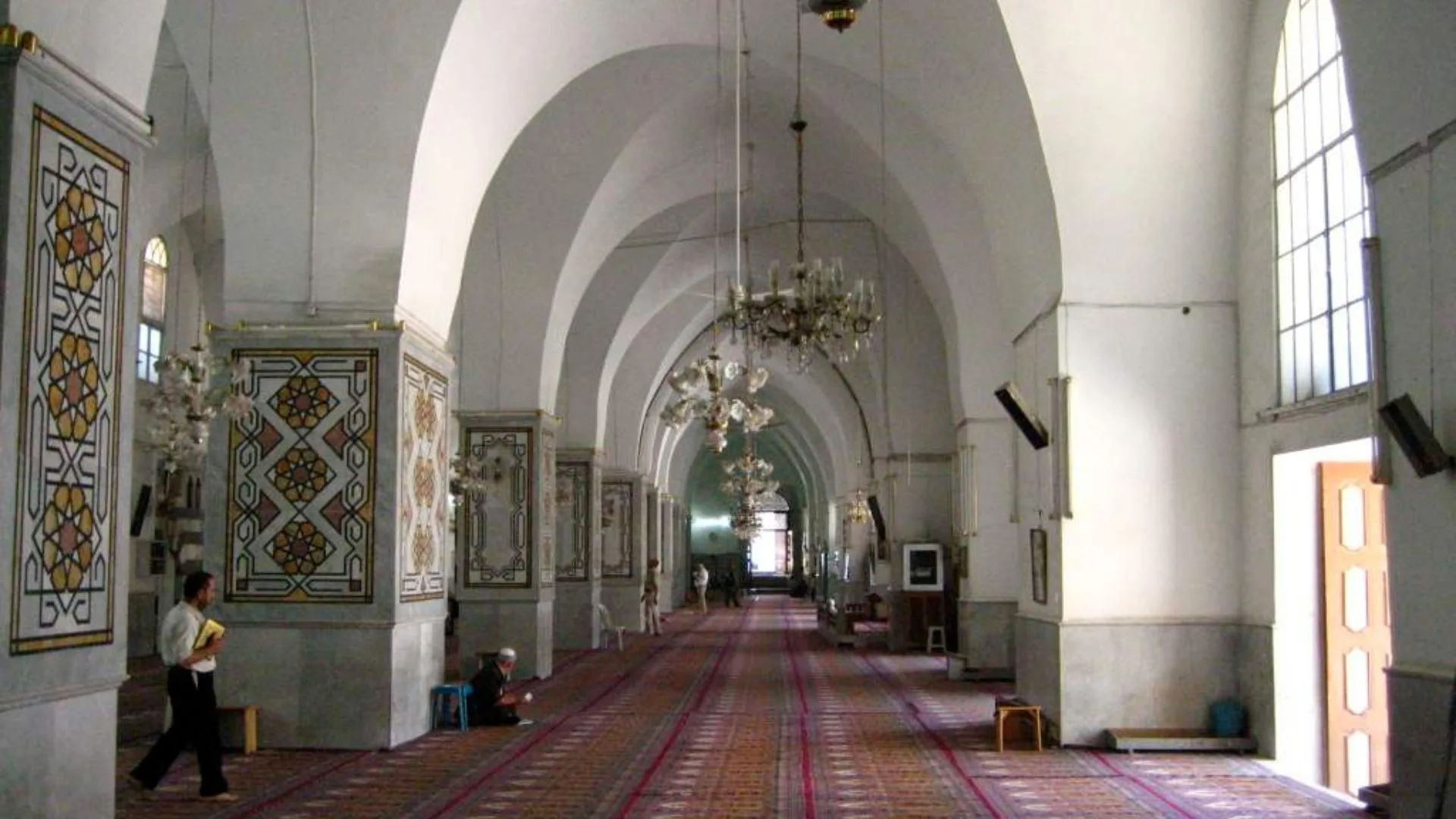
A newly studied Greek inscription discovered inside the Great Mosque of Homs in Syria is offering fresh insight into the long-lost Temple of the Sun in ancient Emesa and its possible link to the Roman emperor Elagabalus, according to arkeonews.gr
The inscription was found in 2016 during restoration work, carved into the granite base of a column beneath the mosque’s floor. Measuring about one meter square, it features a 75-centimeter inscribed panel bordered by decorative elements. Although ongoing instability in Syria delayed research, the text has now been fully analyzed and published in the journal Shedet.
Homs, known in antiquity as Emesa, was an important Roman provincial capital and a center of solar worship associated with the deity Elagabalus. Scholars have long suspected that the mosque stands on the site of this ancient temple, but firm evidence had been lacking.
According to Professor Maamoun Saleh Abdulkarim, the inscription uses grand, symbolic language—comparing a ruler to wind, storm, and leopard—typical of Roman-era dedications. Its formal Greek lettering and style further support its historical significance.
This discovery may provide the strongest evidence yet that the mosque was built atop a major pagan sanctuary. Despite minor linguistic irregularities, the inscription likely dates to the Roman imperial period and was originally part of a monumental structure.
If confirmed, the find supports the idea of continuous religious use at the site, evolving from pagan temple to Christian church and later to Islamic mosque, reflecting a broader pattern of adaptation rather than destruction in the region.
Source: arkeonews.net
