By Lisa Radinovsky from Greek Liquid Gold.
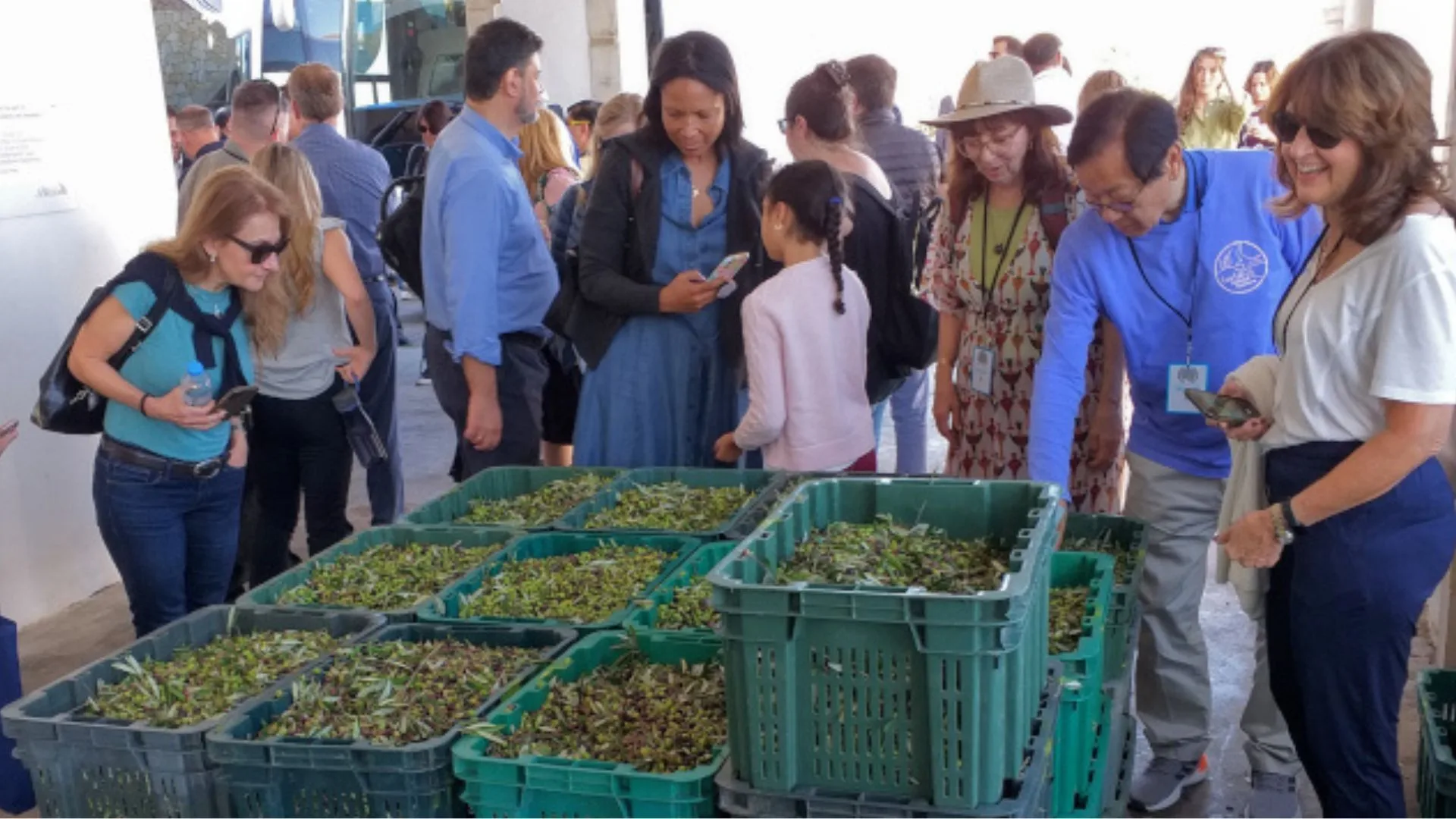
Olive oil tourism (oleotourism) attracts increasing numbers of visitors who seek authentic experiences in olive oil producing countries. This type of sustainable alternative tourism focuses on tradition, tasting, discovery, and hands-on experiences in rural areas. The International Olive Council organized an international webinar to explore it with experts.
Olive oil tourism is “a new model of sustainable tourism” that aims to share “the excellence of extra virgin olive oil and other olive products” with travelers, according to International Olive Council Deputy Executive Director Dr. Abderraouf Laajimi. At the intersection of tradition and innovation, he added, oleotourism promotes “olive culture throughout the Mediterranean basin and the world.” Laajimi pointed out oleotourism’s connections to gastronomy, agriculture, landscape, culture, heritage, history, and rural development.
Olive oil tourism can involve a wide variety of activities
- Olive oil tastings led by experts
- Tours of traditional and modern mills
- Olive oil menus and food pairings with chefs
- Olive picking and observation of oil production
- Area tours focused on olive oil and local products
- Olive farm and village stays
- Cultural events at olive mills
- Visits to ancient olive trees
- Farm-to-table experiences
- Olive oil museum visits
- Picnics in olive groves
- Olive oil soap making
- Cooking lessons
These examples from the island of Crete in Greece were provided by Eleftheria Mamidaki, manager of Anoskeli winery and olive oil mill and chairperson of the Association of Olive Mills of Chania, Crete. At the webinar, Mamidaki explained that Crete offers olive oil tourism experiences at more than 130 agrotourism establishments. She discussed Crete’s oleotourism offerings, potential, and strategy “as the paradigm for unlocking the potential of olive oil tourism across Greece.”
Olive oil tourism embraces history, heritage, gastronomy, and agriculture
Mamidaki linked olive oil tourism in Crete to the island’s history and heritage, going back to Minoan times. For instance, ancient olive trees such as the 3,000 to 5,000 year old sculpturesque olive tree of Ano Vouves are living natural monuments that already attract thousands of tourists each year. Olive Routes are being developed to link monumental olive trees and archaeological sites to visitable mills on the island. Twelve Protected Geographical Indication (PGI) and Protected Designation of Origin (PDO) olive oils in Crete attest to the island’s high-quality extra virgin olive oils.

The declaration of Crete as a European Region of Gastronomy for 2026 offers an excellent opportunity, Mamidaki suggested, to highlight olive oil tourism there. With the traditional, olive-oil-rich Mediterranean diet declared an intangible cultural heritage by UNESCO, its Cretan version has repeatedly been recognized as one of the world’s healthiest eating patterns. As Mamidaki pointed out, this enables Cretans to link “our cultural past to the modern health and food tourism markets.” The olive oil sector is the largest contributor to Crete’s agricultural economy, and Crete itself is a world-famous tourist destination. So the island’s olive oil tourism is anchored in thriving industries.
Benefits of oleotourism for visitors, producers, and communities
- “Economically supports rural and local producers, through new income streams and complementary activities, reducing seasonal fluctuations by encouraging year-round tourism.”
- “Provides cultural and environmental protection by promoting a deeper understanding of sustainable olive oil culture, traditional production methods, and environmental care.”
- Fosters “sustainable tourism focused on authentic, hands-on experiences based on high-quality products.”
- Strengthens “the connection between consumers and producers while enhancing appreciation for high-quality olive oils and their role in gastronomy and diets.”
Webinar speakers agreed that olive oil tourism can offer numerous advantages, with the International Olive Council’s Laajimi emphasizing the four main benefits above.
Keynote speaker Sandra Carvao, Director of Market Intelligence, Policies and Competitiveness at UN Tourism, emphasized the importance of the rural development that olive oil tourism can help stimulate. She reported that more than 80% of impoverished people worldwide live in rural areas, which also host 80% of the world’s biodiversity. With some help, Carvao said, “farmers can be guardians of land preservation to fight climate change,” as rural communities are reinvigorated.
Interest, challenges, solutions: collaboration and planning for oleotourism
Travelers to Europe have recently shown noteworthy interest in trips focused on food and wine, farm stays, food sustainability, longevity, authenticity, heritage, and natural landscapes, according to Professor Roberta Garibaldi—all potential aspects of olive oil tourism. However, the webinar speakers noted that there is room for improvement, for example in infrastructure such as roads and signs in some areas. Like other speakers, Laajimi acknowledged that oleotourism’s potential difficulties involve investment costs, seasonality, and pressure on the environment and communities.
Several speakers emphasized that planning, coordination, training, and collaboration are essential to make oleotourism work well, with manageable numbers of visitors. Collaboration among government officials, restaurant and hotel owners, tour operators, olive oil companies, and other members of the community can help improve the olive oil tourism experience for both visitors and locals. Of course, promotion is also important, especially on social media and websites. Compelling narratives can engage travelers, and positive reviews of olive oil tourism activities can encourage more visitors.
Olive oil tourism success stories worldwide
Olive oil professionals from Brazil, Argentina, Portugal, and Spain described a number of successful oleotourism examples. Miguel Zuccardi revealed that his team lets visitors to their groves in Argentina pick olives, take them to a special milling machine, and bottle their own olive oil to take home. Bob Costa said visitors to his facilities in Brazil “can take a sensorial dive into a new universe.” Discovering “what truly fresh oil is,” he added, can stimulate “enchantment.” Their new understanding “gets people to look for quality products,” according to Costa, which “has a direct impact on demand” for high-quality olive oil.
Filipa Velez said her team often teaches children about olive oil in Portugal. She believes children turn out to be “the best educators of all,” because they share what they learn with their families. Ana Carrilho pointed out that well-trained olive oil tourism guides should teach visitors about biodiversity, olive oil production, storage, freshness, flavors, food pairing, and more, so newly educated consumers can “become ambassadors” for high-quality olive oil worldwide.
*Originally published on Greek Liquid Gold: Authentic Extra Virgin Olive Oil (greekliquidgold.com). See that site for recipes with olive oil, photos from Greece, agrotourism and food tourism suggestions, and olive oil news and information.
 attracts increasing numbers of visitors who seek authentic experiences in olive oil producing countries.)