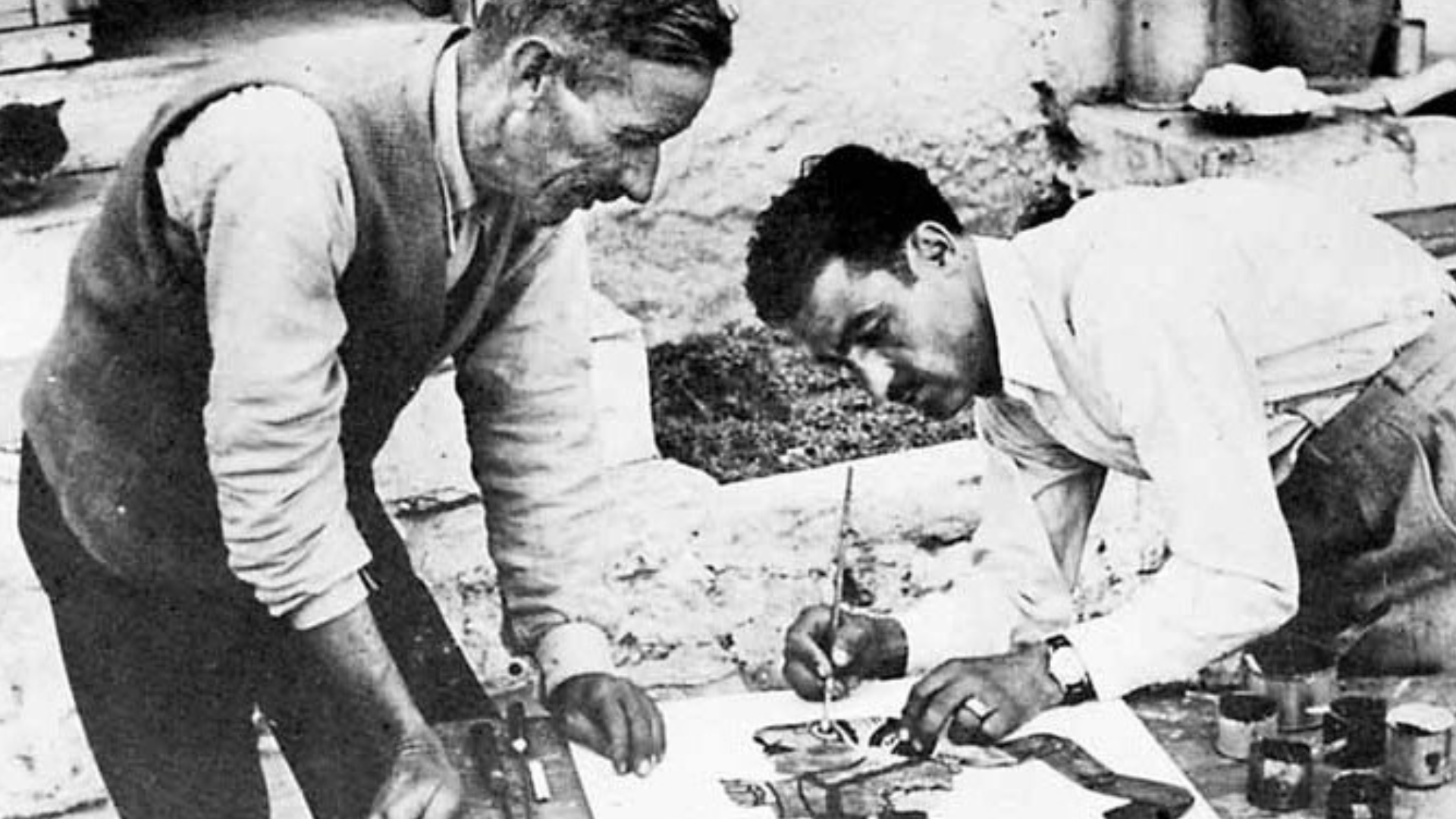
Evgenios Spatharis was the leading representative of Shadow Theatre in Greece. He was a genuine folk artist, who kept the tradition of Karagiozis alive and attempted to teach it to younger pupils.
Evgenios was born on January 2, 1924 in Kifissia, Attica and was the son and successor of the great karaoke player Sotiris Spatharis (1892-1974).
His career began in 1942 and since then he toured and gave performances in theatres and cinemas in Greece. In 1962 he recorded every classic performance of Karagiozis in ‘Columbia’, which were all released on records. In 1966 he was one of the first collaborators of the Experimental Television Station of EIR (ERT), which lasted until 1992.
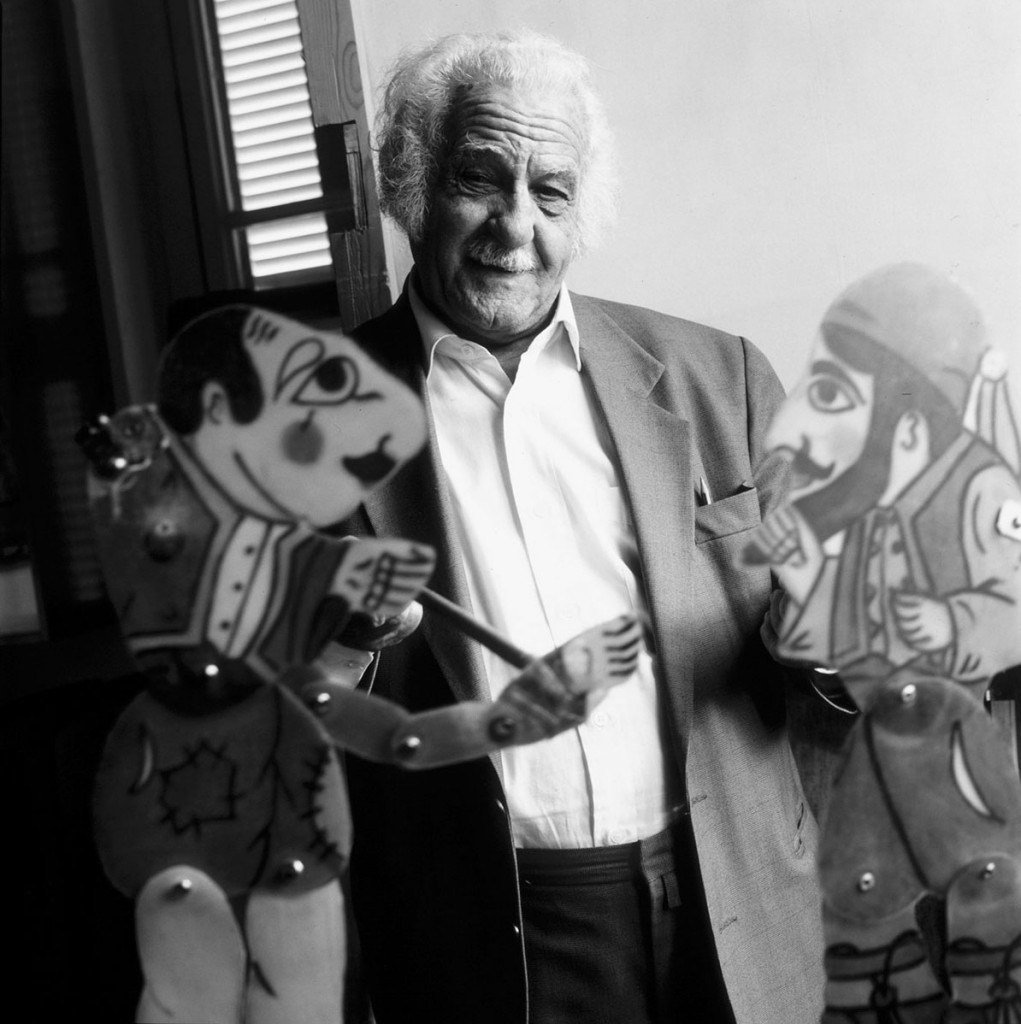
His action in the field of theatre is considered remarkable, directing or staging with great success the performances of ‘Alexander the Great’, with the Greek Dance Drama (1950) and Sofia Vembo (1954). Spatharis also had critical involvement in ‘The Journey’ by George Themelis (1965), ‘Karagiozis Dictator’ by George Giannakopoulos (1969), and ‘Our big circus’ by Iakovos Kampanellis (1972).
In 2001, in collaboration with musicians Ludovico of Anogia and Psarantoni, presenting in Greece and abroad ‘Erotokritos’ by Vicenza Kornaros. In the same year, the Art Theatre staged the play ‘Wealth’ by Aristophanes, starring Evgenios Spatharis. According to him, his presence in the theatre of Epidaurus was the most important stage of his life.
In addition to his huge accomplishments in the field of shadow theatre, Evgenios Spatharis was a distinguished painter, with more than 50 solo and group exhibitions in Greece and abroad. In his artwork he strongly preserved the main features of folk painting, connecting them with unprecedented realism and great colour vibrancy.
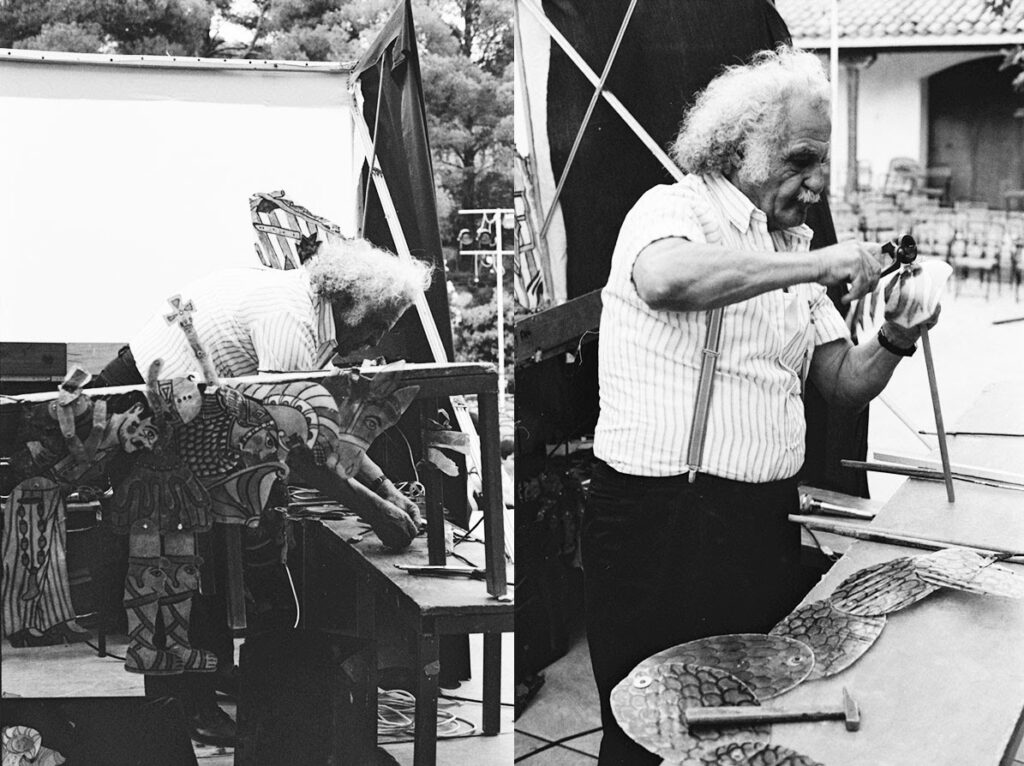
Evgenios Spatharis was honoured with commemorative awards, both in Greece and abroad, for his important and long-standing contribution to the shadow theatre. In 1980, at the Ithaca Festival, he received awards for best director, set design and costume design for the play ‘O Tilalis; by Michalis Bourboulis.
In February 2007, the Ministry of Culture honoured him for his valuable contribution to art and Greek folk tradition, awarding him a commemorative plaque and organising an event dedicated to his sixty-year career.
Evgenios Spatharis died on May 9, 2009, at the age of 85.
Sourced By: San Simera
