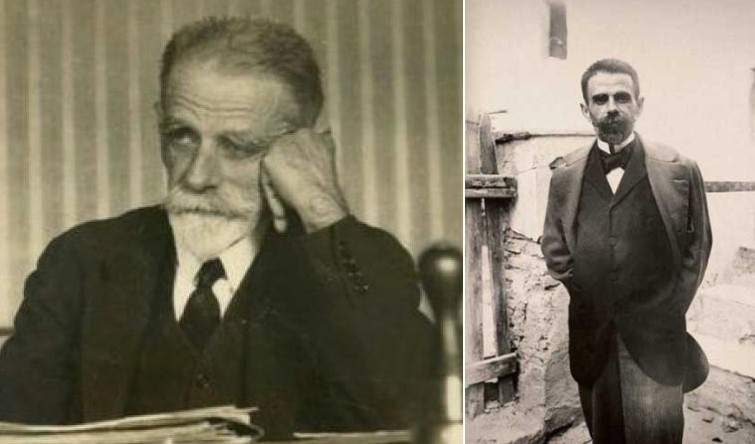
Greek poet Kostis Palamas was one of the most important intellectual figures of modern Hellenism, becoming a central figure in the ‘literary generation of 1880’.
Kostis Palamas was born in Patras on January 13, 1859, and came from an old Missolonghi family. At the age of seven he was orphaned by his father and mother and went to live in Missolonghi with his uncle Dimitrios Palamas.
While he initially enrolled in Law School, it didn’t take him long to realise that his passion laid with poetry, devoting himself to the art of speech.
In 1886 he published his first collection of poems entitled Songs of My Homeland. In this collection, Palamas speaks through words of youth, giving audiences the thoughts of sensitivity. Palamas, together with Drosinis and other poets, used the vernacular method of poetry writing, contrast to the romantic puritanical poets published at the time.
On December 27, 1887 he married Maria Valvi, a descendant of a political family of Messolonghi, with whom he had three children; Leandros, Nafsika and Alkis.
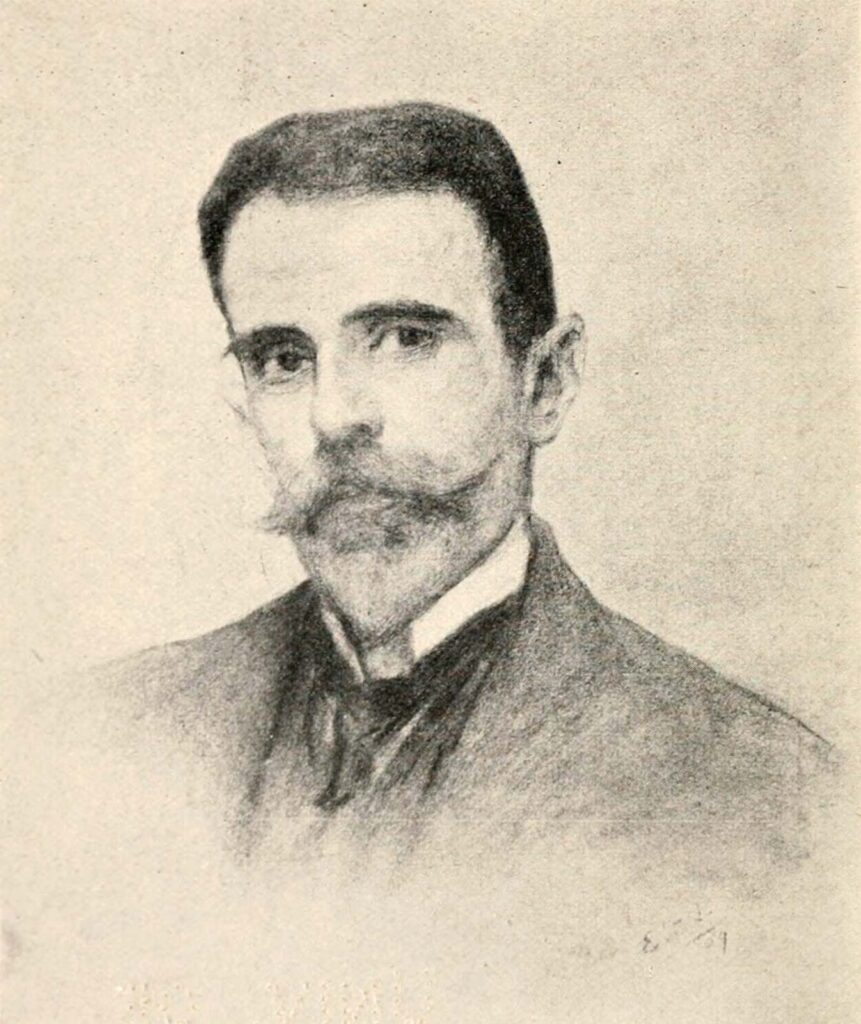
In 1904, Palamas published the poetic collection Asalefti Zoi, which at the time was a proper illustration of the poets newfound maturity, expressing pure emotion that was tightly tied to the contemplation and the sharpness of the verse. Following this collection, he released ‘The Poor of the Lagoon’, ‘State and Loneliness’, ‘The Altar’ and the two epic compositions of ‘The Twelve Gypsies’ (1907) and ‘The King’s Flute’ (1910).
These poetic works elevated him to the top of Greece’s poetry writers, signalling his accomplishments as one of the era’s greatest writers.
In 1926 he joined the Academy of Athens as a member, becoming president in 1930. Four years later he was nominated for the Nobel Prize in Literature, with his fame stretching past the borders of Greece.
Kostis Palamas died on February 27, 1943, and is recognised to this day as being a source of pure universal idealism.
Sourced By: San Simera
