The world’s current state of geopolitical affairs is interesting, to say the least. In this context, a purportedly Chinese saying comes to mind: “May you live in interesting times”, which in its English rendition denotes the phrase’s inherent irony – wishing the recipient to live in times of unrest and disorder.
It is in such an environment, where we may be close to another world war, that I and many others seek rectification – researching and examining facts and propaganda as to why and how wars occur.
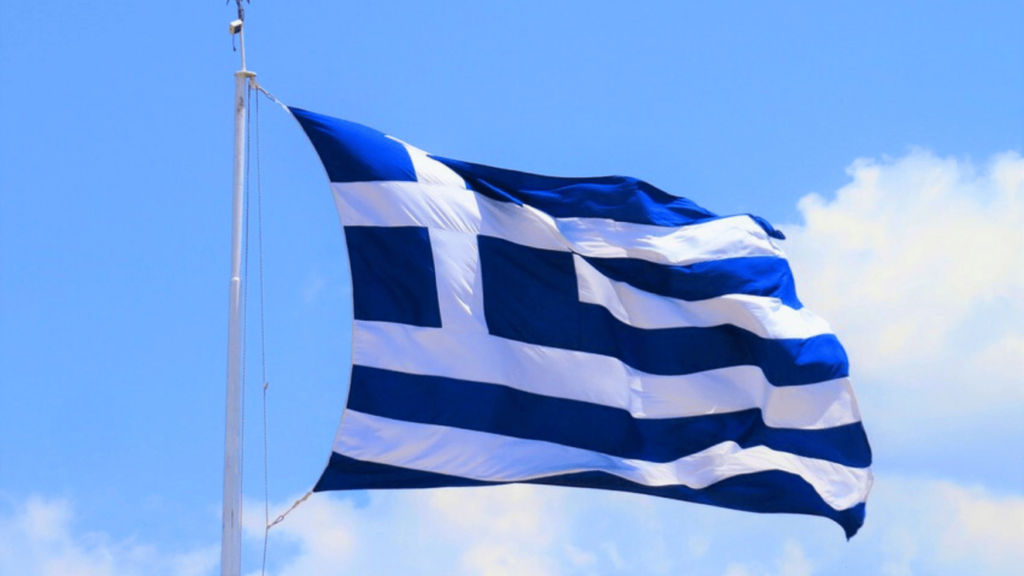
Such pondering lately leads me to examine the 28 October 1940 “OHI (NO) Day” in a broader context. The annual homage to “OHI” Day stems from Greece’s Prime Minister Metaxas firmly stating “OHI” (NO) to Mussolini’s request for his Italian Fascist army to pass through Greece on the above-mentioned date.
Metaxas’ poignant utterance – “So this is war!” – to Mussolini’s messenger, preceded his explanation to the Greek people shortly after, on the same day, 28 October 1940:
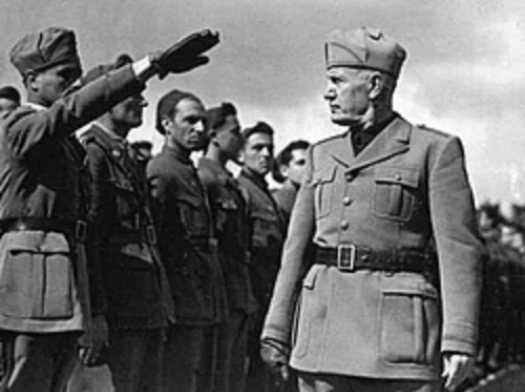
“The moment has come for us to fight for the independence of Greece, its integrity, and its honour. Although we have demonstrated the strictest neutrality and equality towards all, Italy, not recognising our right to live as free Greeks, demanded from me today at 3 o’clock in the morning the surrender of parts of the national territory according to her own will, that the movement of her troops to occupy them should begin at 6 o’clock in the morning. I replied to the Italian Ambassador that I consider both this request in itself and the manner in which it is being made as a declaration of war by Italy against Greece. Greeks, now we will prove whether we are worthy of our ancestors and the freedom that our forefathers secured for us. Let the entire nation rise up together, fight for the homeland, your women, your children, and our sacred traditions. Now the struggle is above all.” – Address of Ioannis Metaxas to the Greek People, 28-10-1940
Metaxas, an experienced politician and skilled diplomat aiming to keep Greece neutral, evocatively describes the why of his “OHI” to the press a few days later:
“To avoid war we would have to become willing slaves and pay by extending Greece’s right hand for amputation by Italy, and Bulgaria would cut off our left hand. Of course, it is not difficult to predict that in such a case, the English would cut off Greece’s legs. And rightly so. As they are sovereign at sea, they would not fail, after seeing the enslavement of Greece, to occupy Crete and other of our islands, defending their interests.” – Announcement by Prime Minister Metaxas to the owners and editors-in-chief of the Athenian press at the General Headquarters [Hotel “Great Britain”] on October 30, 1940.
I recently conversed about 28 October 1940 with an Italian gentleman in his 50s who has been living “happily” in Greece for almost two decades. Not wishing to be named, he felt that reciting some Italian history was necessary: “Around a million Italians died in WWI, due to being betrayed by the Allied forces – like Great Britain and France. At the end of WWI and beyond, Italy was in great debt with huge inflation, whereby more than half a million people died due to food shortages and poor harvests in 1918 – apart from the Italians who died fighting this first world war.”
He then declared with indignation: “The Allies lied to us. We were betrayed at the Treaty of Versailles in 1919, and the Italian people were hurting and angry, and this led to Mussolini and fascism.”
I didn’t point out that Italy involved Greece in World War II by invading her on 28 October 1940. That the failures of Mussolini’s fascist army in Greece forced Hitler to send German troops to Greece in April 1941 – an Axis occupation that lasted until 1944, with much suffering, to say the least, for the Greek people.
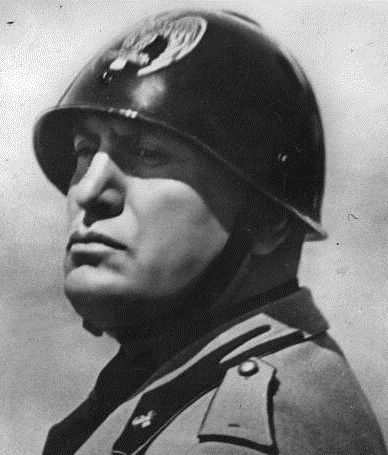
With documented sources now more accessible, prompting research and discussion in this era where a lack of overall trust towards global establishments’ narratives seems prevalent, I came across surprising information. For example, the “una faccia, una razza” – “one face, one people” saying, referring to a fraternal bond between the Greek and Italian people, was used as exaggerated propaganda by the “Western Allies”.
When Italy switched sides away from the Axis and sided with the Allies in a secret truce in 1943, “una faccia, una razza” was apparently pushed by the Allies as post-war propaganda to cover many atrocities enacted by Mussolini’s fascist army.
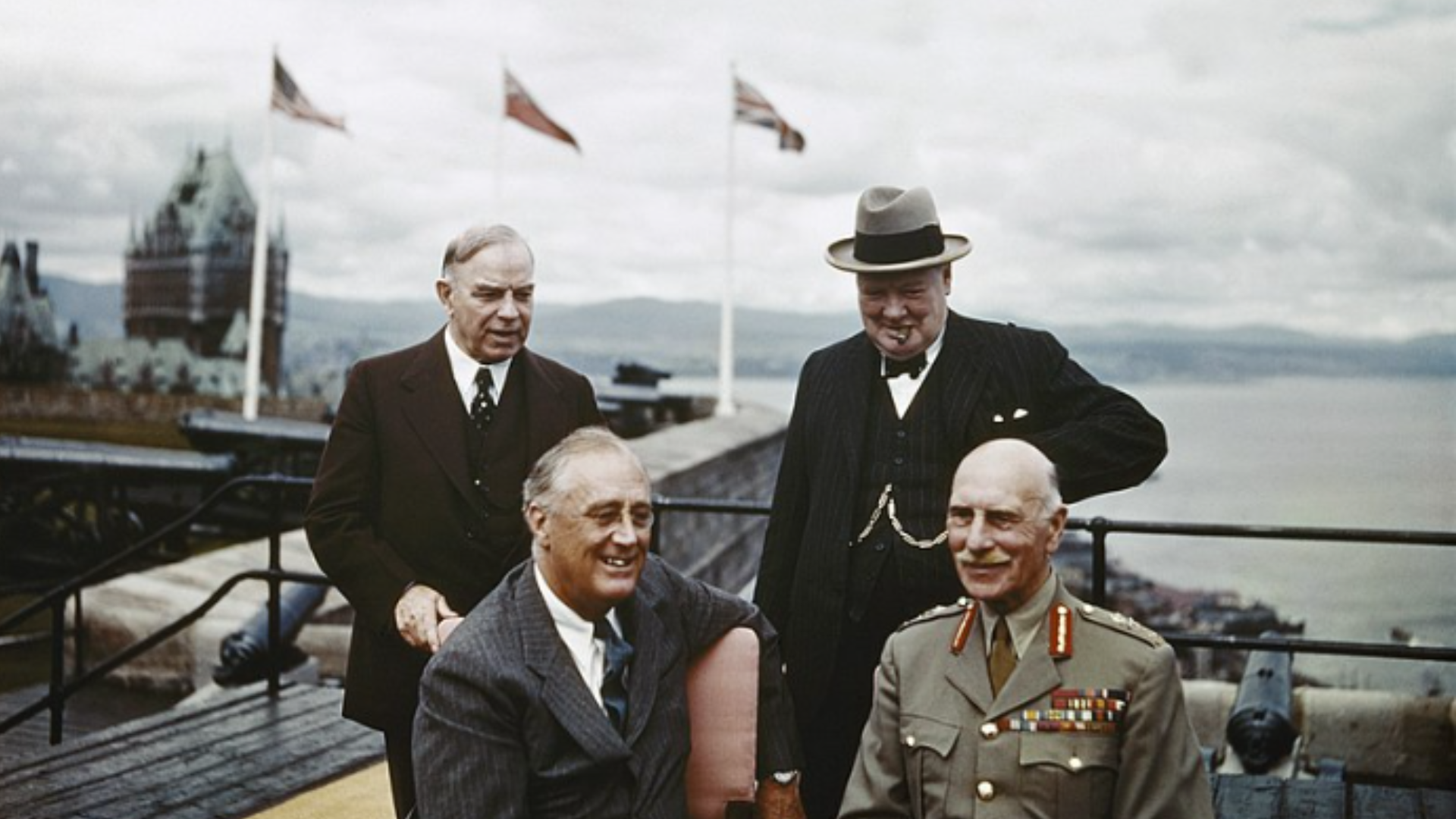
Researcher Spyros Ionas, for example (with sources), writes of the Italian army’s abuses and war crimes in Greece. He further elaborates that Italy was involved by Churchill and Roosevelt in the First Quebec Conference of 1943, whereby her surrender and changing of sides to the Allies included “shaping a new democratic image of the country, covering up and erasing its past”… a “clean-up operation” reinforced in the 1947 Paris Peace Treaty.
Academic Ioannis Kotoulas (PhD in History, PhD in Geopolitics) states that an overall view of the Italian army in Greece from 1940 onwards as humane, compared to the German army, is “a largely post-war construction… the artfully promoted myth of noble behaviour.” He adds, “the coexistence of the Italian soldiers with the subservient Greek population was not a harmonious experience.”
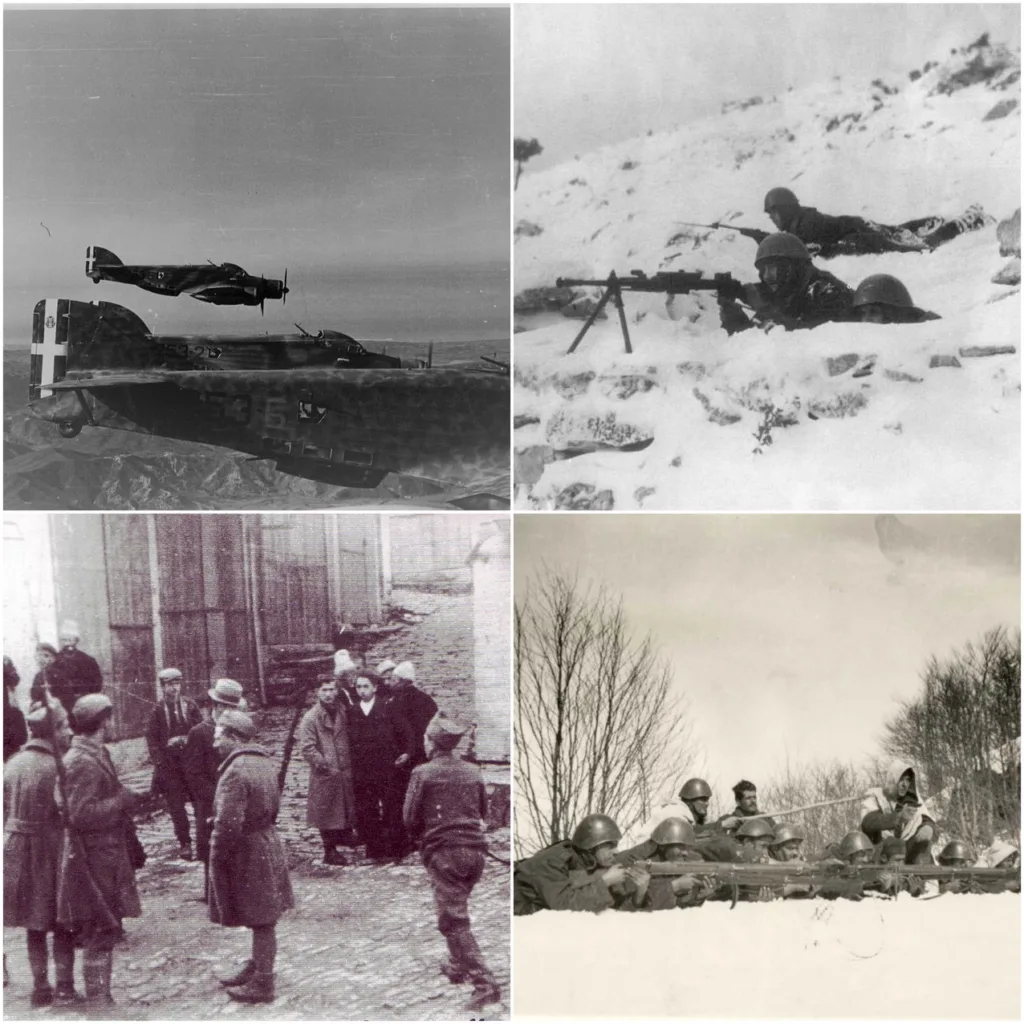
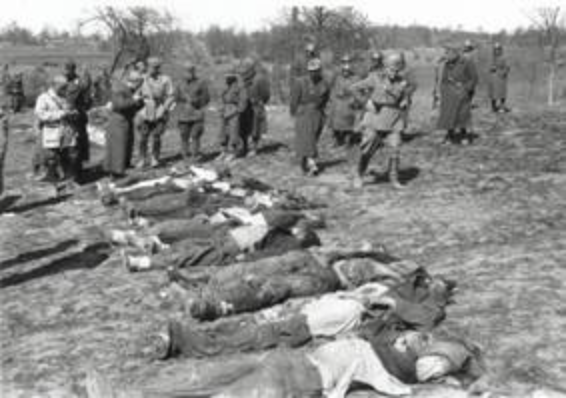
Kotoulas explains that during the Italian army’s 29-month (until September 1943) invasion of Greece, many executions and massacres occurred, such as the 1943 Domenikon massacre in Thessaly. He also mentions that the Greek famine in the winter of 1941–42 and immediately after, where “it is estimated that at least 100,000 people died… was a consequence of the general occupation of the Italians.” Furthermore, Kotoulas attributes the belief of the “good-natured” Italian soldier versus the “merciless German soldier” as “constructions that are due to the simple change of camp on the Italian side in 1943 and the alignment with the victors of war.”
Let’s hope that Greece today will not be in the position that Metaxas was on 28 October 1940; nor, for that matter, in that bizarre turn of events when, in the 2015 referendum regarding “The Crisis” bailout, we the Greek people saw our ‘NO’ vote become an apparent ‘yes’.
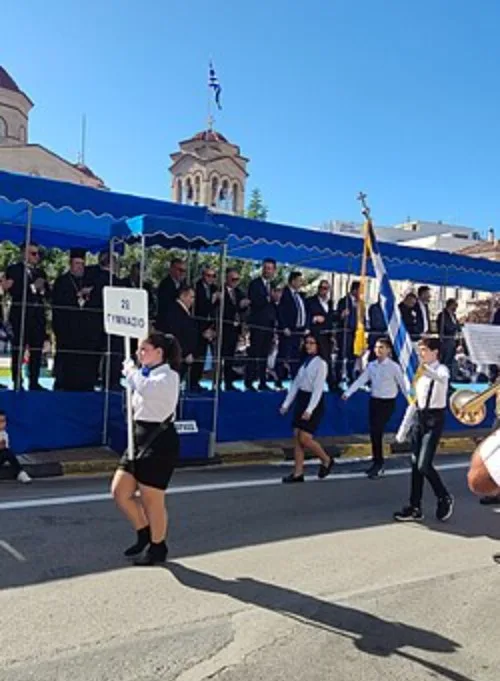
May we now have the insight and clarity to demand “OHI – NO” to propagandistic lies and a consequent NO to the continuation of wars where neither Greek, Italian, nor any of the world’s people be at war. May our civilised, peace-loving selves reign, bearing this saying in mind perhaps:
“Of all manifestations of power, restraint impresses men the most.” – By F. B. Jevons, A History of Greek Literature: From the Earliest Period to the Death of Demosthenes, 1886.
 to Mussolini's request.)