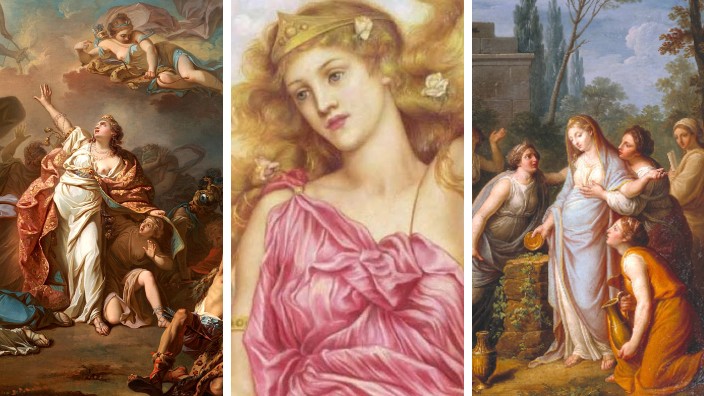
Had it not been for the beauty of Helen, Hermione’s mother, there would have been no Trojan War. Had it not been for their mothers, Jocasta and Clytemnestra, the heroes Oedipus and Orestes would have remained obscure.
To mark Mother’s Day this year, The Greek Herald takes a look back at six legendary Greek mothers you should know about.
1. Niobe:
Niobe thought herself so blessed in the abundance of her 14 children that she dared to compare herself with a goddess. This was not a smart thing to do as she lost all of her children by most accounts and others believe she was turned to stone that eternally weeps.
2. Helen of Troy:
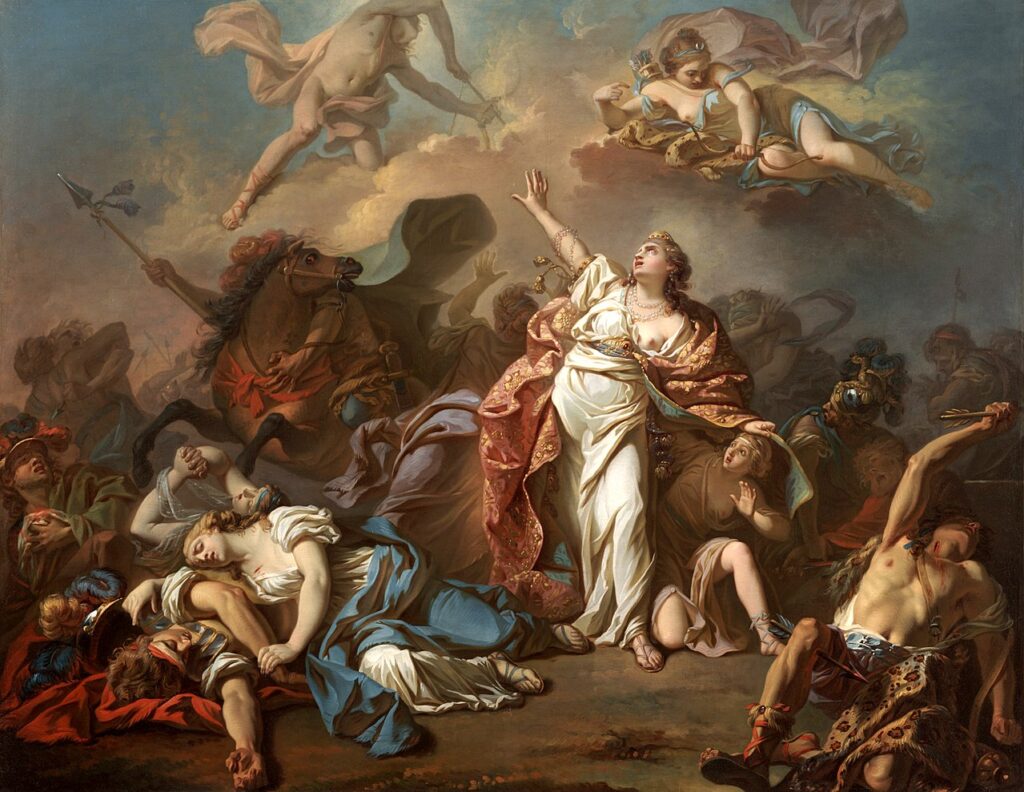
Helen, the daughter of Zeus and Leda, was so beautiful that she attracted attention even from a young age when Theseus carried her off and according to some accounts sired a daughter named Iphigenia with her.
But it was Helen’s marriage to Menelaus (through whom she became the mother of Hermione) and her abduction by Paris that led to the events of the Trojan War renowned in the Homeric epic.
3. Jocasta:
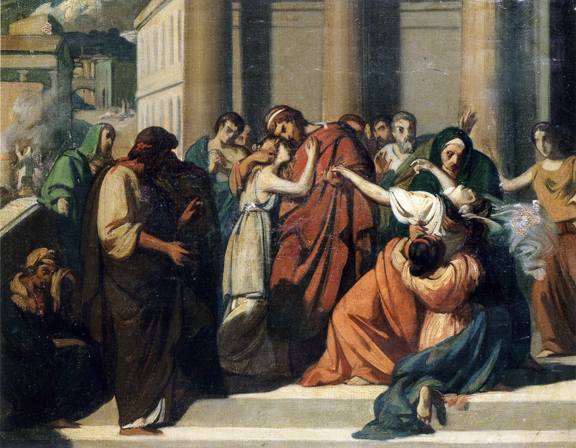
The mother of Oedipus, Jocasta (Iocaste), was married to Laius. An oracle warned the parents that their son would murder his father, so they ordered him killed. Oedipus survived, however, and returned to Thebes, where he unknowingly killed his father.
He then married his mother, who bore him Eteocles, Polynices, Antigone, and Ismene. When they learned of their incest, Jocasta hanged herself and Oedipus blinded himself.
4. Andromache:
Andromache, the wife of Hector, one of the major figures in the Iliad. She gave birth to Scamander or Astyanax, but when she and the child are captured by one of the sons of Achilles, she throws the baby from the top of the walls at Troy, because he is the heir apparent to Sparta.
After Troy fell, Andromache was given as a war prize to Neoptolemus, with whom she gave birth to Pergamus.
5. Penelope:
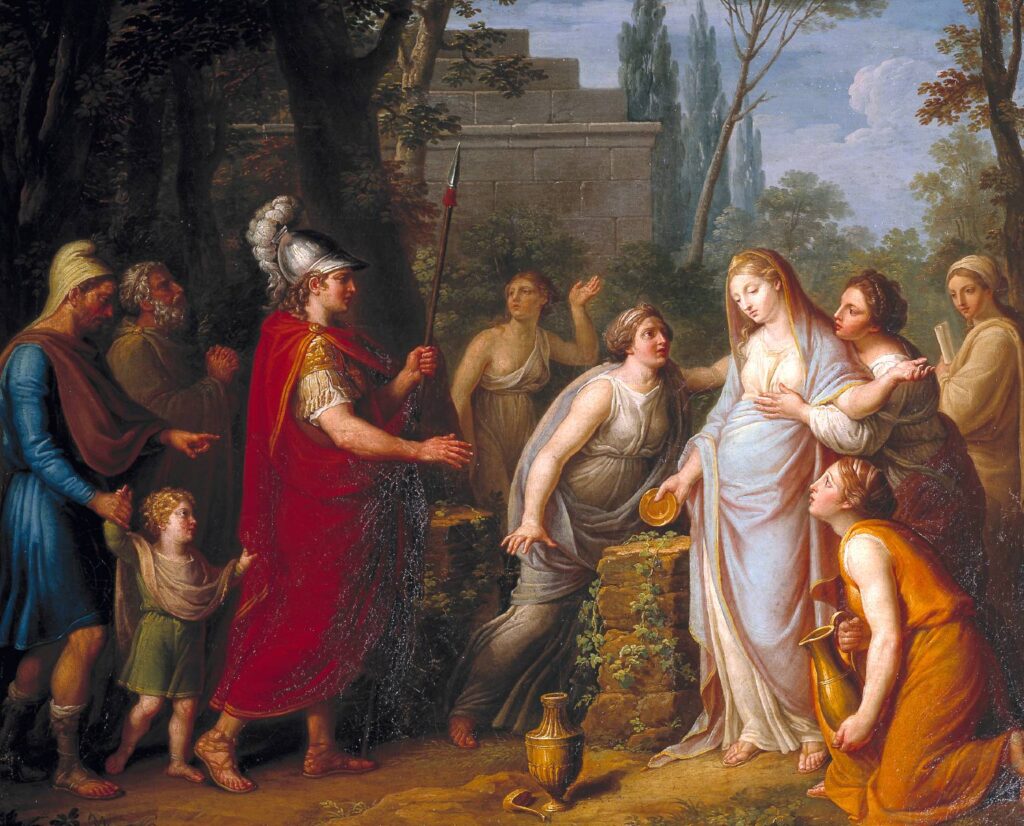
Penelope was the wanderer Odysseus’ wife and mother to his son Telemachus, whose tale is told in the Odyssey. She waited for her husband’s return for 20 years, fending off her many suitors by tricks. After 20 years, he returns, wins a challenge and slays all the suitors with the help of their son.
6. Alcmene:
Alcmene’s story is unlike those of the other mothers. There was no particular great sorrow for her. She was simply the mother of twin boys, born to different fathers. The one born to her husband, Amphytrion, was named Iphicles. The one born to what looked like Amphitryon, but was actually Zeus in disguise, was Hercules.
Source: ThoughtCo.

