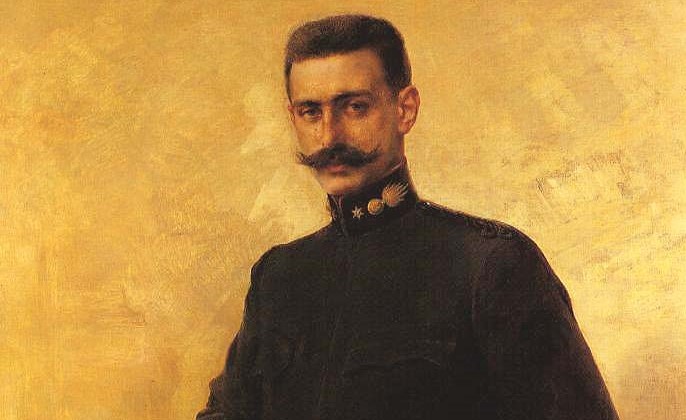
Pavlos Melas was a Greek army officer and one of the most important defenders of Macedonia’s struggle for freedom. We take a look back at his short but impactful life.
Early Life:
Pavlos Melas was born on March 29, 1870 in Marseilles. He was the son of Michael Melas, an elected MP for Attica and mayor of Athens.
In 1886, Melas decided to go to Athens to study and later joined the Hellenic Army, graduating from the Hellenic Army Academy as an artillery lieutenant at the age of 21.
In 1892, he married Natalia Dragoumi, the daughter of a famous politician from Macedonia’s city of Kastoria, Stephanos Dragoumis. They had two children.
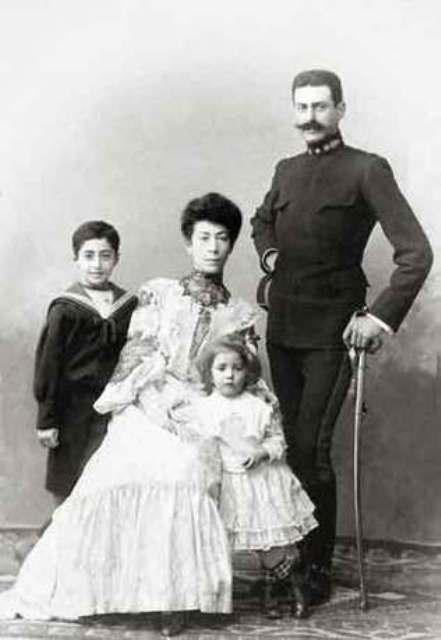
Melas’ relationship with Dragoumis played a crucial role in his decision to start raising money for the financial support of Greece’s overt and secret efforts in the region of Macedonia.
The Greek Struggle for Macedonia:
At the beginning of the 20th century, Melas became concerned about the situation in Turkish-occupied Macedonia.
In February 1904, together with three other officers, Sergeants Alexandros Kontoulis and Anastasios Papoulas and Lieutenant Georgios Kolokotronis, Melas participated in a secret mission to Macedonia under the pseudonym Mikis Zezas.
The group of four officers, accompanied by Macedonian fighters, was active in western Macedonia, but its movements were noticed by the Turks, who asked the Greek government to withdraw them. So Melas, along with the three other officers, returned to Athens on March 29.
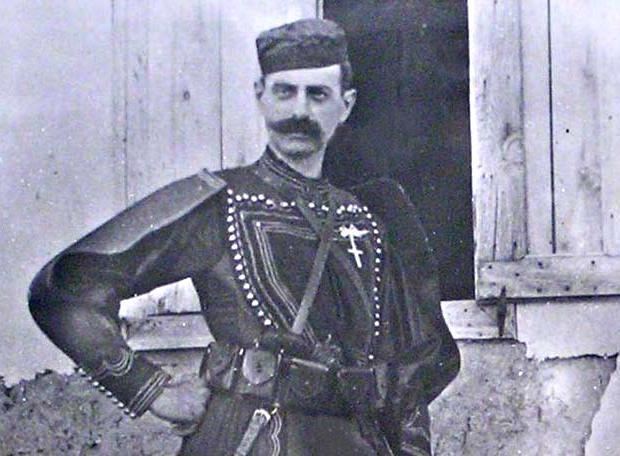
In July, while serving at the Guards School, he asked for a 20-day leave and made a second trip to Macedonia.
As soon as he arrived in Kozani, he met with the local Greek community and decided to not only form an armed corps by recruiting men from the surrounding areas, but to also take immediate action in western Macedonia.
He returned to Athens on August 3 full of optimism for the outcome of the struggle. After 15 days, he asked for and received a four-month leave from the army to officially take over the leadership of the Macedonian Struggle in the area of Kastoria.
Death and Legacy:
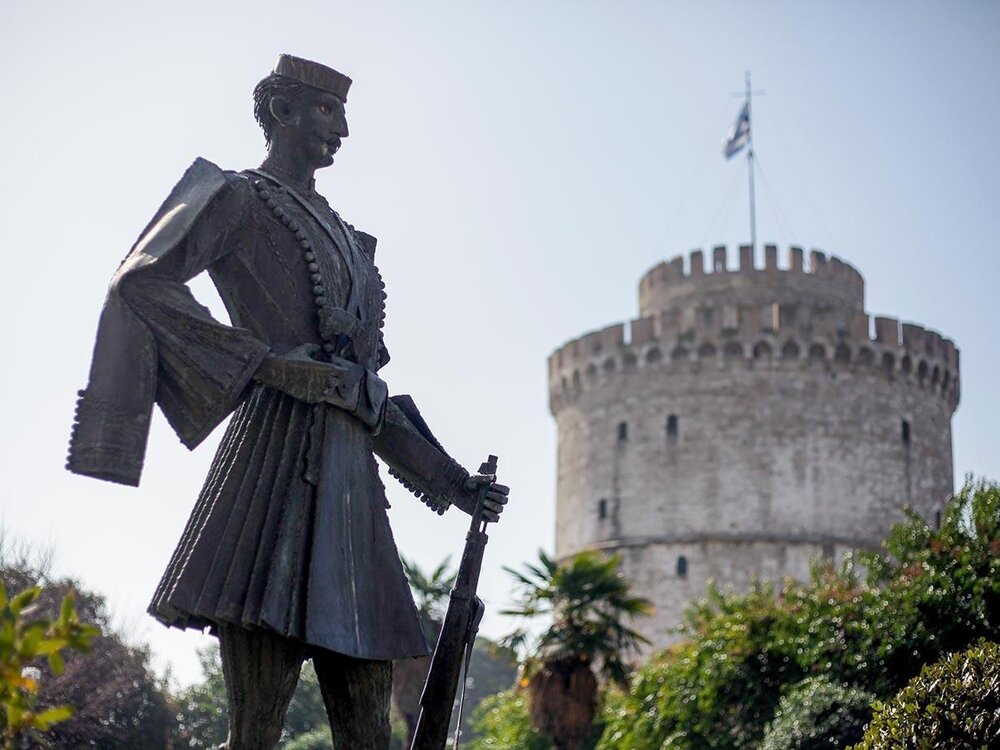
On August 28, Captain Mikis Zezas (Melas) crossed the border, accompanied by several Macedonians, Laconians and Cretans.
On October 13, 1904, Melas and his men entered the town of Statista near Kastoria, to rest. Betrayed by the people he trusted, more than 150 Ottoman men surrounded Melas and killed him.
The exact conditions under which Melas died are still unknown.
What is sure is that his death sparked a wave of support throughout Greece for the Greeks in Macedonia who were fighting a dual fight, both against the Ottoman oppressors and the Bulgarian nationalists.
A national symbol of the Greek struggle for Macedonia, Melas is still a source of inspiration for many.

