By Dr. Themistocles Kritikakos (Historian)
When we think of ancient Greece, Athens often dominates both our imagination and historical discussions. The Parthenon, democracy, philosophy, and drama shape the familiar image we have of Greek civilisation. Beyond Athens were other influential city-states such as Sparta, Corinth, and Thebes, which also contributed to Hellenic civilisation.
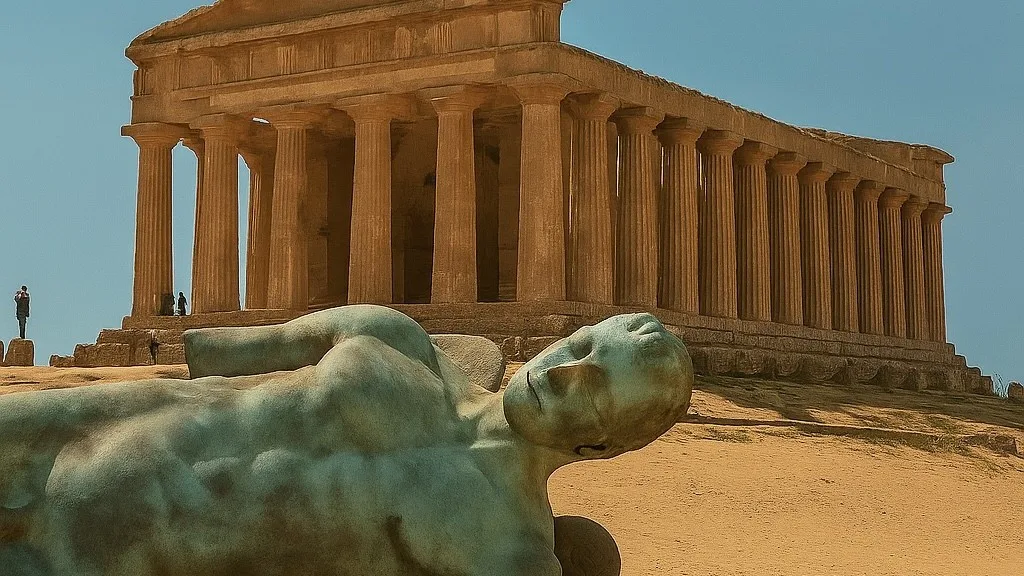
However, what remains less recognised is how Greek civilisation not only spread beyond the homeland but flourished in new regions that became vibrant extensions of the Greek world. Throughout southern Italy and Sicily, Greek settlers established thriving cities collectively known as Magna Graecia (Great Greece or Megali Ellas).
Greek Migration and Settlement in Southern Italy
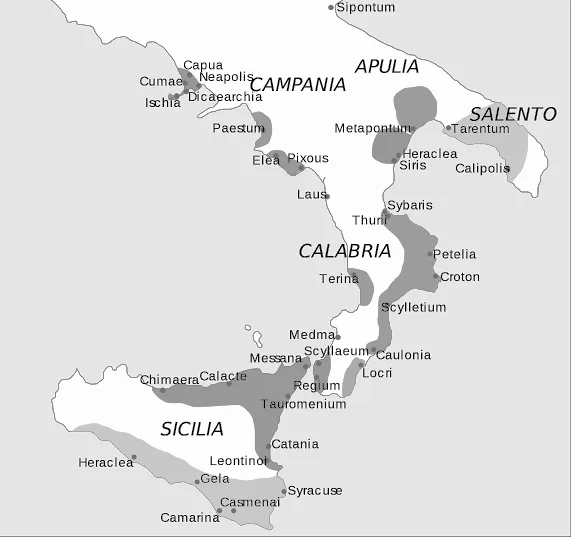
Beginning in the eighth century BCE, Greek settlers crossed the Ionian Sea in search of new opportunities. Several factors drove this movement: overpopulation, land shortages, internal conflict, and the desire to enhance trade prospects. These conditions compelled communities to establish colonies (apoikiai) in what are today Calabria, Apulia, Basilicata, Campania, and Sicily.
The settlers originated from diverse regions across the Greek world, including the Peloponnese (notably Sparta, Achaea and Corinth), Athens, Thebes, Euboea, the Cyclades, the Dodecanese (such as Rhodes), Crete, and Asia Minor (notably Phocaea). Sent by their mother cities (metropoleis), they brought with them their language, customs, religious practices, and civic ideals. Over time, Greek culture in Magna Graecia retained core elements of Hellenism while adapting to local conditions and regional influences shaped by the settlers’ diverse origins.
Across these southern territories, major settlements emerged in each region, primarily along the coastal areas. Apulia’s key settlement was Taras (also known as Tarentum, modern Taranto), while Basilicata featured Metapontum, Heraclea, and Thurii. Meanwhile, Campania became home to Cumae, Poseidonia (Paestum), and Neapolis (Naples). Important Calabrian cities included Croton (Crotone), Epizephyrian Locris (Locri), Sybaris (Sibari), and Rhegion (Reggio Calabria). Sicily was home to major Greek centres, including Syracuse (Siracusa), Gela, Akragas (Agrigento), Naxos, Selinus (Selinunte), Himera, and Catana (Catania).
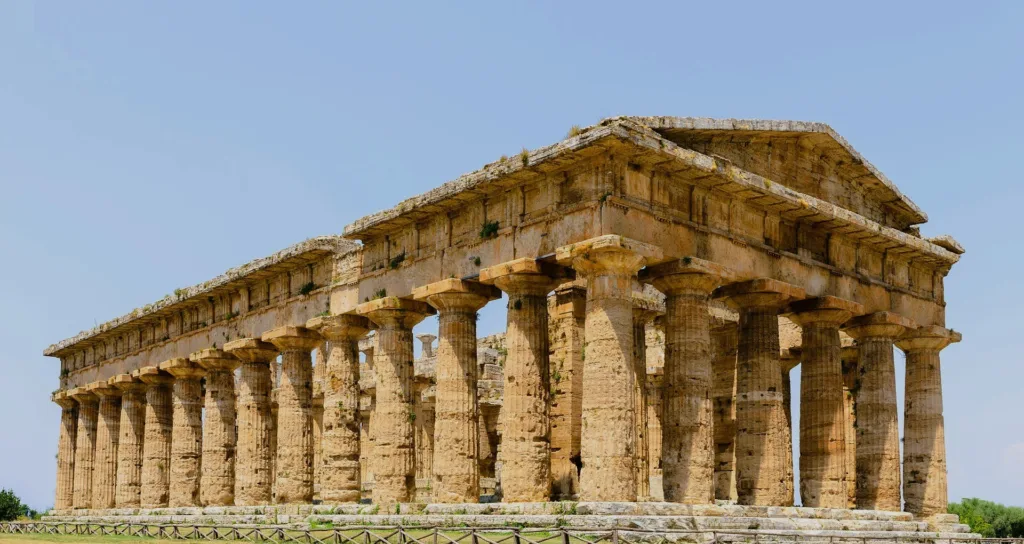
Despite maintaining political autonomy, these colonies preserved strong cultural and economic ties with their mother cities. Through sustained trade, intermarriage, and interaction with indigenous Italic peoples such as the Oenotrians, Sicels, and Lucanians, these Greek colonies gradually evolved. Over time, Magna Graecia developed a distinctive identity that blended Hellenic traditions with local influences. The region became a major centre of trade, religion, political development, artistic expression, and architectural innovation. Its cities established vast trade networks across the Mediterranean, dealing in wine, grain, olive oil, pottery, and metalwork.
Magna Graecia in Ancient thought and practice
The geographer Strabo (64 BCE – 24 CE) noted that southern Italy was referred to as Magna Graecia not only because of the number of Greek cities established there, but also because many of these cities became influential enough to rival their mother cities. Earlier still, the fifth-century BCE historian Antiochus of Syracuse documented the spread of Greek colonies across southern Italy, reflecting an early awareness of the region’s uniquely Hellenic character.
In his History of the Peloponnesian War (late 5th century BCE), Thucydides described Sicily as home to many settlements founded by Chalcidians and Dorians, noting that Greek colonists had become the dominant cultural and political force in many parts of the island. Centuries later, Cicero, the Roman statesman and orator, identified cities such as Neapolis (Naples) and Tarentum (Taranto) as enduring centres of Greek education and artistic life. His observations highlighted their continued Hellenic identity well into the Roman period.
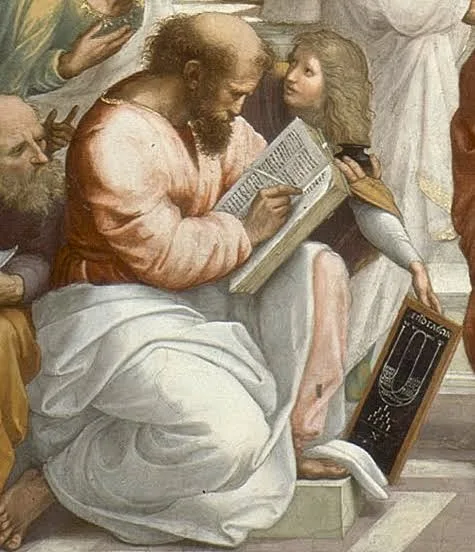
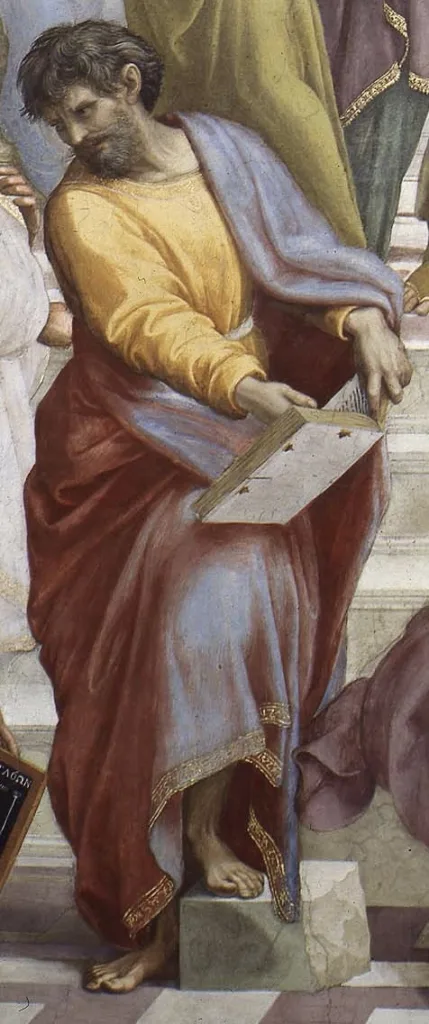
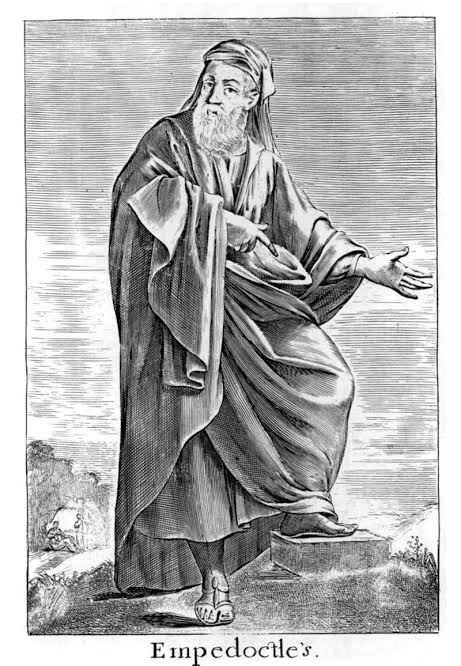
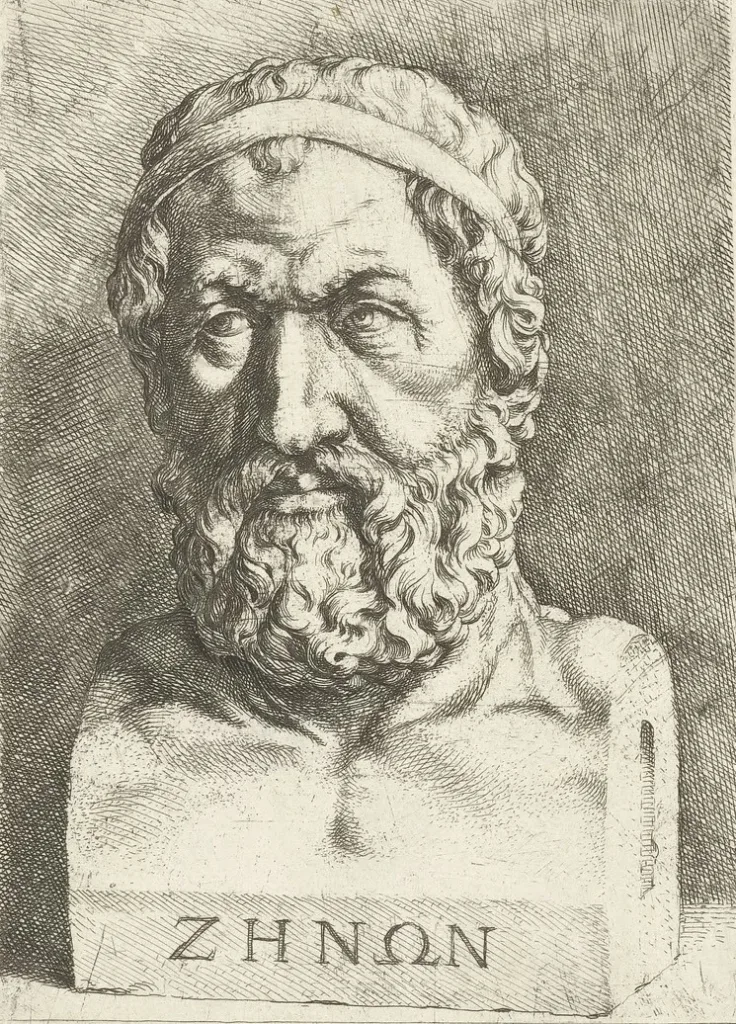
The intellectual achievements of Magna Graecia matched its political prominence. Pythagoras migrated from Samos to Croton (Crotone in modern-day Calabria), where he established a school combining scientific and philosophical study. This institution profoundly shaped mathematics and metaphysics. It also became a community united by shared beliefs and ways of life. Elsewhere, Elea (part of modern-day Campania) produced Parmenides, one of the most influential figures in Western philosophy, and his pupil Zeno, whose paradoxes defended and extended Parmenides’ ideas. Together, they laid foundational principles concerning being, logic, and the nature of reality. From Akragas (Agrigento) came Empedocles, the philosopher who advanced early theories on the origin of the universe and is best known for his theory of the four classical elements: earth, air, fire, and water.
Perhaps no city better exemplifies Magna Graecia’s cultural and strategic importance than Syracuse in Sicily. This metropolis became a key cultural and military hub, notable as the birthplace of Archimedes. He made foundational contributions to science through his work in geometry, mechanics, and physics. His ideas, famously linked to the exclamation “Eureka” (“I have found it”) when he discovered the principle of buoyancy, influenced later scientists including Galileo and Newton.
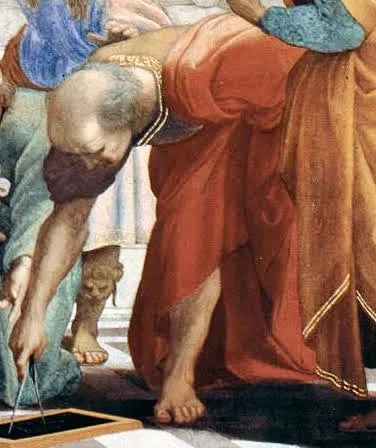
Under the rule of tyrants such as Gelon and Dionysius the Elder, Syracuse came to dominate the western Mediterranean. The region’s political dynamics reflected intense competition between city-states, exemplified by the rivalry between Croton and Sybaris that culminated in the destruction of Sybaris around 510 BCE. This rivalry extended to broader Mediterranean conflicts. During the Peloponnesian War, Syracuse became the site of the disastrous Sicilian Expedition (415–413 BCE), where Athenian forces were defeated by Sparta, Syracuse, and Corinth. This defeat marked a turning point in the war. It also highlighted Magna Graecia’s strategic and military importance in the broader Greek world.
Shaping the Mediterranean: The lasting influence of Great Greece
The political independence of these Greek cities eventually came to an end, but their cultural influence endured. By the third century BCE, most Greek cities in southern Italy had come under Roman control, particularly after the Pyrrhic Wars (280–275 BCE), which were fought between King Pyrrhus of Epirus and the Roman Republic over influence in the region. Yet Roman conquest did not erase Greek culture. Greek served as the language of education, religion, and public life in urban and elite settings. Temples and civic spaces retained Greek features, even as they were gradually adapted to Roman influence.
Greek culture remained vibrant throughout the Byzantine era and into the Middle Ages, especially in Calabria and Sicily, where Greek-speaking communities and traditions persisted long after antiquity. Today, traces of this ancient legacy are still evident in regional dialects, religious customs, place names, traditions, and architectural styles.
The Greeks have long been a diasporic people. They carried and adapted their culture across geographic borders through language, traditions, and the establishment of new centres of Greek life. The name Magna Graecia came to signify far more than mere geographical expansion. It embodied the recognition of these cities as significant and dynamic centres of the Greek world. Through their lasting impact, these cities, along with Greek ideas and customs, played a pivotal role in shaping the course of Hellenic civilisation.
Next week: We begin in Neapolis, the “New City,” which is today known as Naples, in the Campania region of southern Italy.
*Dr Themistocles Kritikakos is a Greek-Australian historian, philosopher and writer. He holds a PhD in History from the University of Melbourne. His forthcoming book explores intergenerational memories of violence in the late Ottoman Empire, identity, and communal efforts toward genocide recognition, focusing on the Armenian, Greek, and Assyrian communities in Australia.
