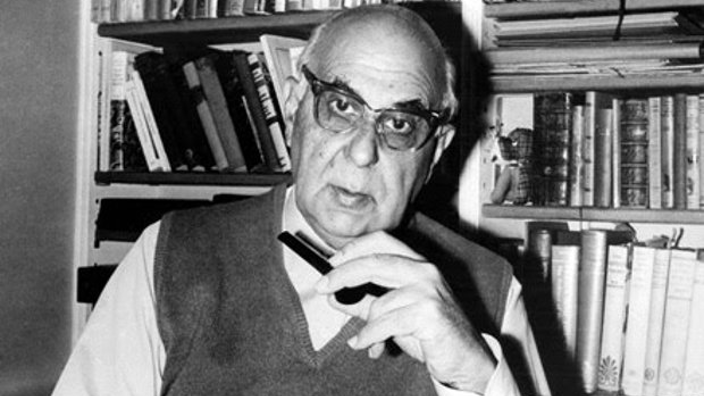
Giorgos Seferis: The Nobel Prize-winning poet

·

By Victoria Loutas

Giorgos Seferis was the first Greek poet to be awarded the Nobel Prize for Literature. We take a look back at his incredible life.

Early Life:

Seferis was born in 1900 in Smyrna Greece. He attended school in Smyrna before his family settled in Athens in 1914 to escape the devastation of World War 1. 

His family later moved to Paris in 1918, where Seferis would go on to study Law at the University of Paris and discover his passion for literature. 

Literature work:

In 1926, Seferis was appointed Greek Minister of Foreign Affairs, a role in which he served until 1931, when he was appointed to the Greek Consulate in London. He later held post in Albania from 1936 to 1938.

His international travels and connection to Greece were the inspiration for much of Seferis’ writing, which is filled with themes of isolation, wandering and death. 

He began writing his early poetry in 1931, which consisted of Strophe (turning point). His mature poetry explores the sense of awareness, particularly of Greece’s great past. 
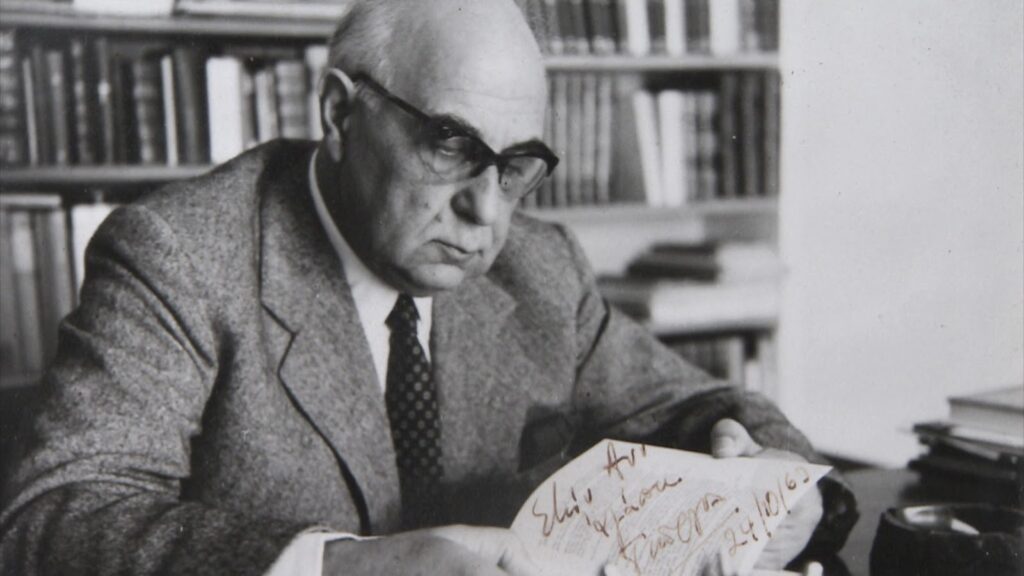
Photo: Greek News Agenda

In addition to writing poetry, Seferis published a book of essays (Dokimes) in 1961. He also published a collection of his work and translations of works by T.S Eliot and other French, English and American poets entitled Antigrafes (copies) in 1965. 

In 1963, Seferis was awarded the Nobel Prize in literature, demonstrating the impact and success of his poetic career. 

Death and Legacy:

In 1969, Seferis publicly took a stand against the Dictatorship of the Colonels in Greece. His funeral, on September 20, 1971 was turned into a mass demonstration against the military government. 

Seferis’ contributions to diplomacy and to the art of literature will always be remembered and cherished.

Share:

KEEP UP TO DATE WITH TGH

By subscribing you accept our Terms of Service and Privacy Policy.

Latest News

Giannis Topalidis on Euro 2004, discipline and Greek football

Giannis Topalidis, one of the key figures of the Euro 2004 triumph, visited Australia and met with The Greek Herald last Friday.

Cairns faithful welcome Bishop Bartholomew for Epiphany celebrations

His Grace Bishop Bartholomew of Brisbane visited Cairns in Far North Queensland, where he celebrated the Divine Liturgy.

Adelaide Writers’ Week and Ariadne’s Thread: Can cultural institutions navigate complexity?

The immediate debates in the wake of the Adelaide Festival Board’s decision to remove Randa Abdel-Fattah from the 2026 program.

Giannis Vidiniotis in critical condition after serious beach injury in Perth

Greek national Giannis Vidiniotis is fighting for his life after suffering severe injuries while swimming at Cottesloe Beach in Perth.

From Australia to Athens: Six acclaimed Australian plays find a Greek voice

Australian plays are being staged in Greek at Athens’ Aggelon Vima Theatre, introducing local audiences to contemporary Australian drama.

You May Also Like

Veganism: A new approach to Greek Orthodox Easter cuisine?

As Orthodox Easter approaches, the familiar aroma of roasted lamb, kokoretsi and tsoureki fills most Greek households. What do vegans do?

Nick Galatas on next steps in the National Second Tier

The National Second Tier football competition, set to kick off in 2025, is currently facing uncertainty regarding its final structure. 

Australian National Maritime Museum celebrates 876 new names on Monument to Migration

Another 876 names have been added to the National Monument to Migration at the Australian National Maritime Museum.