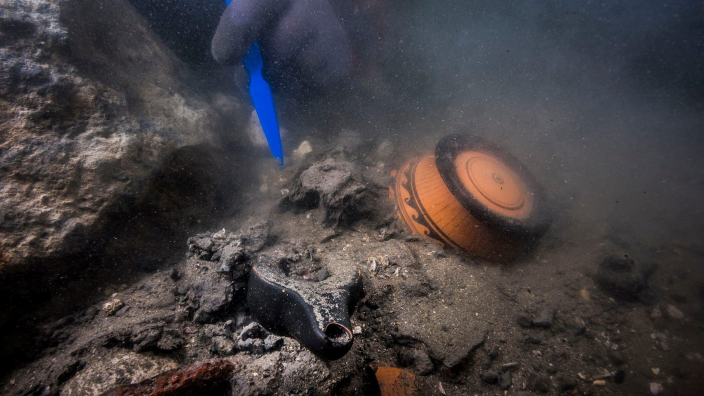
Egypt finds ancient military vessel, Greek graves in sunken city of Thonis-Heracleion

·

Divers have discovered rare remains of a military vessel in the ancient sunken city of Thônis-Heracleion – once Egypt’s largest port on the Mediterranean – and a funerary complex illustrating the presence of Greek merchants, the country said on Monday.

The city, which controlled the entrance to Egypt at the mouth of a western branch of the Nile, dominated the area for centuries before the foundation of Alexandria nearby by Alexander the Great in 331 BC.

Destroyed and sunk along with a wide area of the Nile delta by several earthquakes and tidal waves, Thônis-Heracleion was rediscovered in 2001 in Abu Qir bay near Alexandria, now Egypt’s second largest city.
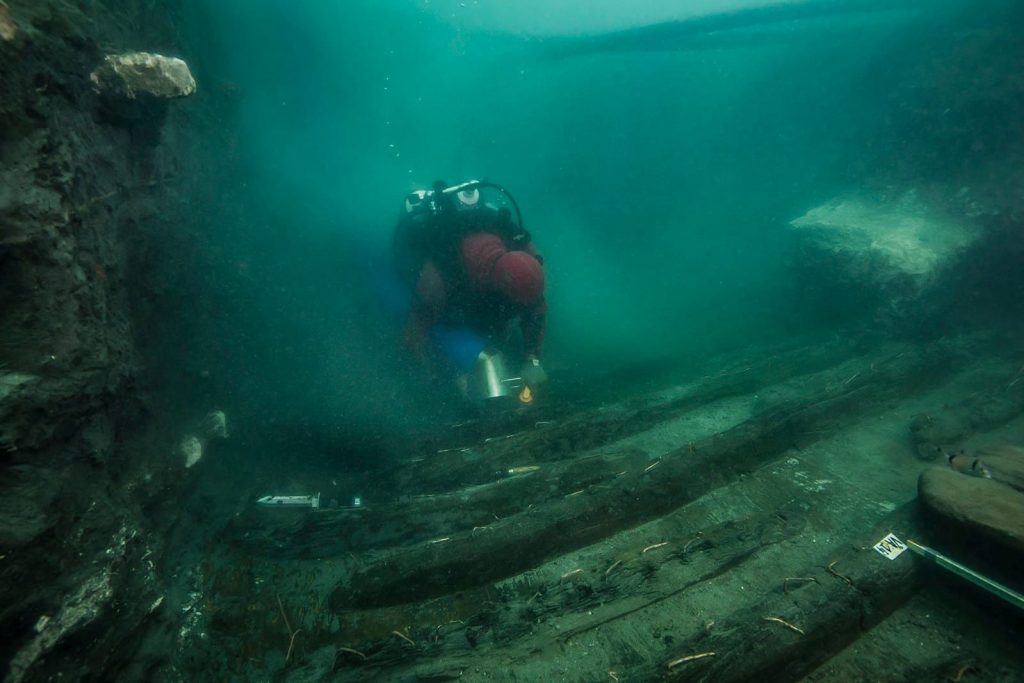
A diver examines the remains of an ancient military vessel discovered in the Mediterranean sunken city of Thonis-Heracleion off the coast of Alexandria, Egypt, in this handout image released on July 19, 2021. Photo: The Egyptian Ministry of Antiquities/Handout via REUTERS.

The military vessel, discovered by an Egyptian-French mission led by the European Institute for Underwater Archaeology (IEASM), sank when the famed temple of Amun it was mooring next to collapsed in the second century BC.

A preliminary study shows the hull of the 25-metre flat-bottomed ship, with oars and a large sail, was built in the classical tradition and also had features of Ancient Egyptian construction, Egypt’s tourism and antiquities ministry said.
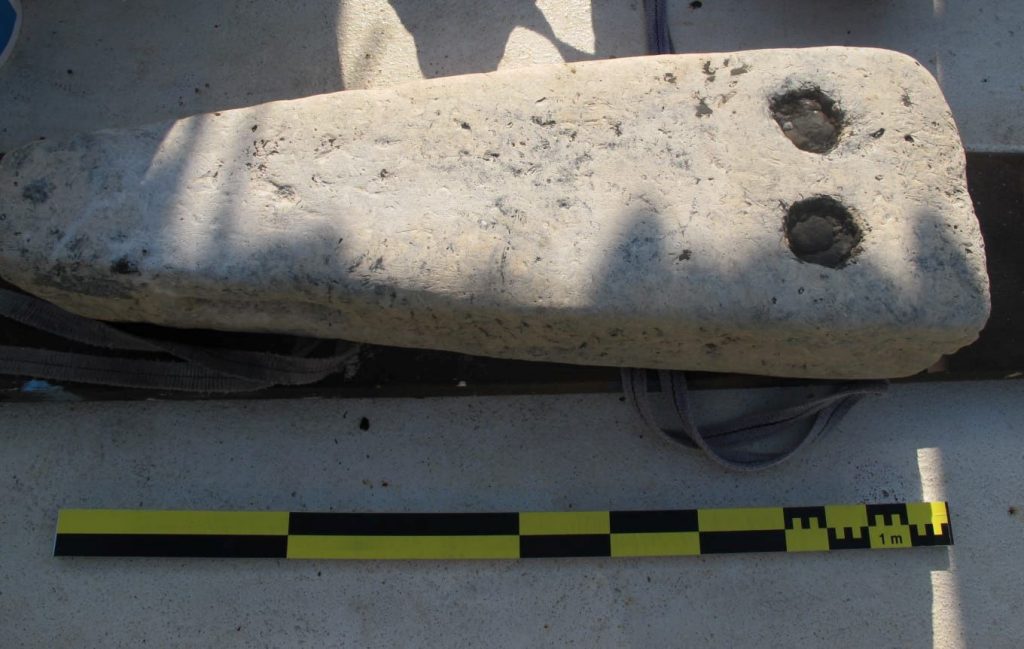
A fragment from the remains of an ancient military vessel discovered in the Mediterranean sunken city of Thonis-Heracleion off the coast of Alexandria, Egypt, is seen in this handout image released on July 19, 2021. Photo: The Egyptian Ministry of Antiquities/Handout via REUTERS.

In another part of the city, the mission revealed the remains of a large Greek funerary area dating back to the first years of the 4th century BC, it said.

“This discovery beautifully illustrates the presence of the Greek merchants who lived in that city,” the ministry said, adding that the Greeks were allowed to settle there during the late Pharaonic dynasties.

“They built their own sanctuaries close to the huge temple of Amun. Those were destroyed, simultaneously and their remains are found mixed with those of the Egyptian temple.”

Source: Reuters.

Share:

KEEP UP TO DATE WITH TGH

By subscribing you accept our Terms of Service and Privacy Policy.

Latest News

Greek Christmas spirit lights up Canterbury at Cyprus Community’s Carols and Night Market

Up to 1,500 people came together for a joyful Greek summer Christmas at the Cyprus Community of NSW’s Greek Christmas Carols & Night Market.

Archbishop Makarios of Australia condemns Bondi Beach terror attack

His Eminence Archbishop Makarios of Australia has condemned the terrorist attack at Bondi Beach in Sydney.

Greek court rules against journalist in defamation case involving Archbishop Makarios

The Greek Orthodox Archdiocese of Australia announced the Tripartite Court of Appeal of Thrace (civil procedure) issued its judgment.

St Spyridon Parish marks 50 years of ministry by Fr Steven Scoutas and his Presvytera

The Parish of Saint Spyridon in Kingsford, Sydney, celebrated fifty years of devoted ministry by Fr Steven and Presvytera Patricia Scoutas.

$120,000 raised in Adelaide to support Orthodox Mission in the South Pacific

Adelaide’s St Dimitrios Parish raised $120k to support the Orthodox Mission in the South Pacific during a special visit by Metropolitan Myron

You May Also Like

GOCSA welcomes New Year with traditional vasilopita cutting

The Greek Orthodox Community of South Australia hosted its annual Vasilopita cutting ceremony on Thursday at Olympic Hall in Adelaide.

Australia starts extradition process for Easey St murders suspect Perry Kouroumblis

Australian authorities have begun the extradition process for Perry Kouroumblis, the man accused of the Easey Street murders.

Cypriot Community of QLD marks 69th Anniversary of EOKA

The Cypriot Community of QLD commemorated the 69th Anniversary of EOKA (National Organisation of Cypriot Fighters) on Sunday, April 7. EOKA was an underground nationalist movement...