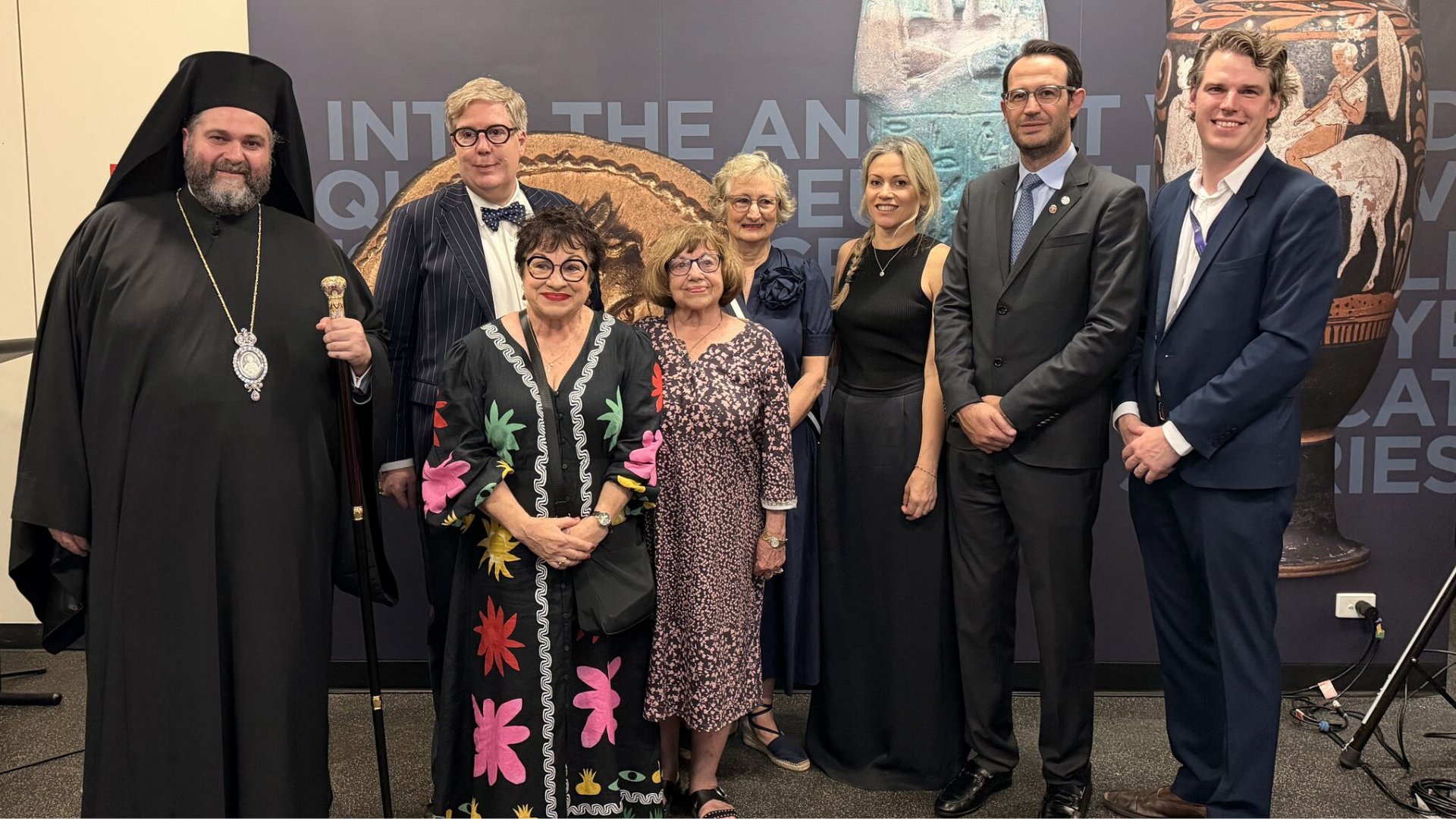
An extraordinary celebration of Hellenic heritage unfolded at The University of Queensland’s RD Milns Antiquities Museum on Wednesday evening, as the exhibition ΝΟΣΤΟΙ | Homecomings: Stories of the Ionian Island Diaspora in Queensland officially opened to the public.
The opening night was attended by Greece’s Honorary Consul-General in Queensland, George Mastrocostas, who delivered a keynote address reflecting on the ancient Greek concept of nostos – a return home that spans far beyond geography.
Among the distinguished guests in attendance were His Grace Bishop Bartholomew of Brisbane, Professors Alastair Blanshard, Lisa Featherstone, and Kim Wilkins, as well as community leaders, academics, and representatives of the Kytherian and Ithacan communities.
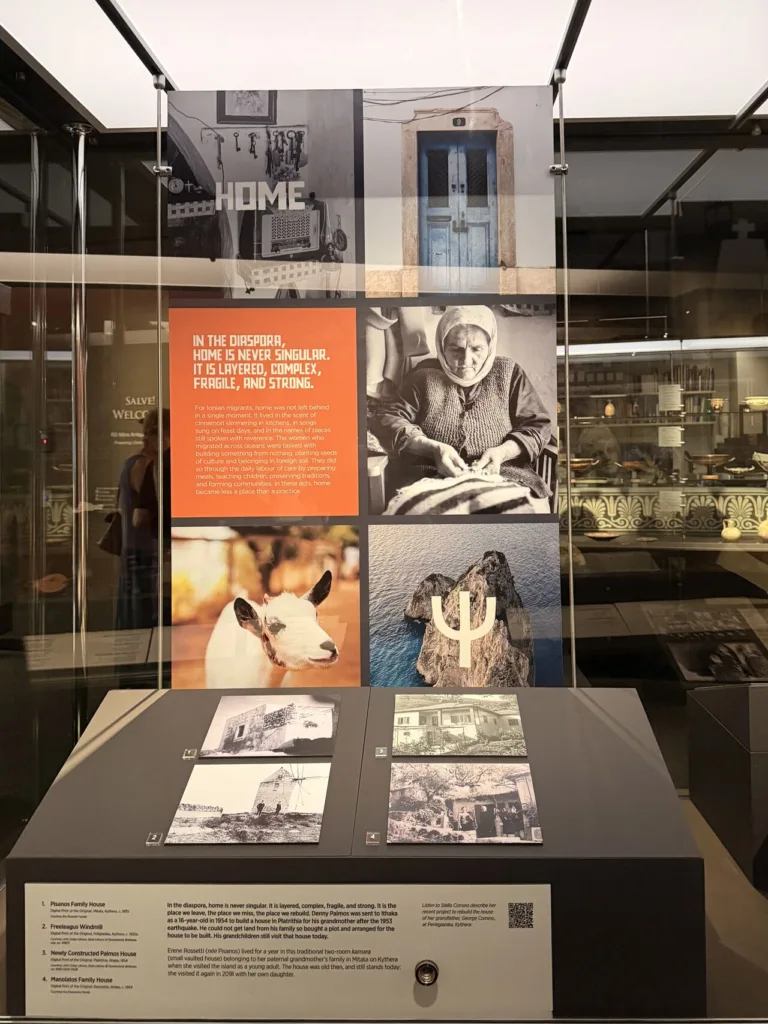
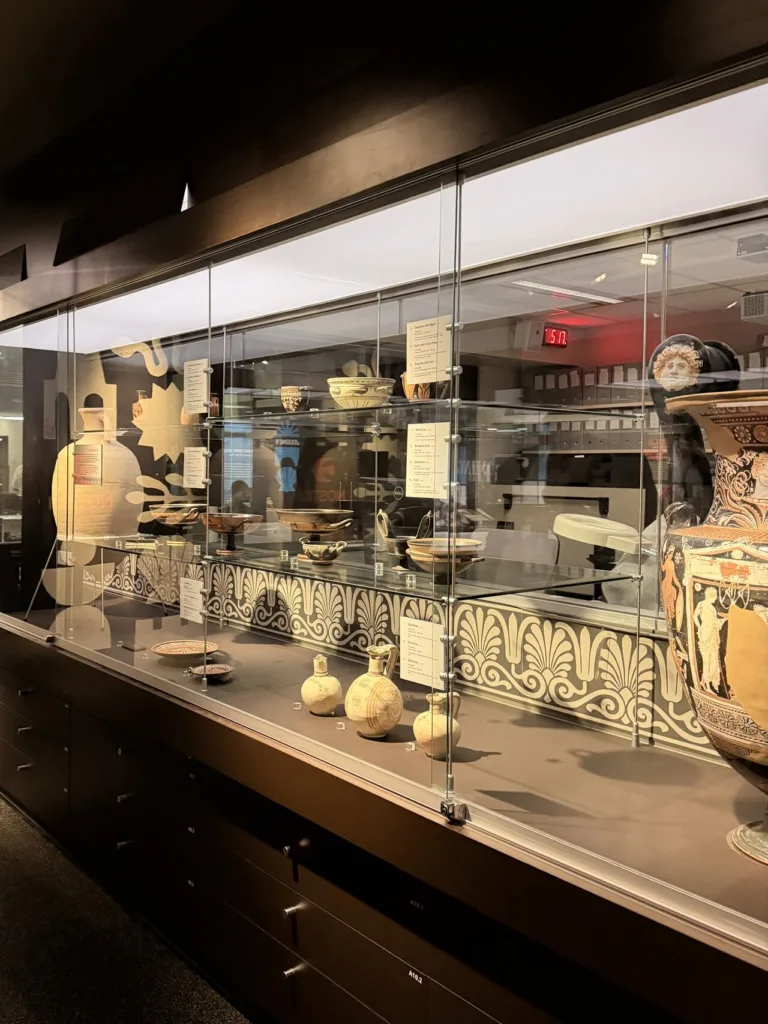
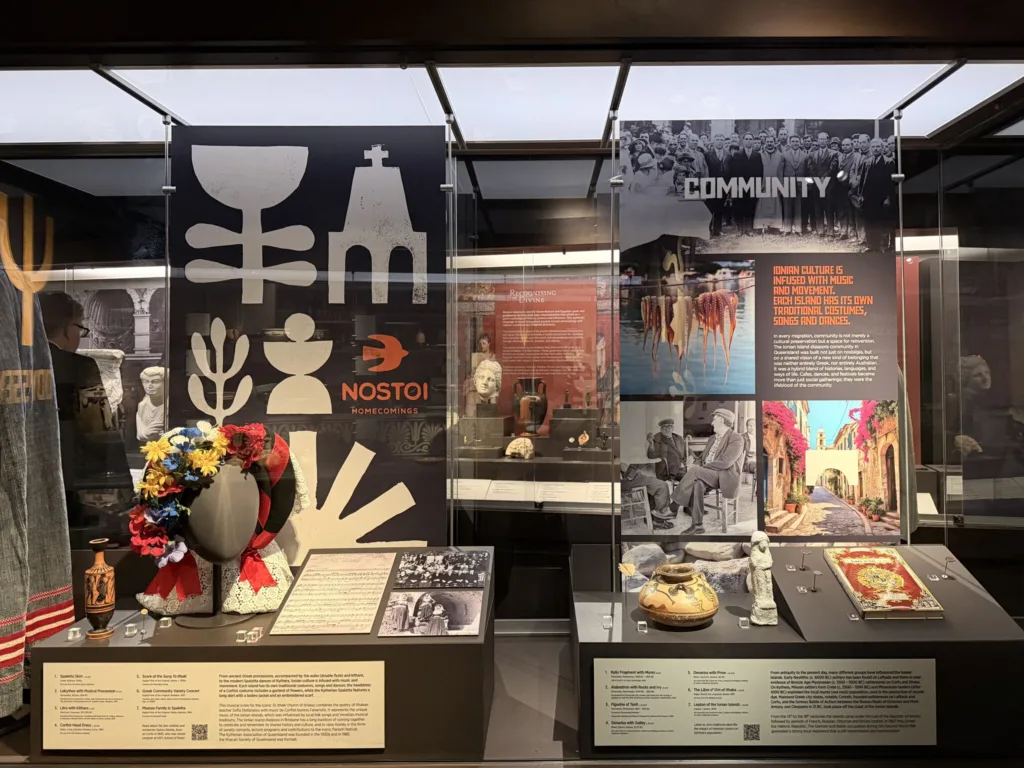
The exhibition marks the first time stories from Queensland’s Ioanian island diaspora have been intertwined to form a unified cultural narrative. The artefacts presented – ranging from personal letters to community archives – have been deeply sourced from families across the state and include photographs, handwritten correspondence, migration records, and treasured heirlooms.
Speaking to a packed audience of diaspora members, theologians, and academics, Mr Mastrocostas said: “Nostos means the return home, but not merely a physical return. It is the spiritual journey back to one’s roots, one’s identity, one’s truth.”
His remarks honoured generations of Ionian Islanders who left their homelands – Kythera, Ithaca, and the broader Ionian archipelago – to build new lives in Queensland, carrying with them an enduring love for Greece, a fierce commitment to family, and the fortitude to thrive through uncertainty.
The exhibition’s collection draws from historically significant materials, including oral histories, artefacts, and letters documenting personal migration journeys, grief, triumph, separation, and cultural continuity.
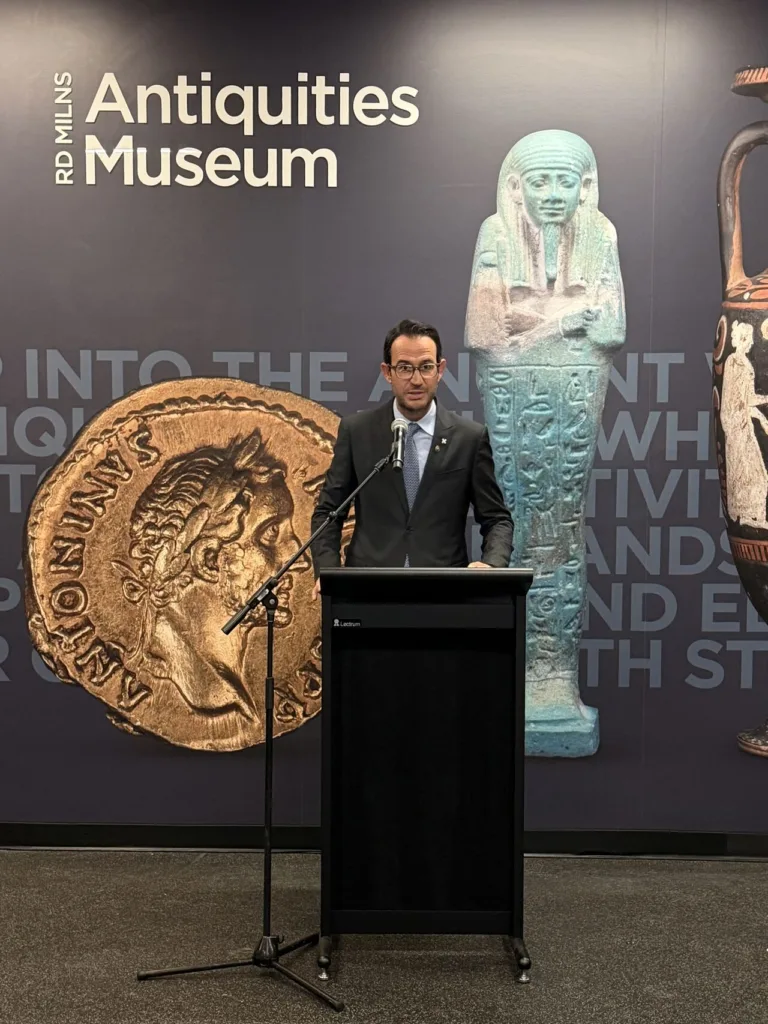
Mr Mastrocostas also acknowledged the institutions and community organisations whose joint efforts made the exhibition possible, paying tribute to: The University of Queensland, RD Milns Antiquities Museum, The Kytherian Association of Queensland, Ithacan Society of Queensland, and community families who contributed objects and testimony.
The exhibition is the result of months of archival collation, community consultation, and academic partnership, led by cross-disciplinary teams spanning classical studies, cultural history, migration studies, and anthropology.
