Momentum continues to build for Melbourne’s World Greek Language Day, with Australian mainstream media now also highlighting the event as a leading global initiative.
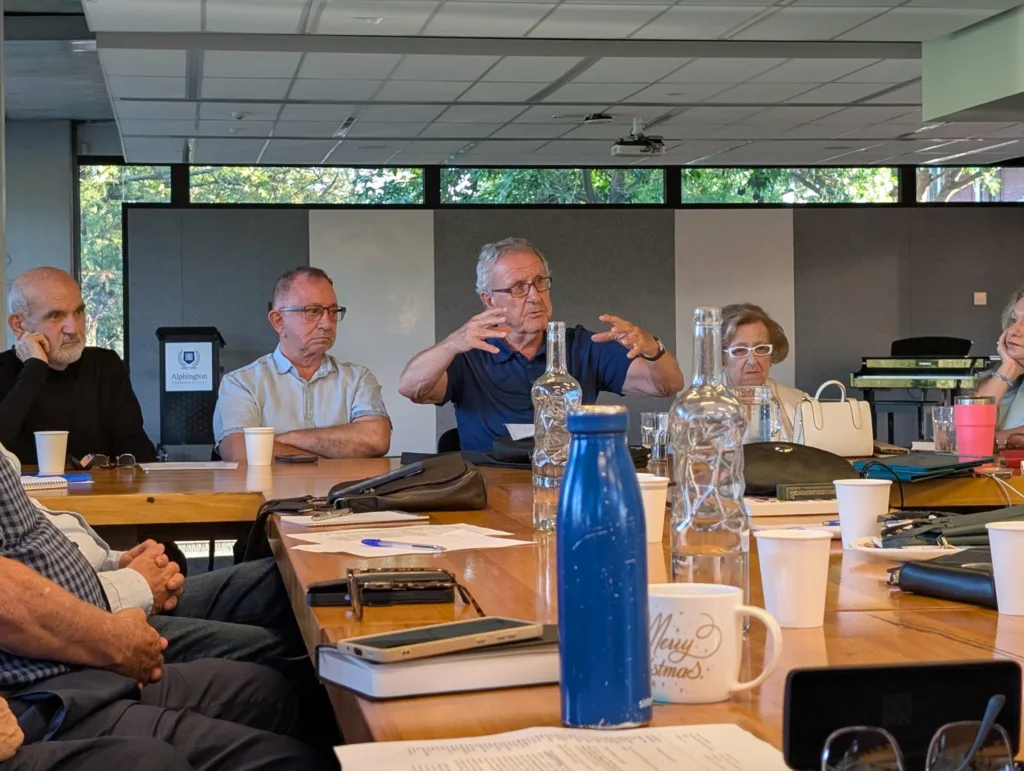
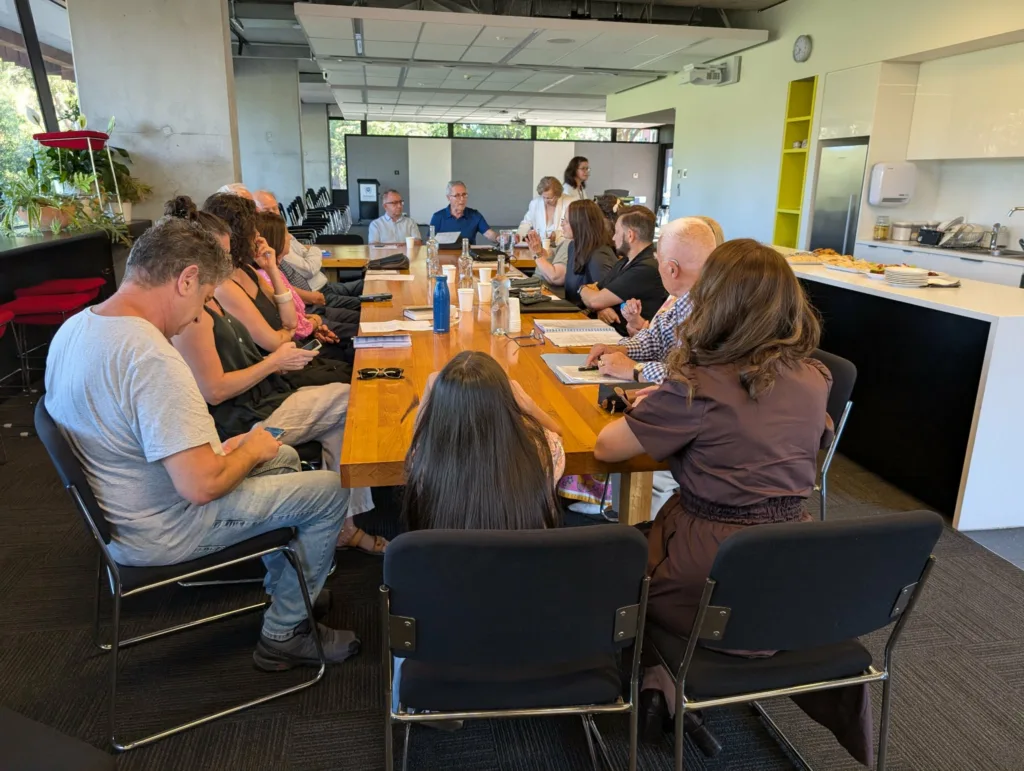
Melbourne plans entered their final phase this week as the organising committee met at Alphington Grammar to confirm last details for the public event at RMIT’s Capitol Theatre on Monday, February 9th.
The event is free and open to the public, with more than 450 people already confirming their attendance through the event’s website. Organisers said demand continues to rise, with attendance capped at approximately 550 in line with the Capitol Theatre’s seating capacity.
From classroom to the Capitol
Professor Anastasios Tamis, who initiated the UNESCO-recognised celebration in Australia, said priority access has been given to students, particularly VCE candidates, who represent the future of Greek language education nationwide.
“If we want Greek to thrive at university level, we must first engage students at school,” he said. “That is where the future is decided.”
Professor Tamis said the program was deliberately designed to strengthen education by making Greek visible, contemporary and culturally compelling, following sustained outreach to schools and universities across Victoria. “By placing students, educators and universities at the centre of the program, and by showing Greek as a value proposition, we are creating long-term demand for Greek studies across both secondary and tertiary education,” he said.
Committee member Mike Zafiropoulos has previously noted that language uptake grows when it moves beyond the classroom. “Students are far more likely to embrace Greek when their Australian peers see it as relevant and respected,” he said.
When language is alive, you celebrate it
The committee confirmed a two-hour program combining education and performance to honour the Greek language’s global influence. The evening will be presented by Konstantinos Kalymnios and Helen Kapalos, with an artistic program featuring the Psaltries Choir of Melbourne and the 45-member Camerata Chorus of Melbourne performing excerpts from Manolis Kalomiris’ Symphony Leventia amongst other highlights.
Musical Director Andreas Koikas will lead a 12-membered ensemble, guiding performances that draw on the works of Vangelis, Manolis Kalomiris, Mikis Theodorakis, Manos Hatzidakis and Stavros Xarchakos. There will also be narrated excerpts from Odysseas Elytis’ Nobel Prize address to the Swedish Academy and selected stanzas from Dionysios Solomos’ Hymn to Freedom, reinforcing the enduring link between language, poetry and national identity.
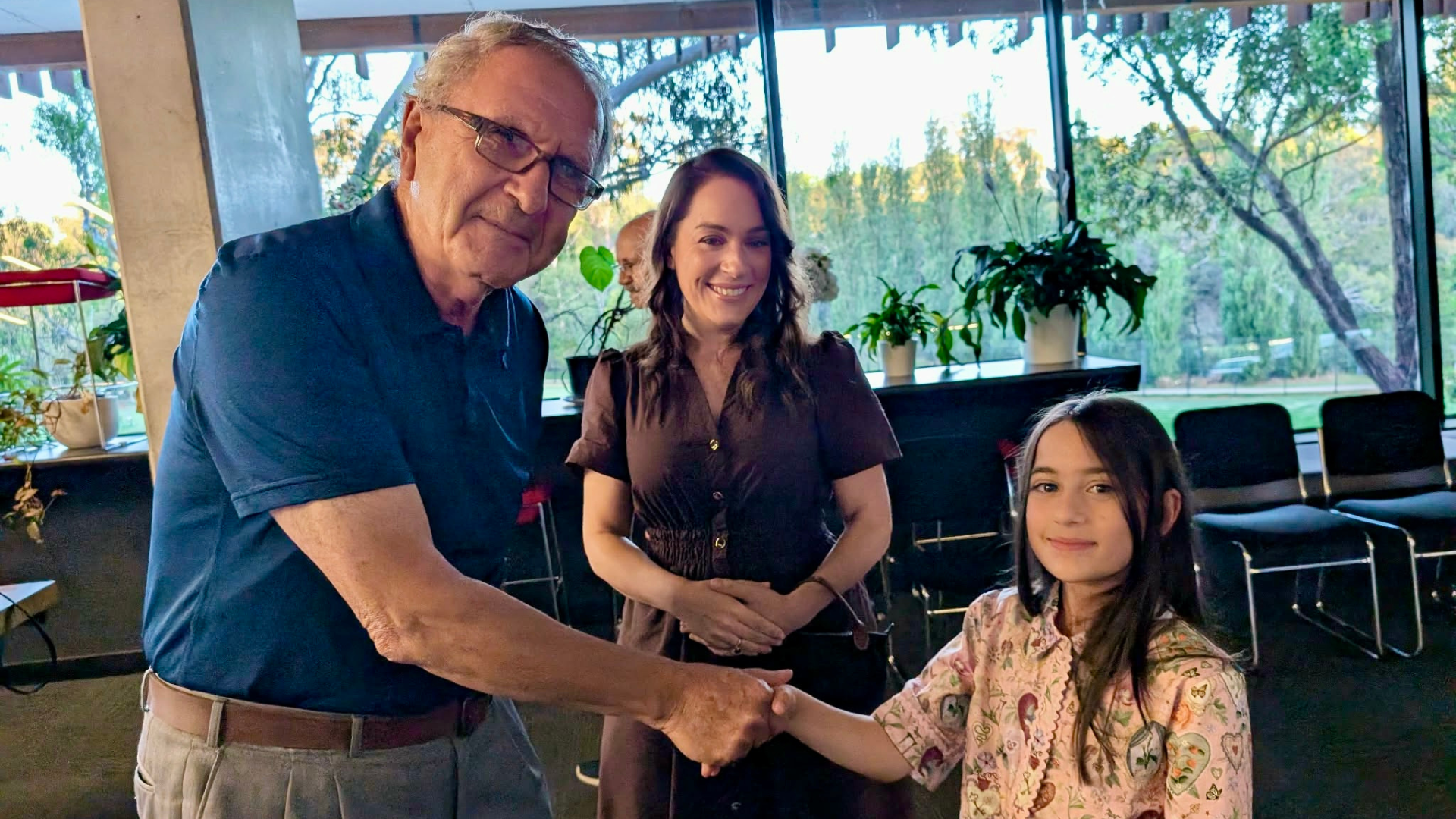
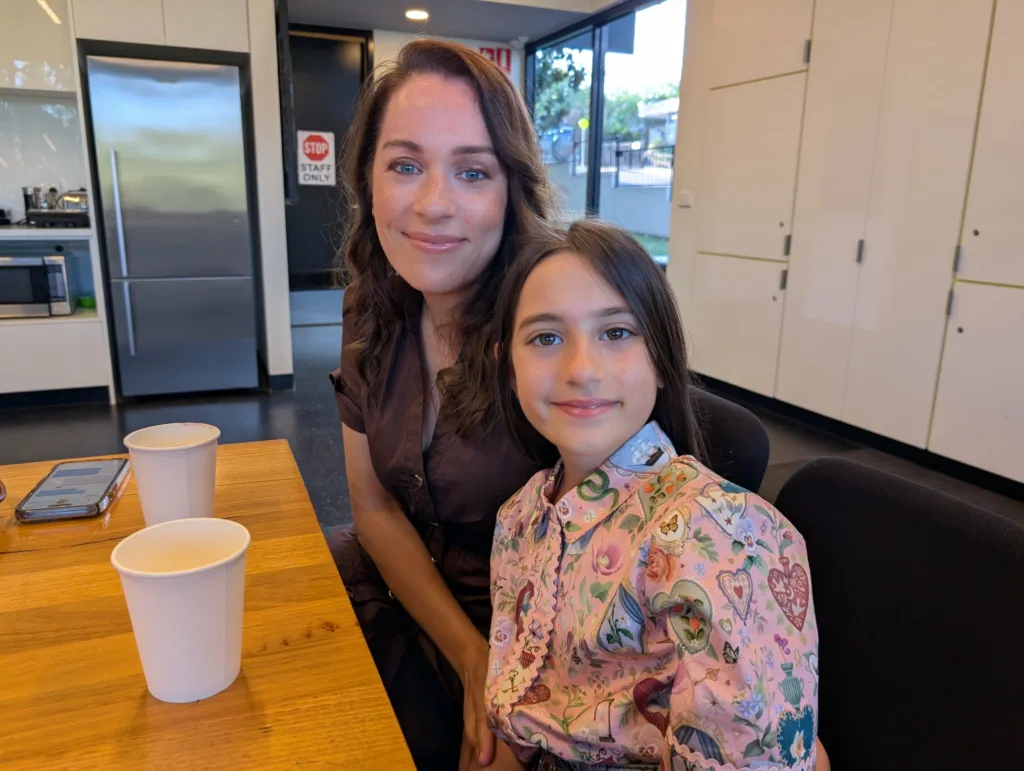
The keynote address will be delivered by The Hon. Professor Anthe Philippides, former Justice of the Supreme Court of Queensland. Her address will explore Themis, the goddess of divine law, and the Greek language, examining how Greek legal terminology shaped the foundations of jurisprudence. She will appear on stage alongside her daughter, Lilly. Her keynote is expected to bridge antiquity and modernity, reinforcing why Greek remains a living language.
Discussion was robust when it came to the selection of Philhellenes to be honoured for their contribution to Greek language and culture. While names remain confidential, discussions included advocacy from The Greek Herald for the inclusion of at least one female Philhellene among the five award recipients.
Not a gala, but a gateway
Tuesday’s meeting also emphasised outward engagement, with invitations extended to ministers, academics, jurists, and diplomats across Victoria. Foreign Minister Penny Wong has responded with a letter praising the Greek language and its contribution to democratic thought. Committee member Christina Despoteris of Sister Cities Australia, who worked alongside Mike Zafiropoulos on outreach, said the response has been strong.
“Consuls from more than 70 countries have been approached, alongside peak multicultural bodies, legal and medical associations and universities,” she said. Responding to a query from Theo Theofanous, President of the Cypriot Community of Melbourne and Victoria, Despoteris confirmed invitations had been extended to all embassies, including Turkey and North Macedonia. She noted the breadth of the guest list reflects an effort to position Greek as a foundational pillar of Western civilization and law.
Beyond the gateways of Melbourne, a video professionally filmed by Platon Denezakis will be shared with other countries, extending its reach to national and international audiences.
NUGAS Co-President Demi Bourdopoulos is assisting with the event’s digital organisation and social media presence. “World Greek Language Day speaks directly to young people who care about culture, philosophy and where modern thinking comes from,” she said. “That’s why students want to be part of this.”
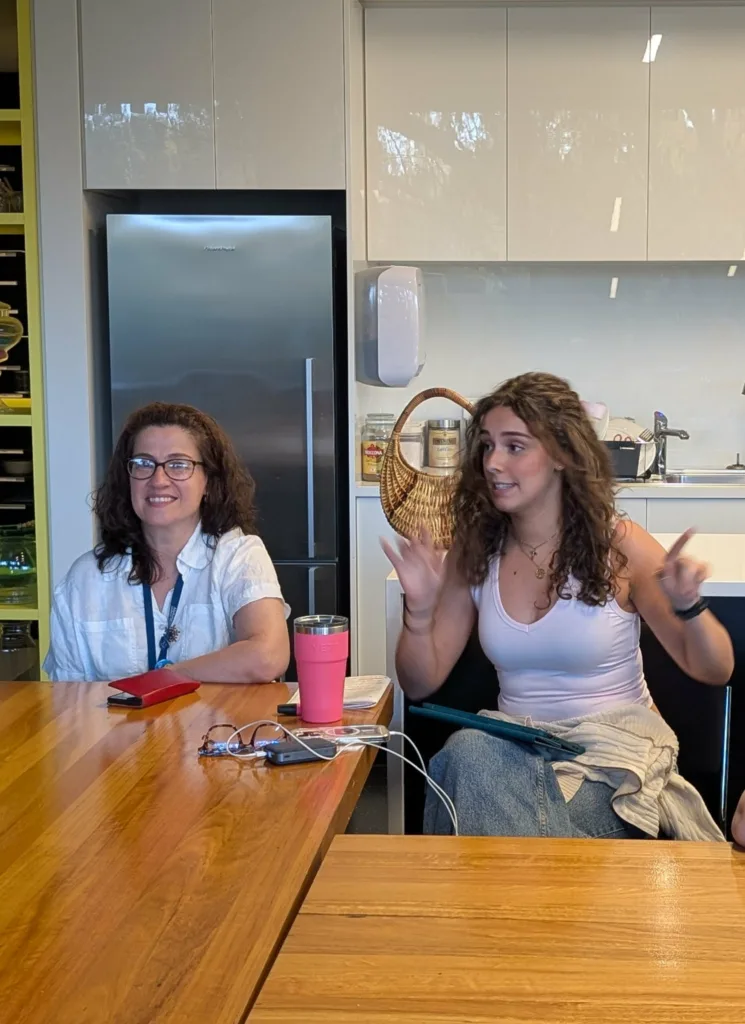
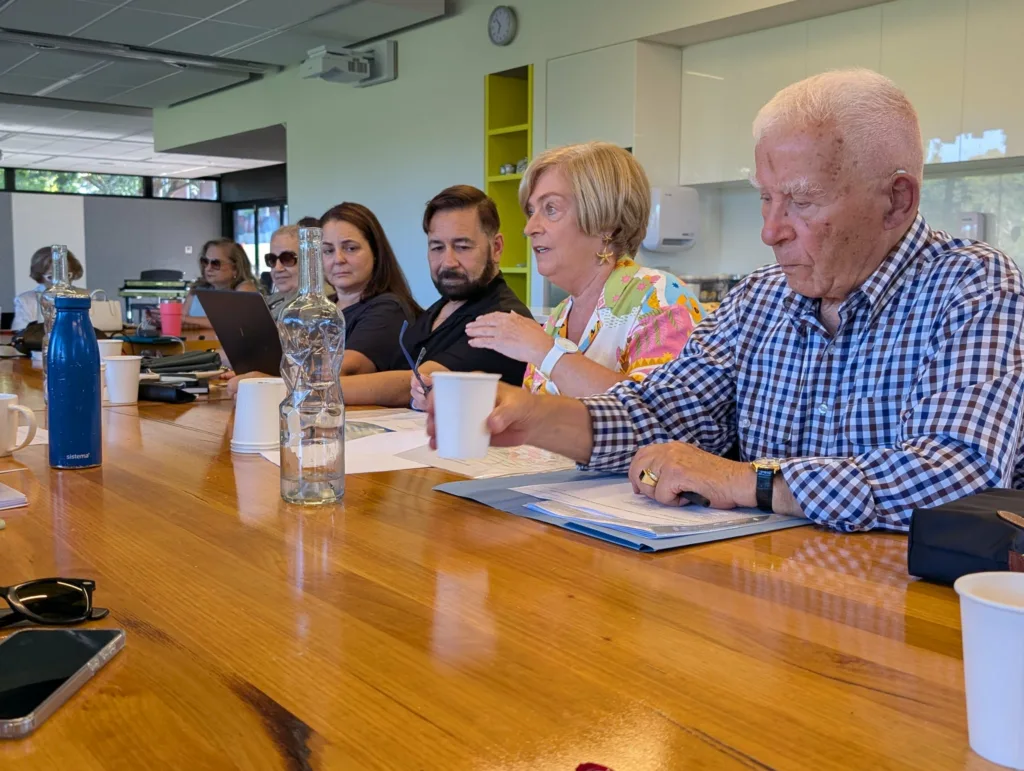
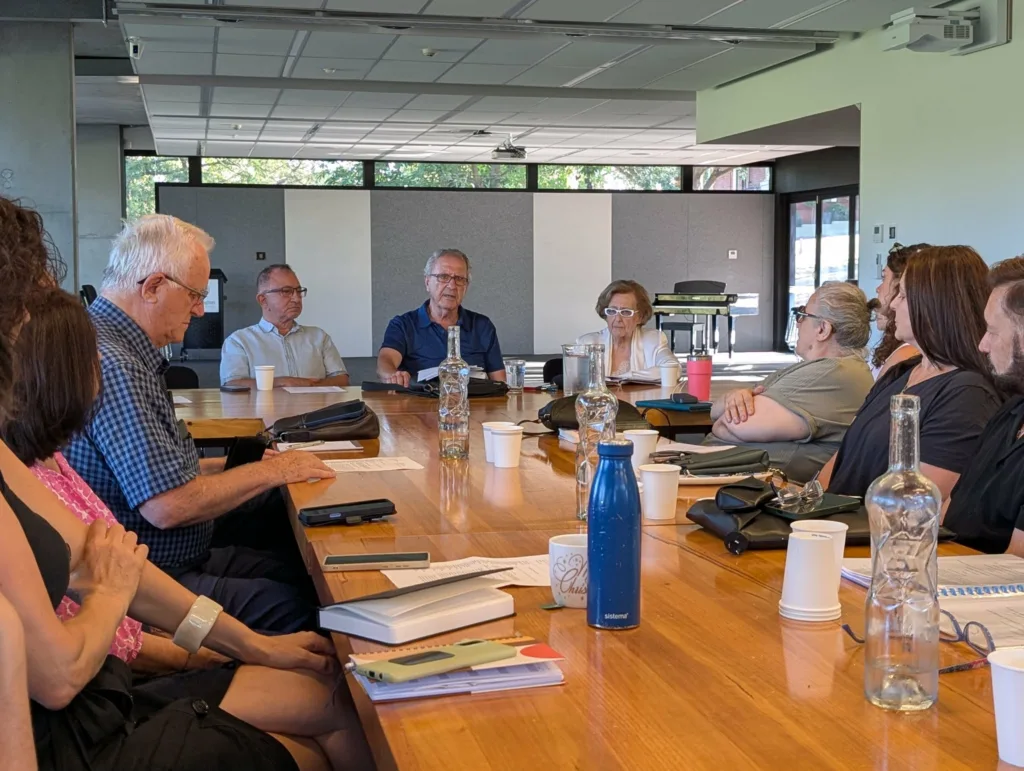
The atmosphere on Tuesday was palpable as the team discussed the event’s position as the first in an ongoing national continuum with plans already being discussed for next year. Organisers look beyond February 9th to establish UNESCO’s World Greek Language Day celebration as an annual fixture with an impact that stretches throughout the year.
Within a short space of time, and without any government funding or support, the team were able to pull together a vibrant program. “Imagine what we could do if we had more time,” Zafiropoulos said.
Much of the event’s momentum is credited to the persistent advocacy of Professor Tamis, whose decades of scholarly work and community leadership have been instrumental in elevating the profile of the Greek language in the Australian diaspora.
Professor Tamis described the meeting as a decisive moment for the committee. “We are now on the final straight,” he said. “The response has been deeply encouraging. This is not an event for one community, it is a celebration that belongs to everyone.”
UNESCO’s World Greek Language Day tribute takes place at the Capitol Theatre on Swanston Street at 8pm, doors open at 7.30pm. Tickets are limited due to venue capacity. To enquire about tickets or to join the waiting list, leave your contact details on the event’s website.
*Mary Sinanidis is a member of the digital communications subcommittee of the UNESCO World Greek Language Day.
