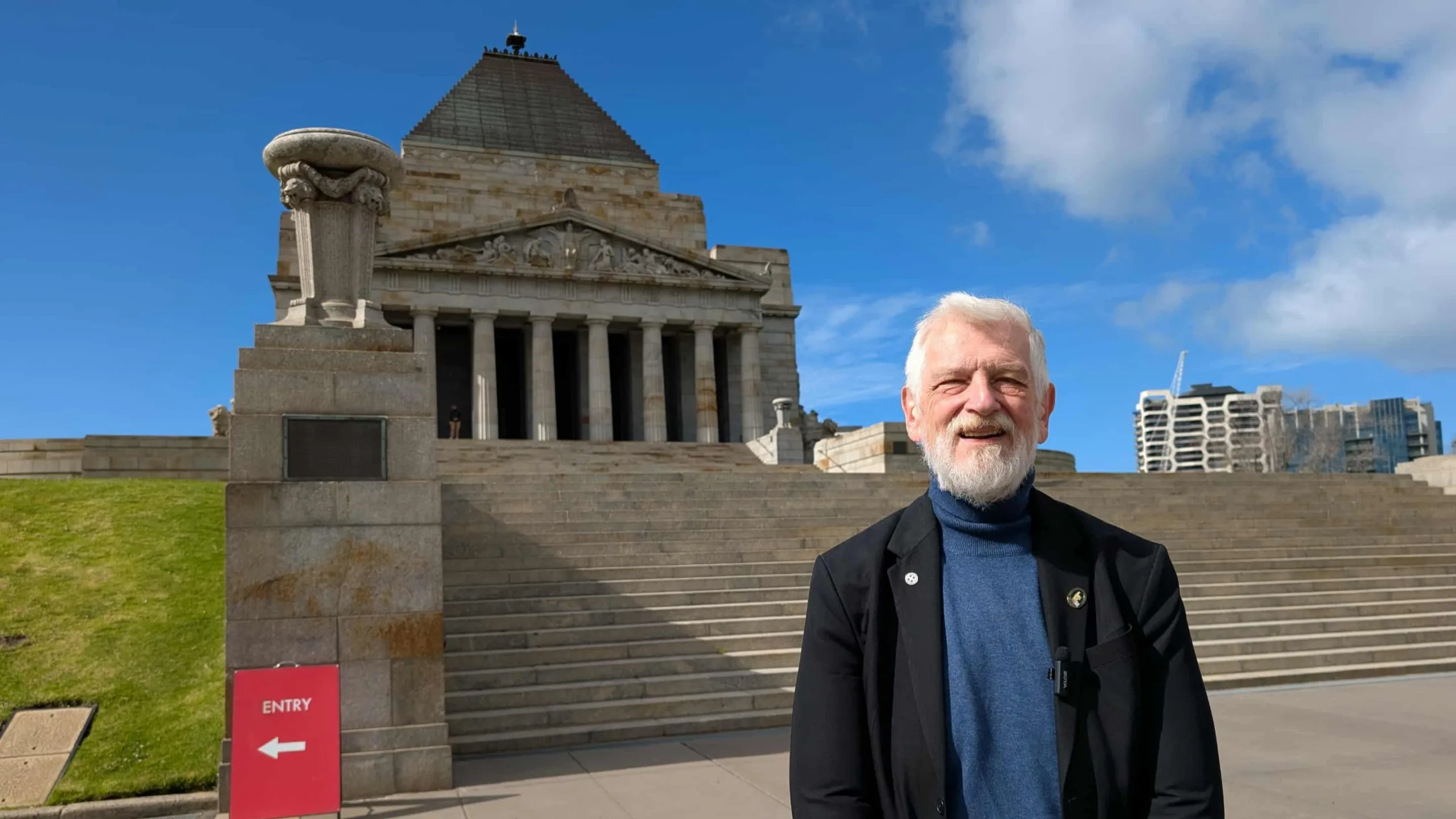
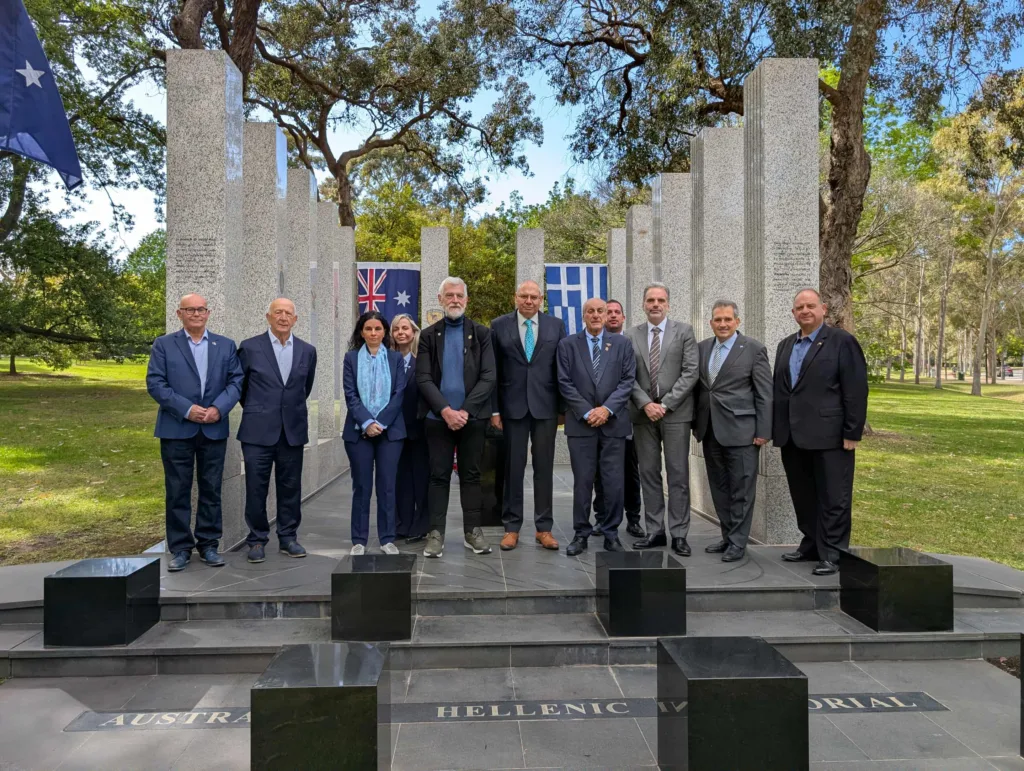
It was a lovely morning at the foot of Melbourne’s Shrine of Remembrance as Australian Hellenic War Memorial (AHWM) President Steve Kyritsis OAM ensured everything was pristine ahead of Greek Deputy Foreign Minister for Greeks Abroad Ioannis Loverdos’ visit.
Patron and AHWM co-founder Pantelis Kalimnakis OAM, AHWM Secretary Peter Andrinopoulos, and AHWM Treasurer Nikolaos Kydas hoisted the flags, chatting about the night before as the sun broke through the clouds.
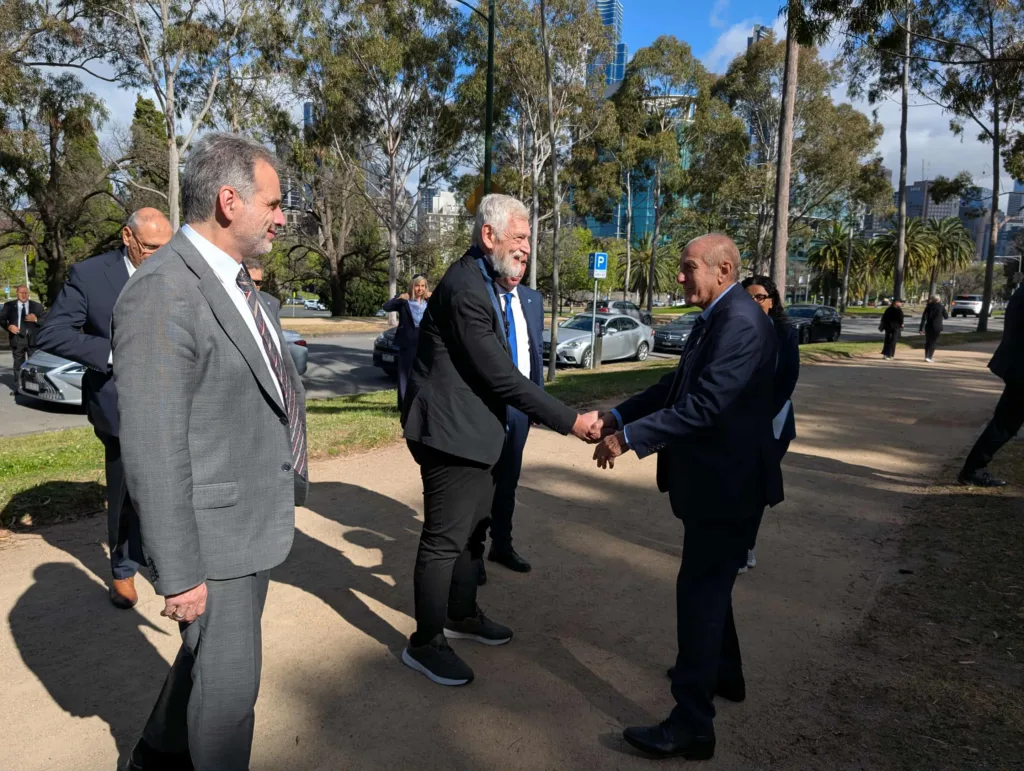
Right on schedule, Loverdos arrived with the Greek delegation – Interior Secretary General Athanasios Balermpas, Citizenship General Secretary Dimitris Karnavas, and Director General for Citizenship Issues Katerina Ouli. They were joined by Greek Ambassador Stavros Venizelos and Consul General of Melbourne Dimitra Georgantzoglou, who ensured the visit ran seamlessly and on time. Her task was not an easy one, as members of the delegation joked that they could happily stay all day.
Loverdos shared with The Greek Herald his reflections on Greek Australians during his first visit to the country, touching on questions of identity, language, and the enduring essence of being Greek.
“We preserved Hellenism during Ottoman rule through language and Orthodoxy. Without these, we would have lost ourselves,” he observed.
Asked whether this, his first visit to Australia, had changed his perception of the Greek Australian diaspora, he replied thoughtfully: “I don’t think so. My impression hasn’t changed. I see people who have a deeply emotional bond with their homeland,” he said.
“Their visits (to Greece) are powerful, because more people come now than in the past. You’ve understood that Greece has changed; it’s no longer the Greece of your grandparents’ village. It’s a different Greece, more substantial, less romantic, and that’s a good thing.”
When The Greek Herald suggested that Greece could engage more actively with influential Greek Australians and philhellenes, creating a lobby, Loverdos nodded in agreement.
“That’s what we want,” he said, adding that he had already met several prominent figures who, despite losing the language, retained a strong ‘Greek consciousness.’
Loverdos also reflected on the complexity of his role, encompassing a wide gammut of Greeks, from new arrivals to post-war migrants and those who may not hold Greek citizenship but still feel deeply connected to their heritage. He lamented the loss of language, but emphasised that Hellenism cannot be measured solely by linguistic ability.
“We meet people born in other countries who may not have documents, but you can tell if someone is truly Greek. That’s why we’re changing the citizenship code, so these people can also obtain Greek nationality,” he said.
Balermpas, continuing The Greek Herald’s conversation from the previous evening, expanded on this topic, advocating for the rights of diaspora Greeks without citizenship. He confirmed that the proposed Homogeneia (Diaspora) Card, stalled despite being designed for those wishing to reconnect with Greece, would soon be revived. The card would grant privileges such as opening bank accounts, reduced museum entry, and extended stays in Greece as Greeks rather than tourists.
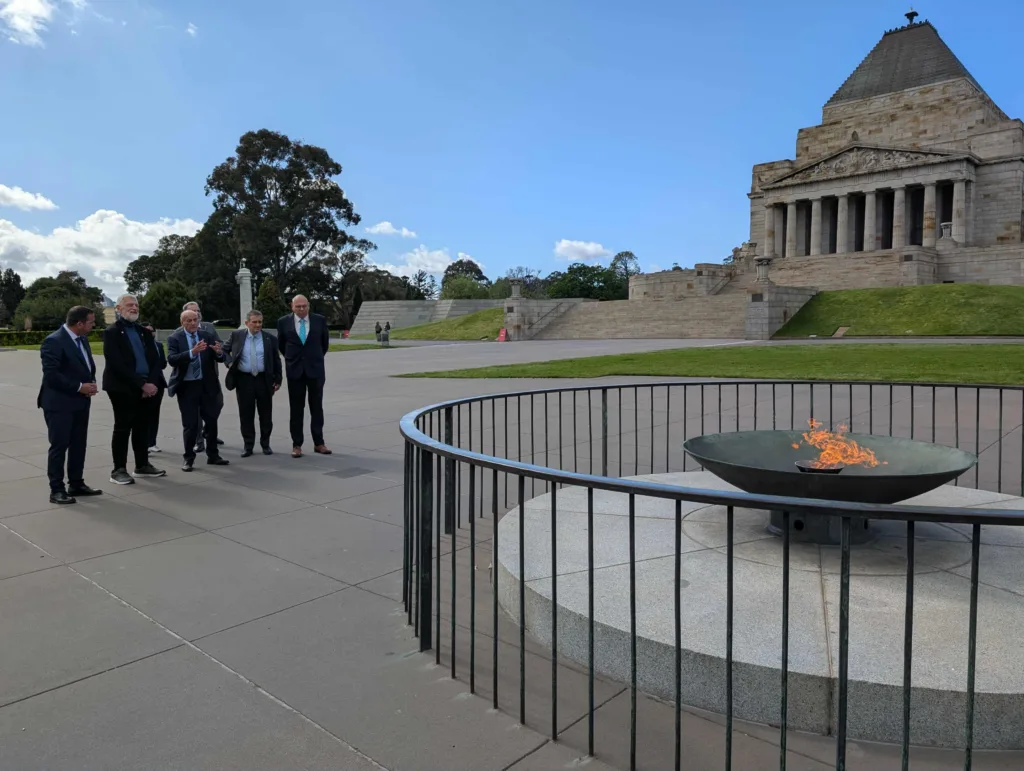
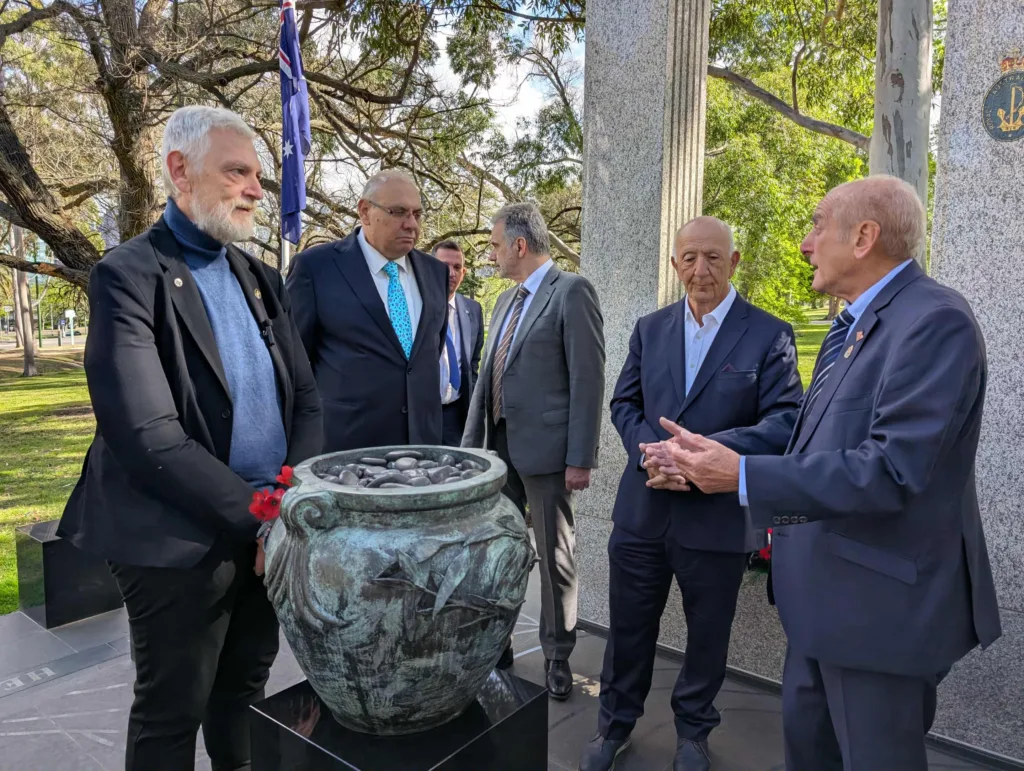
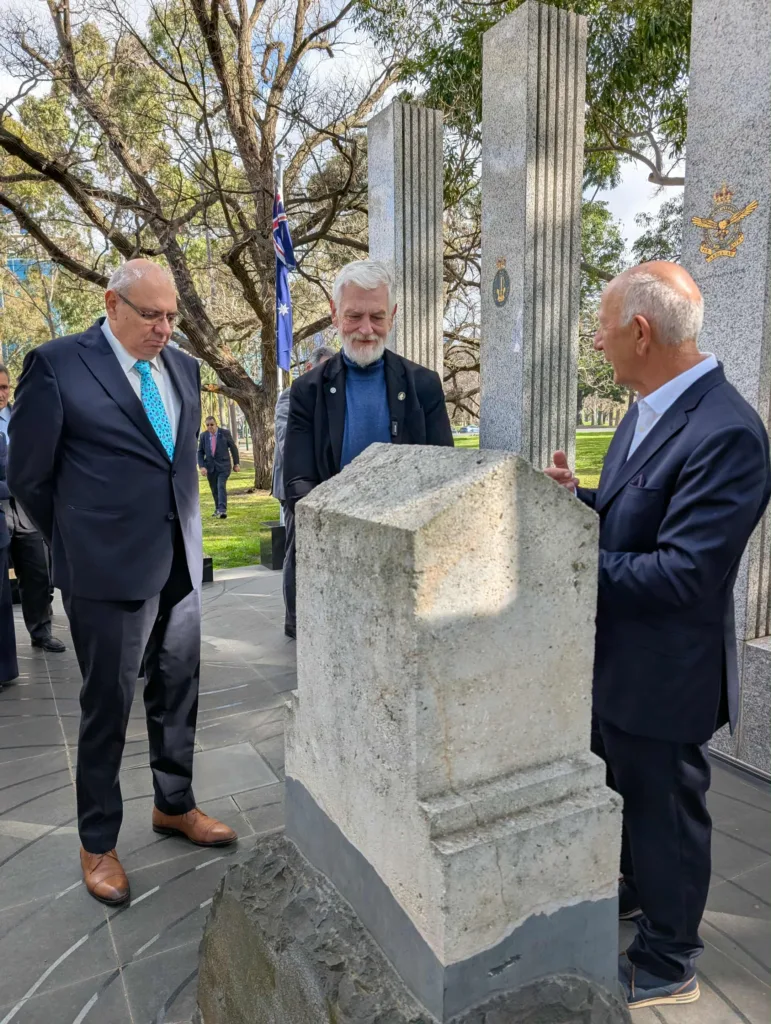
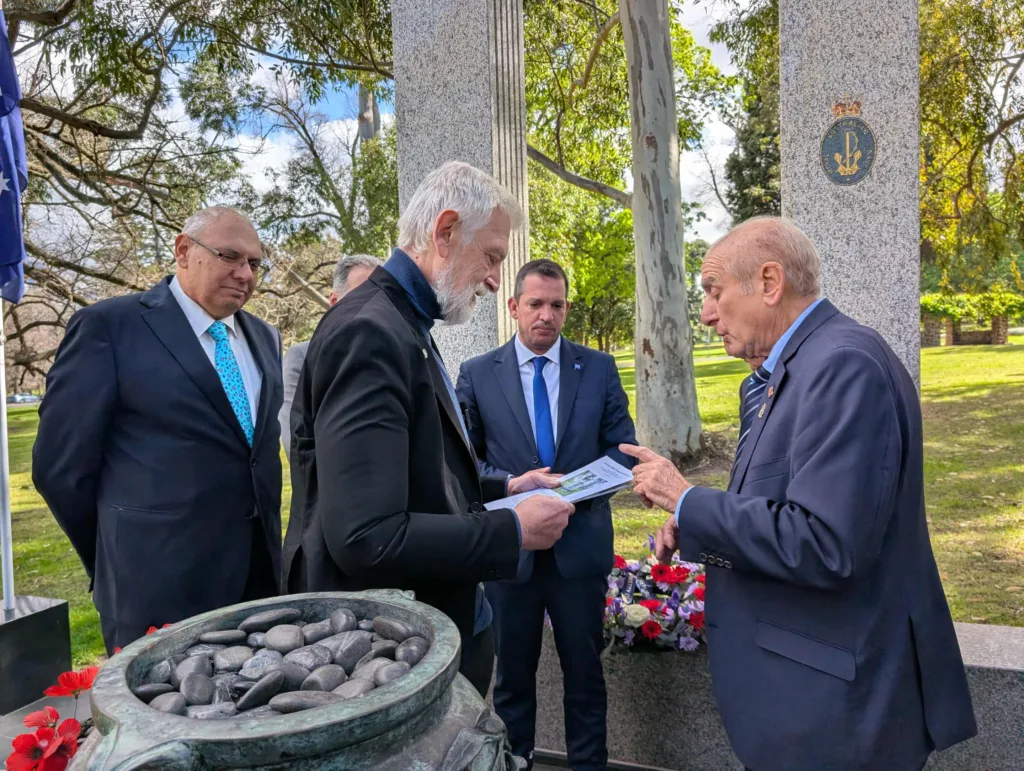
The discussion about citizenship and belonging flowed naturally into the day’s solemn visit to the AHWM. Kyritsis, a veteran and historian, guided them through the twelve granite columns of the Australian Hellenic War Memorial, silent witnesses to the thousands who served in Greece, Crete, and beyond. He recounted the doomed retreat of the Australian Division in 1941, “the greatest catastrophe,” describing how “many were captured alongside British, New Zealand, and Greek soldiers.”
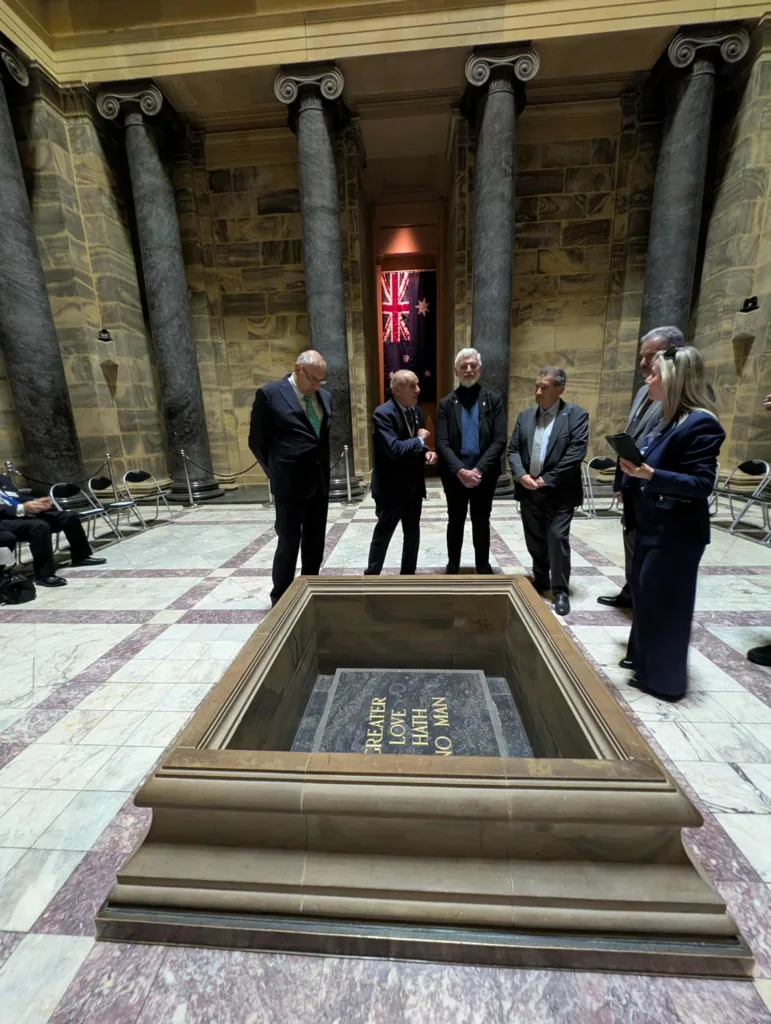
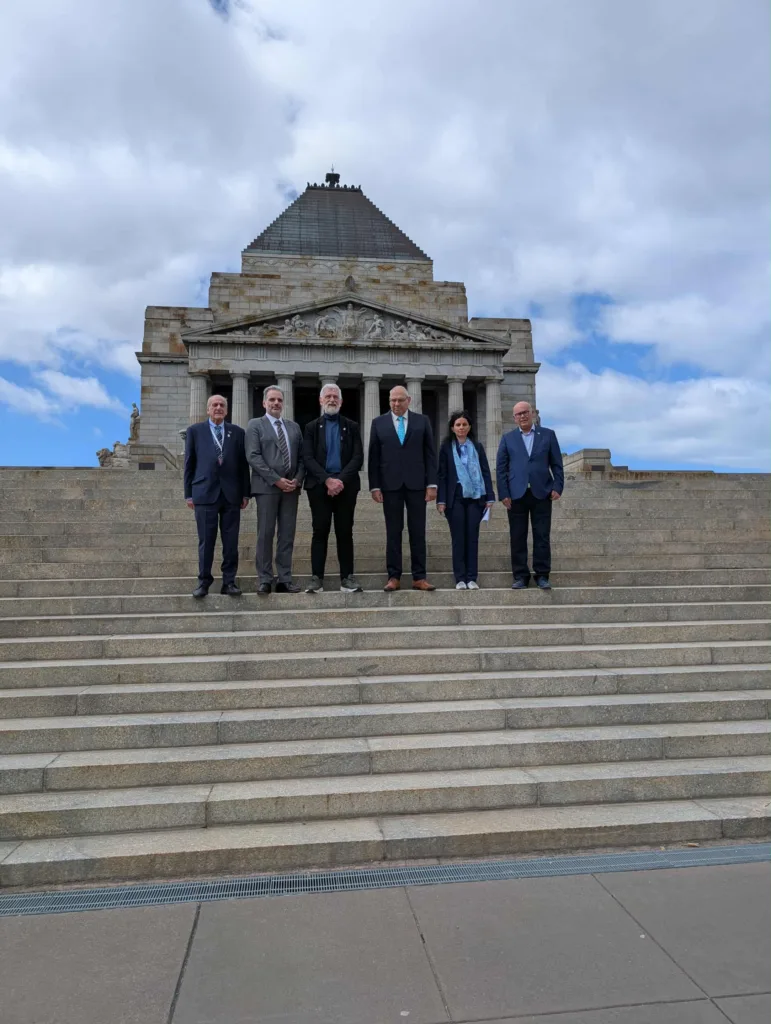
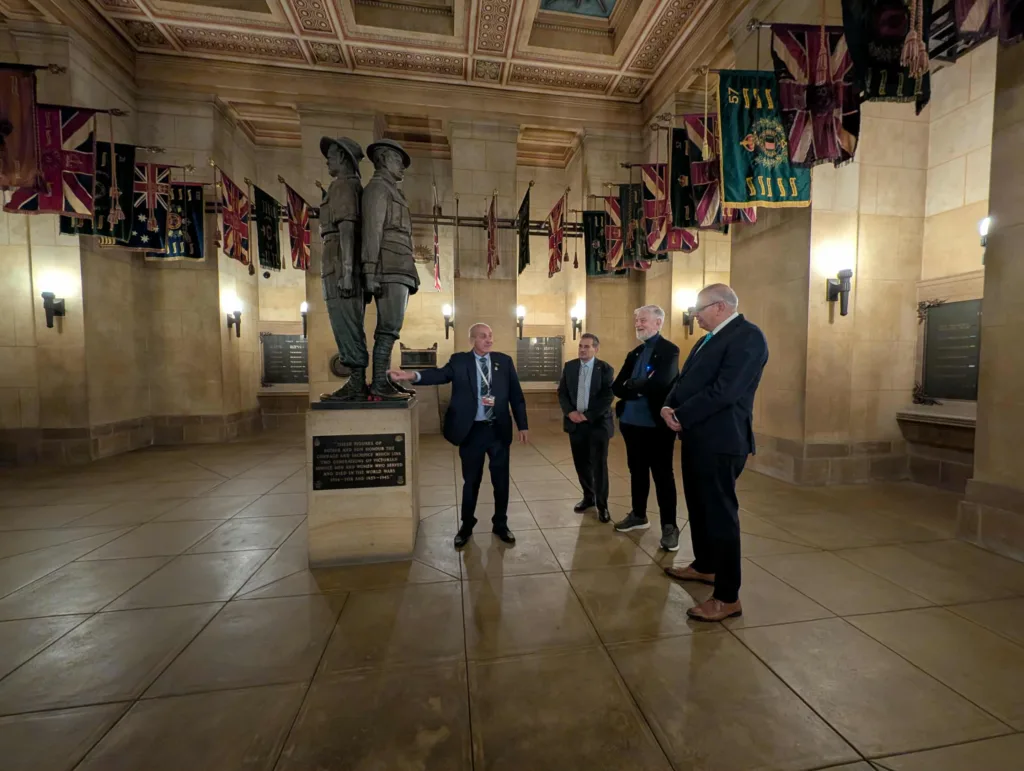
At the Shrine of Remembrance, Loverdos was visibly impressed by the classical geometry and symmetry of the architecture, turning to Ryan Johnson, the Shrine’s Visitor Experience Director, to ask about the Greek influence in its design.
When the Great War ended, Australians rebuilt their communities, drawing on ancient Greek ideals to present a serene, timeless aesthetic that offered solace to the living. The Shrine stands not only as a mausoleum but also as a temple venerating those who served, a structure whose form and function evoke the democratic ideals of ancient Athens: freedom, sacrifice, and the pursuit of peace.
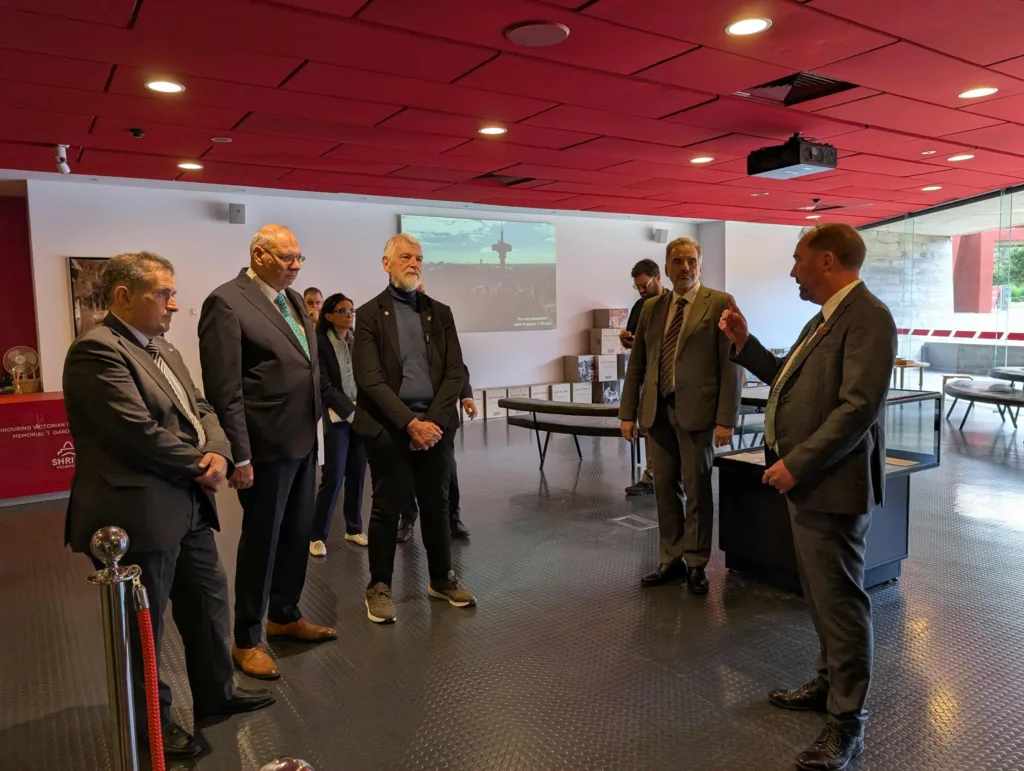
The delegation expressed admiration for Australia’s commemoration of conflicts extending beyond Greek campaigns, including Korea, Vietnam, and Afghanistan.
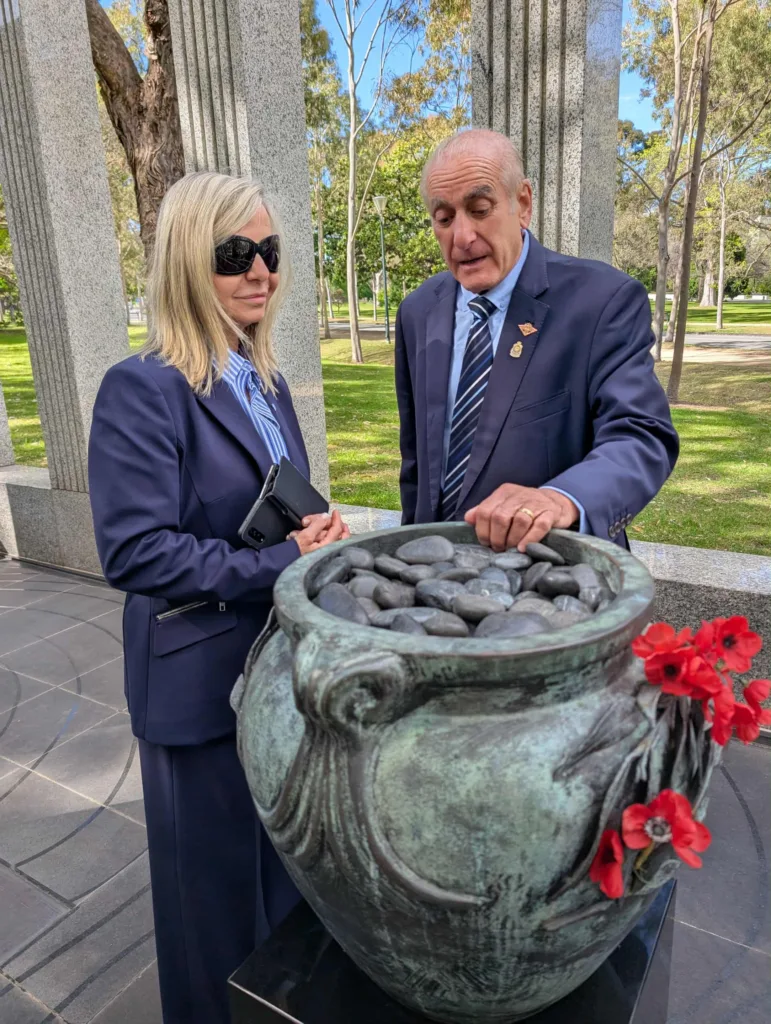
Discussing remembrance, Kyritsis explained the symbolism of the poppy: “It was the only flower that grew in the blood-soaked fields of France after World War I, that’s why we wear the poppy each year.”
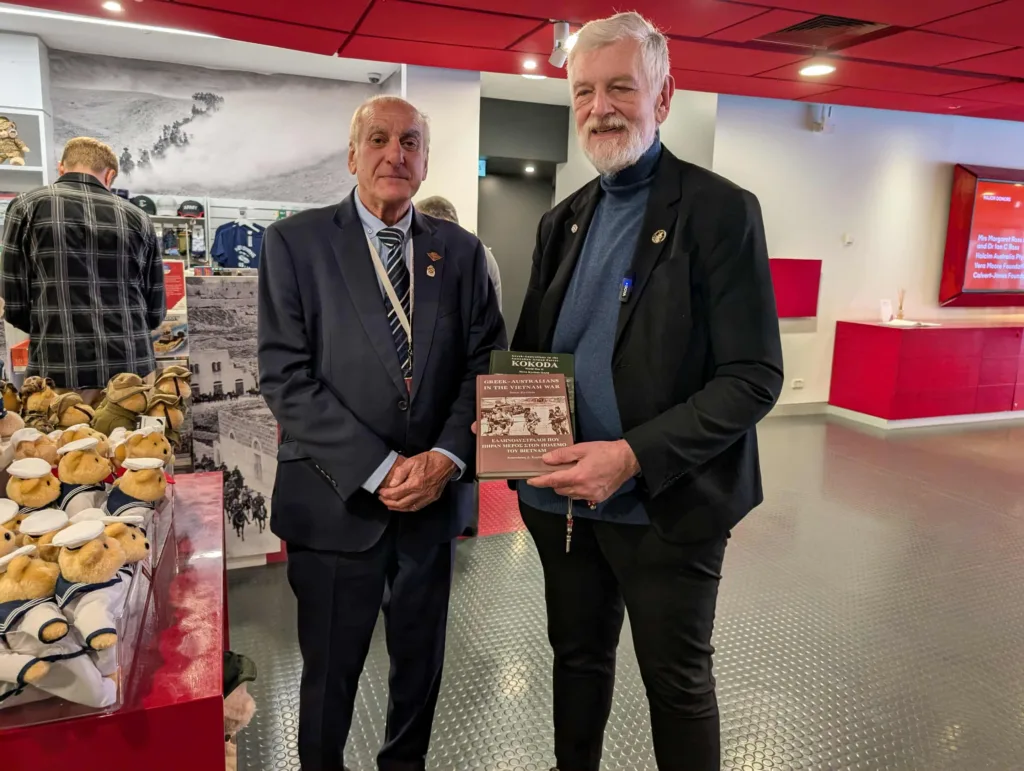
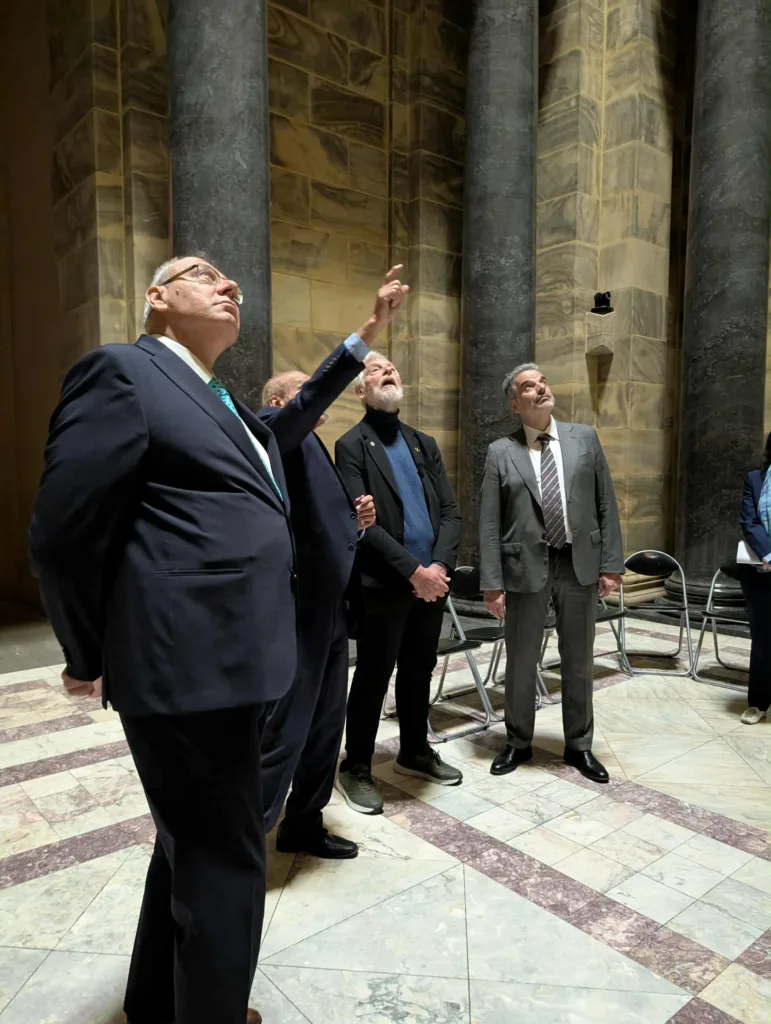
Meanwhile, Ouli, who oversees citizenship policy, shared a personal moment inside the Shrine’s crypt – a room steeped in symbolism, where at 11 am each Remembrance Day, a beam of sunlight passes through an aperture to illuminate the word Love on the Stone of Remembrance. Mesmerised by the architectural precision, she revealed that her son was born on 11 November 1998 at 11am, precisely on Remembrance Day.
“I’ll bring him here for his birthday,” she said softly, “to celebrate at the Shrine.”
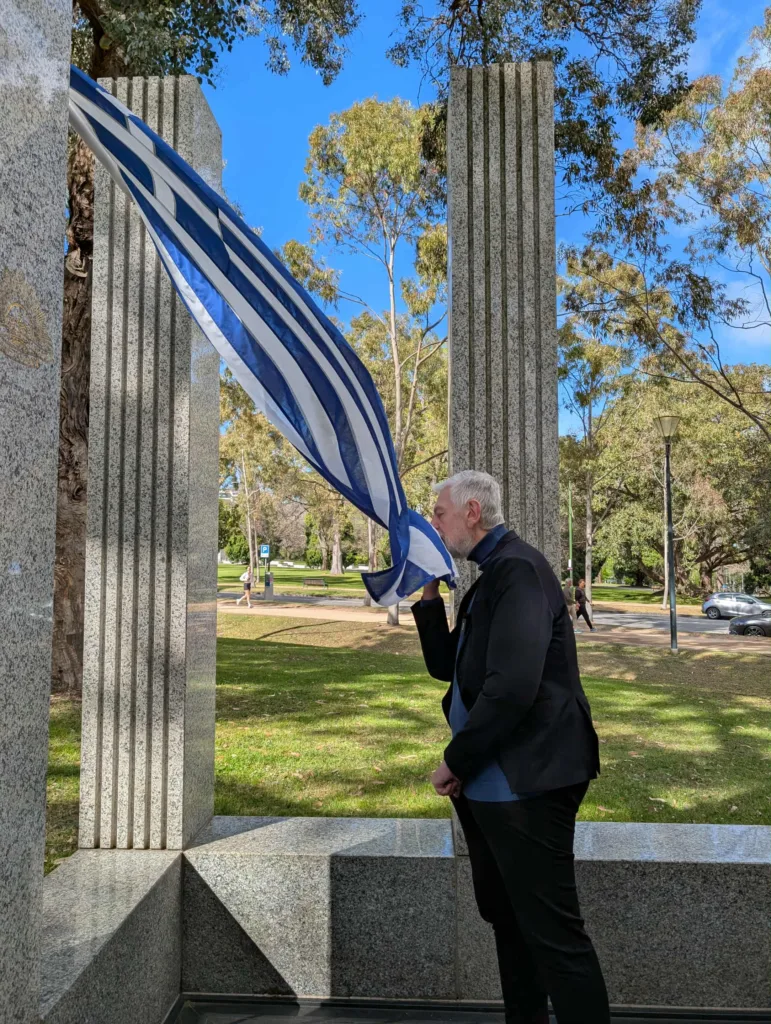
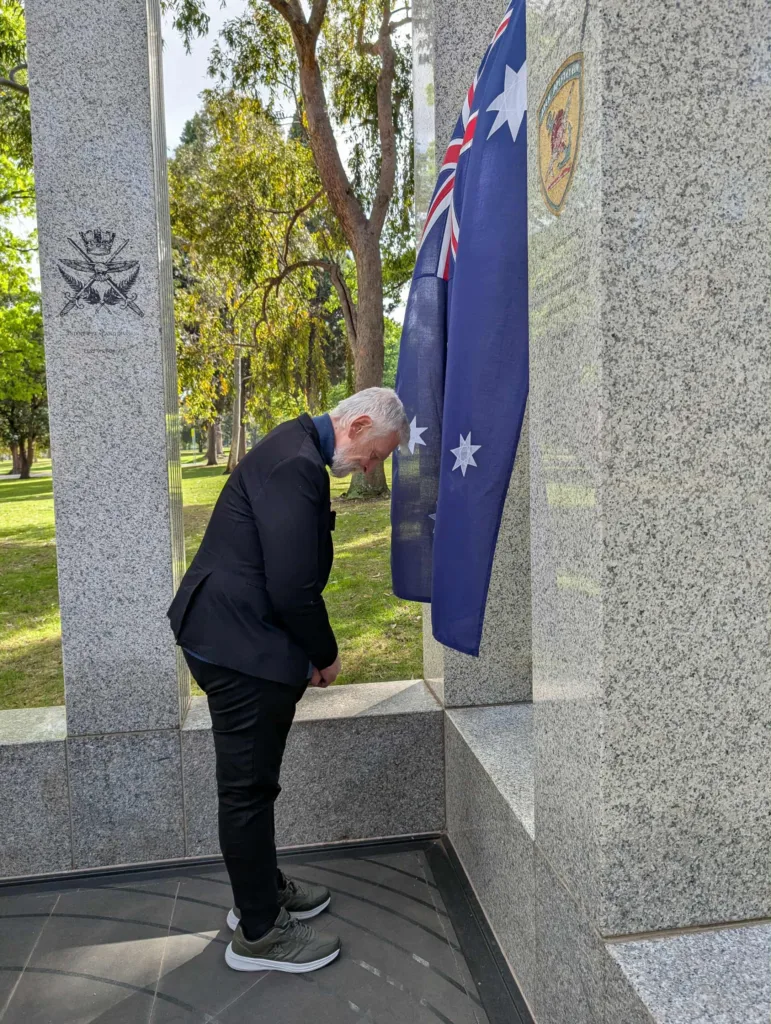
Earlier, Loverdos had laid a wreath at the memorial, bowing before the Greek and Australian flags. The quiet gesture, framed by gum trees and spring light, carried the symbolic gravity of two nations bound by shared battles, and shared ideals of democracy and freedom.
*All photos copyright The Greek Herald / Mary Sinanidis
