The Greek Community of Melbourne (GCM) has announced a special lecture by Dr Andonis Piperoglou, the Hellenic Senior Lecturer in Global Diasporas at the University of Melbourne.
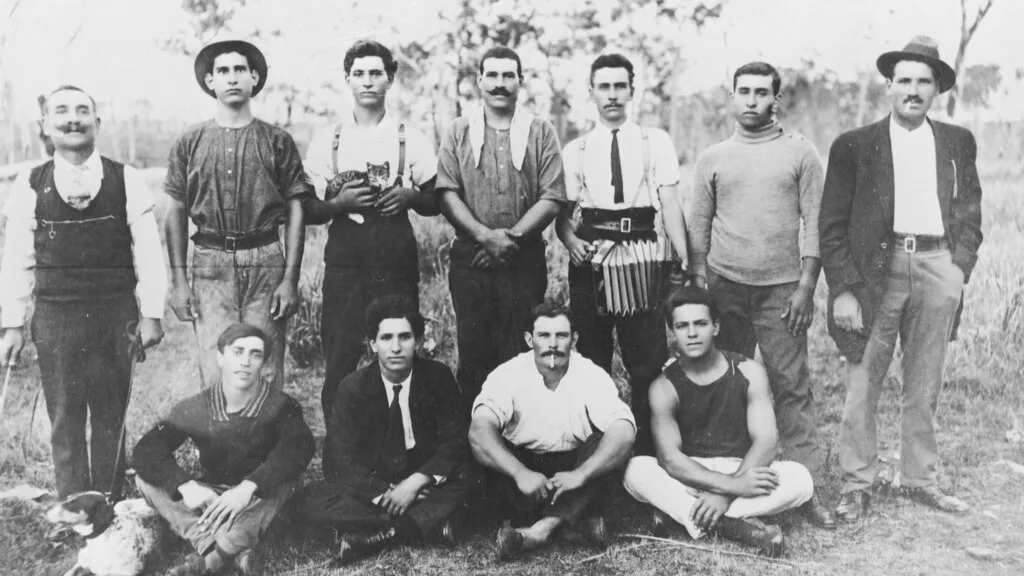
The lecture, titled “Envisioning a Mediterranean Pacific: Photography and Sugar Cane Migrants,” will be delivered on Thursday, 15 August 2024, at 7pm at the Greek Centre. This lecture is part of the ongoing Greek History and Culture Seminars series.
Dr Piperoglou’s lecture will delve into the intertwined histories of Mediterranean and Pacific migrant labor in Queensland’s sugar industry.
While much of the early twentieth-century narrative focuses on Mediterranean migrants who labored in the region’s sugar refineries and bush-clearance efforts, this presentation will expand the discussion to include the pre-existing system of forced migration from the South Pacific that was also vital to Queensland’s sugar industry.

By examining visual culture—through photographs, cartoons, and sculpture—Dr Piperoglou aims to reveal the often overlooked connections between these two migrant labor groups. His work challenges the conventional narratives of assimilation and highlights how Mediterranean and Pacific diasporas have been represented and perceived within the context of Australian settler colonialism.
As the inaugural Hellenic Senior Lecturer of Global Diasporas, Dr Piperoglou brings a wealth of expertise in migration and ethnic history, with extensive publications on Greek migration to Australia. His research explores historical links between colonialism, racism, and migration, focusing on the movements between the Mediterranean and Pacific regions. In addition to his academic role, he is the Vice President of the International Australian Studies Association.
This lecture promises to offer a fresh perspective on the history of migration and labor in Queensland, encouraging attendees to reconsider established narratives and explore comparative histories of diaspora.
Event Details:
- Title: Envisioning a Mediterranean Pacific: Photography and Sugar Cane Migrants
- Date: Thursday, 15 August 2024
- Time: 7:00 pm
- Venue: Greek Centre, (Mezzanine, 168 Lonsdale Street, Melbourne)
