By Ikaros Kyriakou
In an era where newspapers are born with a “click”, it is difficult to imagine that once every page was the result of manual work, patience and precision. For Dimitra Mitsos, however, that era is not simply a memory — it was her everyday reality for many years.
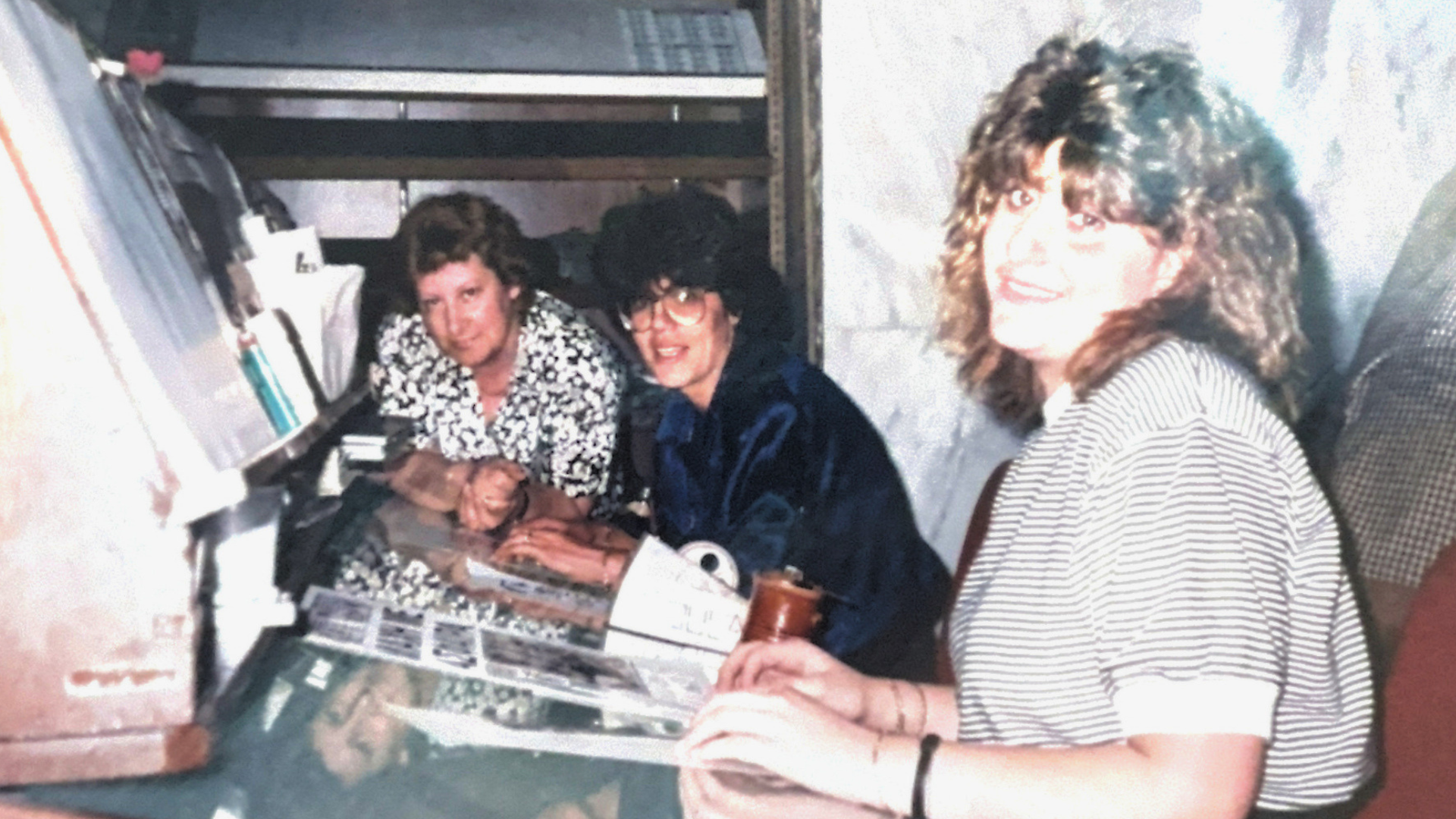
Her journey at The Greek Herald began during a period when page layout was done with paper, scissors and glue. “Every headline, every photograph, every piece of text passed through our hands,” she recalls. “There was no ‘undo’. If you made a mistake, you had to correct it from the beginning.”
The conditions were demanding. The deadlines strict. The “closing” of each edition was accompanied by tension, but also by a sense of collective effort. “We were a team. The editorial department, the technical department, everyone worked so the newspaper would come out on time,” she says.
The major change came with the arrival of technology. The transition to electronic page layout was not simply a technical development — it was a change of mentality. “At first there was fear,” she admits. “But at the same time there was excitement. Suddenly, we had tools that gave us more possibilities, speed and accuracy.”
Despite the changes, one element remained unchanged: the responsibility towards the final result. “Page layout is not only technical work. It also has creativity. You have to ‘see’ the page, to understand how it will speak to the reader.”
During her years at The Greek Herald, there were moments that stood out — editions that remained in the memory, nights filled with pressure and anxiety, but also moments of satisfaction when the paper came out flawless. “Every edition had its own story,” she says.
Today, looking back, Dimitra sees a journey full of experiences and changes. From handmade to digital, from slow to immediate, from “making” to “designing”. And yet, the essence remains the same.
“The newspaper is a living organism,” she notes. “It changes, evolves, adapts — but it always carries within it the people who worked for it.”
In an anniversary year for The Greek Herald, stories like hers remind us that behind every page there are faces, hard work and passion. And that the history of a newspaper is not written only with words — but also with the hands of those who created it.
When and how did your collaboration with The Greek Herald begin? What do you remember from your first day?
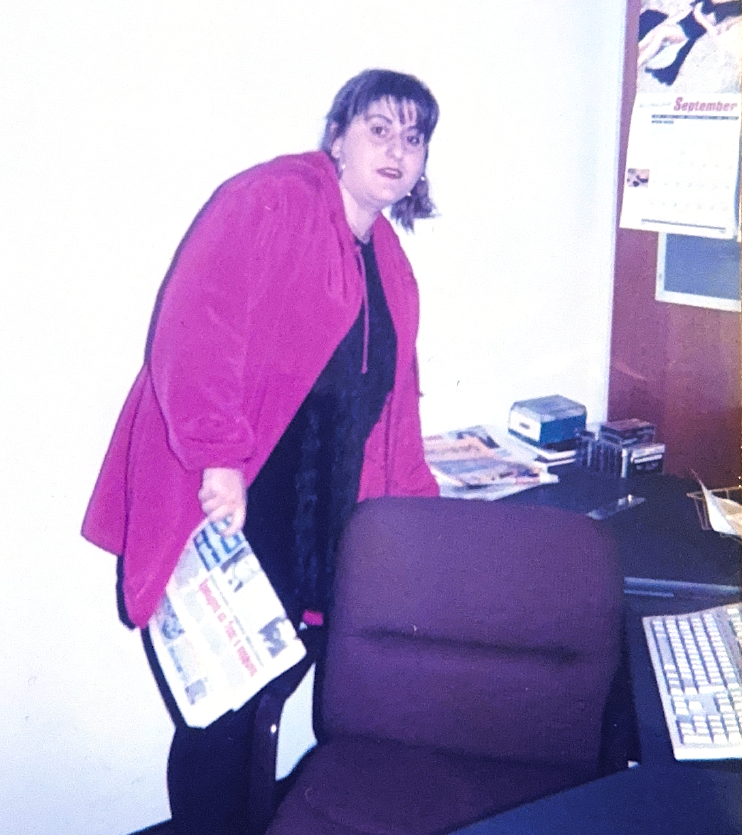
I began my collaboration with The Greek Herald in April 1986, shortly after my arrival from Greece. I had seen an advertisement in the newspaper for a position in page layout, submitted an application and was fortunate to be selected.
On my first day I met many of the staff members and soon realised that I was the youngest in the team, only 19 years old. It was an experience full of excitement but also awe, as I entered a completely new professional world. From the very beginning, Barba Kostas stood beside me like a mentor, guiding me and helping me find my place within the workplace.
What was the page layout process like in the era of manual “paper” layout? What were the biggest challenges of those years?
During the era of manual page layout, the so-called “paste-up”, everything was done by hand. The articles came out of the computer room in the form of bromides, where the staff worked on early Macintosh computers with green text screens.
After they were printed, the texts were corrected and then passed on to us. We carefully cut them into columns and manually placed them onto the layout sheets, together with the advertisements that would appear in each edition.
It was an extremely demanding and detailed process. Every element had to be absolutely precise, as the final pages were photographed before being sent for printing. There was no room for error — everything had to be clean, aligned and professional.
The biggest challenge was the constant pressure of time. As a daily newspaper, there were strict deadlines every day, creating a high-intensity environment where speed and accuracy were equally important.
You experienced the transition from traditional to modern, electronic page layout. How did you experience this change? Was it difficult or exciting?
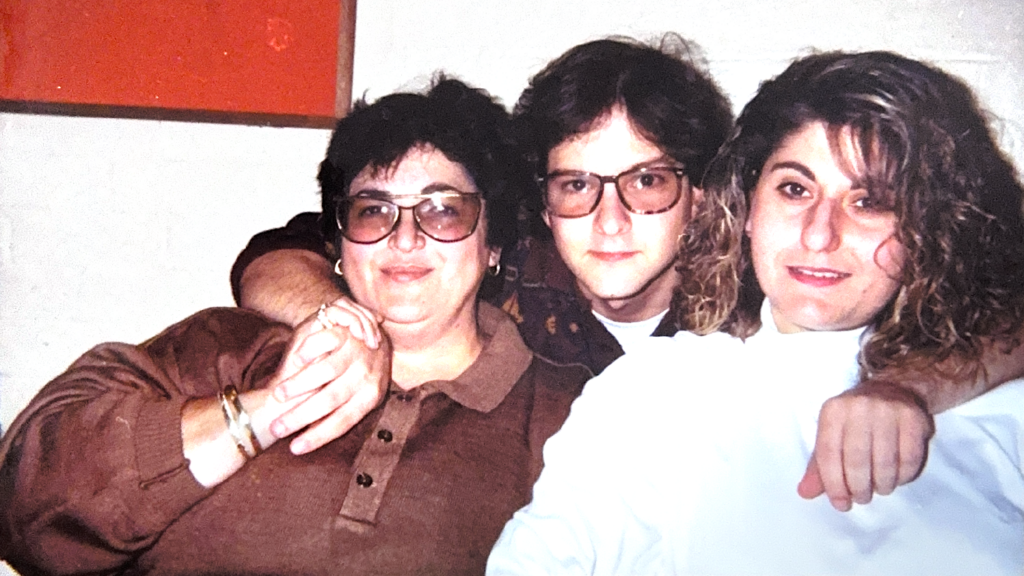
I was fortunate to be among the first people who experienced the transition from traditional to digital page layout. I remember Theo Skalkos introducing me to a technician from Greece, who had come to train us on the new systems and the QuarkXPress program.
At first, the change was demanding. We needed to stay after work for training, many times until late at night. However, despite the difficulty, it was an exciting experience. Tasks that in the past required ten minutes by hand could now be completed within just a few minutes.
As I became more familiar with the program, I realised how much more efficient the process had become. After my training, I took over the design of the front and back pages of the newspaper on a daily basis, while at the same time I began creating advertisements and training other colleagues on the new system.
What was the relationship like between the editorial staff and the technical department at the time? Was there intense pressure before the “closing” of the edition?
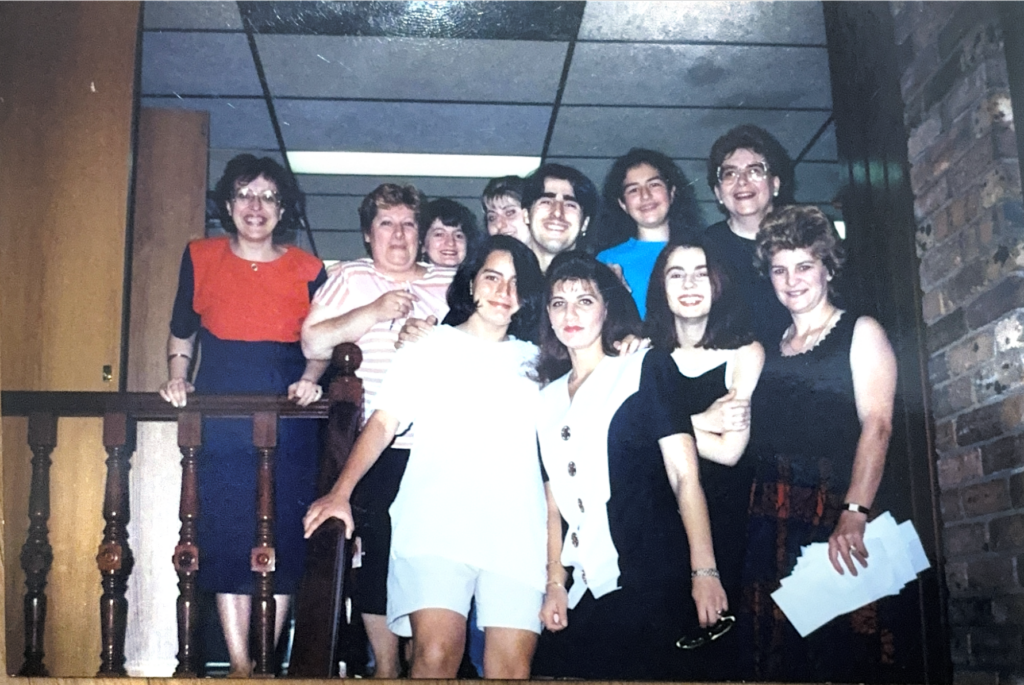
The relationship between the editorial department and the technical department was excellent — we functioned like one big family. There was cooperation, mutual support and a common goal.
The pressure was always intense, particularly as we approached the “closing” of the edition. However, what made the pressure manageable were the human relationships. Even today, many of those people remain in my life — we have become κουμπάροι and share a deep bond.
I believe that period was one of the strongest for the newspaper — a time when The Greek Herald was at its peak, experiencing great growth and serving as the “gospel” of the Greek reader.
Which change do you believe most affected the quality or character of the newspaper over the years?
The biggest changes that affected the quality and character of the newspaper were technology and the people.
The evolution of technology significantly improved production, making the process faster and more efficient, while at the same time elevating the standard of presentation. At the same time, the people who worked within the organisation brought new ideas, skills and passion, contributing decisively to the newspaper’s evolution.
How did you view your role as a layout designer? Did you consider it more technical or creative?
My role had both a technical and creative dimension. On the one hand, it required precision and discipline so that everything was correctly positioned and ready for printing.
On the other hand, there was a strong creative element. With the support of the editorial department, I had the opportunity to give personal style to the page layout, creating pages that were not only correct, but also attractive to the reader.
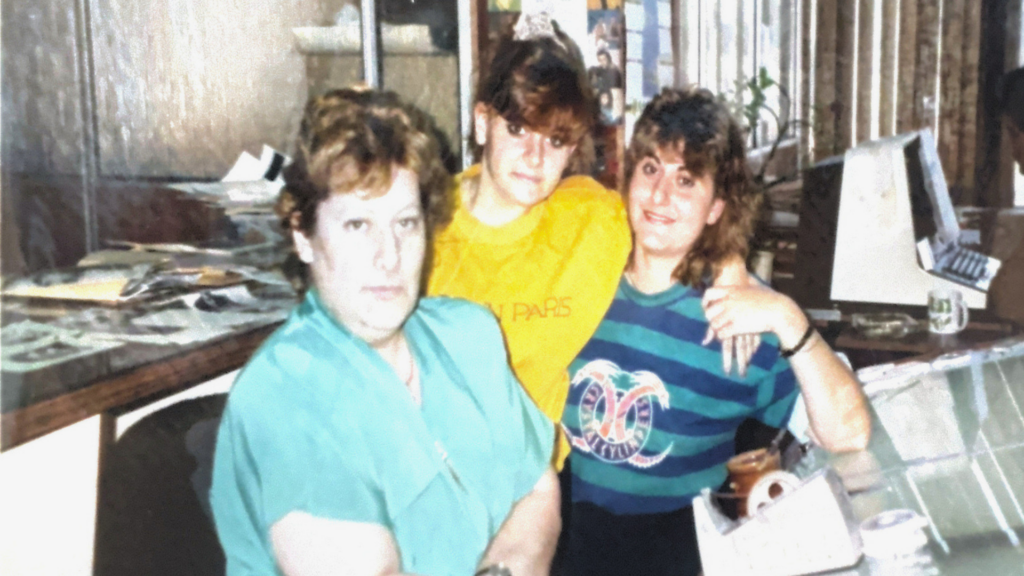
What did this journey at The Greek Herald personally give you? Which moments stand out as most important to you?
The Greek Herald gave me many things on a personal level. It gave me lifelong friendships and people who became family — κουμπάροι and companions in life.
Through my work there I also met my husband, who worked as a printer at the newspaper. Together we created our own family and had three wonderful daughters.
Looking back, I realise that the newspaper was not simply a workplace. It was the place where my life was shaped.
