
By Mary Sinanidis
Leonidas Vlahakis is a beloved figure within Melbourne’s vibrant Greek community. Recognisable by his trademark dark-rimmed glasses, he is somewhat of a cultural icon.
At major events like the opening of the Greek Film Festival, he proudly showcases Greek film offerings, capturing an annual selfie with the jam-packed audience. His passion for the festival scene is palpable; he meticulously prepares for each event, viewing the films not just as movies but as an extension of his vision of Greece.
As a “people person,” Leonidas effortlessly engages with visitors, politicians, performers, and stallholders at the upcoming Antipodes Lonsdale Street Greek Festival on February 24th and 25th.
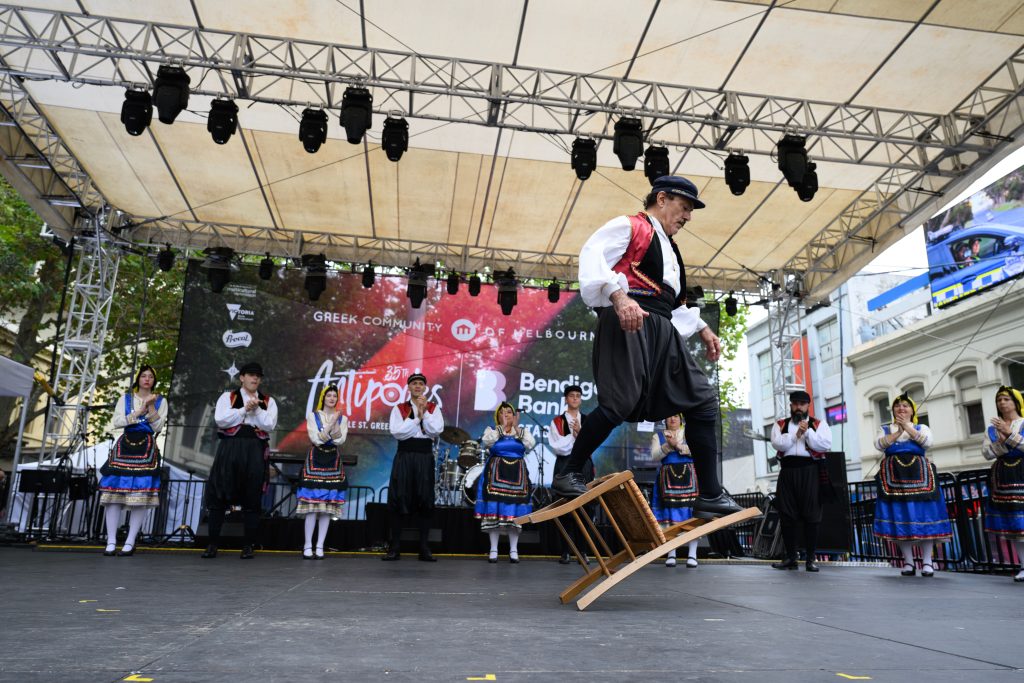
Reflecting on the festival’s name, he chuckles, “It was the Antipodes Festival however, due to its scope, we felt this was limiting and wanted to emphasise its Greek identity – so we called it the Lonsdale Street Greek Festival. But people kept saying ‘Antipodes’ so we just tacked it on.”
Along with the larger name has come a growing audience with an estimated 100,000 people expected to pour into the CBD.
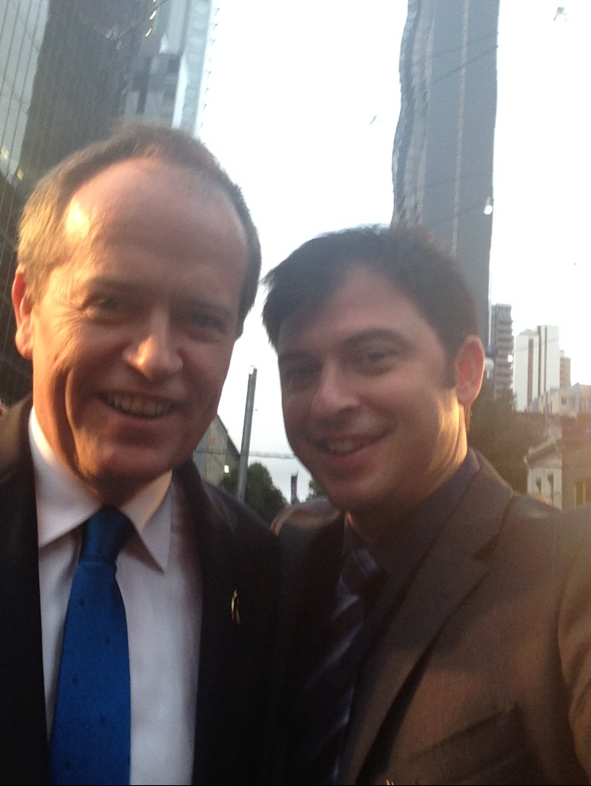
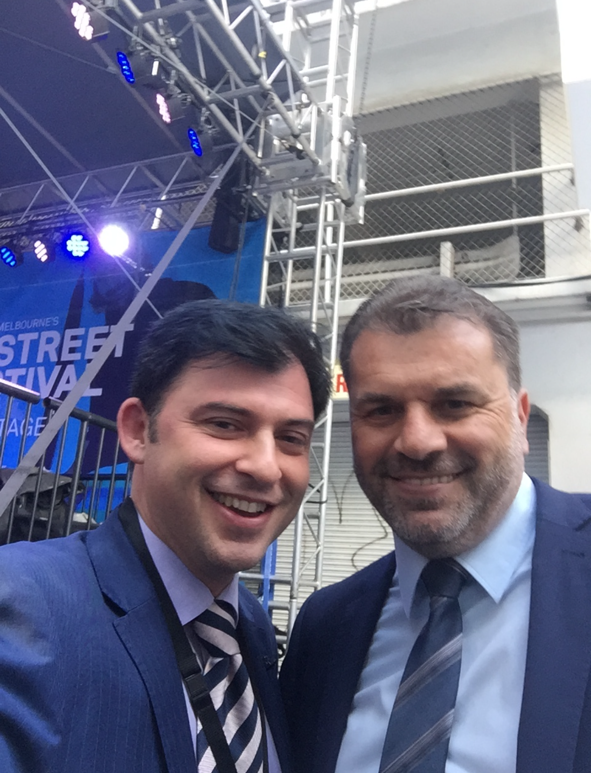
Renowned as the “biggest festival outside Greece,” it’s no surprise three of the last four Australian Prime Ministers have attended. Leonidas proudly pulls from his phone a treasured photo of himself alongside Julia Gillard, Australia’s only female Prime Minister.
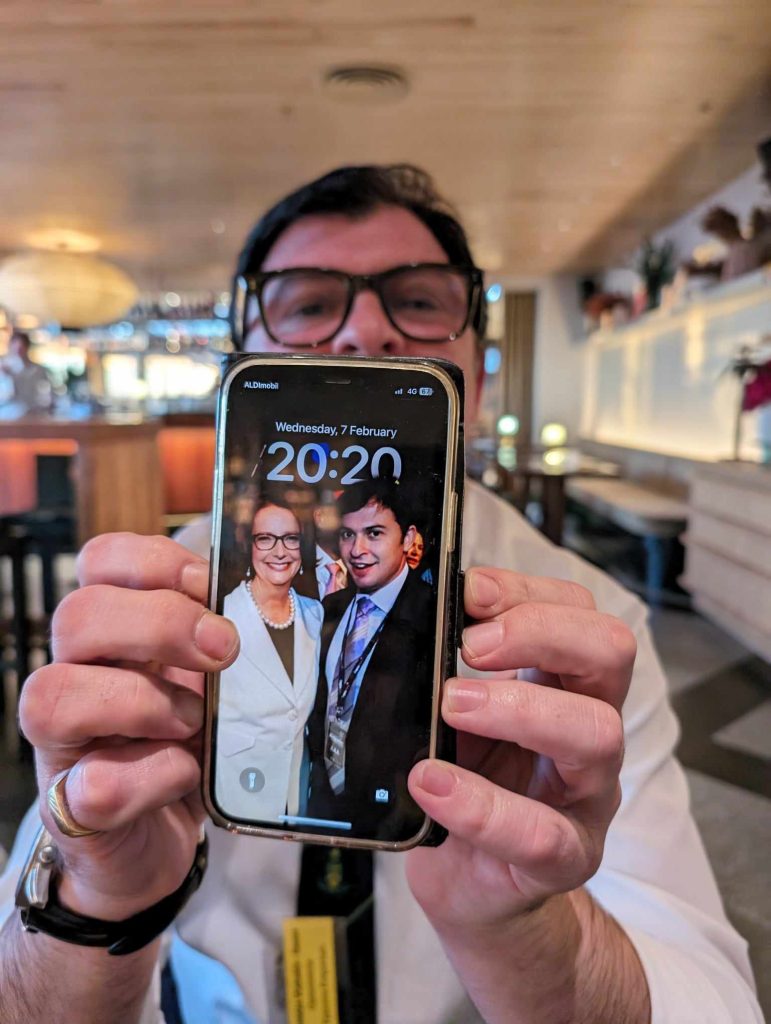
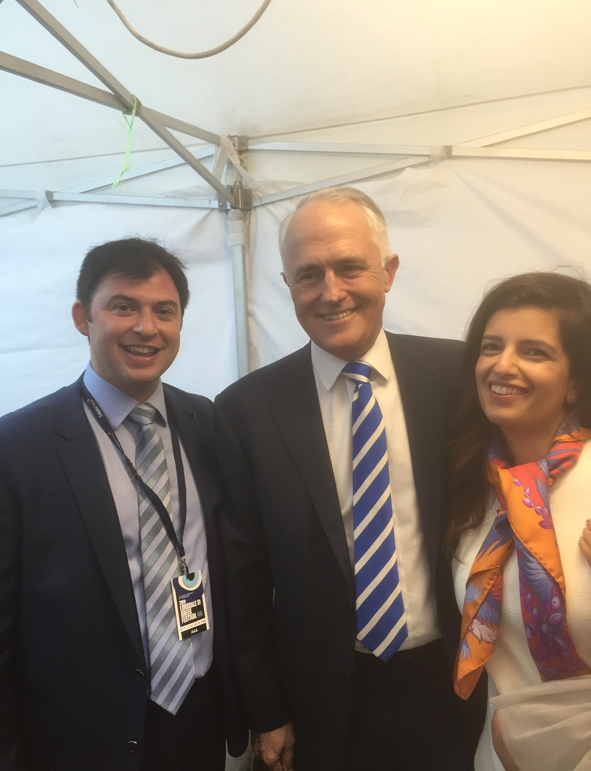
“My favourite photo,” he says, and flicks through festival photos featuring Australia’s most prominent figures, including artists from Greece.
“Let’s not kid ourselves, politicians look at the numbers before coming and the sea of people celebrating the festival is a huge drawcard.
“Our board is apolitical, which also helps bring politicians from across the spectrum. I have no idea what the other members vote for as we focus on our mission to celebrate multiculturalism, keep our language and culture, support the diaspora, and we work with all parties to achieve this.”
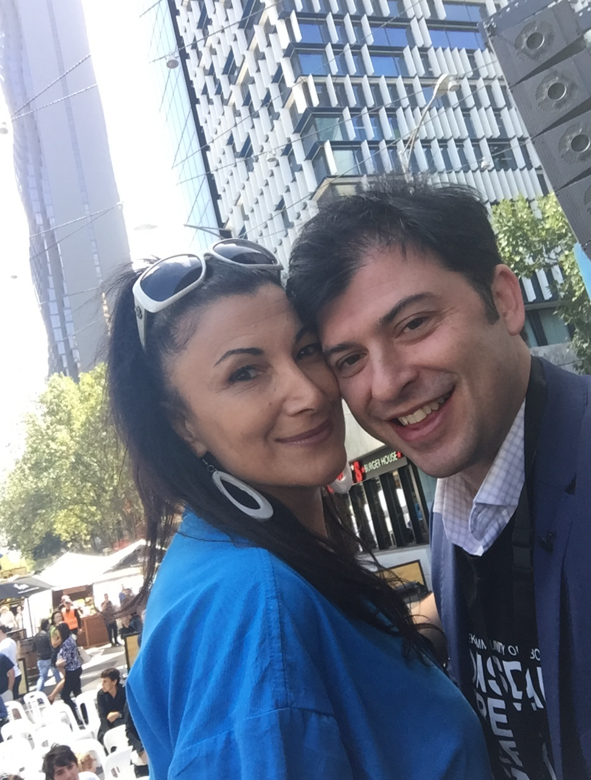
For Leonidas, the heart of the festival lies in connecting with community members across generations. He finds joy in witnessing families come together, sharing cultural traditions and creating lasting memories.
“I see a pappou (grandfather) and say ‘ti kanete edo?’ (what are you doing here?) and he says ‘horevi to engonaki’ (my grandchild is dancing) because he says he never comes to the city but seeing the engonaki dance is what motivated him,” Leonidas says.
“You get emotional seeing that. It affects you.”
The festival’s inclusive approach ensures there is something for everyone, from educational programs for older attendees to platforms for emerging artists. There’s a new community hub on Russell Street for older people to learn to navigate their way around the internet, to a new space at the corner of Lonsdale and Russell streets for emerging artists. Then there’s the usual fare, the three stages, Melina Aslanidou drawing the crowds, the food trucks, stalls representing community groups and businesses, even rides and 80 hours of entertainment squeezed into two days.
He is not surprised the state government has declared the festival to be a Tier 1 event in recent years.
“To understand the magnitude of this is to look at other Tier 1 events. These include the AFL Grand Final, the Melbourne Cup, the Grand Prix,” he says.
Melbourne University feasibility studies have shown the benefits of the festival.
“That’s why we call it the Greek Festival of Melbourne rather than Melbourne’s Greek Festival, because it is our gift to this city,” he says.

Growing up in Melbourne
Reflecting on his journey, Leonidas recalls his initial disconnect from the Greek community.
“I didn’t fit the stereotype of being born in Brunswick or Oakleigh,” he says. “I was born in Malvern and we moved to Ashwood when I was four.”
Apart from Greek lessons at Omiros Greek school, there was little involvement in community events. Even at university, a bureaucratic bungle meant that NUGAS had a lull.
“My first direct contact with Melbourne’s Greek community was with the Pallaconian Community where, after a barbecue, I joined and met a lovely bunch of young people with whom I am still friends,” he says.
“I really liked the vibe because they were people that I could connect with. They knew what a yiorti was and I didn’t have to explain dekapentavgousto.”
Later, the Macedonian issue flared up on the political scene prompting Leonidas to join the Panmacedonian Committee in 1997. He ran for elections with the Greek Community of Melbourne in 2001 after being prompted by a colleague.
“When the results of the election became clear, I remember saying, ‘So what do we do now?’” he recalls.
“At the time, I didn’t know the different facets that make up this beautiful brand. I started on the board of Alphington, later became chairman of the Cultural Committee before being joined by Tammy Iliou and Jim Bosinakis as co-chairs. Throughout this time, I have seen the Greek Centre grow from three storeys to 15, and I have made friends I know I’ll have until my dying breath.”
Apart from these huge benefits, the optometrist makes it clear that he doesn’t get paid for his efforts and is in it sheerly for the love of it.
“It has not made me richer in monetary terms, but it has given me more than I have given it, that’s for sure,” he says.
“It is my very firm belief that human beings need to feel that they are a part of something bigger. Whether it be a footy club or a church group or Rotary, or in my case, the Greek community.”
The future for Leonidas looks bright, he wants to see the festival thrive, the Greek community grown and to some day have his own family with children to enjoy the results of his toil.
The Antipodes Festival will be held on Lonsdale Street in Melbourne from February 24 to February 25. The Festival is presented by the Greek Community of Melbourne. For more updates and to access the festival’s program, please visit: Antipodes 2024 (antipodesfestival.com.au).

