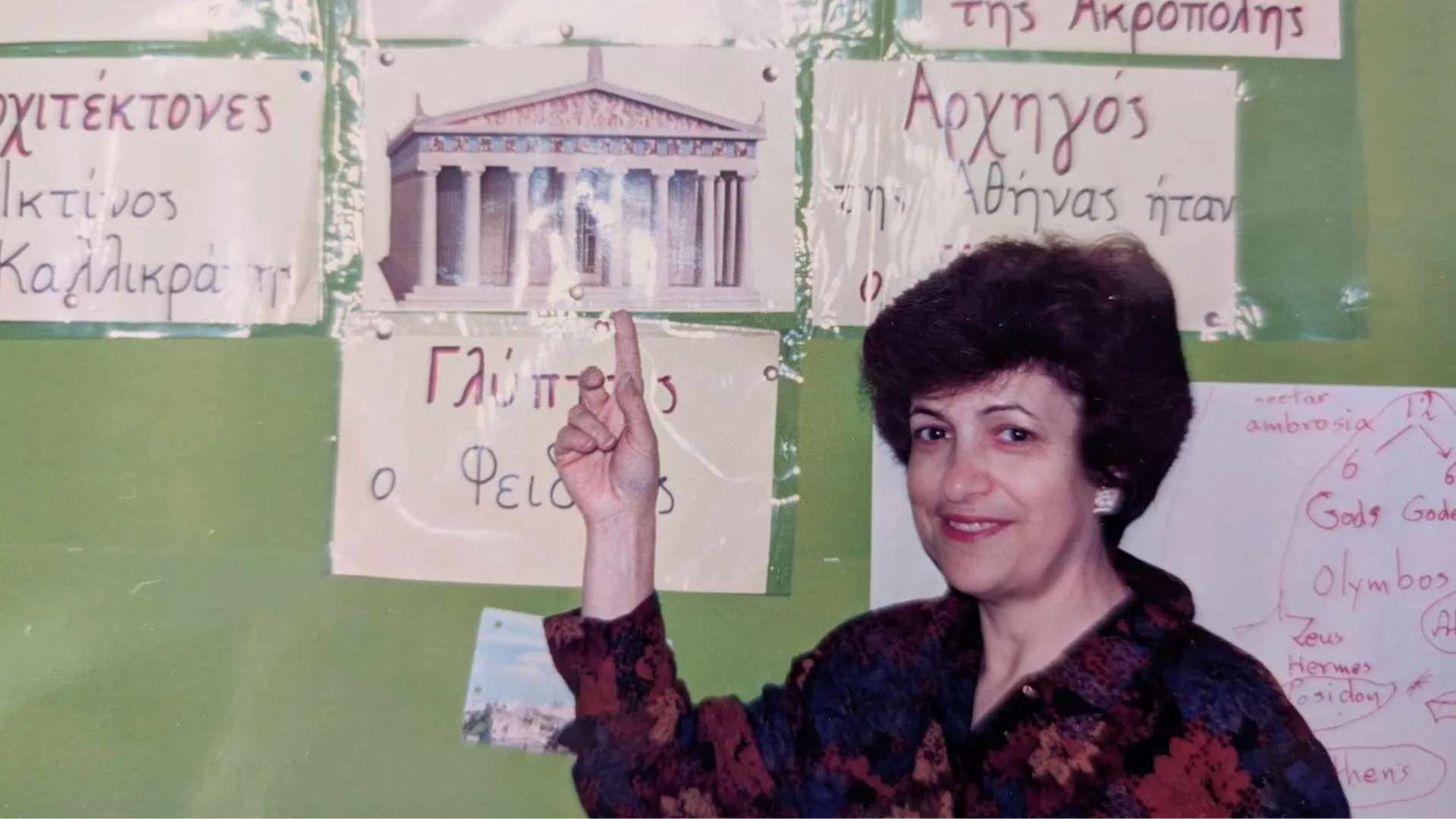
An ode to the Greek language by a teacher’s daughter

·

My mother, the teacher, always reminded me we left Istanbul, where I was born, to come to Australia, for the sake of our language.
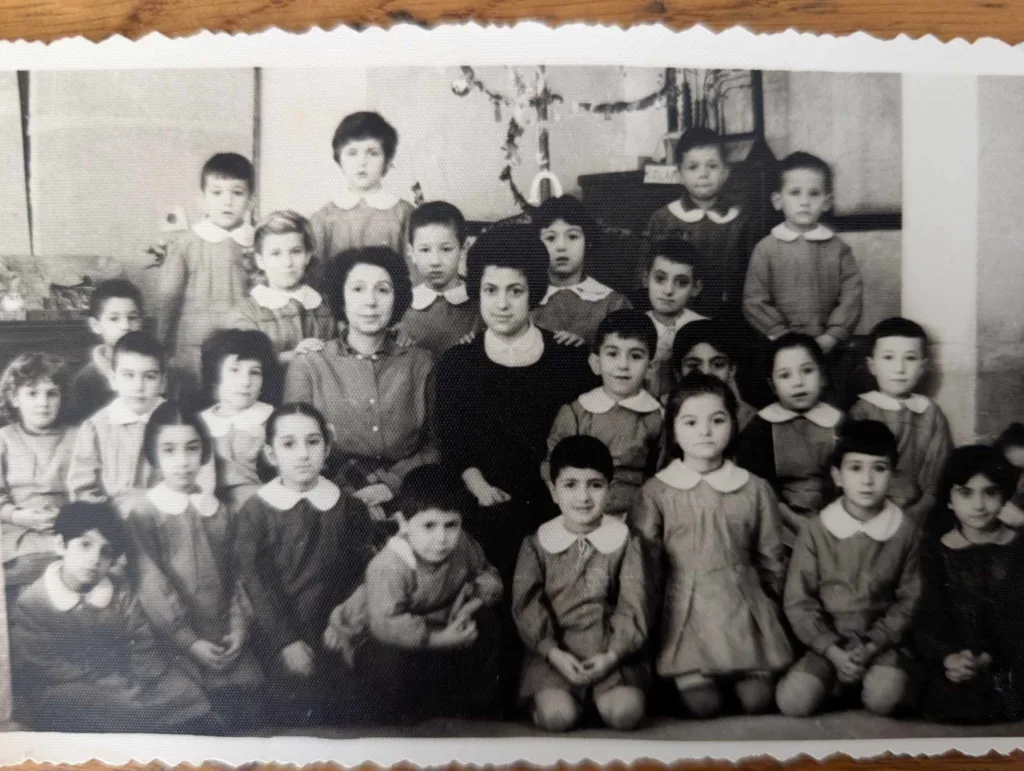
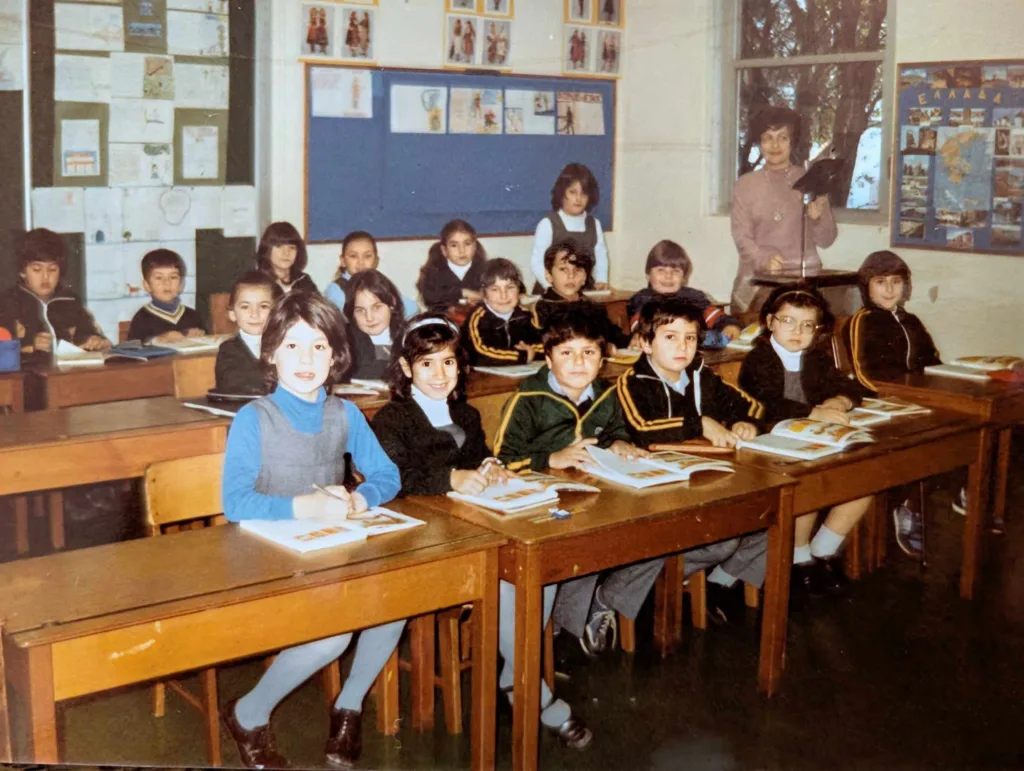
Her first teaching gig at Kontoskali, Turkey, where she later became a principal. Her ex-students, now grown up, had a fan page for her on Facebook.
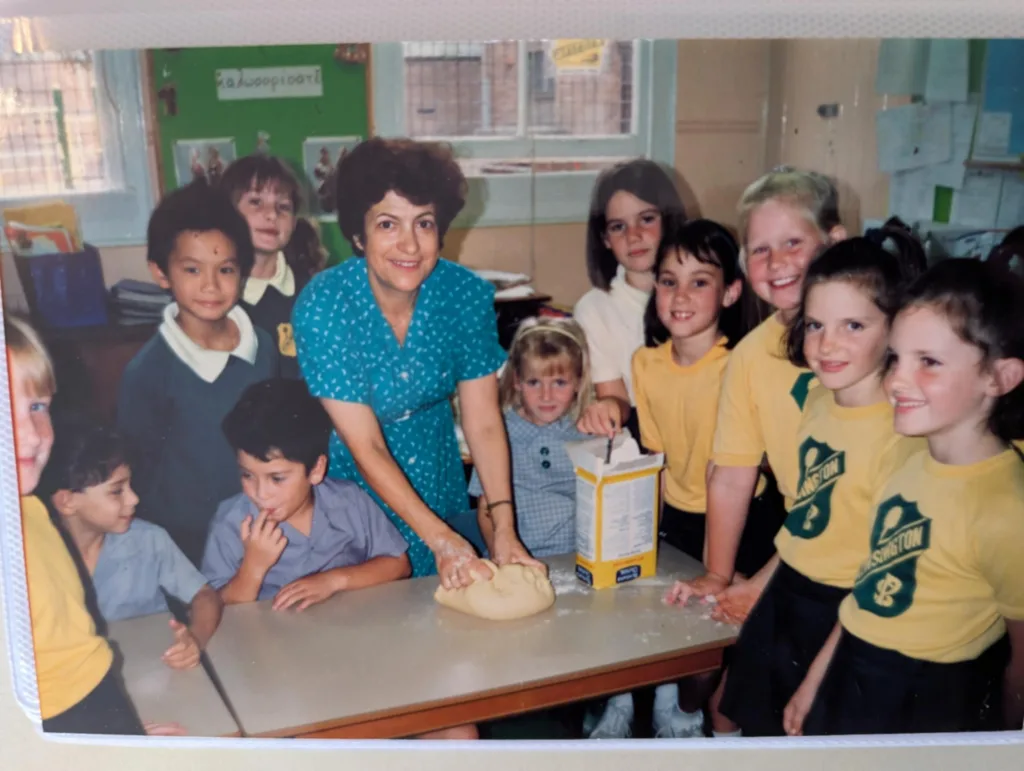
She taught Modern Greek to students at Kensington Primary School, and particularly enjoyed teaching other nationalities the Greek language

In Turkey back then, speaking Greek meant hushed tones; and cautious glances over our shoulders lest we be called giaours (non-believers). Despite this, for generations the Greek language survived – possibly as an act of defiance.
In our home, language was everything. My father’s Istanbul flavour of Greek was laced with centuries of Byzantine echoes. His heavy ‘l’ sound, clashed with my mother’s strict, formal instruction and efforts to be succinct – never forgetting all they had taught her at the Arsakeio Teachers Academy during the three years she lived in Athens. She also recalled Athenians labelling her τουρκόσπορη (Turkish seed) but that just made her more resolute – to succeed regardless of whether she was a ‘tourkospori’, ‘giaour’ or, later, ‘wog’.
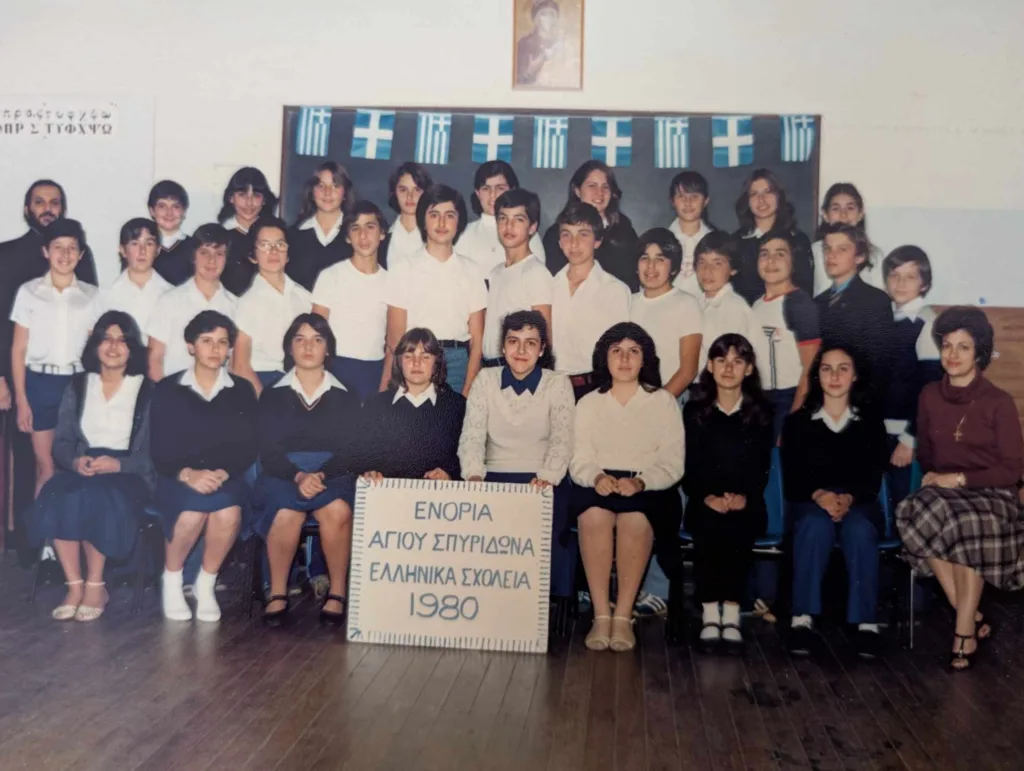
Her 1980 class at St Spyridon College, with Fr Steven Scoutas.

She was a teacher, a guardian of the polytonic system when it was still fighting the slow death of nuance. She mourned the day I partied at no longer having to learn those nasty accents – psili, daseia and perispomeni. Abolished finally, though she still made me learn them regardless in the hope that this decision would be revoked.
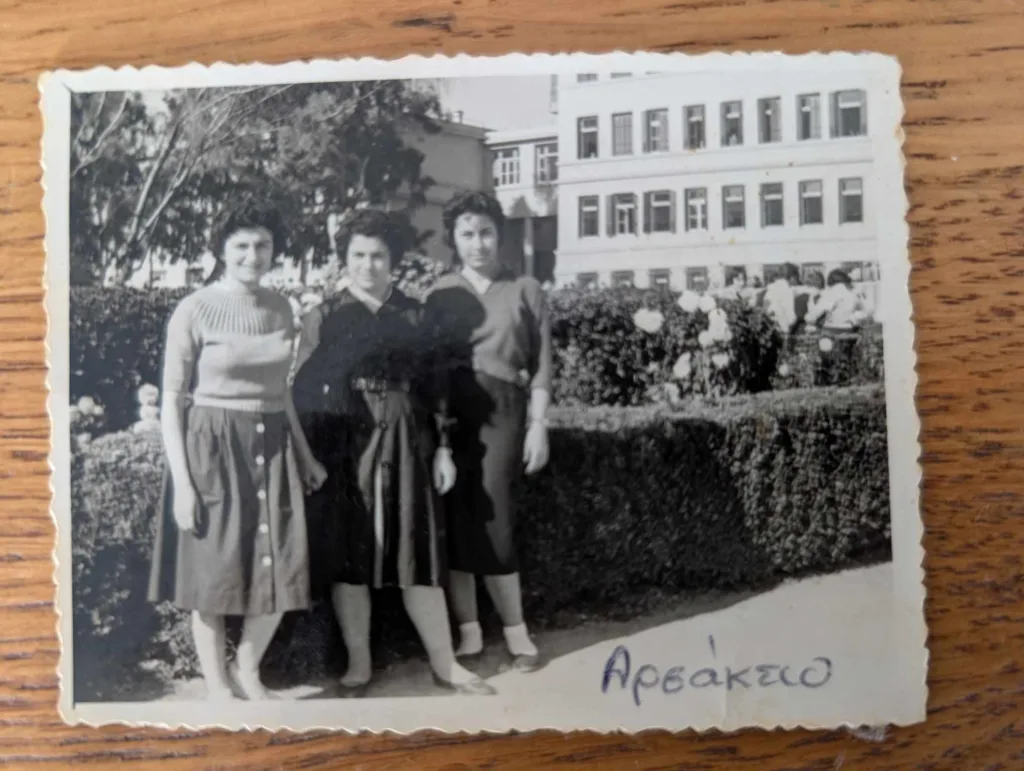
Damiani (Noula) Sinanidis nee Apistola outside Arsakeio Teachers Academy where she was called tourkospori but got to meet Queen Freideriki and King Constantine who was dating Aliki Vouyiouklaki at the time.

She hated “Gringlish” with a vengeance, that lazy mix of Greek and English, fearing we’d lose our native tongue if we weren’t careful.

Her fears seemed unfounded at the time, but – as in most things – she was infuriatingly right.
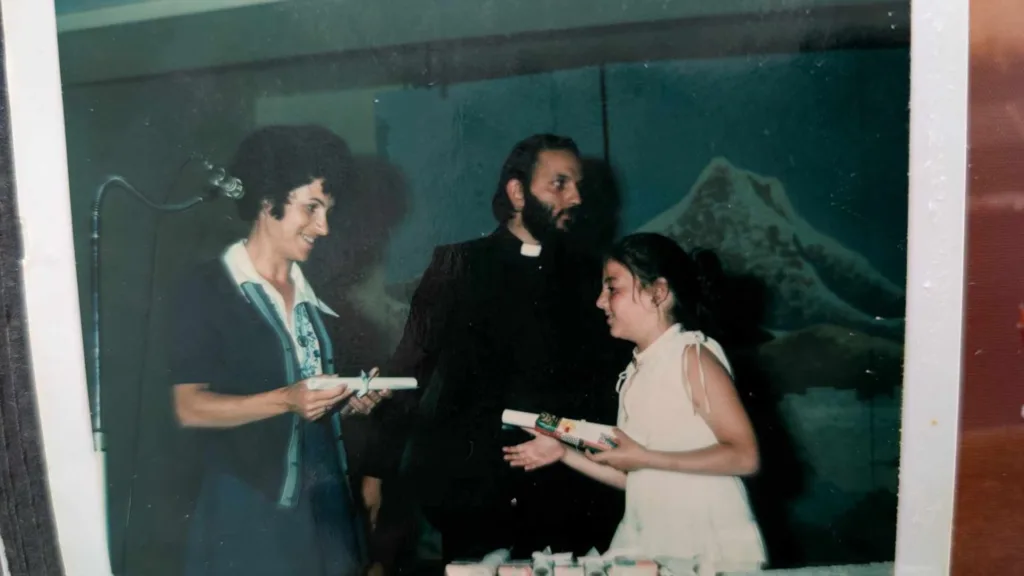
A language untended fades, slipping through the cracks of generations.

Share:

KEEP UP TO DATE WITH TGH

By subscribing you accept our Terms of Service and Privacy Policy.

Latest News

Why Australians of Cypriot descent are reclaiming their place in the ANZAC tradition

From Greece and Crete to North Africa and Rome, Cypriots fought alongside Australians and their descendants will march again this ANZAC Day.

Thebarton Hellenic Festival 2026 to unite culture, community and ANZAC tribute

The Thebarton Hellenic Festival 2026 will bring Adelaide together for a celebration of Greek culture, opening with an ANZAC Day tribute.

Cyprus Community of NSW affirms support ahead of Armenian genocide commemorations

The Cyprus Community of NSW has reaffirmed its solidarity with Armenians, supporting recognition and remembrance.

Battle of Crete Council honours ANZAC nurses at Melbourne commemorative service

The Battle of Crete & Greece Commemorative Council of Victoria was represented by Natasha Spanos, at an ANZAC Commemorative Service.

GCM seminar to explore shifting Turkish narrative on Gallipoli commemoration

The Greek Community of Melbourne will host an online seminar this Thursday, April 23, as part of its 2026 Seminar series.

You May Also Like

Submissions now open for the first-ever International Pontian Film Festival

The Youth Committee of the Federation of Pontian Associations of Australia is launching the International Pontian Film Festival (I.P.F.F).

Antipodes Festival is back on Lonsdale Street

The Greek Community of Melbourne's Lonsdale Street Greek Festival is back with a different name! The Greek Community of Melbourne's Antipodes Festival will now...

Magna Graecia – Part 4: From Colony to Colossus: Syracuse and Hellenism in Sicily

Syracuse (in present-day Sicily) was founded in 734 BCE by settlers from Corinth and Tenea, led by their oikist (founder), Archias.