By Victoria Loutas.
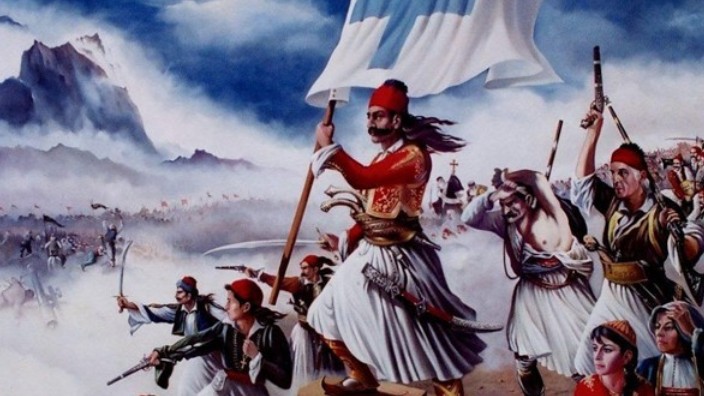
On this day in 1826, the Battle of Arachova ended with Greece claiming victory. The battle was fought between an Ottoman Empire force under the command of Mustafa Bey and Greek rebels under Georgios Karaiskakis. The win for Greece was revolutionary and transformed the fate of Arachova.
Lead up to the battle:
In the midst of the Greek War of Independence, countless battles continued to occur between the Republic of Greece and the Ottoman Empire.
In 1823, during the campaign of Yusuf Perkoftsalis Pasha in Eastern Central Greece, the Turkish army forced the numerically fewer Greeks to leave the small mainland town of Arachova, where the land remained in the control of the Turkic people.
In 1826, Greek General George Karaiskakis along with an army of men, made their way to Arachova with plans to rekindle the revolutionary spirit of its original inhabitants. After receiving intelligence of the Ottoman army’s maneuvers, Karaiskakis prepared a surprise attack in the vicinity of the village of Arachova.
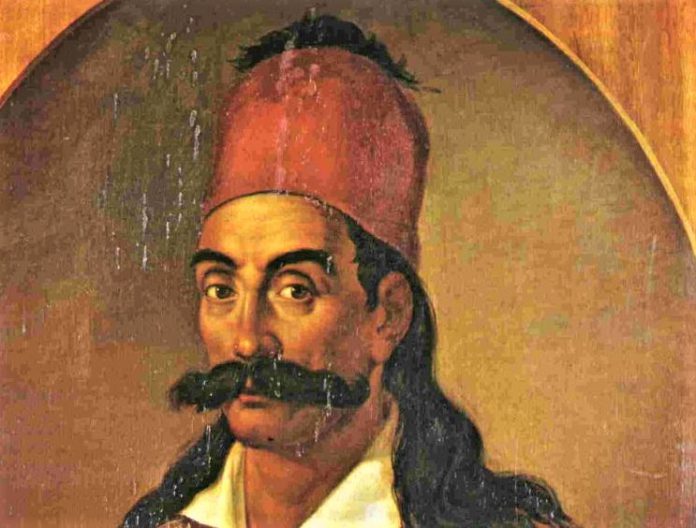
READ MORE: Georgios Karaiskakis: Hero of the Greek War of Independence.
On 17 November, Karaiskakis and his troops arrived in Distomo where they encamped in the lead up to the battle. On the same day, Mustafa Bey, the Ottoman commander, dispersed Greek pickets at Atalanti, later camping at the Agia Ierousalim monastery outside Davleia.
Karaiskakis ordered his officers to occupy the church of Agios Georgios in Arachova and the surrounding houses. Small bands were also stationed between Arachova and Distomo in order to signal the outbreak of hostilities, at which point the main force would come to their aid.
Although the Greek force had a much smaller army of 950 men going up against the Turk’s 2000, they were still determined and adamant to succeed.
The battle:
On November 18, the battle officially began and enemy units wasted no time to attack the Greeks. Despite their initial successes, they failed to overthrow the Greek positions. By the end of the first day, the Greeks were in a more advantageous position having tightened the siege around the enemy, who had to face the adverse weather conditions.
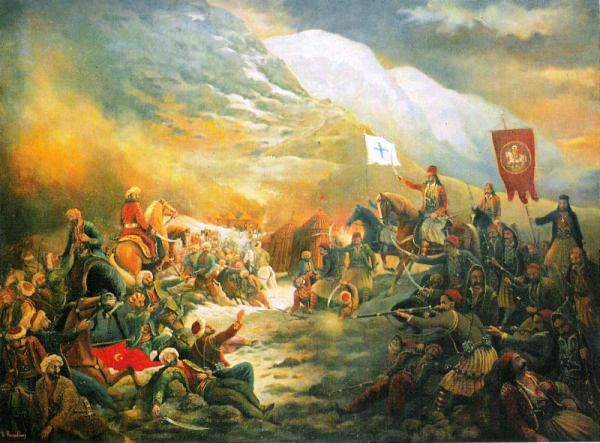
As the days went on, the strength of the Greek army was revealed as they maintained their dominant position. With the battle not looking up for the Turks, they asked for a negotiated deal, however they rejected the offer Greece presented.
Mustafa Bey ordered his men to prepare to attempt an exit through the Greek positions on the night of the 23rd and 24th of November, as it was their only way out. In preparations for this escape, Mustafa was injured due to a Greek bullet and was unable to continue on.
Come November 24, the Turks decided to go ahead with their escape plan,heading towards the peaks of Parnassos. The Greeks noticed them and rushed at them with clubs and knives, as the falling snow rendered their weapons useless.
The strong snowstorm restricted the Greek army from chasing after the Turkish men past the slopes of Mount Parnassos. The fled of the Turks declared this battle a victory for the Hellenic Republic of Greece.
Aftermath:
The day after the victory, Karaiskakis set up on a hill, visible from the Oracle of Delphi and lifted a trophy with the inscription “of the Greeks against the barbaric Ottomans, erected in 1826, November 24 in Arachova.” The victory was later announced to the government via a letter, which was signed by all the chiefs and officers who took part in the battle.
Of the 950 Greek men who took part in the battle, the Hellenic army had minimal losses, with only 4 dead and 9 slightly injured.
This victory of Arachova was of immense importance, retrieving the land back to its true inhabitants and further rekindling the revolution in Roumeli.

