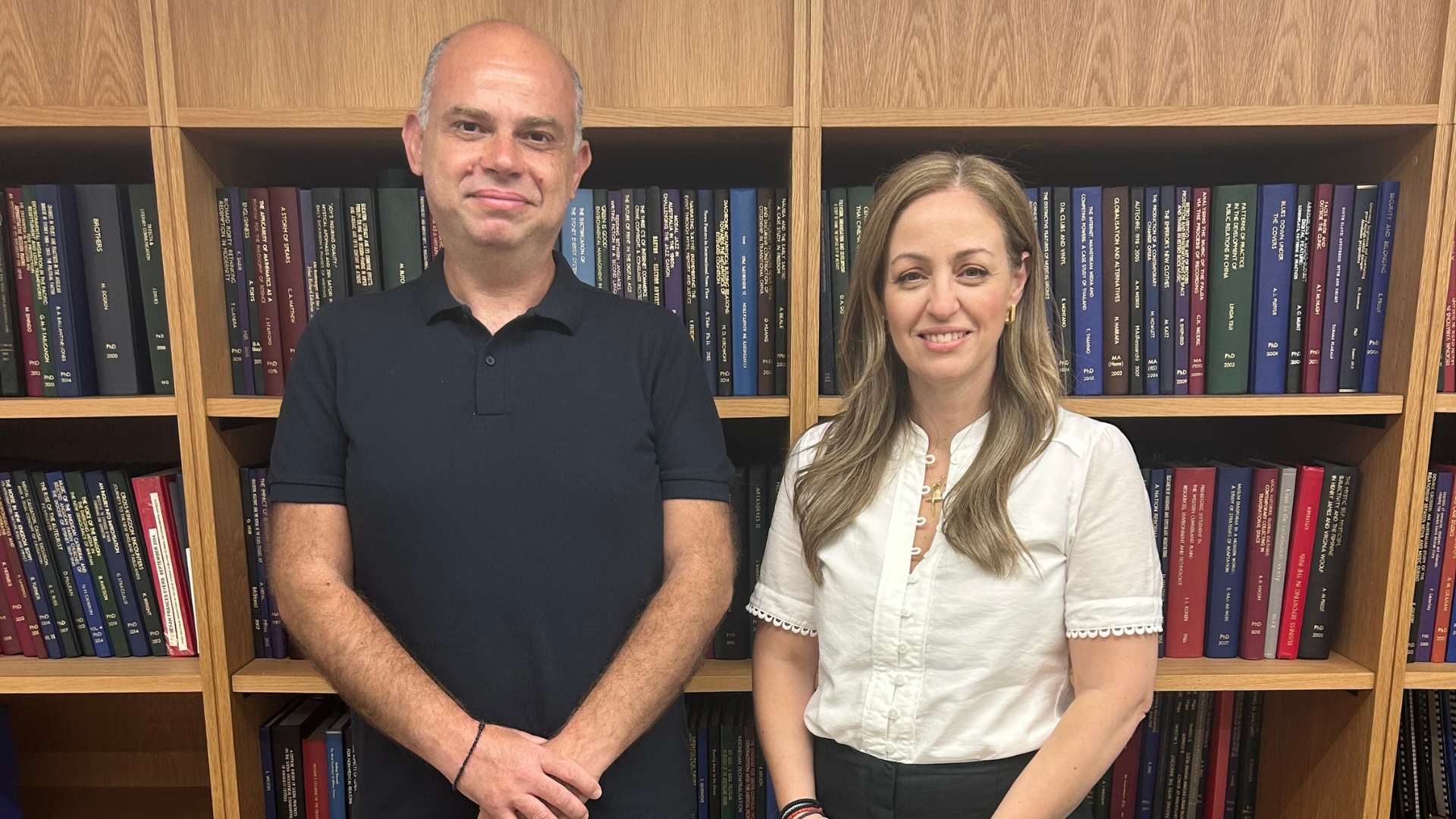
Visiting Sydney as part of his sabbatical, Ioannis Galantomos, Professor of Applied Linguistics at the University of Thessaly, spent the summer as a Visiting Professor at Macquarie University, strengthening academic ties between Greece and Australia.
Professor Galantomos was based in the School of International Studies at Macquarie University from December 2025 to January 2026, where he worked closely with Dr Patricia Koromvokis on a collaborative research initiative examining how Artificial Intelligence (AI) can transform pedagogy and support learners in developing the linguistic and intercultural skills essential for global citizenship.
Speaking to The Greek Herald, Professor Galantomos said his visit built on a longstanding relationship with Macquarie University, having previously been a visiting scholar in 2024, and reflected a shared commitment to advancing research in language education, bilingualism and global engagement.
Professor Galantomos, could you tell our readers about the purpose of your visit as a Visiting Professor at Macquarie University?
Thank you Ms Simos personally and The Greek Herald for the invitation and for the opportunity to speak about my visit to Sydney as a Visiting Professor at Macquarie University and to share insights from my research in Applied Linguistics, Bilingualism/Multilingualism, and the Teaching of Greek as a second language.
I was delighted to return to Sydney as a Visiting Professor at Macquarie University, an institution recognised for its strength in global cultures and language education, enjoying the city as part of my sabbatical. The purpose of my visit was to engage in academic collaboration with Dr Patricia Koromvokis, Senior Lecturer in the School of Global Studies at Macquarie University, on a joint research initiative examining the role of artificial intelligence in transforming pedagogy to support learners in developing the linguistic and intercultural skills essential for global citizenship. As part of this collaboration, we also plan to publish an edited volume.
You are an applied linguist. How would you describe your field of expertise to a broader audience?
At its core, Applied Linguistics seeks to understand how languages are learned, taught and used in various contexts, and how this knowledge can inform effective instructional and assessment practices.
A key focus of your work is bilingualism and multilingualism. Why is this area particularly important today?
Bilingualism and multilingualism are increasingly central to contemporary societies due to migration, globalisation, and mobility. Research consistently shows that bilingualism offers cognitive, educational, and social benefits, while also playing a crucial role in identity formation and cultural continuity. Understanding how multiple languages coexist, interact and develop within individuals and communities is essential for designing inclusive education systems and supporting linguistic diversity.
You have also specialised in teaching Greek as a second language. What are the main challenges and opportunities in this area?
Teaching Greek as a foreign or second language presents both challenges and opportunities. One challenge lies in supporting learners who may have varying degrees of exposure to the language, particularly within diaspora contexts where Greek is often a heritage language. At the same time, there are significant opportunities to draw on learners’ bilingual repertoires and cultural connections. Effective teaching approaches recognise Greek not only as a language per se, but also as a carrier of history, culture, and identity.
How does your work connect with the Greek Australian community?
The Greek Australian community has a long and rich tradition of bilingualism and multilingualism. My work is highly relevant to community language education. By applying research-based approaches to language teaching, we can better support schools, educators, and families in sustaining Greek language use alongside the dominant English in Australia.
What makes Macquarie University an important setting for this kind of work?
Macquarie University is recognised for the study of global cultures and languages. Its strong research culture, diverse student body, and close engagement with multilingual communities make it an ideal environment for advancing research on bilingualism, global citizenship and language education.
In addition, the School of International Studies of Macquarie University is the largest Greek Language examination centre for the exams of the Certificate of Attainment in Greek language, playing a pivotal role in supporting Greek language maintenance, certification, and educational continuity within the Greek Australian community. This role places the University at the intersection of academic research, community engagement, and language policy, allowing research initiatives to respond directly to the lived linguistic realities of Greek Australian families, schools, and institutions.
What do you hope will be the lasting outcomes of your visit to Sydney?
I hope that this visit will strengthen academic collaboration between Macquarie University and my home institution, University of Thessaly and contribute to ongoing research in Applied Linguistics.
How does Applied Linguistics inform effective language teaching in multicultural societies such as Australia?
Applied Linguistics provides the empirical and theoretical foundations for understanding how languages are learned and taught in diverse contexts. In multicultural societies, like the Australian, it helps educators design teaching approaches that acknowledge learners’ linguistic backgrounds, promote inclusion, and build on existing language knowledge. This is particularly important in contexts where students are navigating multiple languages across home, school, and community settings.
What role do heritage languages, such as Greek, play in shaping identity among younger generations?
Heritage languages play a central role in the construction of personal and collective identity. For younger generations, maintaining a heritage language like Greek fosters a sense of belonging, cultural continuity, and intergenerational connection. Research shows that when heritage languages are valued and supported, young people develop more positive attitudes towards both their linguistic and cultural identities.
In your experience, what are the most effective strategies for maintaining Greek in diaspora communities?
Effective language maintenance requires coordinated efforts across families, community organisations, and educational institutions. This includes high-quality Greek language programs, well-trained teachers, and curricula that are relevant to learners’ lives. Most importantly, positive attitudes towards bilingualism are critical for sustaining long-term language use.
How has research on bilingualism evolved in recent years?
In recent years, research on bilingualism has moved beyond viewing languages as separate and competing systems. Contemporary approaches recognise bilingual speakers as possessing integrated linguistic repertoires that they use strategically in different contexts. This shift has significant implications for language teaching, assessment, and policy, particularly in multilingual educational settings.
What advice would you give to educators teaching Greek as a heritage language in Australia?
I would encourage educators to draw on learners’ full linguistic resources and to view bilingualism as an asset rather than a challenge or even a disadvantage. Teaching should be informed by current research in second language acquisition and heritage language education. In addition, ongoing professional development is essential in ensuring effective and engaging Greek language instruction.
How do universities contribute to the preservation and promotion of languages such as Greek?
Universities play a key role by conducting research, training future educators, and offering high-quality language programs. They also serve as important sites for collaboration with schools and community organisations. Through teaching and research, universities help ensure that languages like Greek continue to be studied, taught, and valued in contemporary, multicultural societies.
What opportunities do you see for collaboration between Australia and Greece in the field of language education?
There are significant opportunities for collaboration in teacher education, curriculum development, and research on bilingualism and multilingualism. Australia’s experience as a highly multilingual society offers valuable insights, while Greece provides a rich linguistic and cultural context for research and innovation in language education. Strengthening these links can benefit both academic communities and learners.
Looking ahead, what are the key challenges facing the future of Greek language education globally?
One of the main challenges is ensuring sustained institutional and policy support for Greek language education, particularly in diaspora environments. At the same time, there is a need to update teaching approaches and materials to reflect contemporary linguistic research and learners’ realities. Addressing these challenges will be essential for the continued vitality of Greek as a living, global language.
