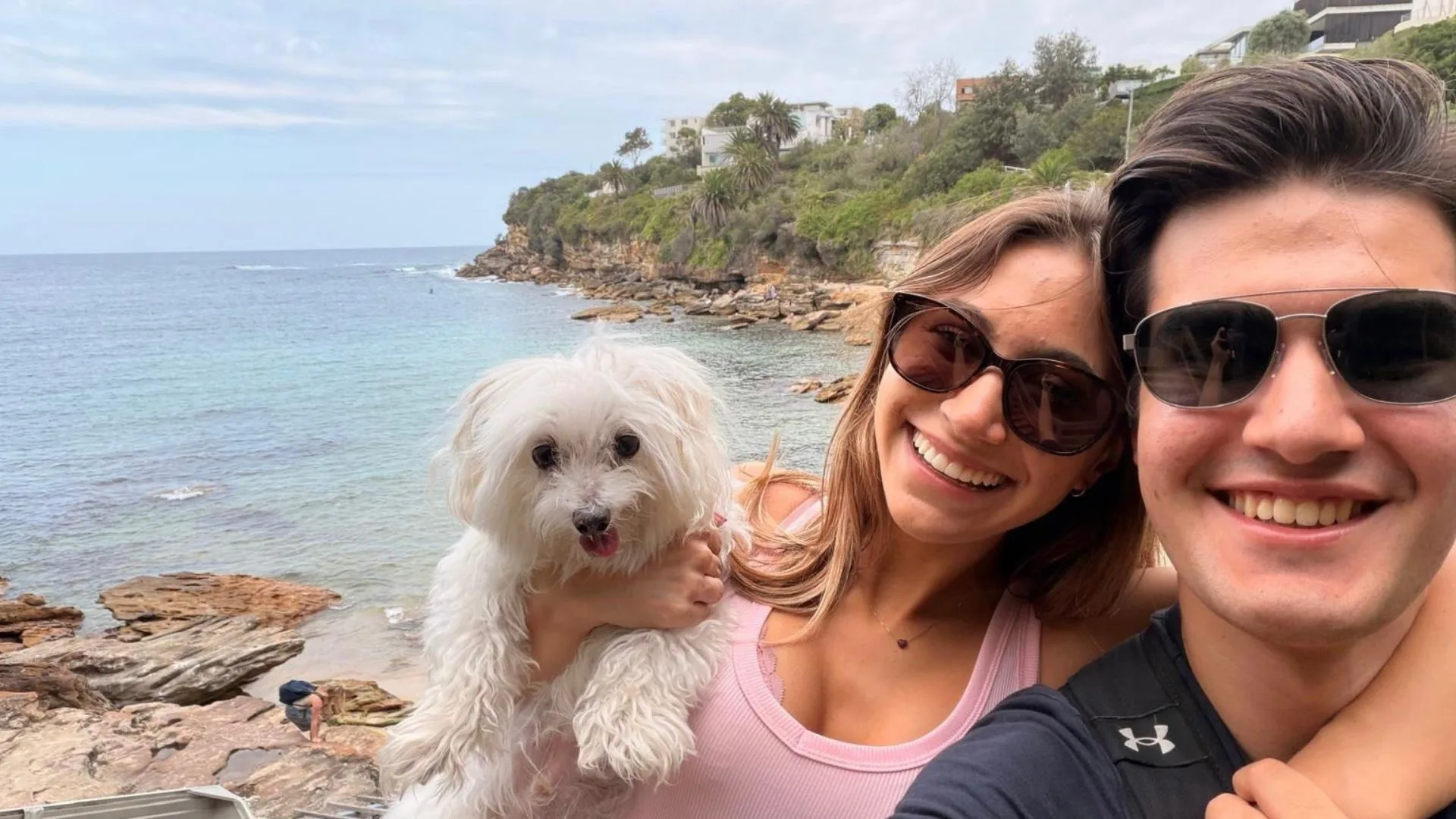
By Giorgio Apostolopoulos
I must have been five, maybe six, watching my neighbour flip lamb on the barbecue while Greek music drifted from inside. The smell of lemon and oregano filled the air. Through the window, I could hear him speaking rapid Greek with my yiayia, laughing, his hands moving in those unmistakably Greek gestures – palm up, fingers pinched together.
Everything about him felt Greek. The way he argued passionately about nothing. The way he insisted everyone eat more. The Greek coffee always brewing in his home.
So, years later, when someone mentioned, “You know he isn’t actually Greek, right?” I was genuinely confused.
“What do you mean? He speaks Greek. He’s always at our celebrations,” I replied.
They laughed. “He’s from New Zealand.”
I didn’t believe them.
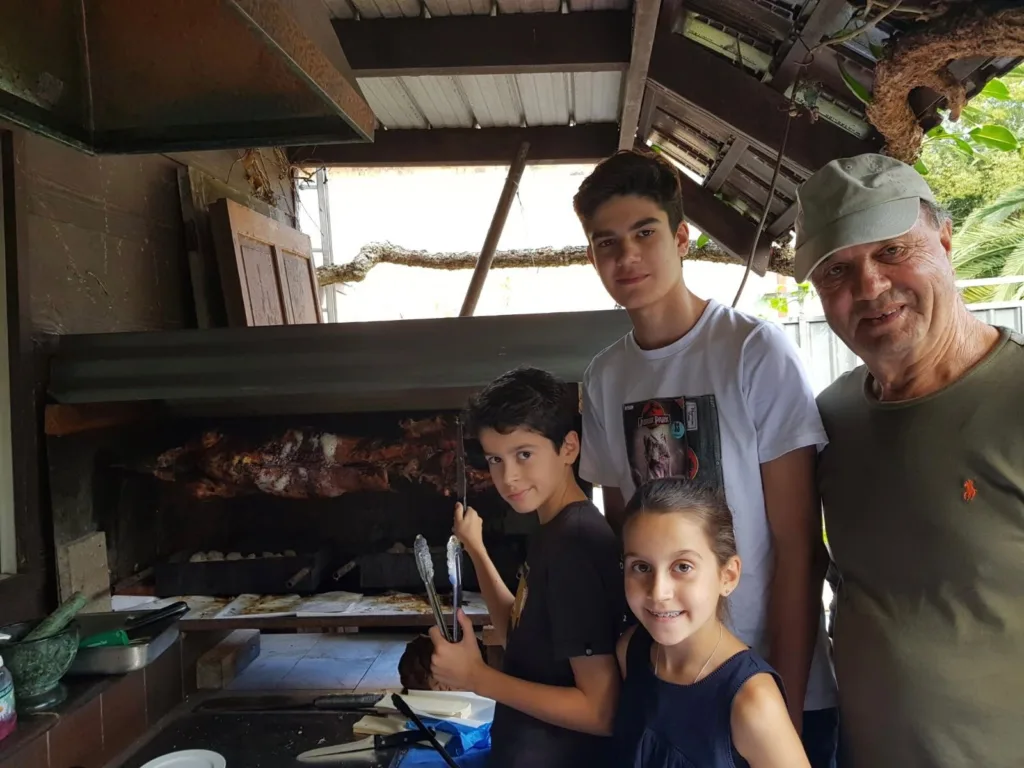
My neighbour met his wife, a native Greek, and fell in love. But there was one complication: her mother, my yiayia’s closest friend, who had migrated to Australia as a young adult, barely spoke English. If he wanted to truly be part of this family, he had a choice to make.
He chose to learn Greek. Not just “hello” and “thank you.” Fluently. Authentically. The kind of Greek where a five-year-old at family gatherings couldn’t tell he wasn’t born into it.
“He did it for love,” his wife told me years later, smiling. “For me, yes. But also for my mother. He wanted to belong.”
And he does. Completely.
My girlfriend, Michaela, and I both happened to be Greek. We didn’t plan it that way; neither of us had “must be Greek” written on some checklist. But somewhere between our third coffee date and meeting each other’s beautifully chaotic families, we realised the ease this gave us.
“Your family’s loud,” Michaela said after meeting my parents.
“Is that okay?” We both laughed.
There’s something about being with someone who just gets it. Who doesn’t mistake loud conversation for anger. Who knows that when a yiayia says “eat, eat,” you eat, no discussion.
But Michaela’s perspective has always been broader than that comfort.
“My social circle looks a bit like an Ancestry DNA results chart… a little of everything,” she says.
“Someone’s cultural background has never been a defining factor in who I connect with.”
What fascinates her is how deeply culture remains embedded in older generations.
“Whenever I talk to my grandparents about someone, they almost always ask, ‘What nationality are they?’” she tells me.
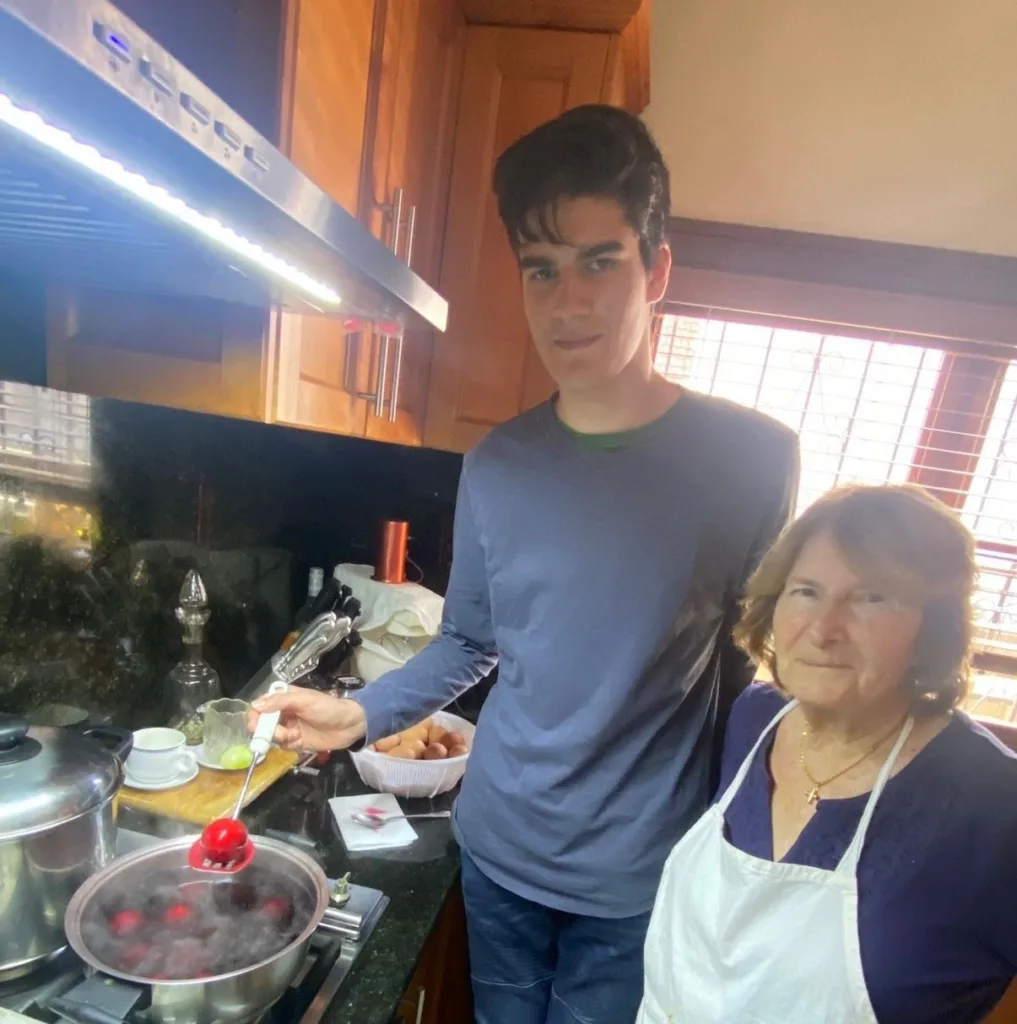
There’s no malice in the question. Just memory.
“Connection to culture matters to everyone, but perhaps even more to the displaced,” she says.
Michaela was born in Athens, Greece before her family moved to Australia. She carries Greece in a way I know mostly through stories and summer visits. Yet here we both are, navigating what it means to be Greek Australian together.
“There was never a conversation in my family about expectations for future partners. It wasn’t until a friend casually said, ‘I only want to date Greeks,’ that I realised some families have unspoken expectations around marrying within culture,” she says.
“Giorgio, being Greek, was a happy coincidence, not a mandate.” That distinction matters.
“What matters most isn’t preserving culture through restriction,” she reflects, “but allowing it to live on through choice. It feels far more meaningful that way.”
But here’s what my neighbour taught me long before I could articulate it: Comfort isn’t exclusive to people born Greek.
This Valentine’s Day, I keep coming back to one question: What actually preserves Greek culture?
My grandparents, both Greek by birth?
Or my neighbour, who chose it and lives it so authentically that a child couldn’t tell he wasn’t born into it?
I know fully Greek couples whose kids don’t speak a word of Greek. Meanwhile, my neighbour learned the language when many second-generation Greek Australians are losing it.
Culture isn’t in your blood. It’s in your choices.
My grandparents came from Peloponnese and Kalymnos with almost nothing, faced what I call “quiet racism,” and still built a vibrant Greek community in Campsie. They preserved culture through speaking Greek at home, through insisting we remember where we come from.
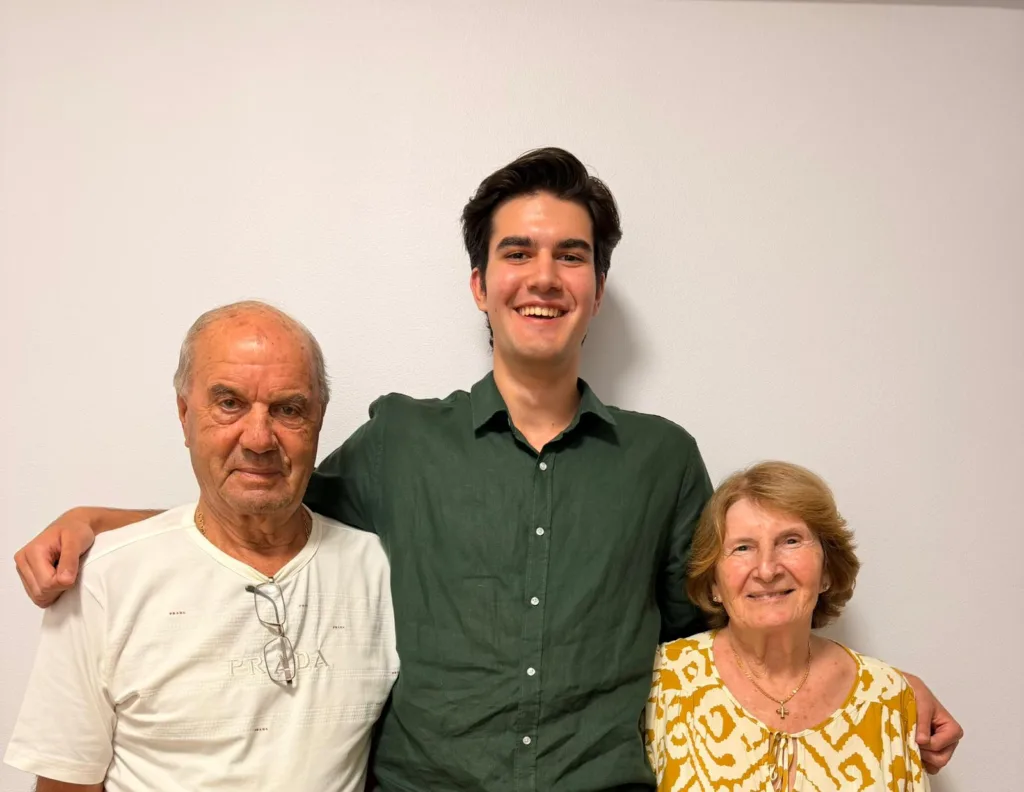
Michaela’s family did the same. Different islands, same story.
When we found each other, we found someone who carries that same inheritance. That same responsibility. That same love for traditions we didn’t create but were trusted to maintain.
“I’m glad you’re Greek,” I told her once.
“Me too,” she said. “But if you weren’t, I think I would have taught you.” Like my neighbour learned.
Like love does.
There’s a Greek expression: “Παπούτσια από τον τόπο σου” – shoes from your own place.
The wisdom behind it is real. Shared culture makes things easier. Michaela and I live that truth every day.
But my neighbour taught me something else: Greek culture doesn’t survive because Greeks only marry Greeks. It survives because people, whether born into it or choosing it, actively practice it, live it, and pass it on.
That’s not cultural loss.
That’s proof what we have is worth choosing.
This Valentine’s Day, we’re grateful we found each other, both Greek, both carrying the same beautiful, loud, loving inheritance.
But I’m more grateful for what my neighbour showed me: Culture lives through love.
Through choice. Through showing up.
The five-year-old version of me never questioned whether he belonged. Because love that learns languages doesn’t need bloodlines to prove it’s real.
