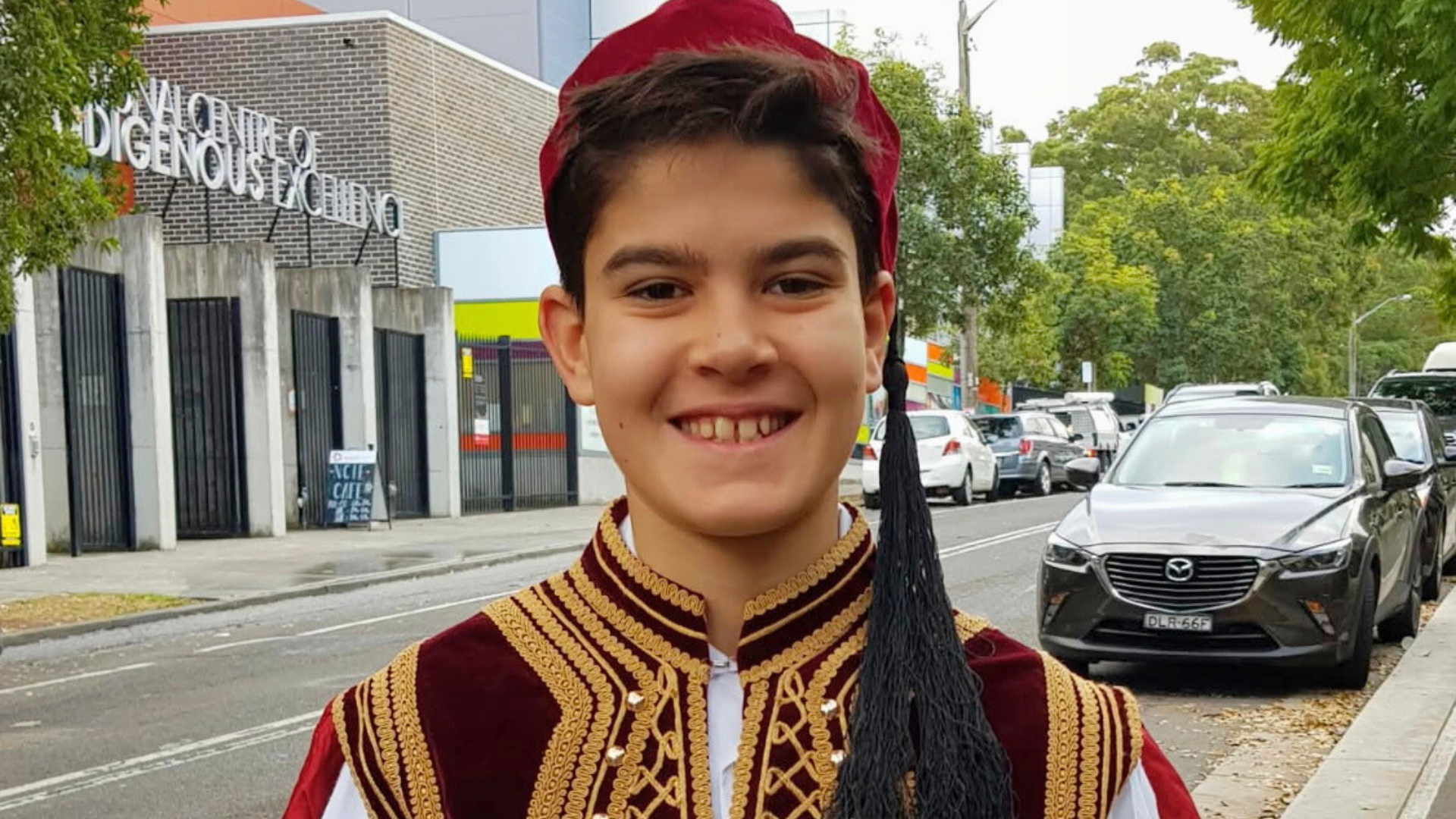
Most Greek Australians learn the language the same way: early, formally at Greek school, and often dragged there unwillingly. Giorgio Apostolopoulos took a different path. Unlike his peers, he didn’t begin formal Greek lessons until Year 8. He wonders if that is why he succeeded.
“Greek wasn’t a timetable obligation or a Saturday punishment,” he explains. “It was simply there, spoken around the house, heard at family gatherings, and experienced on trips to Greece. I understood the language long before I formally studied it, but I wasn’t reading or writing it.”
Formal lessons arrived just as his Greek Australian peers were quitting the language.
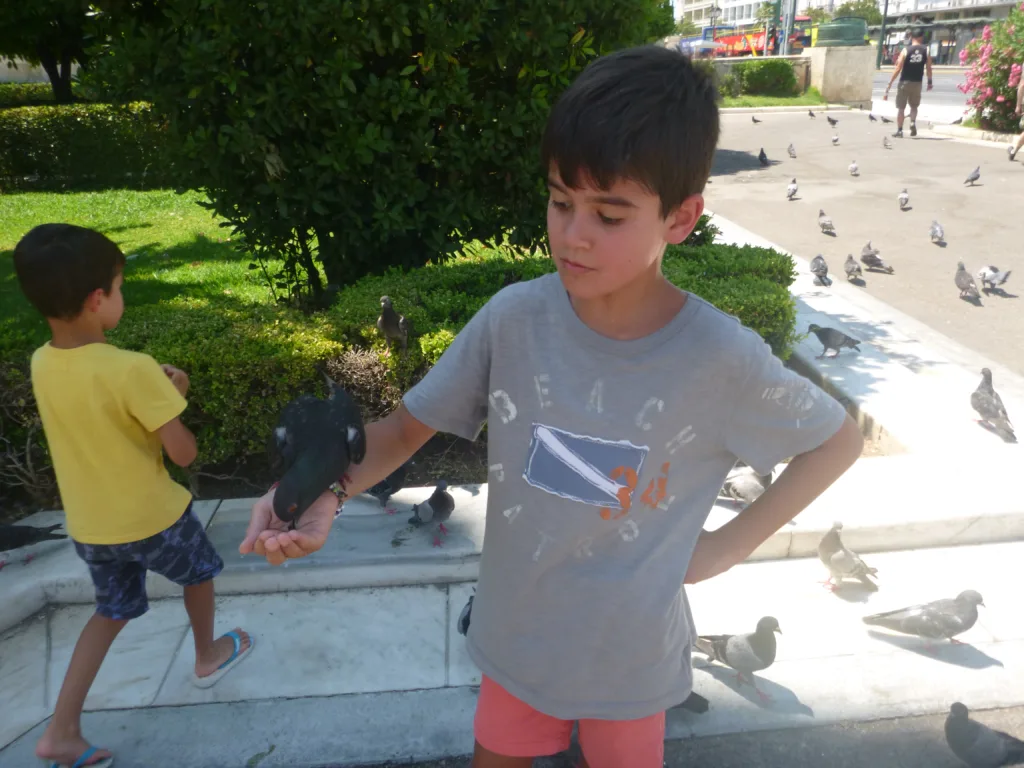
“That timing made all the difference,” Giorgio says. “I was old enough to understand why I wanted to learn it. It wasn’t my parents forcing me; it was my choice.”
Alongside his younger siblings, Giorgio joined an online Greek late-beginners class taught by Eleni Demetriou through the schools of the Greek Community of Melbourne. As the only Sydney-based students in the class, what could have felt like an exhausting after-hours commitment became something he genuinely enjoyed.
“There was no resentment, no burnout after years of doing Greek. Everything was fresh. I just wanted to formalise the heritage I’d grown up with,” he says.
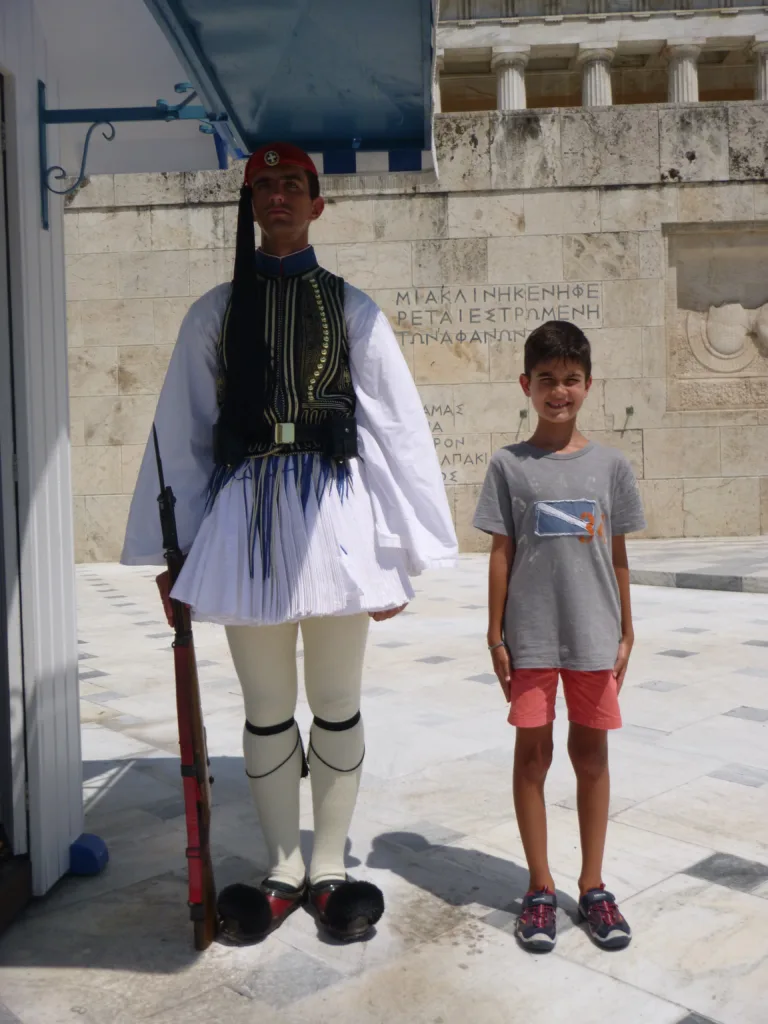
When Greek is an advantage
By the time he completed Year 12, Giorgio had studied French from preschool and taken up Spanish in high school. However, Greek stood as the emotional centre of his education, woven into his major works for English, Music, and History.
“I’ve been navigating two languages and two cultures for as long as I can remember,” he says. “That’s not a disadvantage. It’s a gift.”
His school environment at International Grammar School Sydney encouraged this exploration. His teachers celebrated his choice of music when Giorgio composed Greek-inspired music, such as his lively ensemble piece “ΩΠΑ!”, which utilises traditional Greek rhythms and instrumentation.
“When your Australian teachers and peers treat your heritage as an academic strength, suddenly being Greek feels like a competitive advantage, not something to hide,” he says.
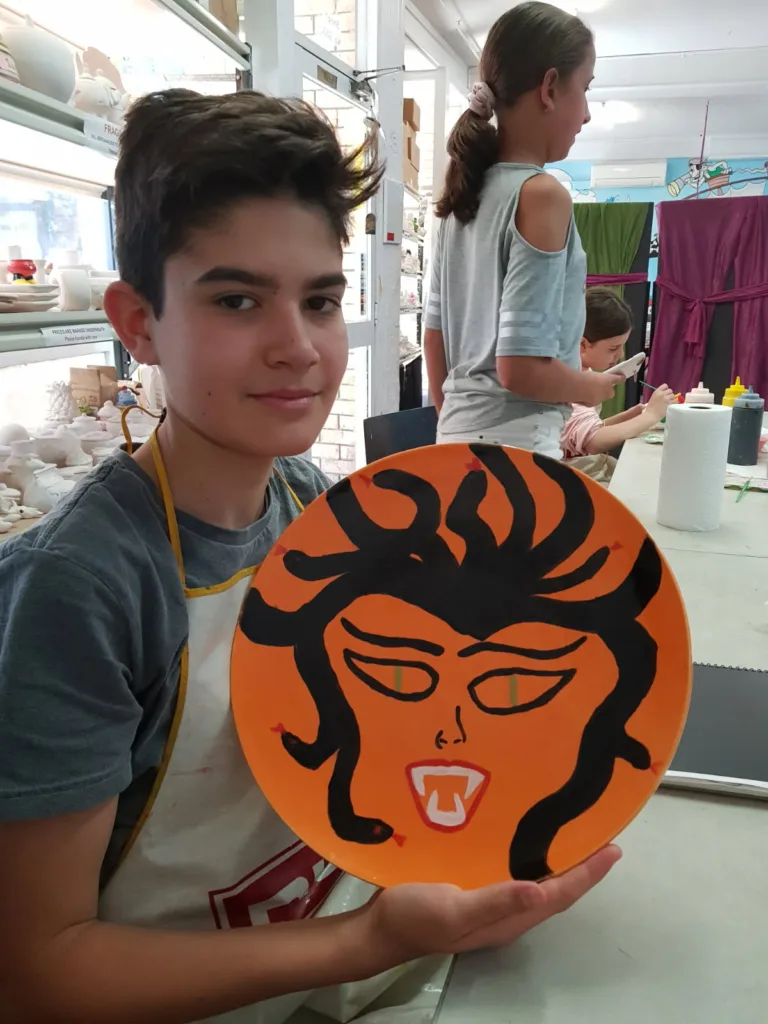
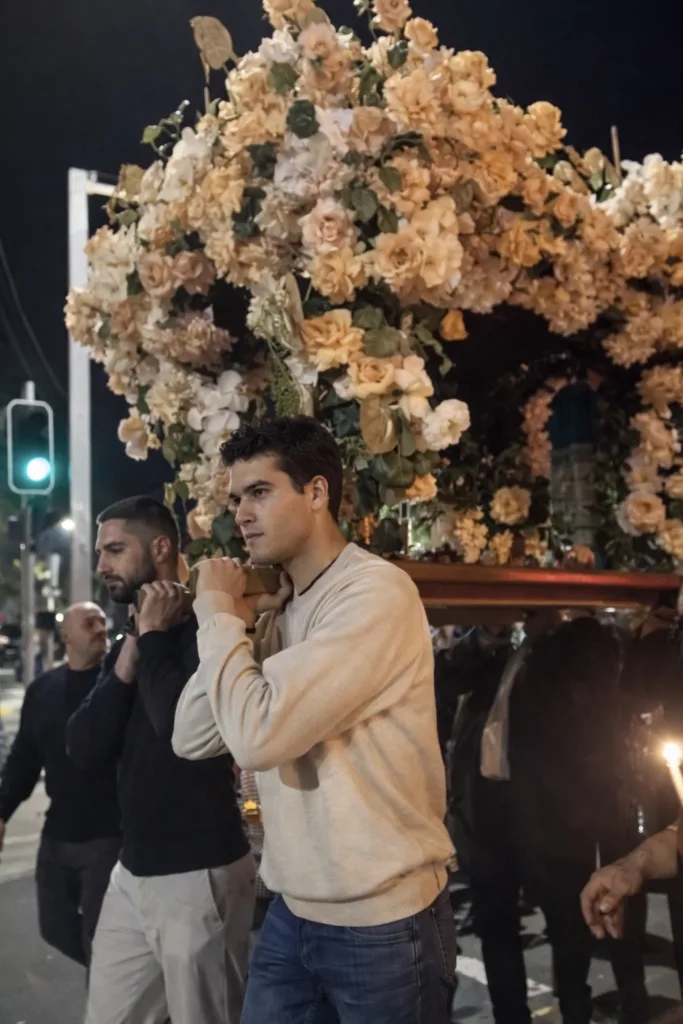
Giorgio’s work frequently explores the concept of adaptation – how culture evolves rather than simply fading away. In his writing, he breathes new life into ancient themes. His short story, “Myth’s Resurrected,” reimagines the Minotaur myth through the eyes of a modern 14-year-old Greek boy on a school trip to Crete. By placing a “Greek mythology nerd” in a real-life struggle with the beast, Giorgio bridges the gap between ancient ritual and contemporary identity.
He further explored this in his narrative “Fractured Nostos,” a poignant look at cultural upheaval and the fragility of memory. By using the symbol of the fig – representing prosperity and the labour of past generations – Giorgio highlights the tactile nature of heritage that exists beyond language.
“Fewer people may speak fluent Greek, but those who do often choose to,” he notes. “Culture isn’t sustained only through grammar drills, but through music, storytelling, food, and creative expression. That’s not extinction; it’s adaptation.”
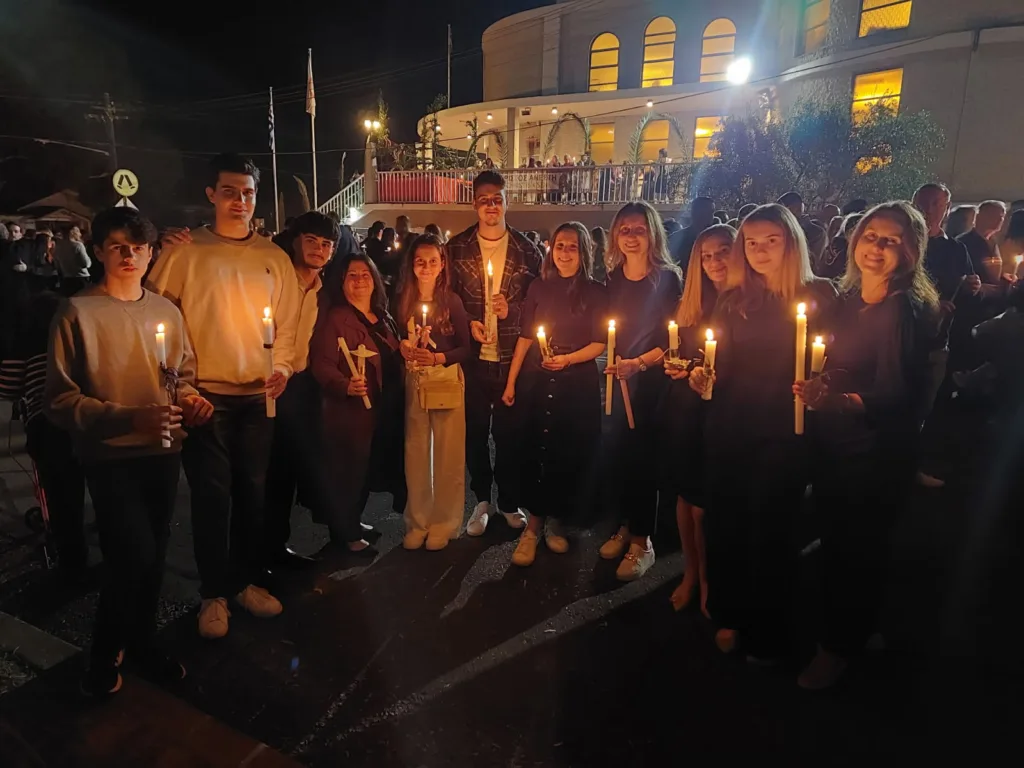
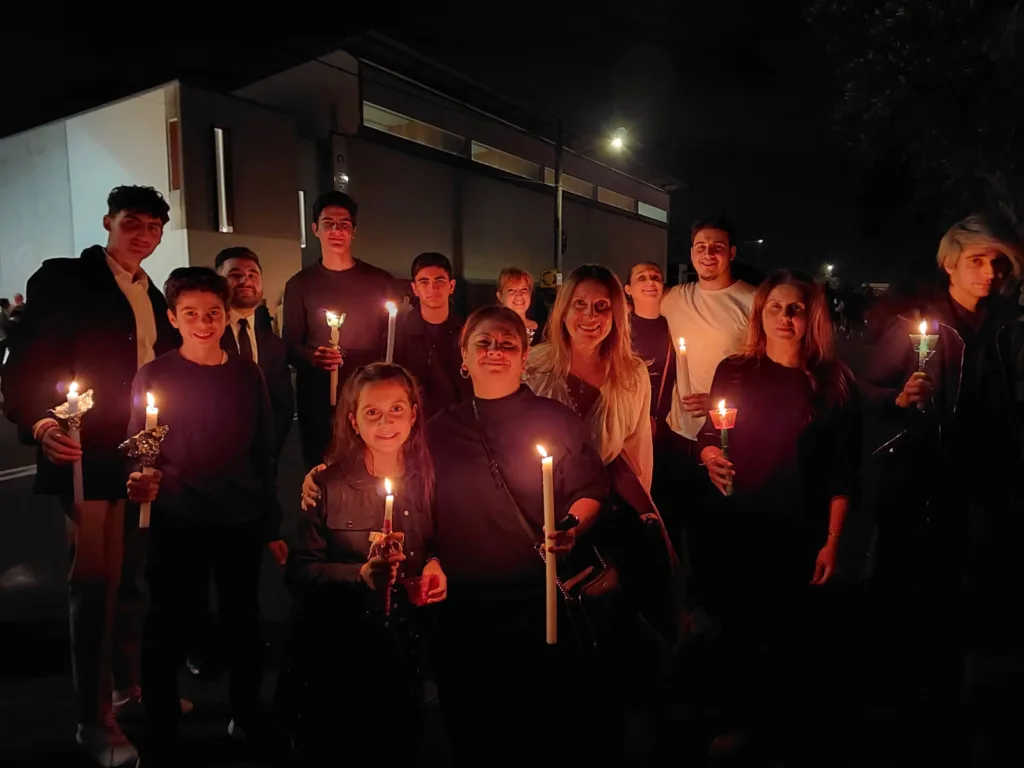
Being Greek as a fraction of the whole
When he visits Greece, Giorgio feels both belonging and distance. He recalls moments of being thrown off by the speed of the slang, yet feeling an undeniable connection when hearing the music or eating the food his yiayia cooks.
Despite this connection, he doesn’t see his future in Greece long-term. “And that doesn’t make me less Greek. It makes me Greek Australian.”
For Giorgio, that identity is complete, not diluted. “My grandparents didn’t leave Greece so I’d move back. They left to give their children opportunities. Honouring that means succeeding here while preserving what they passed down.”
The Greek Herald contacted Giorgio after he shared his Greek-inspired HSC projects, including an epic reimagining of Homeric themes titled “Η Οδύσσεια Μας” (Our Odyssey).
“I didn’t want my work to just sit in a school folder,” he says. “I wanted it to matter beyond marks. And I knew The Greek Herald would be a good place to start.”
Now preparing to study Media and Marketing at UNSW, Giorgio hopes to keep telling Greek Australian stories, translating heritage for new generations.
“Being Greek doesn’t exist only in Greece. It exists wherever Greeks are. And in Australia, it’s becoming something uniquely ours,” he concludes.
