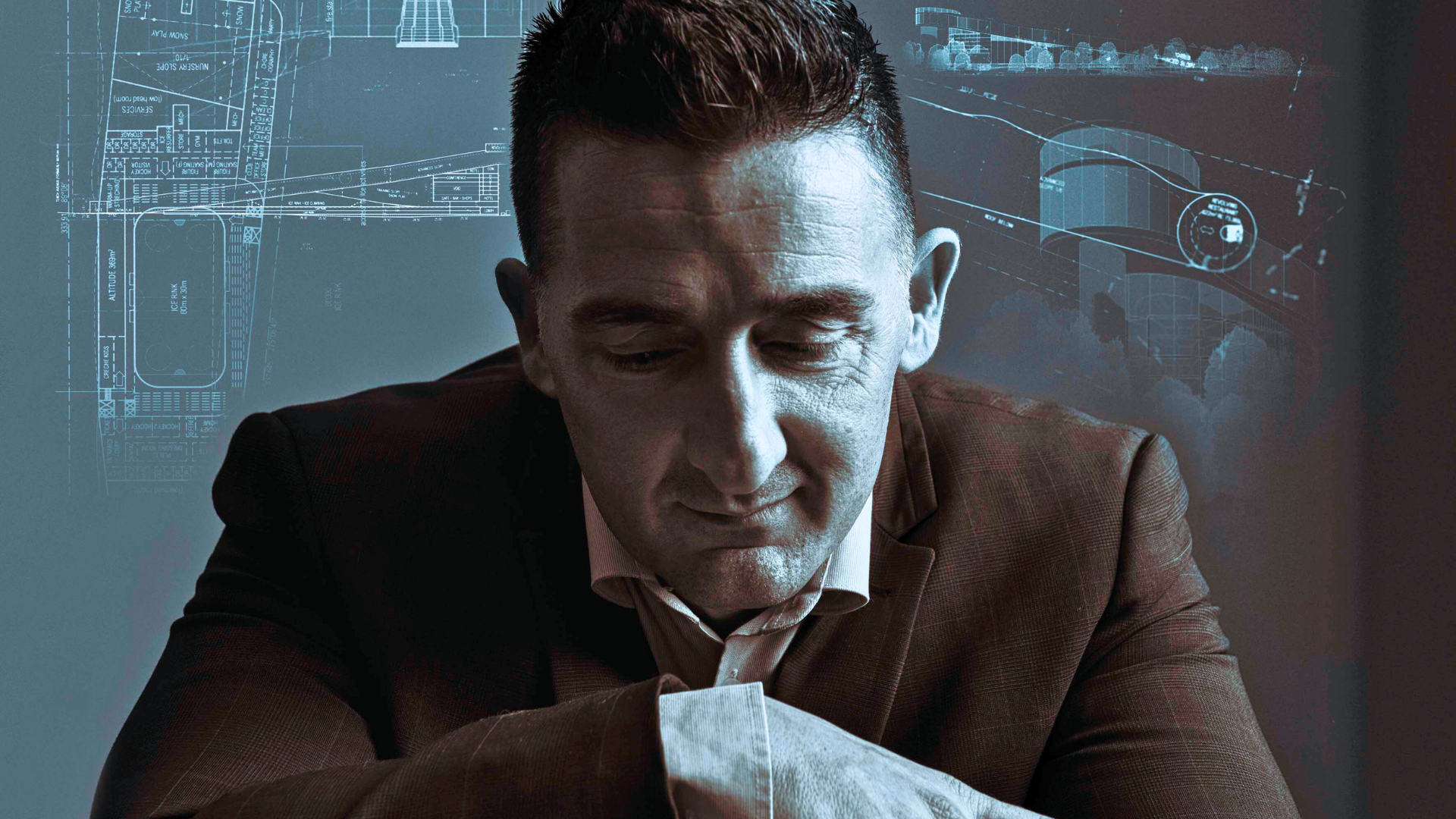
Peter Magnisalis began kindergarten without speaking a word of English.
“It was quite traumatising at the time,” he recalls. That early struggle taught him the discipline he would eventually use to create his $700 million development: Winter Sports World.
Before becoming a developer, Magnisalis grew up on his parents’ three-acre plot in Londonderry, near Penrith. They transformed the Australian scrub into what he describes as “a little Greek village”; fruit trees, vegetable patches, and long days of physical labour.
“It looks idyllic,” he says, “but it was tough.”
His parents’ story is one familiar across the Greek diaspora.
“They both grew up very poor. My mum only went to school until Year 6. My dad barely went at all because my grandfather was blinded in the war. As the eldest son, my father had to work.”
A bricklayer whose own education was cut short by conflict, his father believed work was the greatest teacher. As a teenager, Magnisalis spent weekends labouring: carrying bricks, hauling roof tiles, cleaning sites, and watching buildings take shape piece by piece.
“The biggest gift my dad gave me,” he says, “was not being afraid of hard work.”
Education, denied to one generation, became central to the next. Magnisalis became the first in his family to attend university, completing a degree in Construction Management, a decision he still recounts with humour.
“I asked my careers adviser, ‘What’s the highest building course I can do?’ They said Construction Management, so that’s what I did.”
By 22, he had launched his own building company. The success was brief.
“I realised pretty quickly there was a lot more to learn.”
Leaving a mark
He shut the business and joined some of Australia’s largest construction firms, gaining experience across aged care, retirement living, land subdivisions and large-scale commercial developments. Over time, a guiding principle emerged.
“If you’re going to develop something,” he says, “you have to ask: what can I do differently? How do I leave a mark?”
That question found its answer on a Friday night in 2015.
“I was just thinking,” he recalls. “Australia has very limited snow. It’s expensive, hard to get to, and unreliable. And I thought: why can’t we have a building with snow in it?”
He didn’t yet know that more than 150 indoor snow resorts were already operating globally. He trusted instinct. Australians, he points out, are among the world’s most enthusiastic snow-sport participants: 54 per cent have skied or snowboarded at least once, while 46 per cent have never experienced snow at all—largely due to cost, distance and access.
“This is exactly where indoor snow centres work,” Magnisalis says, adding that the irony is that he himself can’t ski. “I’m saving that for when I ski down the slopes of Winter Sports World for the first time once the doors open.”
Independent modelling by Stollznow Research, using deliberately conservative assumptions, projects more than 1.3 million visits annually to Winter Sports World—before factoring in international tourism, Western Sydney’s population growth, or the opening of Western Sydney International Airport just 15 kilometres away.
Still, the scale of the idea was daunting.
“There was a point where I put the project down for six months,” he admits. “Sometimes you need to stop, reflect, and make sure you’re not heading down the wrong path.”
An independent business review ultimately reaffirmed his instincts.
“Australians are snow-mad,” he says. “Per capita, we’re one of the top snow markets in the world. That gave me the confidence to pick it up again, and I’ve never looked back.”
Winter Sports World has since secured a Memorandum of Understanding with Bonski Group, the world’s largest indoor snow operator, a milestone Magnisalis describes as “massive validation” for both the project and Western Sydney.
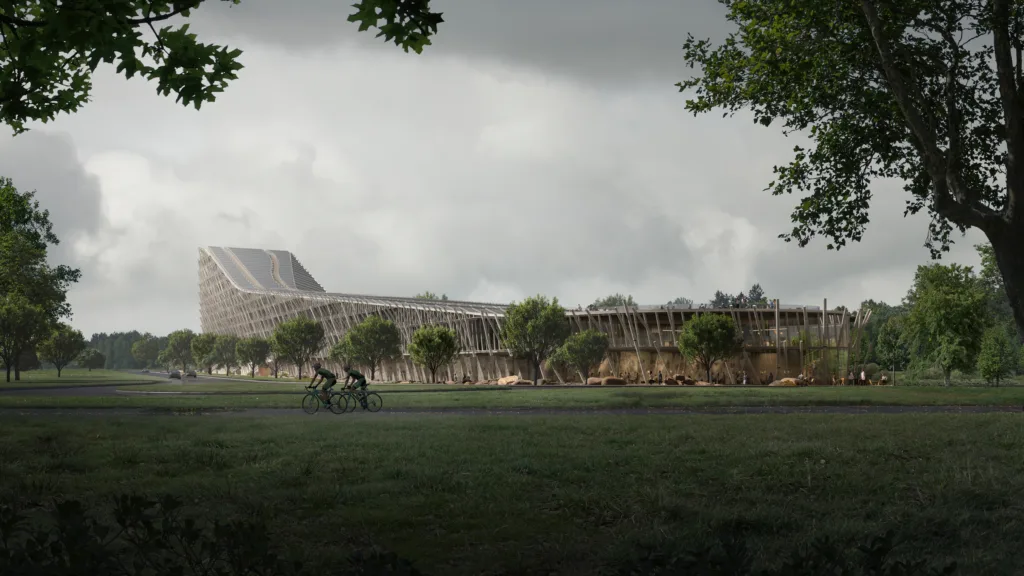
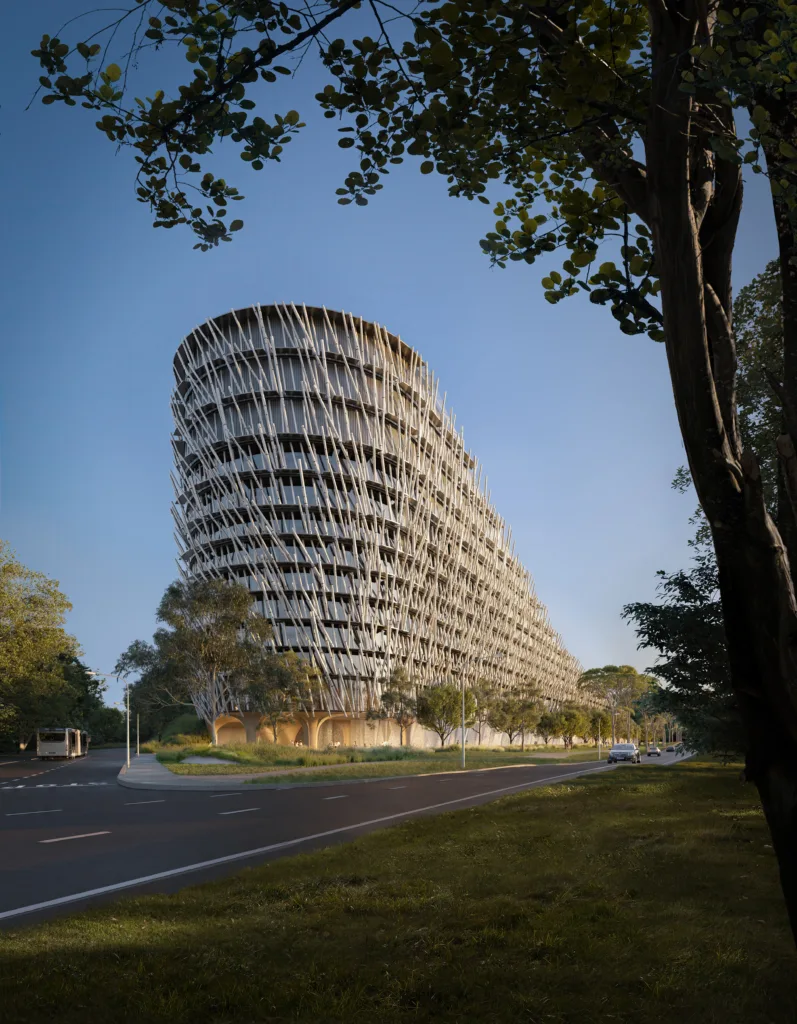
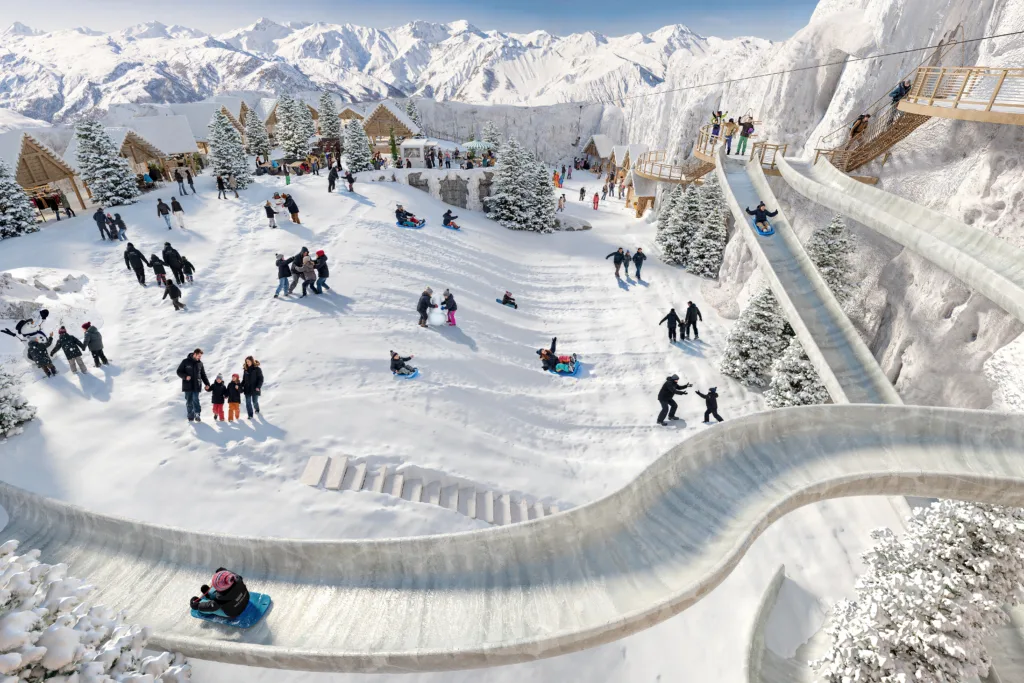
The development will feature real, chemical-free snow, a 300-metre advanced ski run, learning zones, snow-play areas for all ages, and a fully immersive alpine environment designed as both a high-performance sporting facility and a family-friendly tourist destination.
While global in ambition, the project is quietly shaped by Greek values. Central to the vision is filoxenia, the ancient Greek concept of radical hospitality.
“I hadn’t really thought about it before,” Magnisalis says, “but filoxenia is exactly what we’re trying to create.”
For him, that means inclusion without exception.
“Everyone’s welcome. Everyone’s treated like family,” he explains. “That warmth, that’s what people should feel the moment they walk in.”
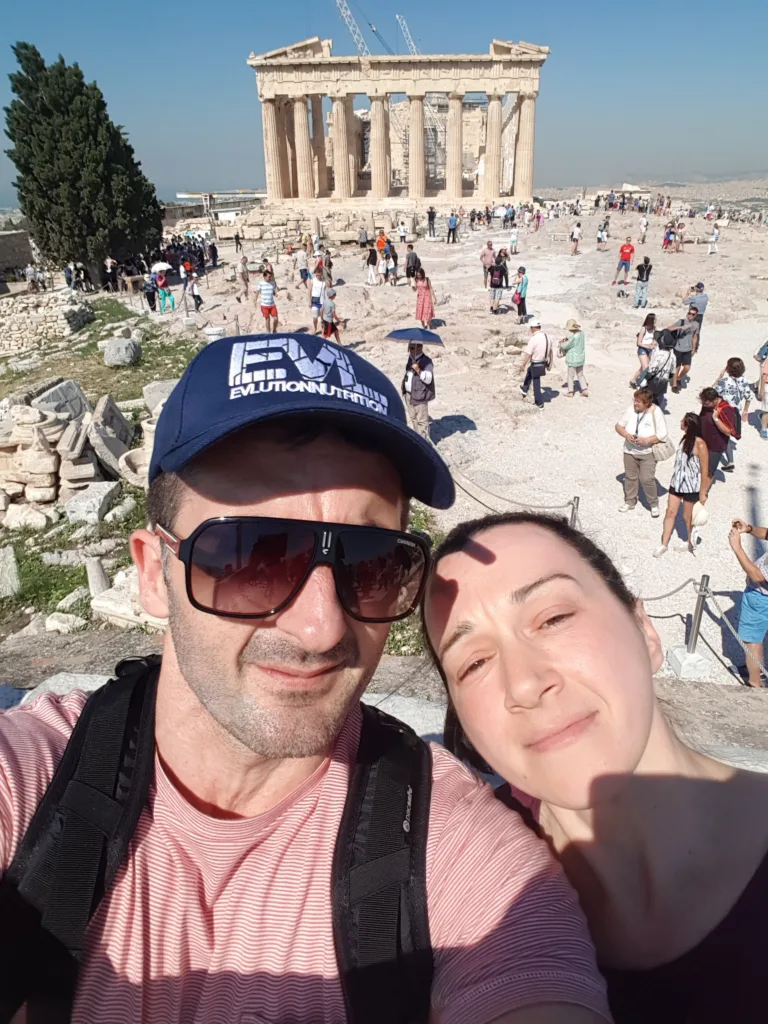
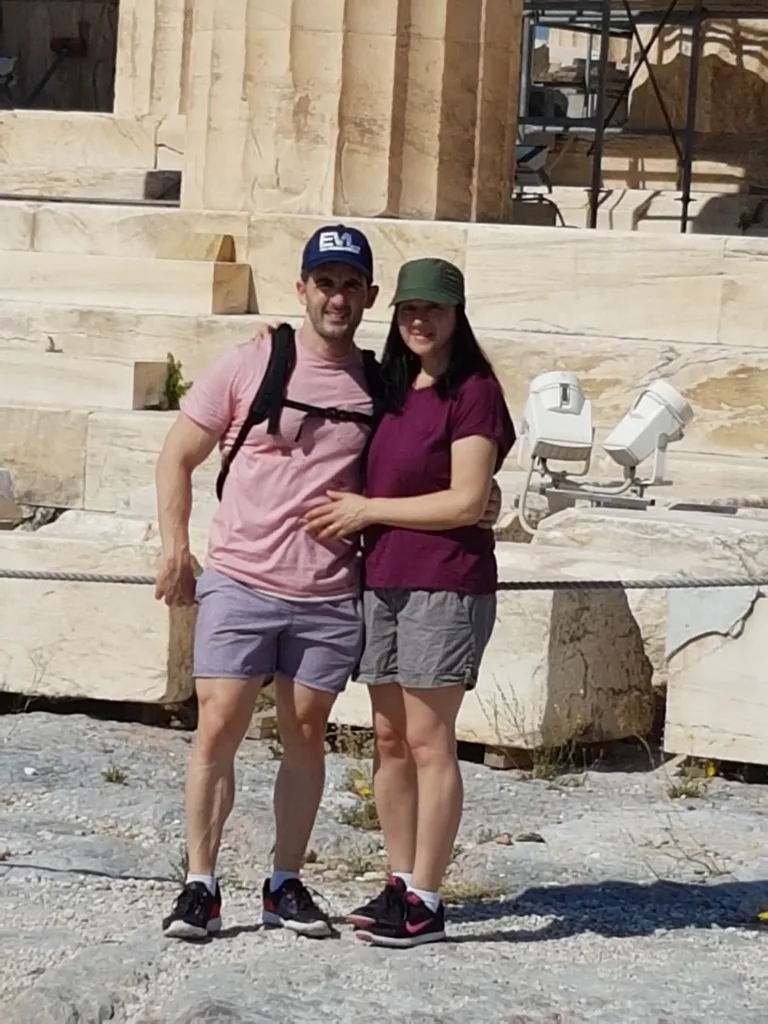
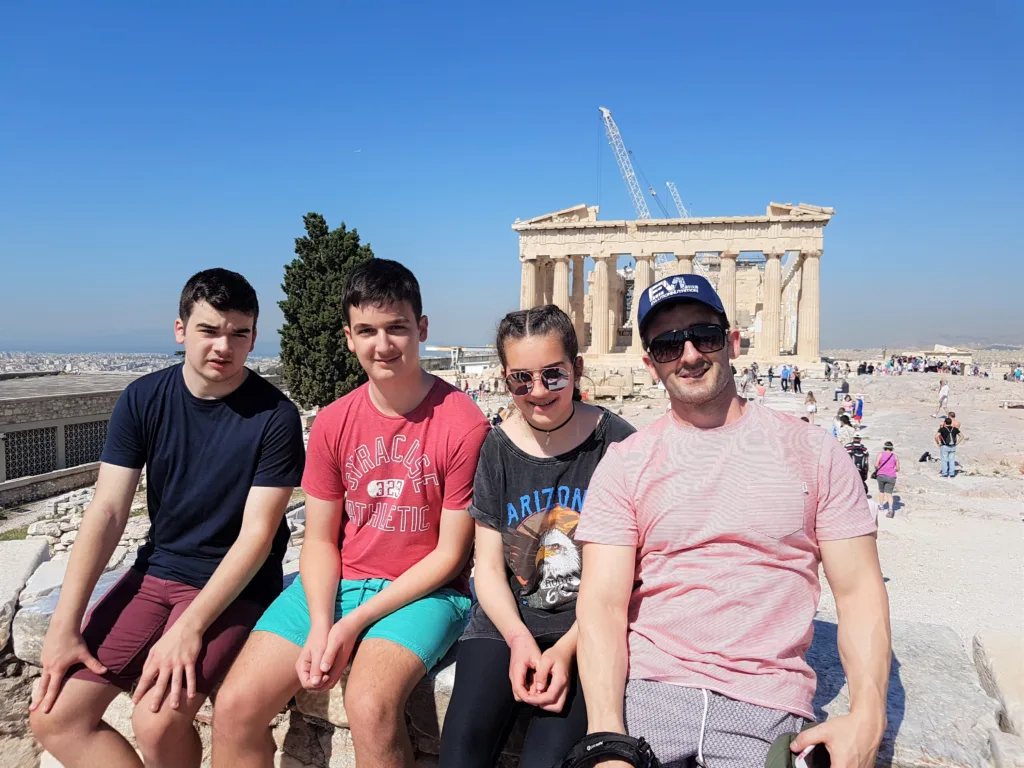
It’s a sense of belonging he only fully understood after visiting Greece in 2017.
“The moment we landed, it felt like home,” he says. “You hear Greeks arguing over the pettiest things and think, ‘Yep—I’m home.’”
The legacy of having a go
That grounding, of family, culture and belonging, also shapes how Magnisalis approaches risk. Married to his wife Vicky for 26 years, after meeting at the legendary Kazzie Club in Kingsford, he says the project isn’t about ego. It’s about challenging a generational instinct to play it safe.
“A lot of us grow up thinking, ‘What will people say?’” he admits. “Don’t aim too high. Don’t risk failing.”
Winter Sports World, he hopes, sends a different message.
“You can have a go,” he says. “You can push boundaries. You don’t have to stay small because you’re afraid of failing.”
When the doors open in 2028, Winter Sports World won’t just be a landmark of steel and snow. It will stand as proof that a boy who once couldn’t speak the language, and a man who has never skied, has helped rewrite the future of Western Sydney.
