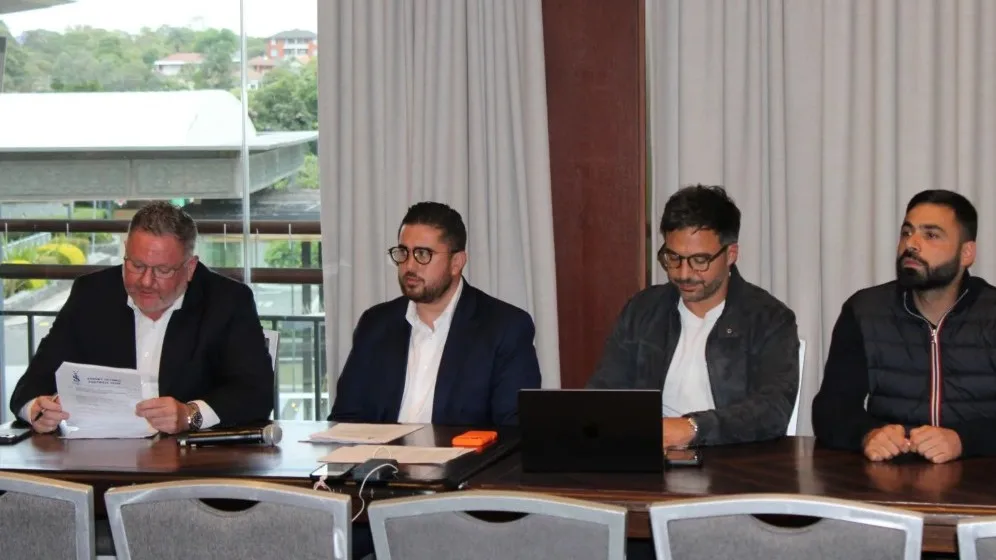
Concerns surrounding governance, transparency and the future direction of Sydney Olympic Football Club have continued to build following a members’ meeting in December 2025, formal requests for information, and a public statement issued by the club’s board.
At the centre of the discussion are member-approved financial deeds, member concerns relating to the club’s constitution, and what members describe as a lack of clarity around decision-making authority and accountability within the organisation.
Members’ meeting and request for information
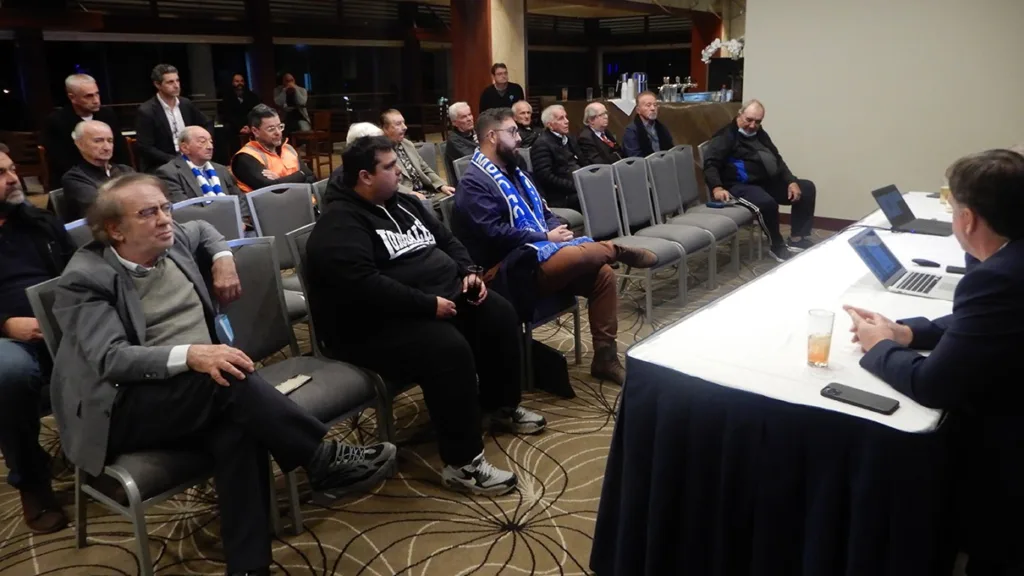
As previously reported by The Greek Herald, a meeting of members, former players and long-standing supporters was held in Sydney on 17 December 2025, where those present agreed to pursue an Extraordinary General Meeting (EGM).
Those in attendance stressed that the move was not intended to undermine the club, but to ensure members were properly informed about its financial position, governance framework and long-term strategy.
Following the meeting, a formal written request was sent to the board on 18 January 2026, seeking access to information including financial records, governance arrangements and documentation relating to deeds approved by members at previous AGMs. Members have asked that the information be provided by 25 January 2026.
Financial deeds approved by members
Central to the concerns raised are two legal instruments approved by members at the club’s Annual General Meeting on 16 June 2022:
- a Financial Support Deed, dated 23 December 2021, between Damon Hanlin as lender and Sydney Olympic Football Club Ltd as borrower; and
- a General Security Deed of the same date, securing the club’s obligations under the Financial Support Deed.
According to the signed AGM minutes, both deeds were circulated to members in advance, explained during the meeting, and approved unanimously.
Some members have since questioned the accuracy of the attendance record for the 2022 AGM, which formed the basis for quorum when the deeds were approved. They say that individuals listed in the minutes as present have since stated they were not in attendance, raising concerns about whether quorum was properly constituted. The club has not publicly addressed those claims, and members say they are seeking clarification through formal channels.
The deeds were executed on behalf of Sydney Olympic Football Club Ltd by the club’s directors at the time, Lawrie McKinna and Chris Gardiner, acting in their capacity as directors. Hanlin executed the deeds as the lender and counterparty, not as a signatory for the club.
The minutes further record that Hanlin, who was president at the time, declared a conflict of interest, stepped aside as chair during discussion of the resolutions, and did not vote on their approval.
While the deeds were approved by members, the AGM minutes do not disclose the total value of funds advanced. Based on subsequent financial reporting, some members estimate the amount exceeds $2 million.
At the AGM, McKinna and Gardiner told members the arrangements were intended to secure and formalise ongoing funding, underwrite operations, and restore confidence with Football NSW, at a time when the club was emerging from significant financial instability.
That period followed the sudden departure of then-president Bill Papas in June 2021, after allegations linked to the widely reported Westpac fraud investigation became public. Papas subsequently left Australia, and Sydney Olympic FC was left facing uncertainty.
The 2022 AGM minutes note that balance-sheet issues from prior years had been corrected and that operational losses were being met through secured funding arrangements, which were presented as necessary to stabilise the club and ensure its ongoing participation in the NPL.
Hanlin comments on funding, stepping back and Championship structure
The nature of the funding arrangements returned to public discussion following public comments made by Hanlin, in which he said that the majority of funds he had provided during his tenure had been treated as non-repayable at the time. He acknowledged, however, that “at the present time” some funding may be treated differently, adding, “I’m considering my options.”
In the same comments, Hanlin said he stepped away from the NPL club due to the personal and financial burden of running it, describing the role as demanding and time-consuming. He stated that he now has “no involvement” in the club’s governance or day-to-day operations, while reiterating that Sydney Olympic remains a member-based club under its constitution.
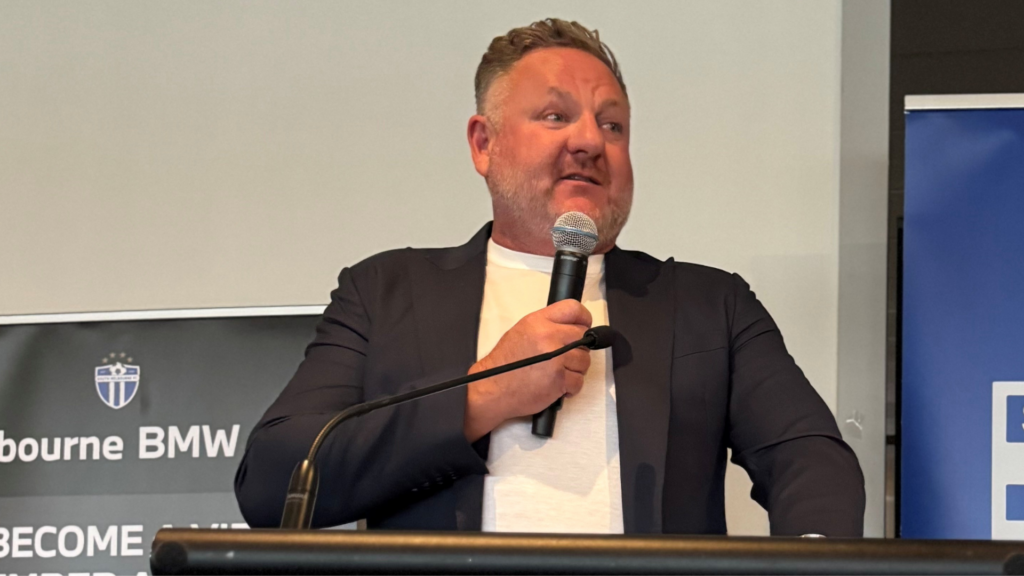
At the club’s Annual General Meeting on 28 October 2025, Hanlin outlined the structure of Sydney Olympic’s participation in the national second-tier competition, explaining that the Australian Championship entity is separately owned by him and operates independently from the member-based NPL club. As reported by The Greek Herald at that AGM, he said this structure was adopted to protect his personal investment, noting the member-based club had not contributed capital to the Championship licence. Hanlin added that the Championship entity pays heritage and branding fees to Sydney Olympic Football Club as part of that arrangement.
Some members, however, say they remain unconvinced, pointing to the ongoing financial arrangements approved in prior years, the continued public association of key individuals with the club, and what they describe as a lack of clarity around who is exercising effective control and influence over major decisions.
Constitution concerns and board response
Members have also raised concerns about a document presented to them as an updated constitution, which they say materially alters the balance of power within the club. The issues raised include expanded board discretion over membership and access to records, changes to voting thresholds, and uncertainty about when and how the amendments were adopted.
In a statement issued on 22 January 2026, the Sydney Olympic FC board acknowledged the recent commentary and opinions expressed publicly, saying it was important for members and supporters to understand where the club currently stands and what the present administration has been focused on.
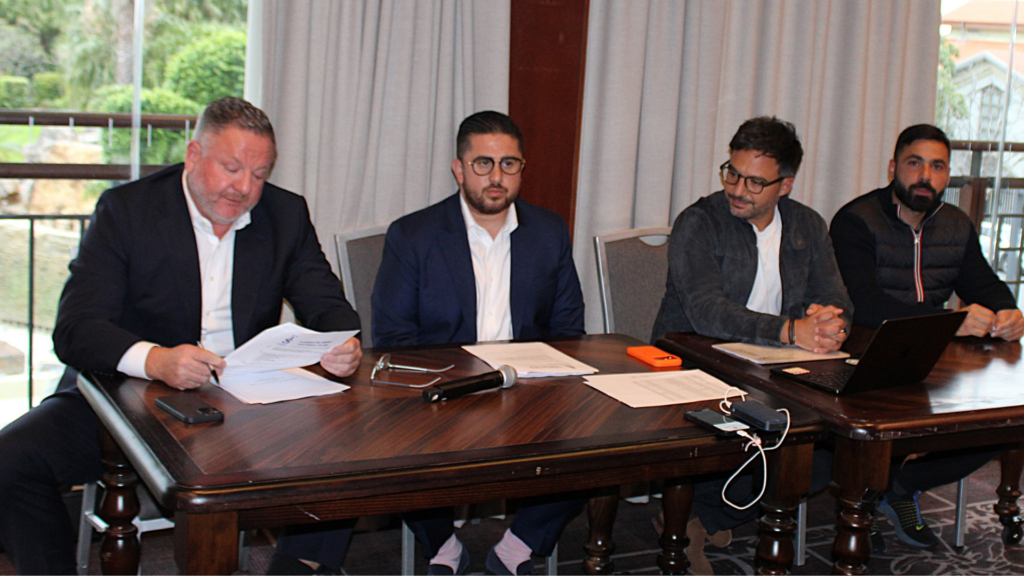
The board said it had deliberately prioritised rebuilding the club’s foundations, describing that work as essential but not always visible or immediately reflected in results on the pitch.
“The club has deliberately prioritised the culture within the Club and key operational matters – stabilising finances, rebuilding football operations, recruiting and developing player talent, and, critically, settling the coaches, volunteers, and staff who keep this club functioning week in and week out,” the statement said.
The board noted that without these fundamentals in place, “no amount of noise, criticism, or structural change” would lead to long-term success, and expressed disappointment that, during this phase, some members had chosen public criticism rather than what it described as constructive engagement.
It emphasised that Sydney Olympic Football Club is “bigger than individuals, factions, or egos,” and said the club’s future depends on unity, effort, and people stepping forward to contribute positively.
The statement added that rebuilding trust, performance and stability takes time, and reiterated the board’s commitment to placing the club on a sustainable footing so that Sydney Olympic can continue to compete “with pride, credibility and ambition across all levels.”
The statement was signed by board members Chris Charalambous, Matt Phelps and Rodolf Salem.
Next steps for members and the board
Discussion among members has continued in private forums, with many encouraging supporters to formally join the club as members, noting that membership provides voting rights and a pathway to participate constructively in the club’s future. Others have stressed that requests for information should not be viewed as disloyalty, but as part of responsible stewardship of a community-owned club.
Members say they are now awaiting confirmation on whether and when an EGM will be convened, as well as the provision of information requested by 25 January 2026. Issues relating to stability, transparency and governance remain central to ongoing discussions between the board and members.
