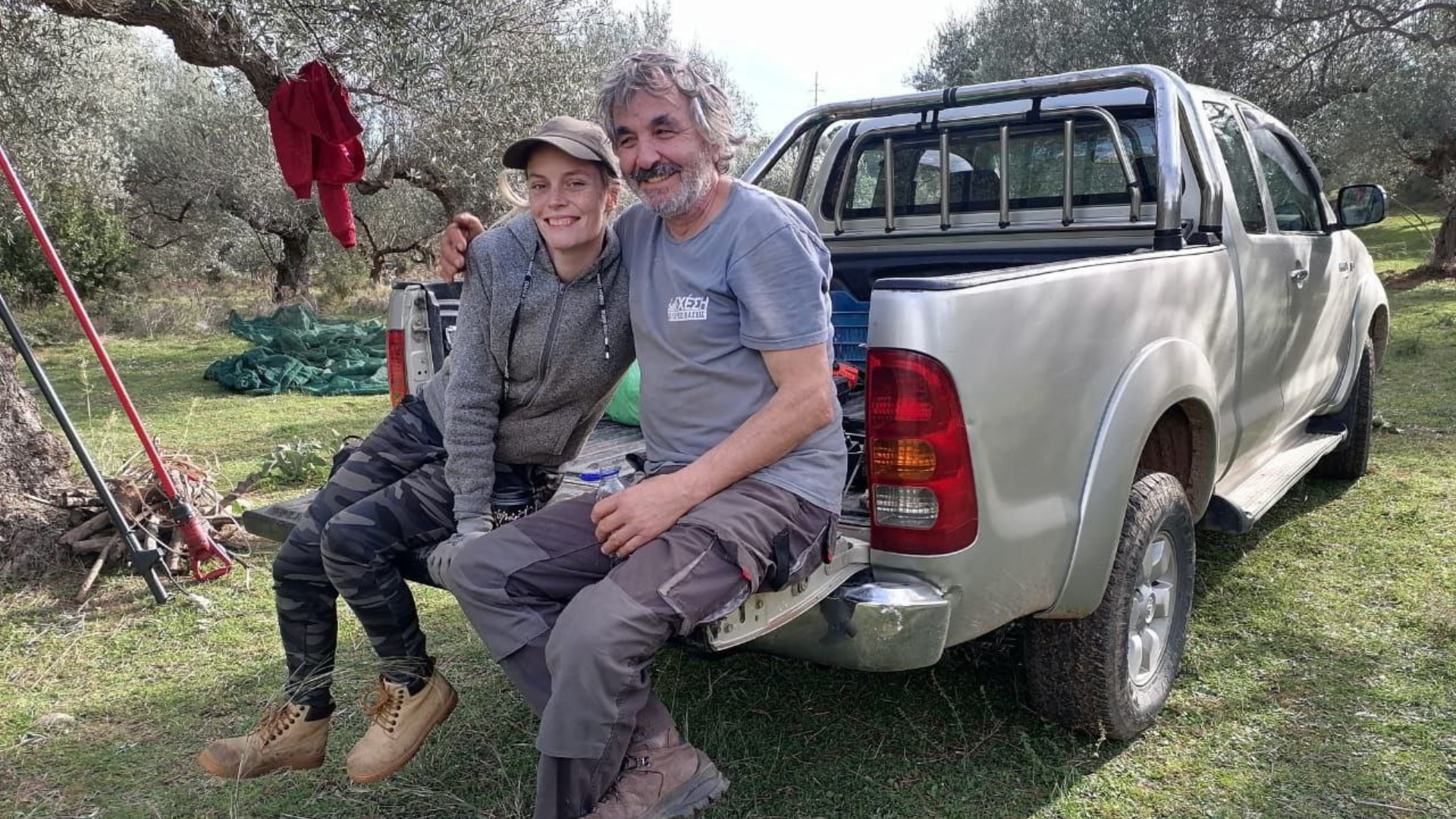
Each autumn in Laconia, when the long summer finally breaks with the first hard rain, something ancient stirs. Farmers rush to the groves with pickup trucks, nets drop to the earth, and the presses glow through the night.
“From November onwards, there’s a communal aspect to it in the lead-up to Christmas,” says Scarlett Athanasia, soaking in the ritual with a reverence she never expected to develop.
The Mauritius-born, Greece-based consultant has carved out an unusual niche for herself: a meticulous curator and importer of early-harvest extra virgin olive oil.

For the last decade, Scarlett has returned each winter to the olive-draped hills surrounding her partner’s ancestral village in Laconia, near Sparta. She rolls up her sleeves and controls every detail, sourcing what she calls “liquid perfection” for only a handful of tables, mostly those fortunate enough to call her a friend.
What began as curiosity evolved into obsession, discipline, and something close to a calling. Greeks have a word for that: meraki, the soul-deep devotion poured into something done with love and purpose.
But as she puts it, “I’m not a producer. I’m part of a process that’s much bigger than me.”
This year, with word-of-mouth quietly spreading, she finally decided to give her labour of love a name: Athanasia’s Fields, a label designed by a childhood friend. Yet the branding hasn’t changed her philosophy.
“I’m not just buying olive oil. I’m part of the process. I see the olives, I smell them, I watch them pressed. That’s the only way to truly honour it,” she says.
The call of the Peloponnese
Scarlett didn’t grow up imagining herself in groves. She spent her childhood in Mauritius and South East Asia, surrounded by travel and exquisite dining; but never once thinking about the importance of olive oil on the table.
“I’d always appreciated olive oil,” she admits, “but coming to Greece opened my eyes to its true character.”
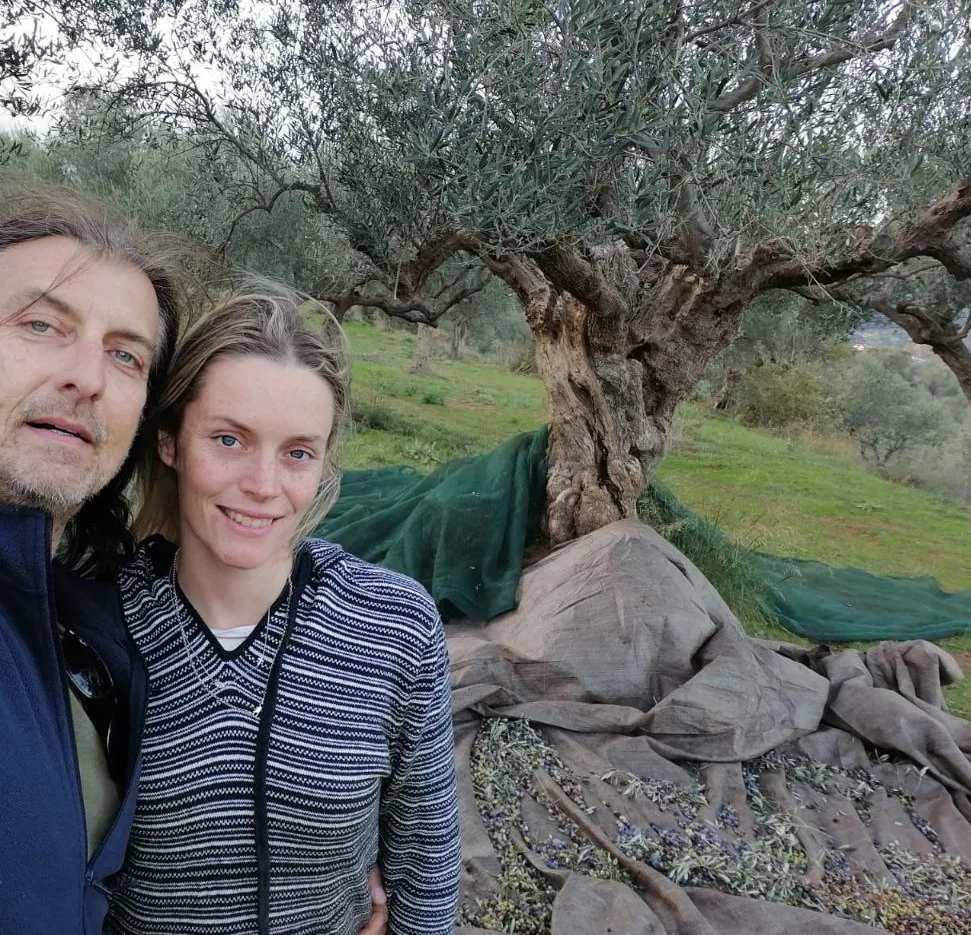
Everything changed when she began visiting Greece with her partner, Kostas, her pethera (mother-in-law) Niki and her petheros (father-in-law) Panagiotis.
“We’d go on road trips around the Peloponnese, trying oil from people’s homes, at oil presses and small secluded taverns. Those little experiences gave me this urge to be part of it,” she explains.
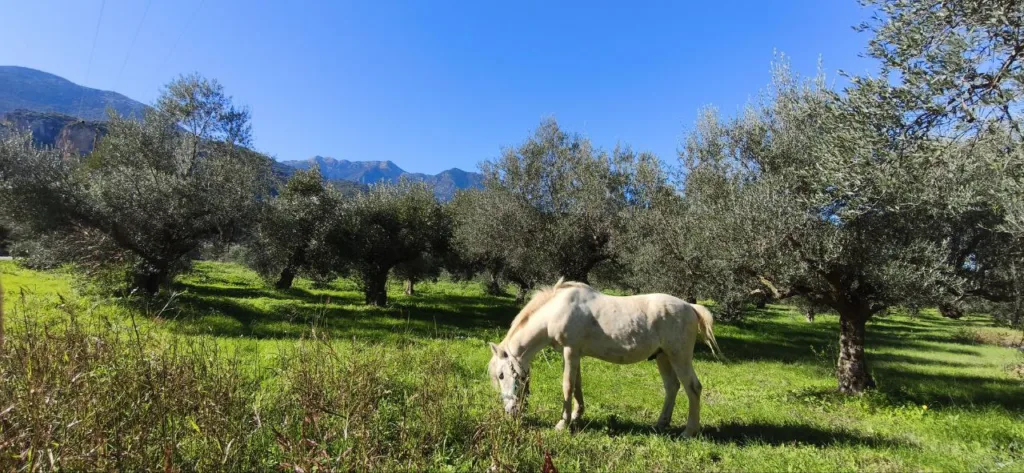
Soon she was in the fields… literally.
“I worked with my friends and my godfather, carrying 30- to 50-kilo bags of olives. Everyone freaked out seeing me lift them, but I thought, ‘No, I need to be part of this. I’m a Spartan now, by marriage.’ That’s when I understood how special this tradition is,” she says.
A quest for perfection
Scarlett Athanasia’s approach is unusual, even in a region famous for obsessive standards.
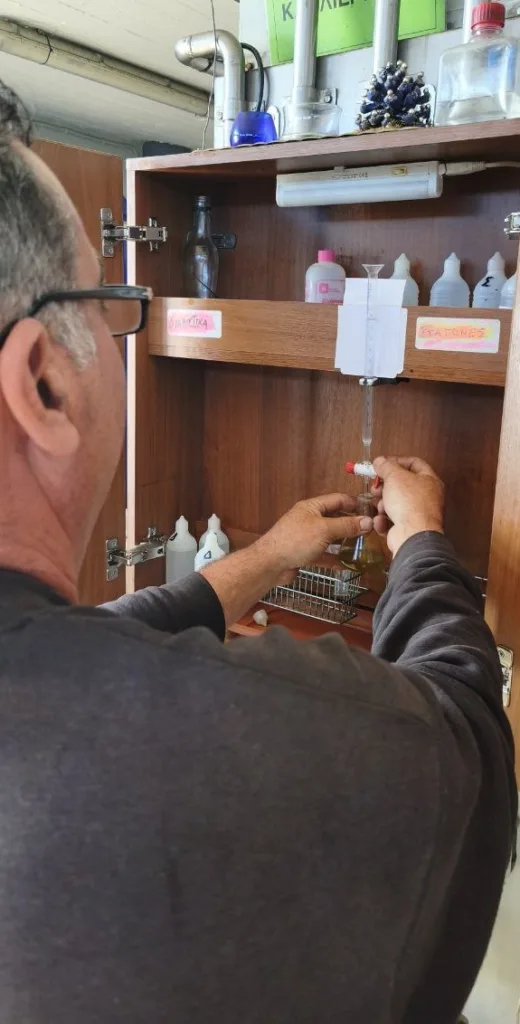
“My job is identifying the trees, the groves, the producers. I go to the press, I look at the olives, I make sure they’re green, not bruised, not starting to rot. I test acidity myself until I get as close to 0% as possible,” she says.
Some years her oils reach below 0.2% acidity, extraordinary by Greek standards.
“It takes me weeks. I don’t mix batches. Everything is single origin. It’s not about quantity; it’s about perfection. That’s what makes my oil different,” she says.
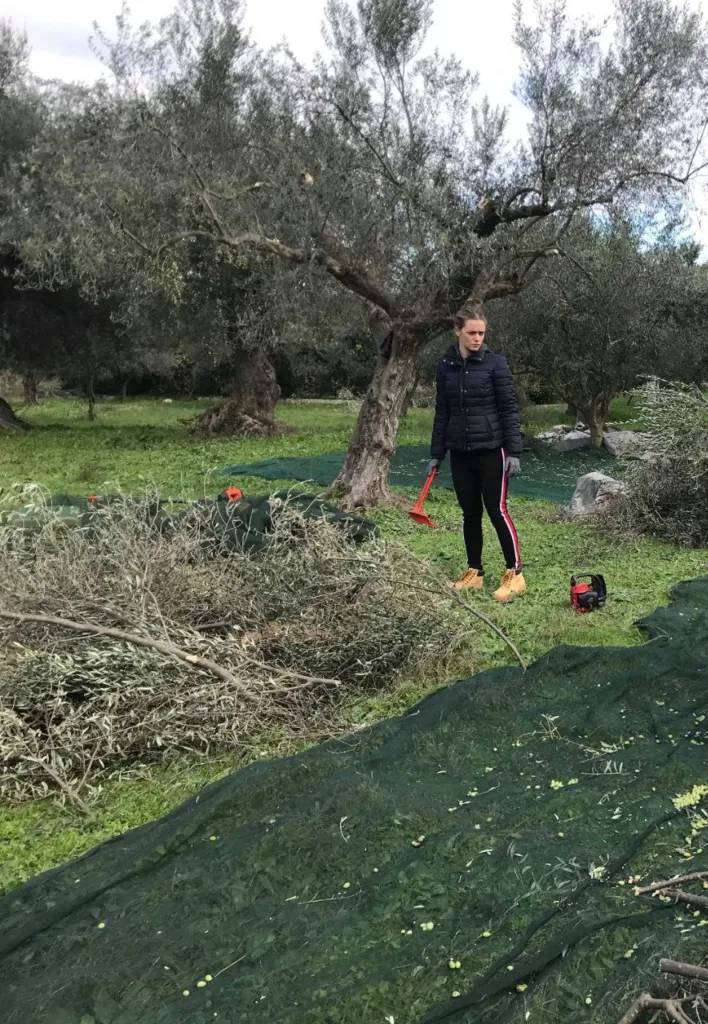
She notes, gently, that many exporters never witness the pressing.
“They send their relatives to pick it up. But when you’re not part of the process, you don’t know what’s happening. Oils get mixed, batches get swapped. To me, olive oil needs respect, love, patience, and care,” she says.
Then she adds, laughing, “And I’m the only person in the Peloponnese crazy enough to be doing it this way.”
Refining palates – and processes
Ten years in, the land itself has become her teacher.
“People think every year is the same, but no. Trees don’t produce the same quality each year. Sometimes the best oil isn’t from the same trees or my own trees at all. That’s why I drive around Laconia, because somewhere, there’s a single origin that’s perfect for that season,” she says.
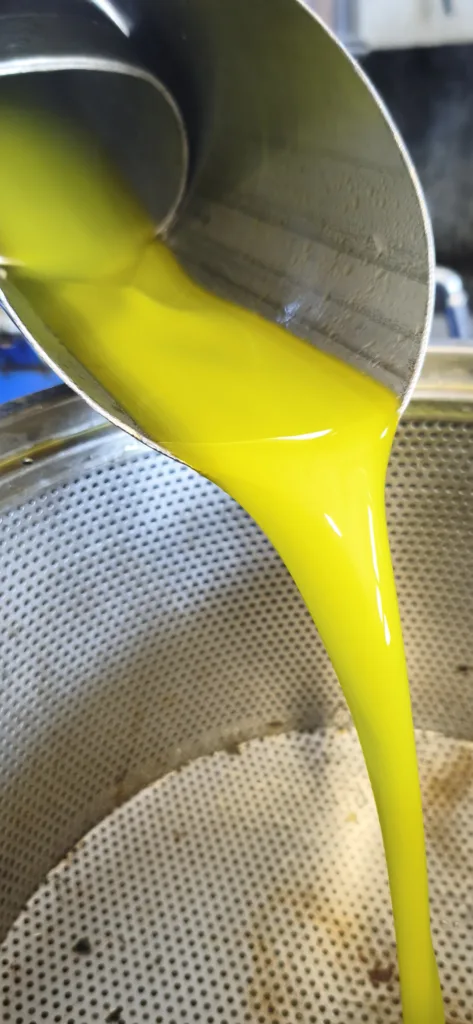
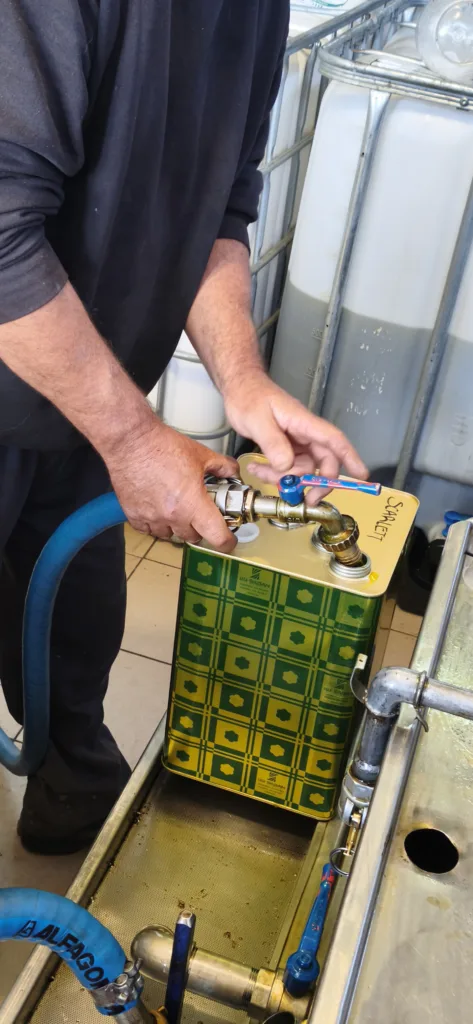
And when she finds it, she moves fast. “I always have empty tins in my car. When I discover the oil, I buy it, fill it on the spot, and organise shipping to Melbourne.”
Shipping, she says, is an adventure of its own. “You need high-quality tins to preserve the quality of the oil on arrival.”

More than business: Olive oil and life
What draws her back to Laconia each winter isn’t business, it’s belonging.
“I live in the ancestral home of my partner’s family. In this house my husband’s grandparents and children survived the Second World War famine with just a few spoons of olive oil a day. That tells you everything about its nutritional value,” she says.
Her petheros told her how villagers traded olive oil for chocolate with the occupying forces. “Hearing these stories in the house where they happened… it made me realise olive oil isn’t just tradition. It’s survival. It’s our history.”
This past year deepened that connection even further.
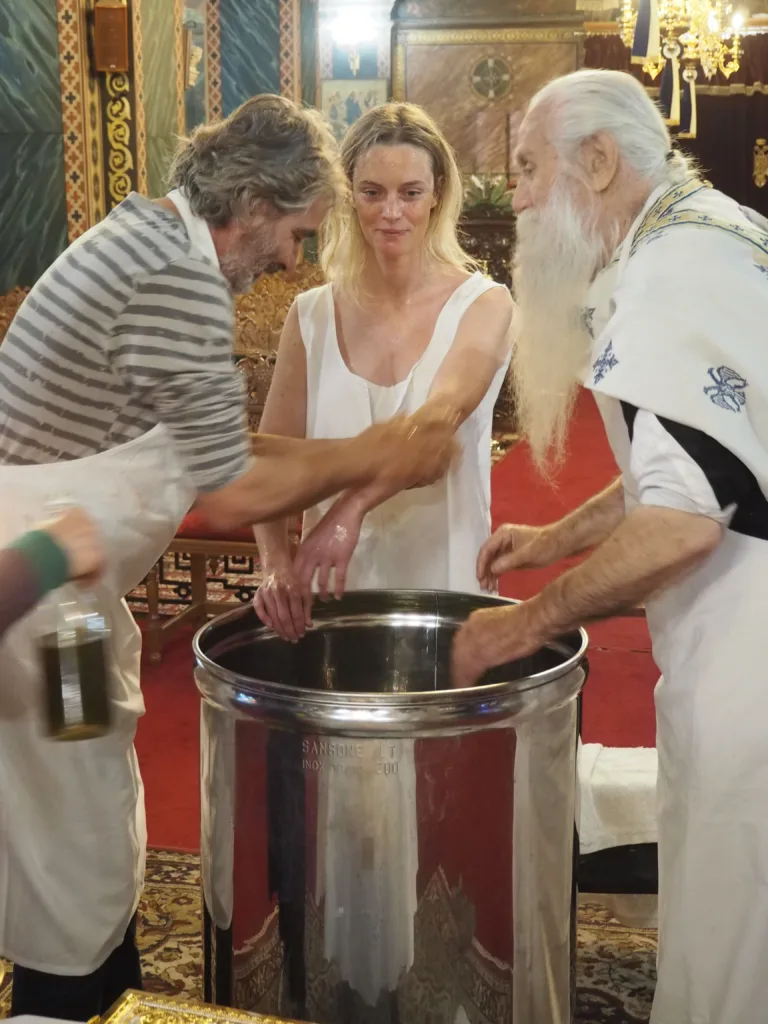
“When I was baptised Greek Orthodox in Sparta in 2024, we used olive oil that I had picked and pressed with my Spartan godfather. Seeing that oil blessed… it was incredibly humbling. One of the most powerful days of my life,” she says.
She pauses, then adds quietly: “Olive oil is the elixir of Hellenism. It fuelled mythology, it fuelled Christianity, it fuelled families. And now it fuels me.”
Authenticity in every drop
Although Scarlett insists this is “just a hobby,” her reputation is growing.
“I always have a little bottle with me,” she says. “And when friends or even strangers taste it, they can’t believe the quality.”
Chefs describe her early-harvest Koroneiki oil as bright, peppery, and intensely fruity, proof of her fastidiously controlled process.
Two Melbourne restaurants now use her oil. She has no desire to scale quickly. “I want to share it with people who have the same philosophy as me. People who love Greece the way I do.”
After a decade, her oil has become more than a product. It is heritage. “It represents my connection to Greece, to faith, to family stories, to the land that shaped me in ways I never expected.”
She hopes that when Australians taste her oil – however limited the quantities may be – “they feel the history, the simplicity of the village, the traditions that continue year after year.”
Then she adds, almost whispering: “I think a little taste of my olive oil can give people a little taste of Hellas.”
