By Lisa Radinovsky from Greek Liquid Gold.
Cretan extra virgin olive oil (EVOO) is now listed in the European Union’s official Geographical Indications Register of high-quality agricultural products and foods. The PGI Κρήτη / Kriti,* or Protected Geographical Indication of Crete, serves to both highlight and protect Cretan EVOO’s unique characteristics and its close connection to the land of Crete.
This certification also “reflects millennia of tradition and culture in Crete, the Minoan civilization, the world-recognized Cretan diet, the soul of the Cretan land and people,” as Emmanouil Karpadakis,* Vice President of the Exporters Association of Crete, told Greek Liquid Gold. Other olive oil professionals with longstanding family traditions of olive oil production in Crete agree.
“PGI Kriti olive oil represents a way of life,” suggests Eleftheria Mamidaki,* Chairperson of the Board of the Association of Olive Mills of Chania Prefecture. “When you buy our olive oil, you are not just purchasing a bottle of liquid; you are buying into the history, traditions, and hard work of a community that has been cultivating olives for millennia. You are getting a taste of the Cretan sun, the rich soil, and the wisdom of generations. Our olive oil is a testament to the belief that the best products are made with patience, respect for nature, and a deep love for the land.”
Mamidaki views Cretan olive trees as “living monuments to our history. Some are hundreds or even thousands of years old.” As Maria Foule,* Treasurer of the Exporters’ Association of Crete, adds, “the olive tree is one of the most iconic symbols of the island. For Cretans, the olive tree is sacred.”
Celebrating customs and traditions with Cretan extra virgin olive oil
Manos Daskalakis* of Oleum Crete – Kidonakis Bros adds that the PGI Kriti designation “is a way to protect our tradition and ensure consumers are getting something truly authentic. It’s a step toward giving proper credit to the generations of Cretans who have dedicated their lives to olive oil production.” Foule believes “when a consumer chooses Cretan olive oil, they are choosing to support a way of life, a culture, and a long tradition that still lives on today,” as Crete produces approximately one third of Greece’s olive oil.
For example, Foule emphasizes the importance of the olive harvest: “it is a celebration and a reunion of the family,” as generations gather to work together each autumn. “This tradition goes back centuries and is deeply rooted in Cretan identity. There is laughter, shared meals under the trees, and a sense of connection to the land, to each other, and to the ancestors who once harvested the same trees.” The tasting of the fresh extra virgin olive oil follows, “usually by dipping warm bread into it, with a little salt or oregano. It’s the best way to feel the flavor of the land.”
Of course, the flavor of Cretan extra virgin olive oil permeates Cretan food and enriches Cretan holidays and rituals. Going from house to house singing Christmas carols with his grandmother as a small boy, Emmanuel Vantarakis* of Efkrato remembers carrying “a small canister where people would give us a small quantity of their olive oil, instead of candy or money. Olive oil was a currency. You could go to the grocery store and pay with olive oil.”
Cretan extra virgin olive oil in church and across the generations
Mamidaki points out that in the Greek Orthodox Church olive oil is also “used in religious rituals, such as the anointing of the sick and the lighting of oil lamps. It’s a symbol of divine light, peace, and purity. Many Cretans also use olive oil blessed in church for healing purposes.”
For baptisms, adds Daskalakis, “families will often bring their own extra virgin olive oil from their land to the church. It’s a way of offering something pure and sacred.” Moreover, according to an old wedding custom, “newlyweds would be given olive branches and oil as symbols of fertility and prosperity. Even in local folktales, olive trees are described almost like family — something that watches over you, survives droughts, and feeds generations.”
Along with the trees and their fruit, agricultural knowledge is passed down through the generations. Daskalakis recalls that he “learned everything about olive cultivation from my grandfather. He showed me how to prune the trees at just the right time and how to read the signs of the tree. He never used a calendar, just the feel of the wind or the look of the leaves. He also taught me the importance of hand-picking olives to avoid bruising them, something we still do today.”
In Foule’s family, grandparents and parents passed down “knowledge of when the olives are ready to be harvested by the feel of the fruit and the color.” In addition, “we were taught to evaluate olive oil with our senses, how to smell for freshness, like green leaves or fresh herbs, and how to taste for the right bitterness and peppery feeling in the throat. That’s how you know it’s healthy and high-quality.”
Traditional cultivation and harvesting rooted in ancestral practices
For Mamidaki, Cretan extra virgin olive oil is “a direct link to our ancestors and a legacy we hope to pass on to the next generation. It’s a source of great pride and a connection to our roots.” While education about modern techniques is also important in Crete, “the PGI Kriti designation specifically requires traditional cultivation methods to link this unique history and expertise to the product’s authenticity. This prerequisite was introduced to ensure our olive oil is truly a product of our tradition, unlike large-scale, industrial harvesting methods and cultivation techniques that prioritize speed and volume over the well-being of the olives and the health of the trees. This means a PGI-certified olive oil from Crete is a testament to time-honored practices passed down through families, not mass production.”
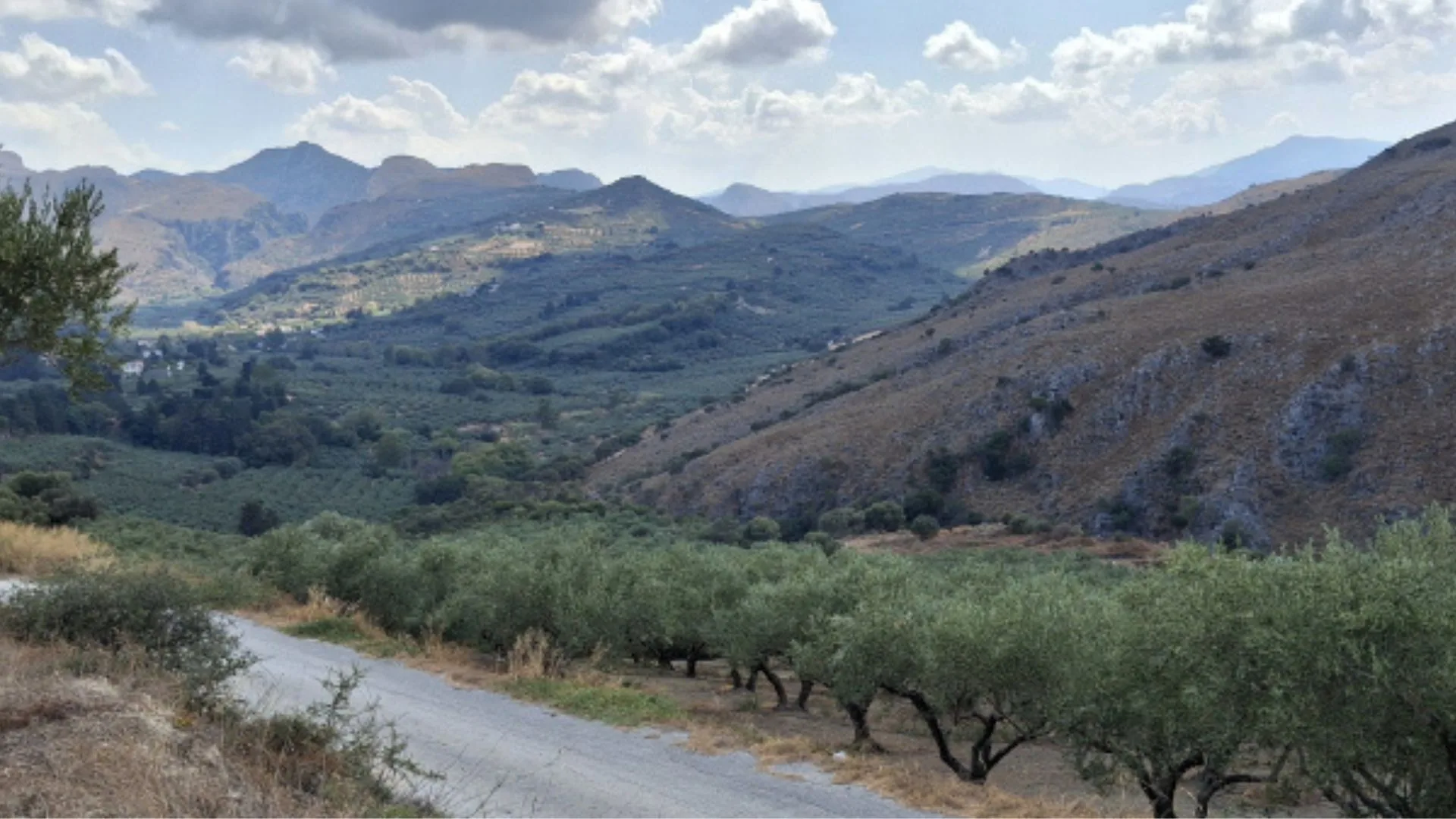
The PGI Kriti also testifies to a “profound” link, as Mamidaki observes, “between our olive oil and the land of Crete. Our land is characterized by its mountainous terrain, unique microclimates, and rich soil. The olive trees thrive in this environment, their roots reaching deep into the earth.” Daskalakis mentions that olive trees even “grow in places where almost nothing else can, clinging to our hillsides and rocky soils. Crete’s sun, its winds, and the mineral-rich earth give our oil a flavor you can’t find elsewhere.”
Criteria for Cretan extra virgin olive oil’s certification as PGI Kriti EVOO
“Every Geographical Indication EVOO promotes a certified origin,” according to Karpadakis—in this case, the PGI Kriti EVOO’s connection to Crete. Moreover, he adds, GI EVOOs “must meet very specific production rules and specifications.” Now that the PGI Kriti has been registered in the EU database, Karpadakis explains, companies that meet specific criteria can apply to be certified by the Greek national certification body in order to use the respected name and logo of PGI Kriti on their EVOO labels and marketing materials.
This is good news for both consumers and producers. Certified PGI Κρήτη / Kriti olive oil will be a valuable, flavorful product, because (according to the application for the PGI), only Cretan extra virgin olive oil with the following characteristics (and more) is eligible for this certification:
• Produced from olives grown in the Region of Crete, with their oil also extracted in Crete
• Bottled in the Region of Crete, to avoid quality degradation from light, oxygen, and heat exposure that could occur during transportation off the island before bottling
• Made mainly from Koroneiki and/or Tsounati variety olives (at least 90%)
• Acidity less than or equal to 0.6% (by weight of oleic acid)
• Rich fruity aroma and taste, with some bitterness and pungency, without defects
• Low oxidation indicator values (K 232/270 parameters, peroxide value), meaning the olive oil tends to have longer-lasting flavor and health benefits and be safe for cooking at higher temperatures and for longer time periods
Benefits of the PGI Kriti: recognition, legal protection, and increased value
The high quality and health benefits of the extra virgin olive oil of Crete have been recognized in numerous publications and countless prizes at international olive oil competitions for many years. Now, as Vassilis Zampounis* explains in Olivenews.gr, “the registration as a Protected Geographical Indication (PGI) offers the product international commercial promotion and recognition, as well as institutional legal protection, which the [European] Commission itself now undertakes in any cases of unfair competition.”
M. Atsalakis writes that the PGI designation also “constitutes an irrefutable guarantee of quality for the consumer,” indicating the EVOO’s origin, production methods, and characteristics, and increasing its commercial value. This “is expected to stimulate the local economy, create new opportunities, and make the agricultural sector of Crete even more sustainable and competitive.”
Karpadakis told Greek Liquid Gold he anticipates that the new PGI Kriti will increase the amount of EVOO that is bottled and branded in Crete, so Cretans benefit from its added value more than they do when Cretan extra virgin olive oil is sold in bulk and bottled elsewhere. In addition, “the designation of ‘PGI Crete/PGI Kriti’ olive oil represents more than just formal European recognition. It marks the beginning of a new, dynamic era for premium, high-quality, authentic Cretan extra virgin olive oil, which serves as an ambassador of the Cretan land and heritage and the Cretan Mediterranean diet worldwide.”
Cretan extra virgin olive oil PDOs and PGIs
As listed briefly here and in more detail on eAmbrosia (which requires a search)
- PGI-GR-02793 Κρήτη / Kriti 15 Registered 11/09/2025
- PDO-GR-0973 Μεσσαρά / Messara 15 Registered 12/10/2013
- PDO-GR-0515 Εξαιρετικό Παρθένο Ελαιόλαδο Σέλινο Κρήτης / Exeretiko Partheno Eleolado Selino Kritis 15 Registered 12/05/2010
- PDO-GR-0125 Εξαιρετικό παρθένο ελαιόλαδο Θραψανό / Exeretiko partheno eleolado Thrapsano 15 Registered 11/07/2002
- PDO-GR-0052 Σητεία Λασιθίου Κρήτης / Sitia Lasithiou Kritis 15 Registered 21/01/1998
- PDO-GR-0047 Αποκορώνας Χανίων Κρήτης / Apokoronas Chanion Kritis 15 Registered 21/01/1998
- PDO-GR-0053 Κολυμβάρι Χανίων Κρήτης / Kolymvari Chanion Kritis 15 Registered 13/06/1997
- PDO-GR-0055 Αρχάνες Ηρακλείου Κρήτης / Arxanes Irakliou Kritis 15 Registered 21/06/1996
- PDO-GR-0045 Βιάννος Ηρακλείου Κρήτης / Viannos Irakliou Kritis 15 Registered 21/06/1996
- PDO-GR-0039 Βόρειος Μυλοπόταμος Ρεθύμνης Κρήτης / Vorios Mylopotamos Rethymnis Kritis 15 Registered 21/06/1996
- PDO-GR-0035 Πεζά Ηρακλείου Κρήτης / Peza Irakliou Kritis 15 Registered 21/06/1996
- PGI-GR-0033 Χανιά Κρήτης / Chania Kritis 15 Registered 21/06/1996
Thanks to Terra Creta for the photos of the olive oil and the olives being washed at their mill. Other photos were taken by Lisa Radinovsky.
*Originally published on Greek Liquid Gold: Authentic Extra Virgin Olive Oil (greekliquidgold.com). See that site for recipes with olive oil, photos from Greece, agrotourism and food tourism suggestions, and olive oil news and information.
