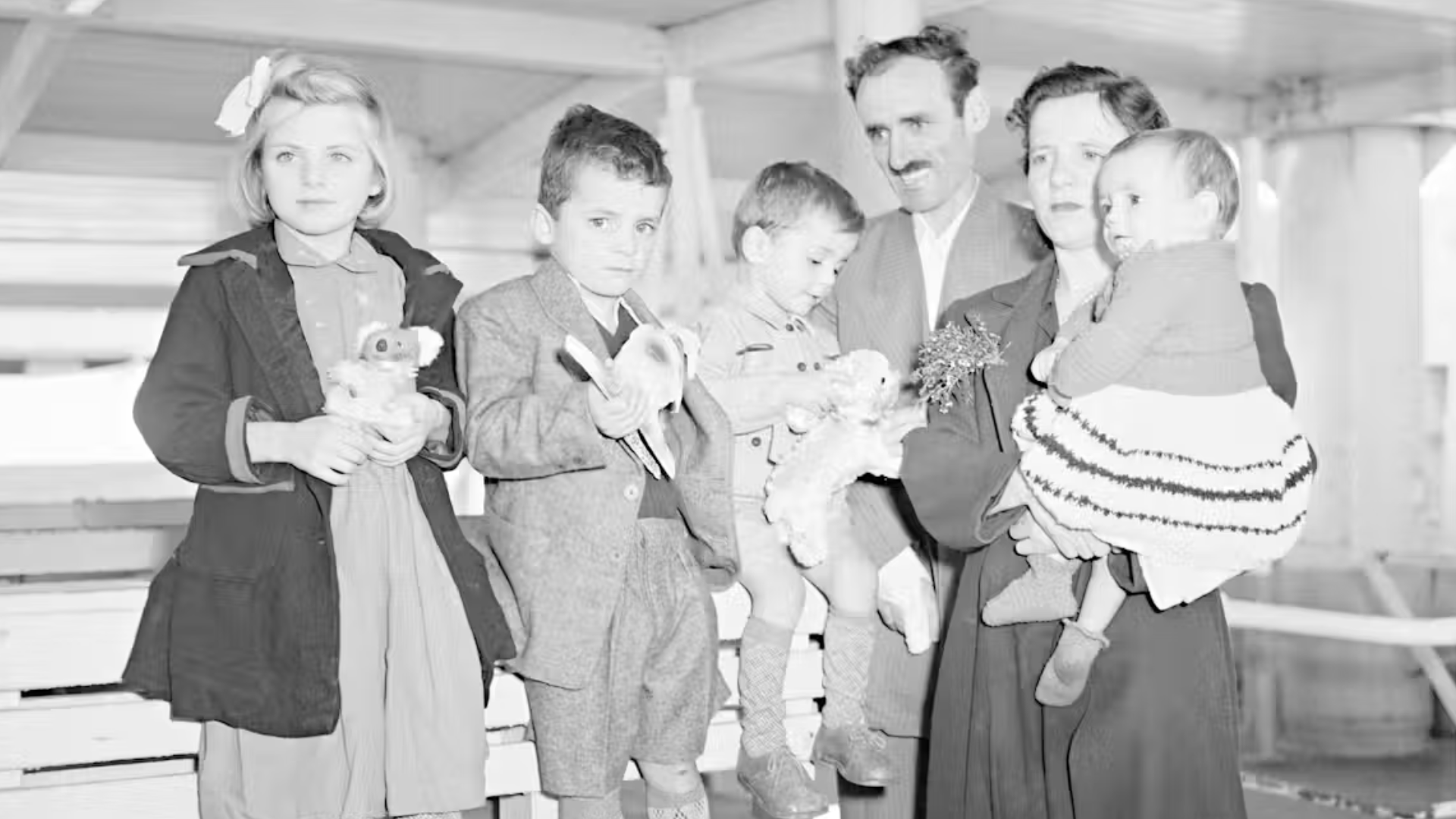
In a Friday Essay for The Conversation, historian Joy Damousi examined how the Australian Security Intelligence Organisation (ASIO) monitored Greek migrants during the Cold War, highlighting the tension between postwar immigration and state suspicion.
Damousi noted that more than 160,000 Greek migrants arrived in Australia after World War II, sought to bolster the economy, yet were viewed with distrust.
During the assimilation era (1945–1966), immigrants were expected to abandon their cultural and political ties, a process enforced under the lingering White Australia policy.
As historian John Rickard observed, “Australia wanted immigration, but not immigrants.”
ASIO’s surveillance focused not only on Greek communists but also on right-wing, pro-royalist groups, and even factions within the Greek Orthodox Church.
Clubs like the Atlas Club and organisations such as the Democritus League were monitored extensively, as they were seen as potential sources of political agitation.
Key figures, including George Zangalis and James Mitsopoulos, were tracked over decades for promoting left-wing politics and activism connected to the Greek Civil War.
Damousi highlighted how Greek migrants also engaged in local political activism, including protests against Australia’s involvement in the Vietnam War, which drew ASIO’s attention.
She observed that efforts to politically assimilate the community, such as the formation of the Federation of Greek Associations in Australia, often reinforced internal divisions.
Her essay underscored that ASIO’s focus on Greek immigrants, regardless of political affiliation, was driven by concerns about protecting “white, British Australia.”
The surveillance created a detailed “social map of knowledge” about cultural groups, illustrating how secrecy and control shaped the immigrant experience.
Damousi concluded that while assimilation policies formally ended by the 1970s, the period left a lasting impact on the political and cultural life of Greek Australians, showing how state surveillance and ethnic identity intersected in Cold War Australia.
