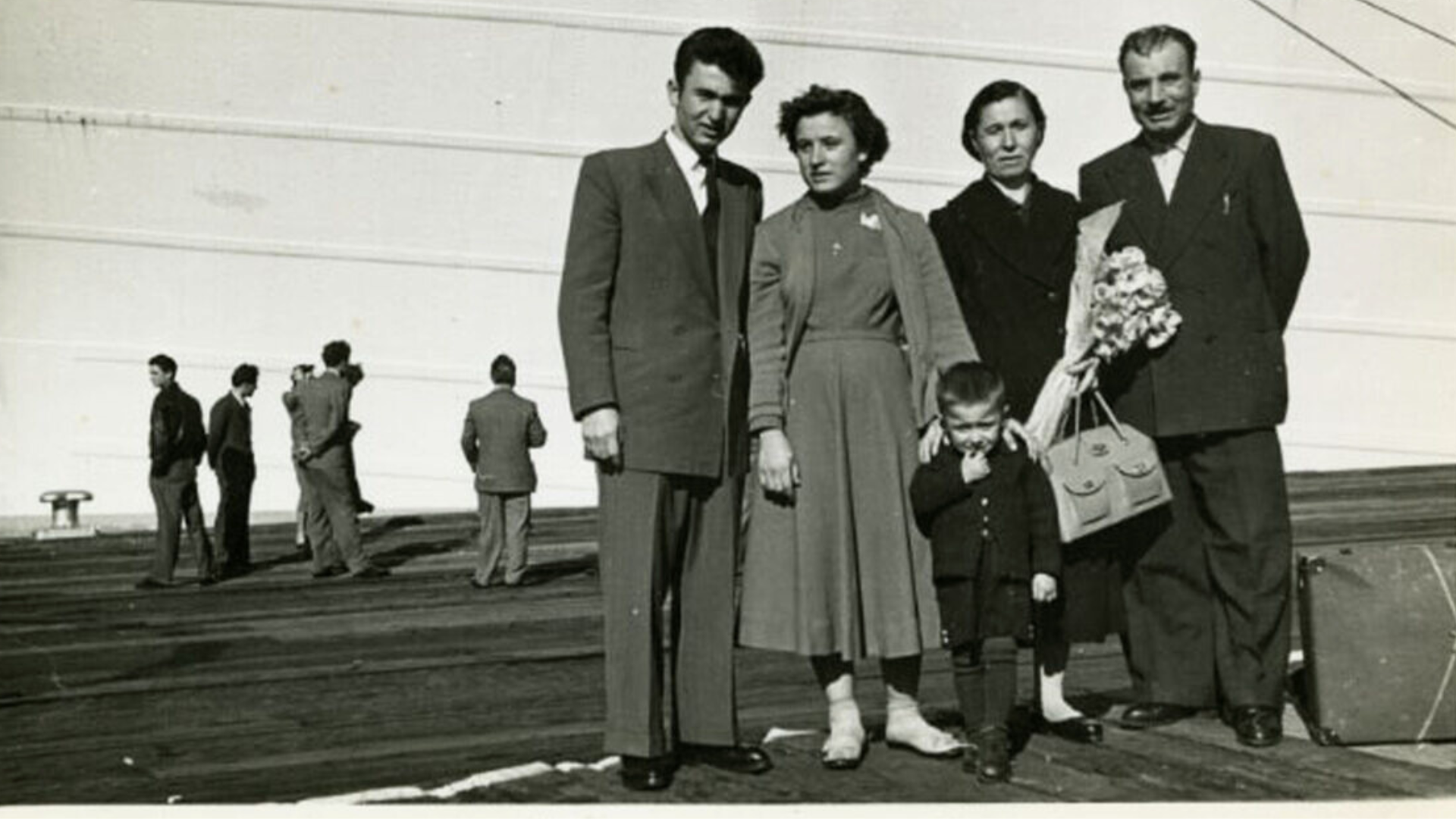
Block 19 of the Bonegilla Migrant Reception and Training Centre was the “first step” in Theofanis Emmanouilidis’ life in Australia and an experience that still holds great significance more than 70 years on.
Despite the shock of a new language and with only a suitcase in tow, Theofanis carried a strong sense of purpose and hope for a better life during his six-day stay in February 1954.
“It was completely strange, but I wanted to be a good citizen in Australia because I was thinking of staying here. It was my last stop,” Theofanis said.
“I went to sleep and when I woke up, the sun was rising and I realised I was in this wonderful country of Australia. It was very special and I will never, ever forget this moment for as long as I live.”
Theofanis was one of 18,441 Greek migrants who passed through Bonegilla between 1947 and 1971 – among the centre’s wider group of 320,000 people from more than 50 countries.
Ilias Tsinanis, who spent two months at Bonegilla in late 1967, remembers the “adventure” as a then 10-year-old but also recalls the fear of the unknown shared by his parents and other adults.
“In the evenings, people would sit outside their residential quarters and some of the conversations revolved around uncertainty and trepidation,” Ilias said.
“We were connected to a community but in Bonegilla, it was just the four of us. Our village had disappeared and because people were coming from all different parts of the world and being sent off virtually every day, it was hard to find connections.”
These personal memories are now captured at the Bonegilla Migrant Experience as part of the exhibition Finding Home, presented in partnership by the Dardalis Archives of the Hellenic Diaspora at La Trobe University and Wodonga Council.
La Trobe Vice-Chancellor Professor Theo Farrell said the University was proud to make the Dardalis Archives available to the public.
“La Trobe has a strong connection with Victoria’s Greek community through its research, Greek language and culture programs,” Professor Farrell said.
“Having custodianship of the Dardalis Archives, one of the largest archives of its type in the world, ensures we are preserving and celebrating Greek heritage and we are proud to partner with Wodonga Council to present this exhibition.”
Through photos, suitcases, books and other important keepsakes, the exhibition honours the courageous journey of Greek migrants and offers a glimpse into their stories, lives and relationships.
Today, one in 20 Australians has a connection to Bonegilla, representing a vital thread in the fabric of Australia’ s multicultural identity and the ideal location for the exhibition’s new home.
Emmanouela Giannoulidou, exhibition curator and Greek archivist at La Trobe, said Finding Home aimed to illustrate both the trials and triumphs faced by Greek migrants, showcasing their resilience and remarkable contributions across generations
“Beyond the challenges of displacement, these migrants carried with them their rich heritage, vibrant culture and cherished memories, all of which became integral to their evolving identity within the Australian landscape,” Emmanouela said.
Wodonga Council Mayor Michael Gobel said the exhibition at Bonegilla Migrant Experience highlights the long-standing collaboration and partnership between La Trobe and the Council.
“This exhibition is a poignant celebration of our Greek migrant community and a shining example of the enduring partnership between Wodonga Council and La Trobe,” the Mayor said.
“Together, we’re honoured to be able to share the stories told in the Dardalis Archives as a way to preserve an essential part of our history and to deepen our community’s understanding and appreciation of its multicultural roots.”
Finding Home opens on Friday, 6 June and will be on display for one year until June 30, 2026.
About the Dardalis Archives of the Hellenic Diaspora
La Trobe University’s Greek Archives comprise a unique collection of more than 180,000 items documenting the migration of the Greek community to Australia, Greek history and culture and the wider Hellenic diaspora.
Established in 1997, the Greek Archives are of great value to the local Greek community as they showcase its history and contribution to Australia.
