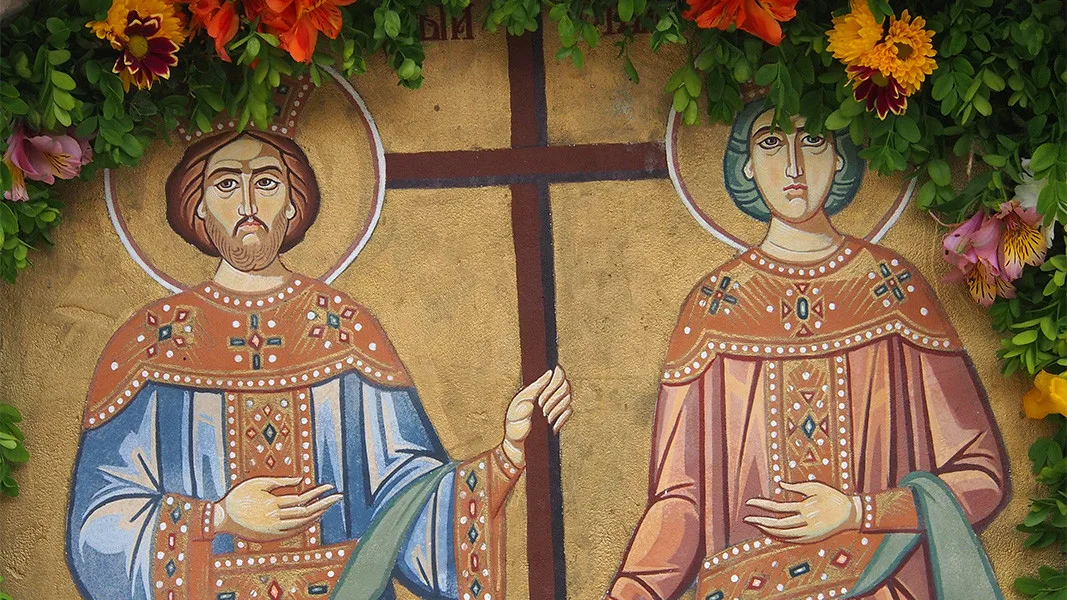
The Feast of the Exaltation of the Holy Cross is a significant Christian celebration observed annually on September 14, honouring the discovery of the cross on which Jesus Christ was crucified. This day is particularly special in Greece for those named Stavros and Stavroula.
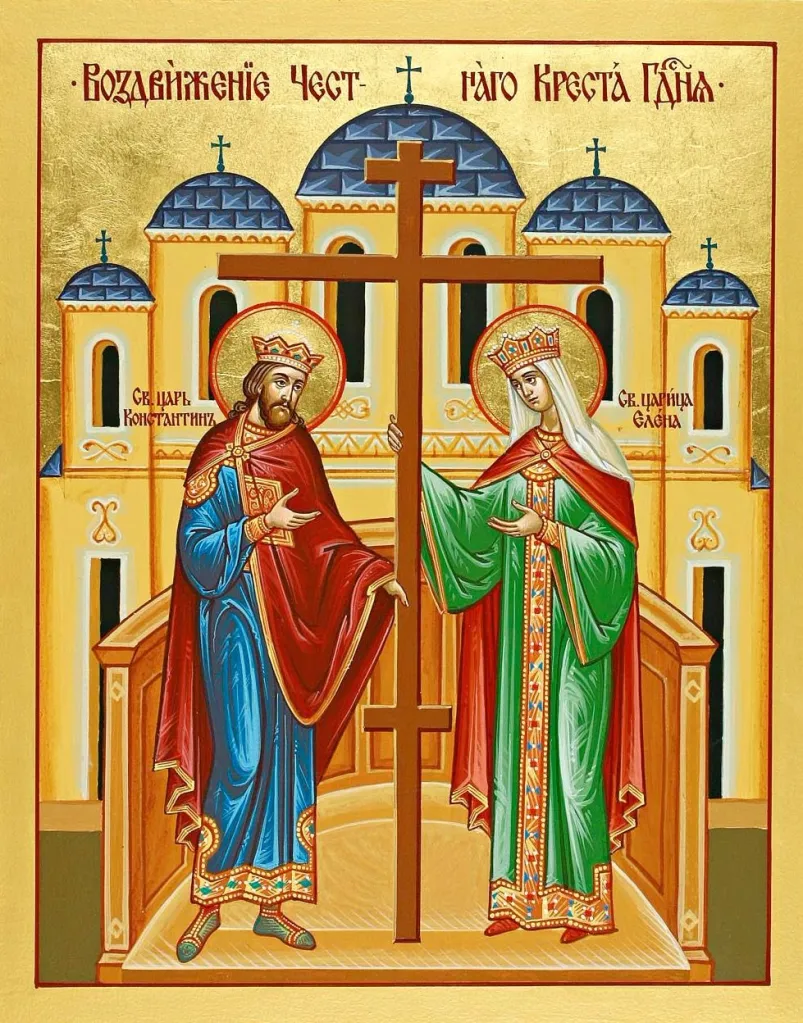
According to tradition, in 326 AD, Helena the mother of Emperor Constantine the Great travelled to the Holy Land with the mission of identifying key sites associated with Jesus Christ’s life and teachings. Her journey led her to Jerusalem, where she oversaw extensive excavations at Golgotha, the site of the Crucifixion and Resurrection. During these efforts, Helena discovered three crosses, including the one believed to be that of Christ, guided by the scent of basil growing at the site.
Church historians Philostorgius and Nikephoros recount that the true Cross was identified through a miraculous event: when the crosses were brought to a deceased woman, her resurrection revealed the authentic Cross.
Originally, the site of the Crucifixion had been occupied by a temple dedicated to Aphrodite, built by the Roman Emperor Hadrian in 135 AD after Jerusalem’s second destruction. Helena ordered the temple’s demolition and constructed the Church of the Resurrection in its place, which remains a major Christian landmark. On September 14, 335 AD, the Cross was placed in this church by Patriarch Macarius of Jerusalem.
The second significant event related to the Exaltation of the Cross occurred during the Byzantine-Persian Wars (602-628 AD). In 614, Persian forces captured Palestine, looting Christian holy sites and taking the Holy Cross as part of their spoils. Believing the Cross to possess magical properties due to miracles associated with it, the Persians venerated it. Emperor Heraclius, after defeating the Persians in 628, reclaimed the Cross. He first brought it to Constantinople on September 14, 629, as part of his triumph, and later returned it to Jerusalem.
The Feast of the Exaltation of the Holy Cross is celebrated with great reverence on September 14 each year. Church services feature the well-known hymn “Save, O Lord, Your People,” and basil, associated with the Cross’ discovery, is distributed to the faithful. Observance of the feast includes strict fasting as a mark of respect and devotion.
