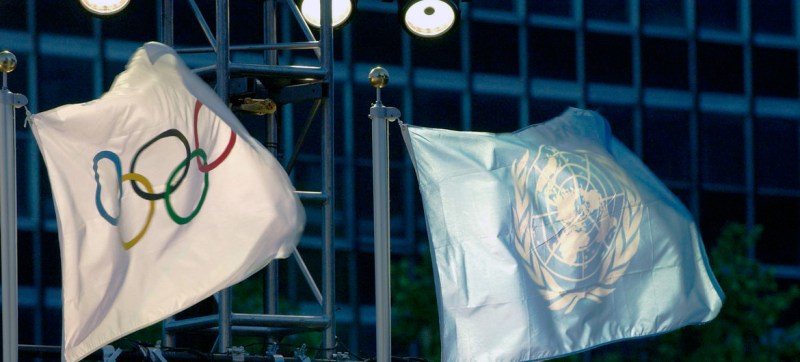
The Olympic Truce – traditionally known as Ekecheiria – was an announcement of peace and denouncement of hostilities before, during and after the Olympic Games.
According to the UN resolution, as in the ancient Greek tradition, the Truce will begin one week before the opening of the Olympic Games (24 July to 9 August 2020) and end one week after the closing of the Paralympic Games (25 August to 6 September 2020).
The UN and the International Olympic Committee (IOC) began discussions in 1992, on how the international community can cease hostilities during the Olympic Games, and how this can extend to international diplomacy. In 2000, the IOC and the Greek Government established the International Olympic Truce Centre, which aimed to promote peace through the traditional Olympic Truce.
Since then, the Olympic Truce has been an integral point of discussion within the United Nations and the resolution is passed every two years to include the Winter and Summer Games respectively.
The establishment of the Olympic Truce closely links with the introduction of the Olympic Games. The Olympic Games are said to have begun in the 8th century BC, when the oracle of Delphi advised Greeks to replace the incessant cycle of armed conflict with a friendly athletic competition every four years.
According to the UNESCO Olympic Truce Declaration, the tradition was established in ancient Greece in the ninth century BC by the signature of a treaty between three kings. It is considered the longest lasting peace accord in history.
With the recent UN resolution concerning the Olympic Games 2020 in Tokyo, UN Member States underlined the importance of cooperating to “collectively implement the values of the Olympic truce around the world,” and agreed to “cooperate with the International Olympic Committee (IOC) and the International Paralympic Committee in their efforts to use sport as a tool to promote peace, dialogue and reconciliation in areas of conflict during and beyond” the holding of the Games.
Today the Olympic Truce has become an expression of mankind’s desire to build a world based on the rules of fair competition, peace, humanity and reconciliation in accordance to the most compelling purpose of the United Nations – the maintenance of international peace and security. The application of the Olympic Truce to the Paralympic Games and its relating recognition of the rights of persons with disabilities is another important achievement building on the General Assembly resolutions.
With reference to Greek News Agenda.
