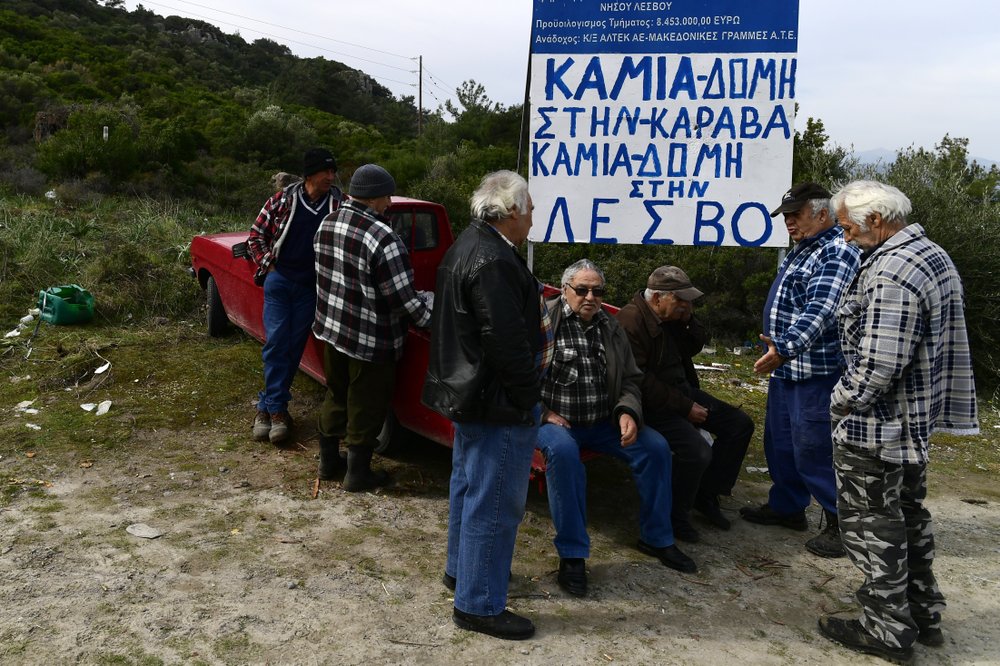
Island protestors set up blockades to halt production of new migrant detention centres

·

Protest groups on three eastern Greek islands on Monday begun setting up blockades aimed at stopping the government from building new migrant detention centres.

The groups on Lesvos, Chios, and Samos have received broad support on the islands, including from municipal authorities and farming associations.

The government says it is determined to build detention centres on recently appropriated land to replace overcrowded camps on the islands — announcing that construction would resume this week after a brief break for consultations.

But many islanders fear that new facilities will only increase the number of migrants and refugees after the government failed to deliver on a pledge to ease overcrowding over the winter months.

“We are guarding the (appropriated) area, and if they start building, everyone here and from the surrounding villages will join the protest — because we don’t want this,” Stephanos Apostolou, a protest organizer and municipal council member from the village of Mandamados on Lesvos, told The Associated Press.
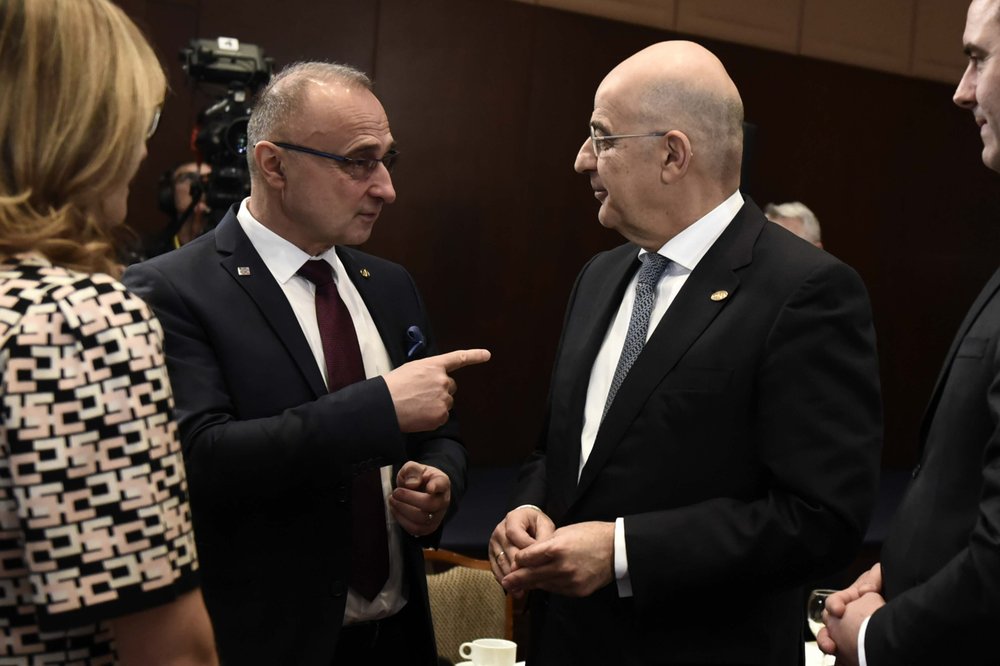
Croatia’s European Affairs Minister Gordan Grlic-Radman, left, speaks with the Greek Foreign Minister Nikos Dendias during a meeting of Foreign ministers from southeast European countries focused in European Union membership efforts in the Balkan region, in the northern city of Thessaloniki, Greece, on Monday, Feb. 24, 2020. (AP Photo/Giannis Papanikos)

Greece remains the European Union’s busiest entry point for refugees and migrants, with nearly 4,000 making the winter crossing from Turkey to Greek islands this year through Feb. 16, according to data from the United Nations refugee agency.

Croatia’s Foreign and European Affairs Minister Gordan Grlic-Radman, whose country holds the rotating presidency of the European Union, said its priority was to improve screening mechanisms to separate legitimate asylum seekers from other migrants entering the 27-nation bloc.

“We have to make a distinction between the refugees and illegal immigration,” he told the AP, speaking on the sidelines of a meeting of southeast European foreign ministers in the northern Greek city of Thessaloniki.

“That’s very important and we have to fight the smugglers, the criminals who organize illegal immigration and we should should protect the European Union from illegal immigration.”

Share:

KEEP UP TO DATE WITH TGH

By subscribing you accept our Terms of Service and Privacy Policy.

Latest News

Echoes from the past: Owl skyphos from Athens

The owl is one of the most famous symbols of ancient Greece. Particularly associated with the goddess Athena.

Love, language and belonging: A Valentine’s Day story about choosing to be Greek

I must have been five, maybe six, watching my neighbour flip lamb on the barbecue while Greek music drifted from inside.

More than roses: How Greek Australian couples celebrate Valentine’s Day their way

The Greek Herald spoke with Greek Australian couples to hear their love stories and learn how their bonds have strengthened over time.

Bank of Sydney shares banking tips to help households and businesses in 2026

The latest inflation data confirms that price pressures are proving more stubborn than policymakers had anticipated.

Discover Athens food culture in a new cookbook‑memoir‑guide

This book is a collection of 150 recipes, but it is also much more than that. Kochilas calls it “part memoir, part reporting, and part guide” (9).

You May Also Like

New co-designed training program equips multicultural communities to combat family violence 

Culturally and linguistically diverse (CALD) women and kids impacted by family, domestic and sexual violence (FDSV) to have better support.

The essential value of language takes centre stage at Sydney Town Hall

A senior member of the New South Wales Government has warned that without diversity of language, Australia would become a weaker nation.

Three Generations of Greek Australians – What separates them?

These three generations of Greek Australians encapsulate all of what it means to be Greek, but how does each generation separate itself from the other?