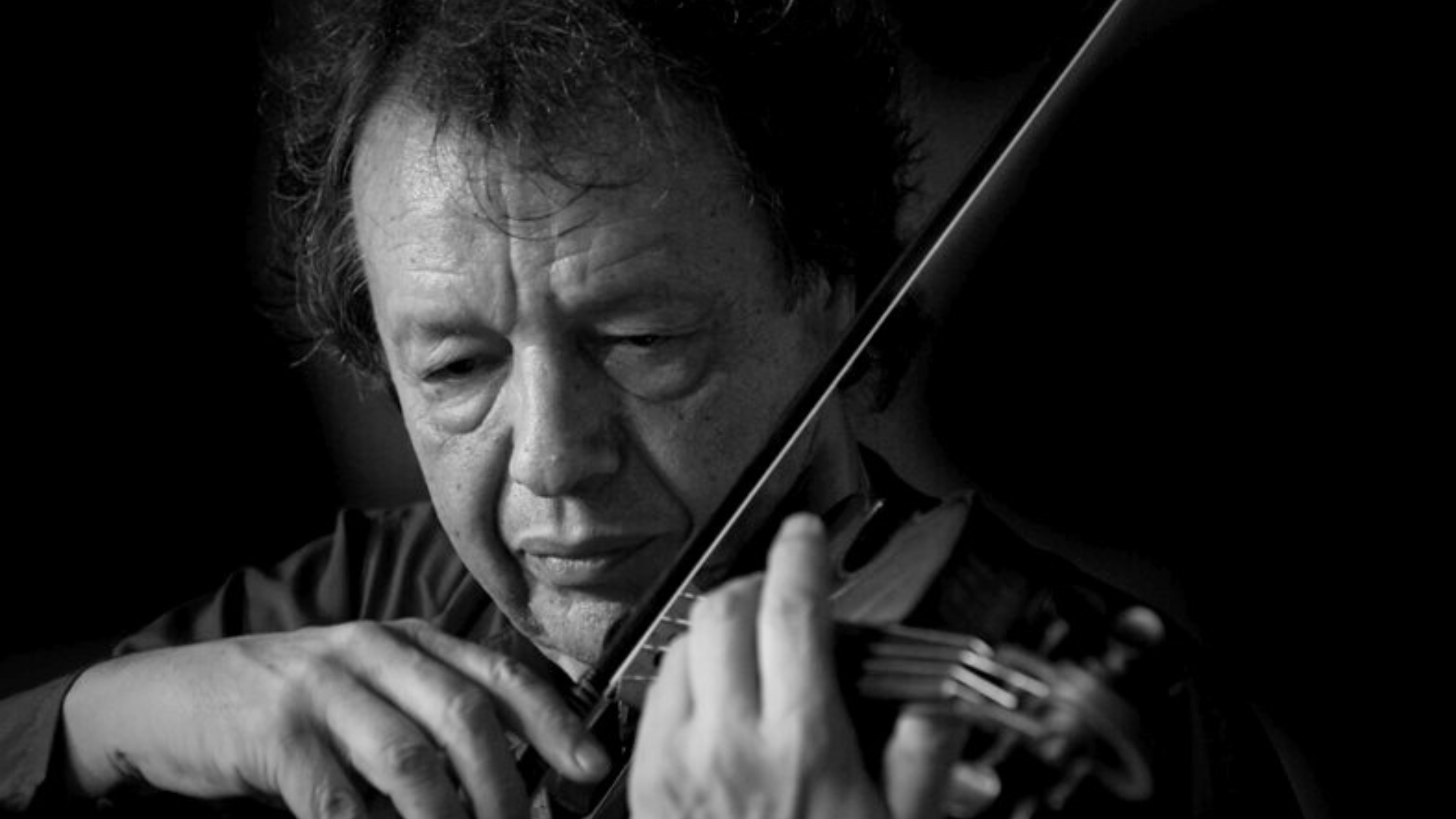
Greek Australian violinist Spiros Rantos passed away in a Brisbane hospital on Friday, September 27. The news has had profound impact on the music world as they reflect on Rantos’ legacy.
Born in Corfu in 1945, Spiros Rantos began his musical journey in Athens before being invited at the age of 18 to join the Linz Opera by its visiting chief conductor. He further honed his skills at the Vienna Musikhochschule under esteemed teachers Eduard Melkus and Ricardo Odnoposoff.
By 1968, Rantos was the concertmaster of the Capella Academica in Vienna and also taught at the Graz Conservatorium. His studies continued in the United States with Franco Gulli at Indiana University, and he garnered acclaim with chamber music prizes in competitions held in Italy and France.
Rantos’ prolific career included recordings for prestigious labels such as Deutsche Grammophon, Harmonia Mundi, and Grevillea Records, and he was a familiar presence in national broadcasts across Europe, Asia and Australia.
In 1976, he arrived in Australia with the Vienna-based chamber group Ensemble I for a residency in Melbourne. This ensemble, which included his partner of over 50 years, pianist Brachi Tilles, saw most of its members remain in Australia, significantly enriching the nation’s musical landscape.
Together with Tilles, Rantos established one of Australia’s premier chamber music duos, collaborating with leading musicians and performing extensively both domestically and internationally. He later founded the Rantos Collegium, which evolved into The Melbourne Chamber Orchestra, where he served as artistic director and conductor.
A passionate educator, Rantos influenced countless students during his tenure at the Victorian College of the Arts, the University of Southern Queensland, and the University of Melbourne. He retired as a senior lecturer at the University of Queensland in 2009 but continued to teach privately, with many of his students now performing in top orchestras worldwide or pursuing their own teaching careers.
Beyond his distinguished performance and teaching roles, Rantos was a mentor and friend to many, instilling a love for music in youth orchestras and amateur groups across Australia.
Source: slippedisc.com
