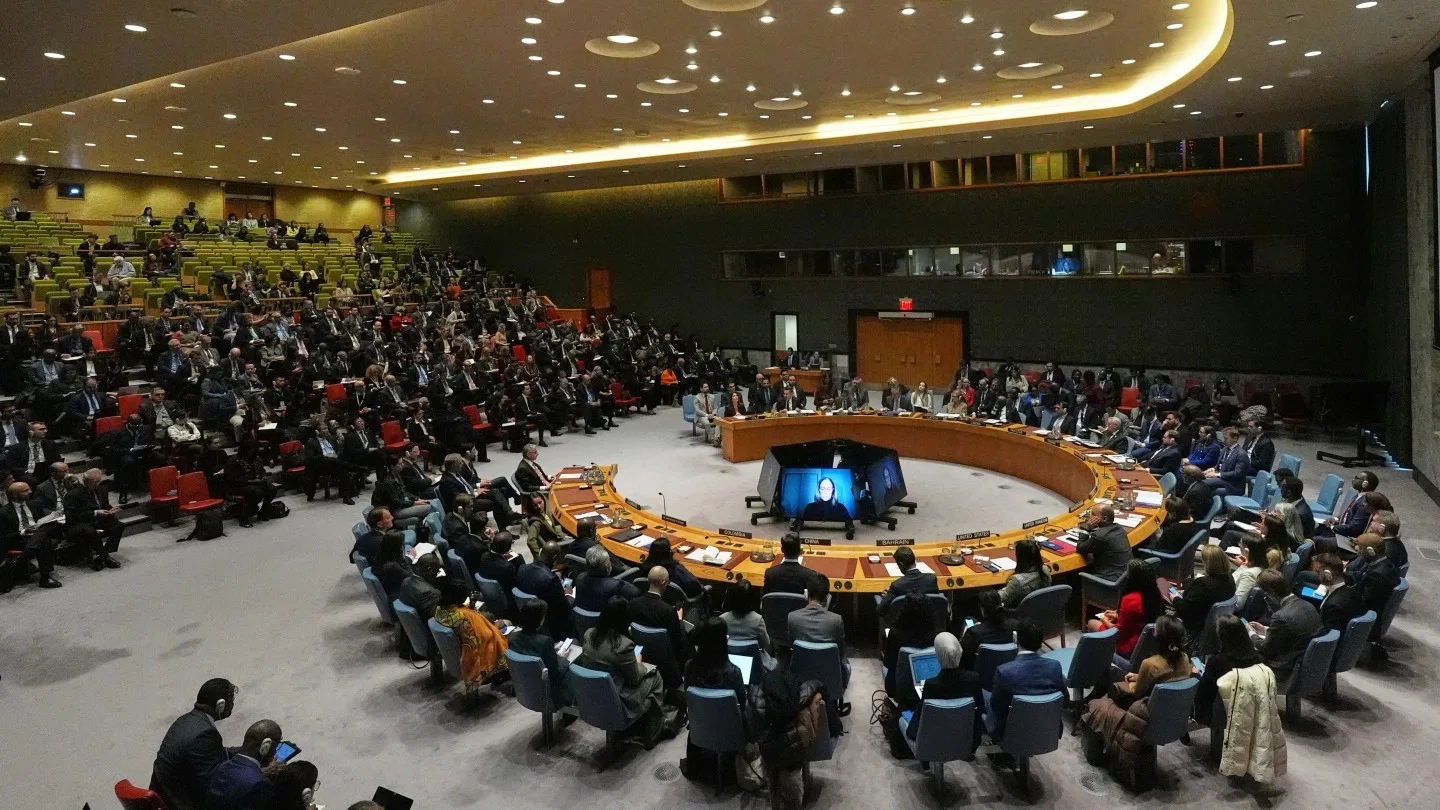
Greece has urged restraint and renewed its call for dialogue amid escalating tensions over Venezuela, as the United Nations Security Council met in emergency session following the US capture of President Nicolás Maduro.
Speaking on Monday, Greece’s deputy permanent representative to the United Nations, Ioannis Stamatekos, said Athens was closely monitoring developments and warned against actions that could deepen the crisis.
He reiterated Greece’s position that Maduro lacks democratic legitimacy, stating: “We have long made clear that Nicolas Maduro’s claim to the presidency lacks legitimacy. Greece has not recognised the results of the rigged July 28, 2024, elections and has consistently supported initiatives aimed at achieving a democratic solution for Venezuela.”
Stamatekos said Greece stood with Venezuelans seeking democratic change, adding: “We stand firmly with the Venezuelan people in their pursuit of a democratic future and hope recent events will move in that direction.”
He stressed the need to respect the UN Charter, international law and human rights, underlining the obligation to protect civilians and the importance of international cooperation to combat organised crime and drug trafficking.
“The only viable means for a peaceful transition and a lasting resolution of the crisis are dialogue and diplomacy,” he said, adding that Greece was ready to support any regional or international initiative aimed at a negotiated transition that respected the will of all Venezuelans.
The comments came as UN Secretary-General António Guterres warned that the US operation to capture Maduro could trigger wider instability in Venezuela and the region.
Addressing the Security Council through his political affairs chief, Rosemary DiCarlo, Guterres said: “I am deeply concerned about the possible intensification of instability in the country, the potential impact on the region, and the precedent it may set for how relations between and among states are conducted.”
Guterres called on all Venezuelan actors to engage in inclusive dialogue, adding: “I welcome and am ready to support all efforts aimed at assisting Venezuelans in finding a peaceful way forward.”
The emergency meeting, requested by Colombia and backed by Russia and China, saw sharp divisions among council members.
Venezuela’s representative, Samuel Moncada, condemned the US action as “an illegitimate armed attack lacking any legal justification” and “a flagrant violation of the UN Charter.” Russia’s ambassador, Vasily Nebenzya, called on Washington to “immediately release” Maduro and his wife, while China said it was “deeply shocked by and strongly condemns the unilateral, illegal, and bullying acts of the US.”
The United States defended the operation, with ambassador Mike Waltz describing it as a lawful move against indicted suspects. “There is no war against Venezuela or its people. We are not occupying a country,” he said, adding: “This was a law enforcement operation in furtherance of lawful indictments that have existed for decades.”
Maduro appeared in a Manhattan court on Monday, local time, as the diplomatic fallout from his capture continued to reverberate through the United Nations.
Source: Ekathimerini
